
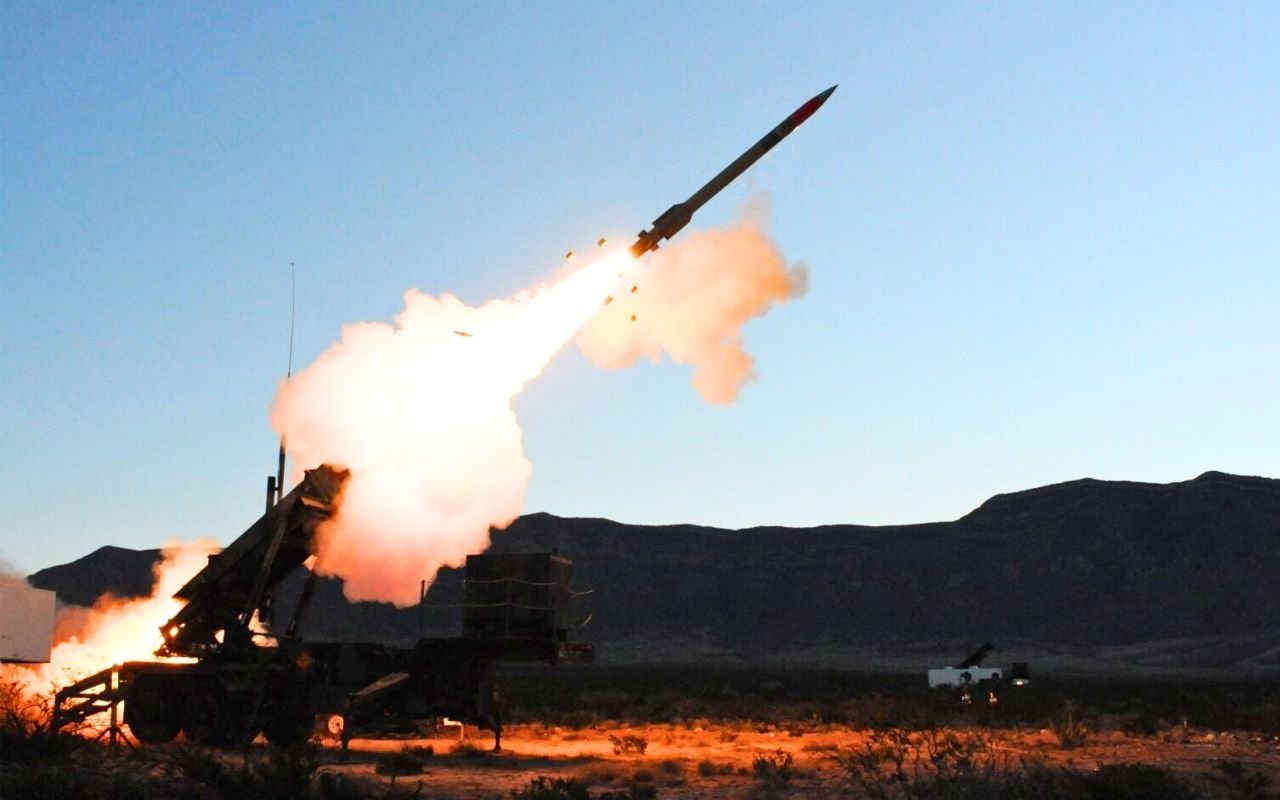
The Pentagon’s strategic move to embed Patriot missile systems into Navy destroyers is set to revolutionize maritime defense capabilities.
This bold investment represents a significant shift in the United States’ approach to naval air and missile defense, blending land-based missile technology with the powerful Aegis Combat System aboard Arleigh Burke-class destroyers. The integration promises enhanced adaptability against evolving aerial threats, positioning the Navy at the forefront of modern defense innovation. As threats from ballistic and cruise missiles intensify worldwide, the U.S. Department of Defense is channeling €60 million from the 2025 reconciliation bill to marry the Patriot Advanced Capability-3 Missile Segment Enhancement (PAC-3 MSE) interceptors with the Navy’s existing Aegis-equipped fleet. Such an initiative signals the Pentagon’s commitment to fortify maritime defense with combat-proven land-based missile technologies, aiming to expand operational ranges and sharpen threat response strategies.
Bridging land and sea defense: the technical leap of PAC-3 MSE integration
The integration of the PAC-3 MSE interceptor into naval platforms marks a profound technological convergence. Traditionally, the PAC-3 MSE missiles have been pivotal in ground-based air defense, protecting critical infrastructure and troops from tactical ballistic missiles, cruise missiles, and advanced aircraft. Transferring this capability to the maritime domain involves complex engineering challenges, deeply rooted in system compatibility and operational synchronization. The heart of this effort lies in embedding PAC-3 MSEs into the Navy’s Aegis Combat System, a sophisticated command and control system that detects, tracks, and intercepts airborne threats. The challenge is twofold: adapting the Patriot interceptor’s guidance and control systems to interface seamlessly with the Aegis radar and fire control, and ensuring the destroyers’ vertical launch systems can accommodate the missile’s specifications. Experts note that this integration is not merely about hardware adaptation but also software harmonization. The Aegis Combat System’s existing software environment must be upgraded to interpret PAC-3 MSE data accurately and execute missile launches with precision under dynamic maritime combat conditions. Achieving this level of synergy demands rigorous testing protocols, including simulation environments and live-fire exercises, ensuring reliability in real-world scenarios. Moreover, PAC-3 MSE’s design enhancements over its predecessors — including improved range, agility, and multi-target engagement capabilities — complement the destroyers’ need to counter increasingly sophisticated threats. Embedding these missiles aboard naval vessels expands the fleet’s air defense envelope, allowing the U.S. Navy to intercept threats much earlier and farther from critical assets. This technological leap further underscores the Pentagon’s proactive response to shifting global military dynamics, where adversaries deploy faster, stealthier, and more variable missile threats targeting sea lanes and naval groups.
Strategic implications for U.S. naval operations and global maritime security
The decision to integrate Patriot missile systems onto Navy destroyers reshapes strategic calculus in naval warfare. Arleigh Burke-class destroyers, already formidable platforms with versatile capabilities, will gain a critical edge with PAC-3 MSE interceptors onboard. This enhances the United States’ deterrence posture, particularly amid escalating tensions in contested maritime regions such as the South China Sea and Eastern Mediterranean. With air and missile threats growing more complex and frequent, the ability to launch PAC-3 MSE interceptors from sea enables rapid response to emerging threats without reliance on land-based batteries. This mobility advantage is crucial for expeditionary forces and naval task groups operating far from friendly shores or in unpredictable conflict zones. Moreover, this integration bridges joint operations between the Army and Navy, fostering interoperability and resource optimization. Sharing a common missile defense technology allows coordinated defense efforts, ensuring comprehensive coverage across domains and reducing duplication of development costs. This convergence also signals to allies and adversaries alike the U.S. dedication to securing maritime routes against missile attacks, strengthening alliances under NATO and other partnerships by potentially sharing technology and joint deployment protocols. However, the program also faces its share of strategic challenges, including potential adversarial countermeasures. Nations aware of this enhancement may accelerate their efforts to develop missile saturation tactics or stealth technologies aimed at overwhelming missile defenses. This places a premium on continued innovation in sensor technology, electronic warfare, and layered defense systems alongside the PAC-3 MSE upgrades. The broader security environment demands that U.S. naval planners not only integrate the new missile systems but simultaneously enhance situational awareness and cyber resilience to protect integrated networks against sophisticated attacks.
Financial commitments and industrial collaboration behind the integration effort
Behind the technical and strategic layers lies a substantial financial investment. With €60 million allocated specifically for the initial phases of the PAC-3 MSE integration on Navy destroyers, the initiative represents a portion of a larger defense budget focused on modernizing the U.S. missile defense architecture. The funding supports a multi-pronged approach encompassing software development, system integration, hardware adaptation, and rigorous testing. Lockheed Martin, the primary contractor for the PAC-3 MSE system, is coordinating closely with the Navy to tailor the interceptor to shipboard requirements, including modifications to launch canisters and data link interfaces. This collaboration between the Department of Defense and prominent defense contractors guarantees steady progress while maintaining high standards of quality and reliability. Lockheed Martin’s commitment is illustrated by an earlier €8.9 billion multi-year contract awarding production of nearly 2,000 PAC-3 MSE interceptors, indicating strong confidence in the missile’s strategic value across the Army and now the Navy. Financial stewardship also involves balancing cost-efficiency against expanding the U.S. Navy’s fleet capabilities. Compared to developing a completely new naval interceptor, adapting the PAC-3 MSE offers a more cost-effective pathway without compromising performance. Additionally, the defense industrial base benefits from increased production demands, sustaining jobs and enhancing technological expertise in missile propulsion and guidance. Still, managing sizeable contracts and timelines amid evolving global threats requires vigilance to avoid delays and cost overruns. The Pentagon’s oversight mechanisms ensure that integration milestones are met while adapting to feedback from ongoing testing and operational exercises.
Operational challenges and training enhancements for naval forces
Introducing PAC-3 MSE missiles on Navy destroyers will necessitate extensive operational adjustments within the fleet. Sailors and officers must acquire new competencies related to the missile’s handling, targeting, maintenance, and command system integration. Training programs are being developed to familiarize crews with the upgraded Aegis Combat System capabilities and the nuanced differences introduced by incorporating the PAC-3 MSE. This encompasses simulation-based tactical exercises and live-fire drills designed to replicate complex threat environments, from high-speed ballistic missile volleys to swarms of cruise missiles. One specific challenge is the real-time coordination required between detection, tracking, and missile launch decision-making, where false alarms or delayed responses could be catastrophic. Therefore, robust procedures and clear communication protocols are paramount to leverage the enhanced interception capabilities fully. Moreover, integrating PAC-3 MSE will influence naval tactics and fleet deployments. Destroyers equipped with these interceptors may assume more autonomous roles in defense zones, protecting carrier strike groups and amphibious assault ships with greater independence. This autonomy alters command dynamics and introduces new layers of complexity in joint operations. Training cycles and maintenance schedules will also adapt to accommodate the missile system’s support requirements, emphasizing preventive care and rapid response to technical issues. The Navy is investing in digital tools to monitor system health continuously and facilitate diagnostics by crews both at sea and ashore.
Future outlook: how PAC-3 MSE integration could redefine naval air defense
The introduction of PAC-3 MSE interceptors aboard Navy destroyers sets a precedent for future naval air defense paradigms. As missile threats grow in speed, maneuverability, and stealth characteristics, blending land-based missile technology into maritime platforms creates hybrid force multipliers. This step could lead to a new generation of naval interceptor development focused on modular designs that can operate across multiple domains. The lessons learned from PAC-3 MSE integration will influence forthcoming acquisitions and defense policies, pushing towards more unified missile defense strategies across the military services. Moreover, these advancements may catalyze international cooperation as allied navies explore similar upgrades, seeking compatibility and information sharing to enhance collective maritime security. This convergence could also spark innovation in networked sensor systems and unmanned platforms to complement missile defense layers. However, the evolving threat environment requires constant vigilance. Hypersonic missiles and emerging drone swarms present new challenges that existing missile systems may struggle to counter effectively. Consequently, the PAC-3 MSE integration is one step in a broader, dynamic race to maintain technological and tactical superiority at sea. The Pentagon is already allocating future budgets to expand testing and refine integration techniques, ensuring that by the time this system is fully operational, it will be a cornerstone of naval air defense with enhanced adaptability and lethality.
Key milestones and budget outline for PAC-3 MSE naval integration
| Milestone | Timeline | Budget (€ million) |
|---|---|---|
| Initial software adaptation & interface development | Q3 2025 – Q1 2026 | 15 |
| Hardware modifications and launch system adaptation | Q1 – Q3 2026 | 20 |
| Integration testing & simulation exercises | Q3 2026 – Q2 2027 | 12 |
| Live-fire exercises and operational validation | Q2 – Q4 2027 | 13 |
Benefits of integrating PAC-3 MSE on Navy destroyers
- Extended interception range allows for early threat neutralization far from fleets.
- Multi-target engagement increases defense effectiveness against saturation attacks.
- Enhanced software compatibility with Aegis Combat System improves tracking and response speeds.
- Improved operational flexibility for Navy task groups deployed worldwide.
- Cost-efficient adaptation leveraging existing missile production lines and technology.
What makes the PAC-3 MSE missile suitable for naval integration?
PAC-3 MSE missiles feature advanced maneuverability, extended range, and compatibility with the Aegis Combat System, making them effective for ship-based air defense.
How will this integration affect joint Army-Navy operations?
Sharing missile technology between services enhances interoperability, streamlines logistics, and strengthens collective defense efforts.
What are the primary challenges in integrating land-based missiles onto naval platforms?
Key challenges include hardware and software compatibility, adapting launch systems, and training personnel for new operational protocols.
Is this integration a response to specific global threats?
Yes, it addresses evolving ballistic missile threats and emerging anti-ship missile technologies from potential adversaries worldwide.
When is the PAC-3 MSE expected to be fully operational on Navy destroyers?
Full operational capability is projected by late 2027 following rigorous integration and testing phases.
