
The U.S. military is tackling the firepower gap by ingeniously revitalizing time-tested assets like the B-52 bomber and Apache helicopter, blending cutting-edge technology with proven platforms to maintain and extend operational dominance.
Modern warfare’s evolving landscape has pushed the U.S. armed forces to rethink the way they balance old and new capabilities. With recent challenges, like the Iran conflict, exposing vulnerabilities in rapid mobilization and resource availability, defense leaders are pivoting to a strategy that breathes new life into decades-old equipment. This approach not only bridges capability gaps but also accelerates deployment timelines without the heavy costs and delays tied to developing fresh platforms from scratch. Among the standout projects are the modernization efforts for the B-52 Stratofortress bomber and the Apache attack helicopter, which showcase the innovative melding of legacy systems with contemporary and autonomous technologies.
Redesigning classic firepower: how the B-52J modernization enhances U.S. strategic reach
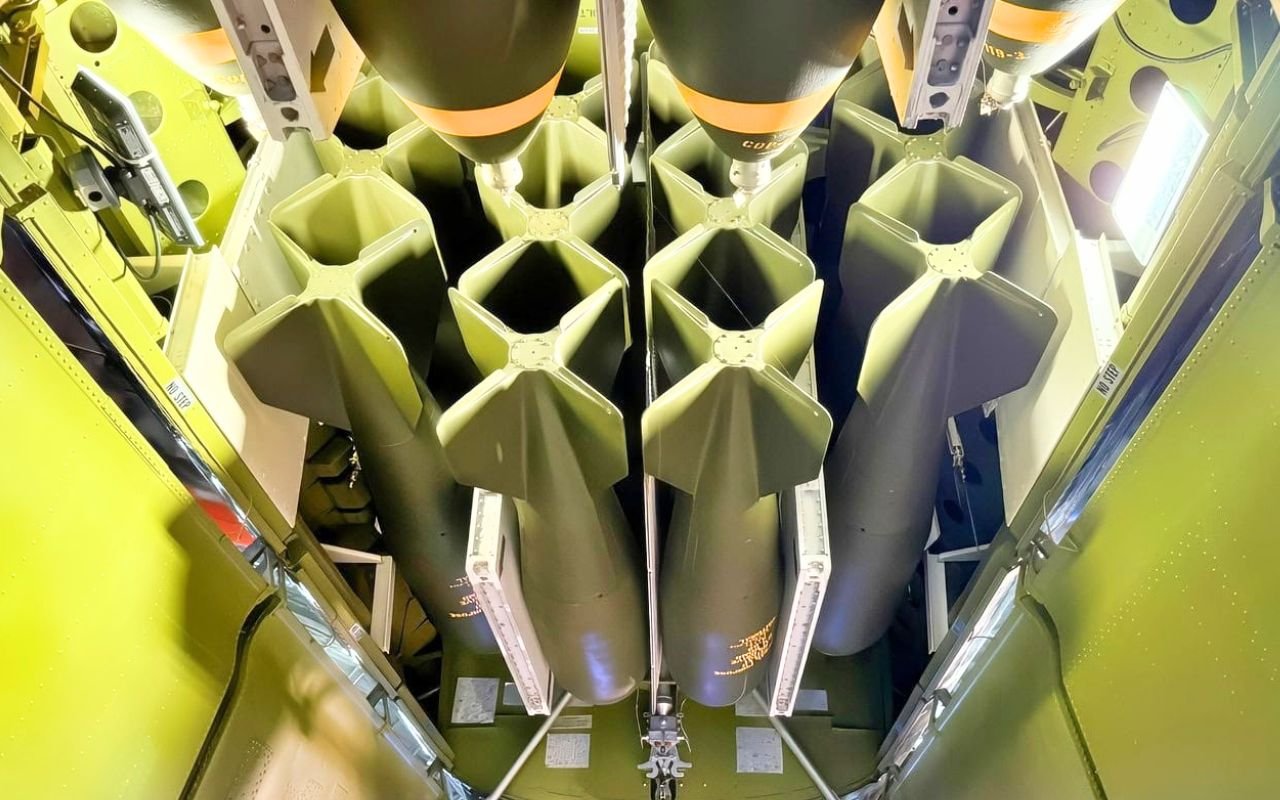
The B-52 Stratofortress, an icon in American aerial warfare for over six decades, is receiving a suite of upgrades that transforms this venerable asset into a modern strike powerhouse. Dubbed the B-52J after its retrofit, this version boasts advanced improvements in targeting, situational awareness, and electronic warfare capabilities, closing the firepower gap against emerging adversaries. Such enhancements radically extend the bomber’s precision strike potential and survivability in contested environments. One of the most significant elements is the Commercial Engine Replacement Program (CERP), which swaps out aging turbine engines for newer, more efficient commercial models. This upgrade improves fuel efficiency, extends range, and reduces logistic strain on airbases worldwide. Coupled with the Radar Modernization Program (RMP), the bomber gains better target acquisition and identification capabilities, ensuring it remains a versatile tool for delivering kinetic and electronic strikes. The strategic value of repurposing the B-52 is not just historical nostalgia; it reflects an understanding that foundational platforms can adapt to new battlefield realities. In 2025, the 69th Expeditionary Bomb Squadron’s deployment within the U.S. Central Command zone demonstrated how the B-52 can integrate with coalition forces and deliver precision strikes that shape regional dynamics. In a world where hypersonic threats and drone swarms escalate rapidly, upgrading legacy bombers like the B-52J exemplifies how proven systems preserve operational efficacy while bypassing years of development delays tied to entirely new aircraft. This approach offers commanders a bridge between old-school firepower and next-gen capabilities, maintaining threat deterrence across the globe.
Transforming the Apache helicopter into a drone-intercepting long-range shotgun
For over 40 years, the Apache attack helicopter has been a symbol of U.S. Army air superiority and battlefield versatility. Today, its design flexibility gets tested in entirely new ways with the development of “long-range shotgun” capabilities tailored for countering drone threats. Unmanned aerial threats have complicated the airspace battlefield, requiring rapid, effective responses. The Army’s innovative integration allows the Apache to carry newly developed munitions and electronic warfare packages specifically designed for drone interception. These adaptations offer fast cycle times for re-armament and target acquisition, capitalizing on the platform’s outstanding maneuverability. The Apache’s repurposing is a vivid example of how legacy systems adjust to asymmetric threats without waiting for the slow grind of new acquisitions. This’s especially crucial given the Army’s broader acquisition challenges. The standard military procurement process—covering requirements generation, contracting, certification, and training—can span years or even decades. By enhancing existing platforms with new drone-killing technology, the Army gains significant operational leverage in the rapidly evolving drone threat environment. Beyond improved munitions, the platform now incorporates new sensors and data links that allow real-time threat identification, sharing intelligence with nearby units and command nodes. This capacity boosts both survivability and mission effectiveness, critical when facing drones designed for reconnaissance, strike, or swarm attacks. In essence, the Apache transforms from a traditional attack helicopter into a multi-role drone countermeasure weapon system.
Leveraging naval modernization through unmanned mine countermeasure packages
The U.S. Navy’s Littoral Combat Ships (LCS) program represents a pivotal effort to blend manned platforms with unmanned systems, particularly in the arena of mine countermeasures (MCM). The Navy’s deployment of the first two operational unmanned MCM packages aboard Independence-variant LCS vessels shows how legacy hulls can incorporate cutting-edge autonomous capabilities to address maritime threats efficiently. The MCM package utilizes unmanned surface vehicles (USVs) and autonomous underwater vehicles (AUVs) to detect and neutralize mines, which remain a significant hazard in littoral zones worldwide. This gives the ships a more nimble footprint and reduces risk to crew members, while ensuring area denial threats don’t restrict naval maneuverability. The program’s rapid pace in recent years highlights a shift in acquisition philosophy: by adding new modular systems onto existing platforms, the Navy skirts the typical development “valley of death” where promising technologies fail to transition from prototypes into frontline tools. This approach fosters an agile, layered maritime defense posture designed to keep pace with emerging threats. As the Navy procures small USVs for offensive sea strike roles, the MCM package stands out as a critical pathfinder, illustrating the power of unmanned and autonomous tools combined with legacy vessels to maintain maritime superiority.
Repurposing surveillance and missile technology: Global Hawk drones and the AIM-174B missile
The U.S. Air Force’s decision to repurpose legacy RQ-4 Global Hawk drones into “Range Hawk” platforms exemplifies how old technologies receive second lives supporting futuristic weapons testing and surveillance. These converted drones, retired from frontline duties, now assist in tracking, testing, and validating hypersonic missile performance, a key focus of modern firepower development. In a related vein, the Navy’s modification of the SM-6 missile into the AIM-174B variant honors the notion of giving existing technology fresh strategic roles. By enabling air-launch capability, the AIM-174B expands defensive envelopes, targeting aerial, ballistic, and surface threats at ranges stretching across hundreds of kilometers — far exceeding the reach of earlier air-to-air munitions. Such upgrades exemplify the philosophy that technology alone doesn’t guarantee battlefield dominance. Platforms and weapons must evolve symbiotically. By integrating modern sensors, communication suites, and propulsion advancements into time-tested designs, the military achieves a balance of innovation with proven reliability, ensuring wide operational applicability and higher mass availability in emerging domains.
Balancing high-low mix: why a smart mix of legacy and new systems secures future battlefield dominance
Defense expert Mackenzie Eaglen argues that the military must carefully preserve a strategic “high-low mix” of capabilities to avoid operational gaps in crises like the ongoing Iran conflict. Too rapid a retirement of legacy equipment can leave dangerous holes in capacity, while keeping outdated systems too long increases maintenance burdens and risks obsolescence. The solution lies in repurposing legacy assets as “bridge” platforms to field new technologies quickly and at scale. This strategy not only blunts the “valley of death” in military acquisitions but also creates a layered force posture that combines mass with precision and speed.
Some specific benefits of this balanced approach include:
- Rapid deployment: Enhanced legacy platforms can be upgraded more swiftly than fielding new builds.
- Cost efficiency: Modifying existing assets reduces the need for expensive, full-scale development programs.
- Operational continuity: Forces can sustain combat readiness without capability gaps during transition phases.
- Technology validation: Proven platforms serve as testbeds for cutting-edge innovations.
- Increased lethality: Combining massed firepower with precision systems enhances battlefield effect.
Examining how the Pentagon has extended the service life of platforms like the B-52J and integrated new missile capabilities highlights these points. As the services continue to invest in unmanned capabilities and electronic warfare upgrades, their ability to strike decisively and at scale will only grow stronger, avoiding the pitfalls of focusing solely on new weapon systems development.
| Platform | Upgrade focus | Benefits | Deployment status |
|---|---|---|---|
| B-52J Stratofortress | Engines, radar, electronic warfare | Extended range, improved targeting, better situational awareness | Operational, active in CENTCOM region since 2024 |
| Apache attack helicopter | Drone countermeasures, new munitions, sensors | Increased drone defense, enhanced agility | Testing and initial fielding underway |
| USS Independence-variant LCS | Unmanned mine countermeasure packages | Reduced risk, enhanced detection | Operational since 2025 |
| RQ-4 Global Hawk (Range Hawk) | Hypersonic tracking systems | Improved missile test support | Recently upgraded, actively used in testing |
| AIM-174B missile | Air-launch adaptation | Extended strike range against air and surface targets | In production, initial deployment |
Why is the U.S. military upgrading older platforms instead of buying new ones?
Upgrading legacy platforms allows faster deployment of new capabilities while avoiding the lengthy and costly process of developing entirely new systems, ensuring operational capacity during urgent conflicts.
What are the key benefits of the B-52J modernization program?
The B-52J features improved engines for better range and fuel efficiency, modern radar for enhanced targeting, and electronic warfare systems to operate effectively in contested environments.
How does the Apache helicopter combat modern drone threats?
By integrating new drone-killing munitions and advanced sensors, the Apache can detect, intercept, and destroy hostile drones rapidly, transforming it into a long-range drone countermeasure platform.
What role do unmanned mine countermeasure packages play in naval operations?
They enable the Navy to detect and neutralize mines autonomously, reducing risks to crew and enhancing operational freedom in critical near-shore environments.
How does the AIM-174B missile enhance U.S. strike capabilities?
With air-launch capability and extended range, AIM-174B can engage aerial, ballistic, and surface threats much farther away than previous munitions, increasing the military’s defensive and offensive options.
