China is rapidly transforming from a military aircraft importer to a formidable exporter, signaling a striking shift in the global defense landscape.
Over the past decade, China has aggressively pursued military modernization, propelling its aerospace industry into new realms of innovation and export potential. Recent reports highlight intentions to expand beyond selling individual jets, advancing toward offering integrated combat systems combining fighters, missiles, sensors, and communications technology. This evolution not only boosts China’s defense industry globally but also challenges longstanding dominance by Western and Russian arms suppliers.
China’s emergence as a major global player in military aircraft exports
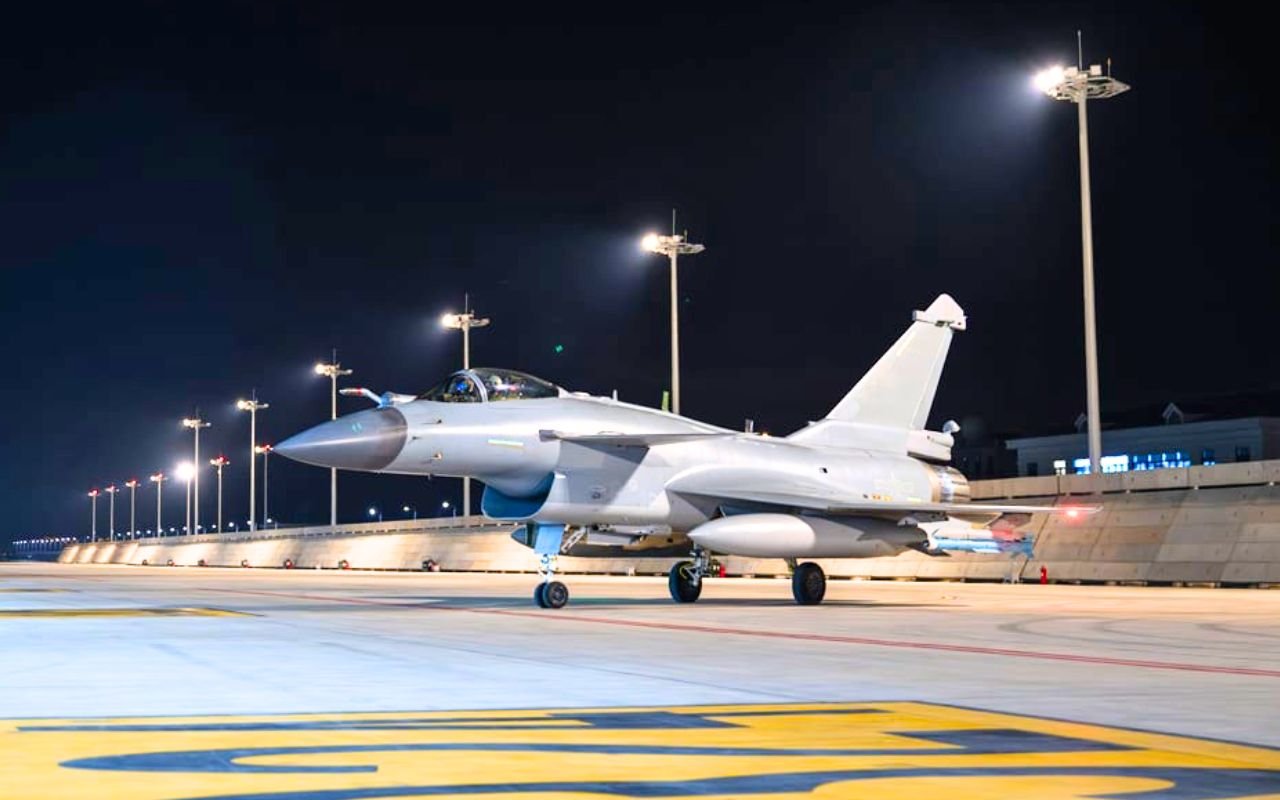
China’s rapid economic growth and significant investment in technology have been pivotal in reshaping its military aerospace capabilities. Unlike in previous decades—where China largely depended on Russian designs and technology transfer today’s Chinese defense manufacturers are producing increasingly sophisticated aircraft that attract global buyers. The export-oriented J-10CE fighter jet, a variant of the multi-role J-10, is a prime example of this transformation. According to a Global Times report, the J-10CE’s claim as the first overseas combat success of a Chinese export fighter marks a crucial milestone, enhancing its appeal to international markets. This success signals more than just a sale; it symbolizes China’s coming-of-age as an independent military aircraft exporter. China doesn’t just sell planes. Officials emphasize a strategy shift toward exporting complete, integrated combat systems rather than piecemeal products. AVIC official Ji Ruidong stated the importance of offering packages that combine aircraft, missiles, sensors, and communications equipment, giving customers a holistic combat capability unmatched by simple fighter deals. China’s military aircraft have progressively caught attention on the world stage, notably at international airshows such as the Paris Air Show, Dubai Airshow, and Singapore Airshow. At these events, Chinese aircraft not only dominate conversations but also reveal China’s growing confidence in its products’ quality and performance. Moreover, the rising self-reliance in design and production, supported by state-driven firms, allows China to bypass previous bottlenecks and political hurdles that restricted more extensive military trade. This strategy not only diversifies China’s clientele but also strengthens its global position.

Strategic implications of China’s expanding military aerospace exports
The growing footprint of Chinese military aircraft exports presents profound strategic implications for global security and power balances. Traditionally dominated by the United States, Russia, and European nations, the global arms market faces disruption as Beijing aggressively pushes its products abroad driving shifts in alliances and defense partnerships. A significant concern for Western powers stems from China’s ability to offer cost-effective yet capable alternatives to established Western jets and systems. This affordability appeals particularly to emerging nations in Asia, Africa, and Latin America that seek to modernize their forces without incurring prohibitive expenses or risking political fallout from Western cooperation. China’s integrated systems approach also changes the game by presenting fully interoperable solutions tailored to customer needs, thus enhancing combat readiness without the hassle of piecemeal procurement. This comprehensive offering makes it harder for Western suppliers to compete, prompting a need to innovate and re-evaluate defense export strategies. Furthermore, China’s steady buildup of drone fleets, sophisticated sensors, and missile technologies alongside fighter development gives countries access to cutting-edge military assets that until recently were primarily within reach of NATO or U.S. allies. The impact extends beyond mere hardware, influencing geopolitical dynamics through shifting allegiances and dependencies driven by arms deals. Adding to this, China’s entry into the export market forces reassessment of military aid and cooperation paradigms. Countries traditionally reliant on Western training and support may look increasingly to China, altering the landscape of future conflicts and defense relationships. This strategic realignment poses challenges for intelligence sharing and coalition building against emerging security threats.
Technological advancements fueling China’s aerospace export ambitions
China’s success in expanding its military aircraft exports is underpinned by remarkable technological strides in aerospace engineering. From advanced jet engines to integrated avionics suites, the Chinese defense industry now boasts innovations that rival global leaders. Historically, China’s propulsion systems lagged behind Western standards; however, recent breakthroughs have allowed domestic production of powerful, reliable engines that significantly improve fighter performance and endurance. This progress is vital for building credibility and trust among international buyers who prioritize aircraft reliability in harsh operational environments. Another major advancement lies in sensor and communication technologies embedded in exported combat systems. These allow for enhanced situational awareness, network-centric warfare capabilities, and real-time data sharing, providing customers with tactical advantages on modern battlefields. Examples include the integration of active electronically scanned array (AESA) radars and sophisticated electronic warfare suites in export variants like the J-10CE, showcasing capabilities previously unavailable in China’s export portfolio. China’s aerospace firms are now combining these innovations into tailored packages, guided by customer requirements and operational doctrines, to ensure flexibility and effectiveness. The shift to integrated solutions marks a departure from past export models that focused on hardware alone. Development of unmanned aerial vehicles (UAVs) and drones alongside manned fighters further demonstrates China’s commitment to modern warfare domains. Unmanned systems enhance surveillance, reconnaissance, and strike capabilities, widening the scope of exports beyond traditional aircraft.
Global markets driving demand for Chinese military aircraft
As China intensifies its push into military aircraft exports, specific global regions exhibit increasing interest in Chinese aviation products. Emerging economies with ambitions to modernize their defense but constrained by budgets are logical targets for China’s export strategy. Africa stands out as a key growth market, where several nations have acquired or expressed interest in Chinese jets and integrated combat systems due to affordability and fewer political restrictions compared to Western alternatives. For example, countries in North and Sub-Saharan Africa appreciate China’s willingness to include comprehensive training and maintenance packages in deals, which assures operational longevity. In Asia, nations such as Pakistan and Bangladesh are long-time customers that continue to expand their fleets with Chinese hardware. Newer markets in Southeast Asia, where regional disputes drive military modernization, increasingly view Chinese aircraft as viable options amidst geopolitical complexities. Latin America also offers new export opportunities. Nations like Venezuela and Bolivia have previously procured Chinese military aircraft, and China aims to strengthen this footprint further by showcasing improved performance and systems integration.
The global arms trade’s competitive landscape frequently revolves around ease of acquisition, political neutrality, and operational compatibility. China’s strategy successfully addresses these factors, fueling demand across diverse military budgets and geostrategic motivations.
| Region | Key Countries | Primary Interest | Chinese Products in Use |
|---|---|---|---|
| Africa | Algeria, Nigeria, Sudan | Cost-effective jet fighters, integrated systems | J-10CE, FC-1 Xiaolong |
| Asia | Pakistan, Bangladesh, Myanmar | Multi-role fighters, drones, air defense | J-10CE, Wing Loong UAV |
| Latin America | Venezuela, Bolivia | Upgraded combat aircraft, surveillance drones | FBC-1 Flying Leopard, CH-4 UAV |
Challenges and future outlook for China’s military aircraft export ambitions
Despite China’s clear advancements and expanding presence, obstacles remain that could influence its trajectory in becoming a dominant military aircraft exporter. International politics, quality perceptions, and competition all shape this complex landscape. Resistance from Western governments is a persistent barrier, with some countries wary about importing military technology that might impact their strategic ties with NATO or the U.S. Restrictions, export controls, and diplomatic pressure can complicate deals, particularly with clients caught in geopolitical tensions. Perceptions of quality and operational reliability still challenge China’s defense exports. While considerable progress has been made, some potential buyers remain cautious about long-term maintenance, parts availability, and combat experience compared to Western offerings. Competition from Russia and emerging European manufacturers continues to exert pressure. Moscow remains a key supplier for many countries that historically favored Russian products, given longstanding relationships and compatibility with legacy systems. Nevertheless, China’s integrated systems export model and escalating global economic influence signal it will remain a serious contender. Continued R&D, improved pilot training packages, and after-sales support enhancement are critical for sustaining momentum. Looking ahead, the evolution of unmanned combat aircraft, hypersonic weapon integration, and artificial intelligence in aerospace will likely define the next phase of China’s exports. Its ability to innovate and address client concerns will determine whether it can truly reshape global military aviation trade in the years to come.
What makes the J-10CE fighter jet attractive to foreign buyers?
The J-10CE combines advanced avionics, affordability, and proven combat performance, making it an appealing choice for countries seeking modern capabilities without the high costs associated with Western jets.
How does China’s integrated combat system export strategy differ from traditional aircraft sales?
Instead of selling individual aircraft alone, China offers a package deal combining fighters, missiles, sensors, and communication systems to provide customers with a complete combat solution enhancing effectiveness and interoperability.
Which global regions show the highest demand for Chinese military aircraft?
Africa, Asia, and Latin America are key markets attracted by China’s cost-effective, versatile military aircraft and integrated systems suitable for a range of defense budgets and operational needs.
What challenges does China face in expanding its military aircraft exports?
Challenges include geopolitical resistance from Western countries, lingering perceptions about quality and reliability, and competition from established Russian and European arms suppliers.
What does the future hold for China’s military aerospace export ambitions?
With ongoing innovation in unmanned systems, AI integration, and hypersonic technologies, China aims to solidify and expand its influence in the global military aviation market despite political and competitive headwinds.
