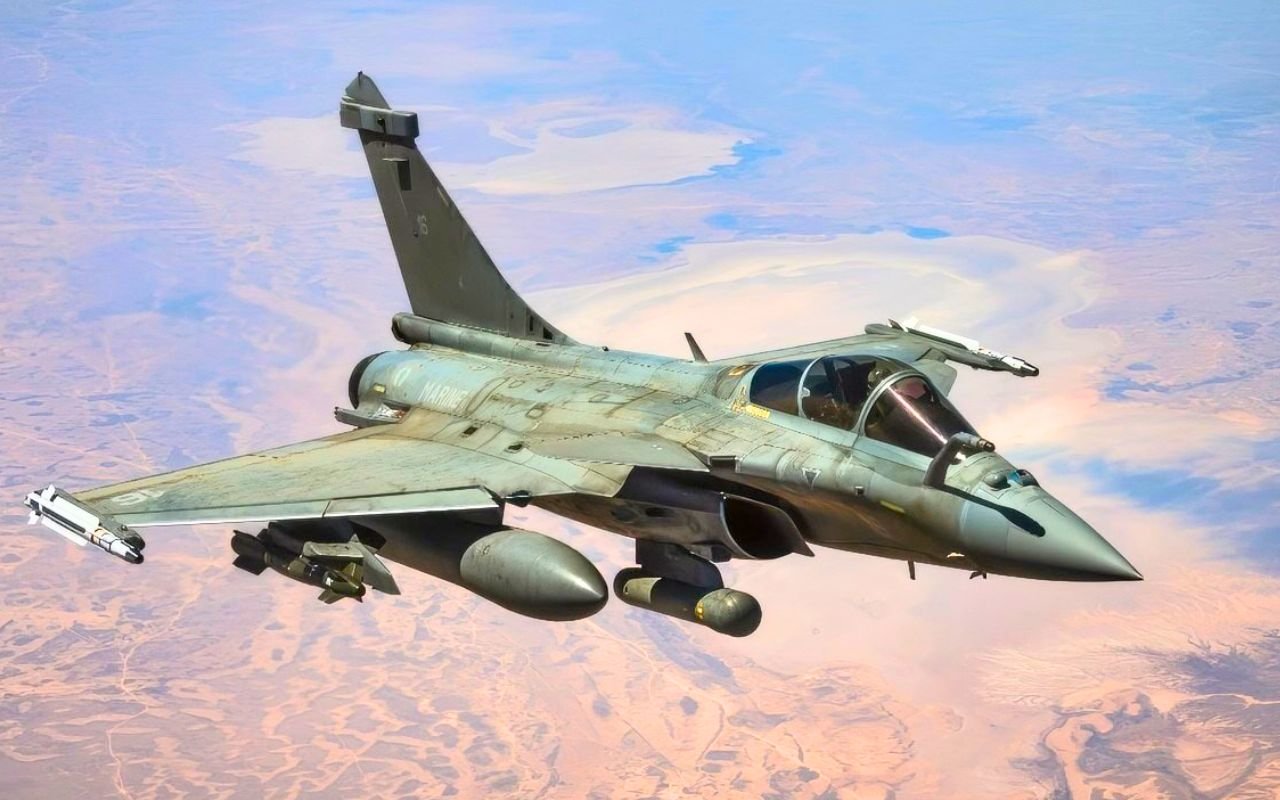
France’s Dassault Rafale is positioning itself as a singular powerhouse amidst the advanced fighter jets like the J-20, F-35, and the emerging F-47, marking a distinctive chapter in combat aviation history.
The Dassault Rafale has grown from a strong contender to a leading symbol of French aerospace ingenuity and military sovereignty. With an unmatched mix of agility, cutting-edge technology, and export success, it stands apart from other giants in the sky. While stealth and fifth-generation jets often dominate headlines, the Rafale’s comprehensive upgrade path and multi-role capabilities reveal a fighter jet that has forged a unique role for itself across the 21st century. In today’s highly competitive global arms market and rapidly evolving aerial warfare landscape, the Rafale’s evolution into the “Super Rafale” signals France’s determination to maintain its influence and strategic edge, especially within and beyond Europe.
How Dassault Rafale’s new fiber-optic “nervous system” redefines combat aircraft technology
The heart of the Rafale F5 “Super Rafale” upgrade lies in its revolutionary fiber-optic “nervous system,” a technological leap that equips the aircraft to process massive volumes of data at unprecedented speeds. Unlike traditional copper-based wiring, this new system utilizes fiber optics to handle the immense bandwidth demands generated by the state-of-the-art Thales RBE2-XG radar, incorporating Gallium Nitride (GaN) technology. This breakthrough allows the Rafale to detect and engage stealth threats such as China’s Chengdu J-20 and Russia’s Sukhoi Su-57, whose low radar cross-section has rendered many contemporary sensors less effective. Beyond radar capabilities, the fiber-optic network enhances data fusion, linking sensors inside the aircraft with external sources like satellites, drones, and ground control stations. This interconnected system elevates situational awareness, allowing pilots to make split-second decisions with a clearer, more comprehensive operational picture. The importance of this cannot be overstated in modern aerial combat, which increasingly relies on rapid information exchange and real-time battlefield updates. Consider the evolution of fighter systems where rapid processing of sensor data combined with real-time communications differentiates winning forces from those blindsided in battle. The Rafale’s upgrade heralds a new era where networked warfare and sensor fusion are critical, positioning the aircraft not just as a standalone fighter but as the brain center coordinating multi-platform operations. Operational testing with the new fiber-optic architecture has demonstrated reduced latency in response times and improved resistance to electromagnetic interference, which is vital when facing advanced electronic warfare systems. This bolstered electronic resilience ensures that the Rafale maintains its operational stride even in contested electromagnetic environments, where electronic jamming attempts to disable communications and radar functionality. In sum, the new fiber-optic “nervous system” represents a technological renaissance for the Rafale, allowing it to process and share data as quickly and reliably as modern fighter jets demand fundamentally transforming its combat effectiveness in 2026 and beyond.
The $1 billion production ramp-up and international export surge in 2026
France’s aerospace giant Dassault Aviation has embarked on one of the most ambitious production increases seen in recent decades, fueled by a soaring international appetite for the Rafale. By 2026, Dassault is set to produce 35 Rafale jets per year, with a production backlog of 175 aircraft destined for export customers worldwide. This massive order book includes key contracts from Indonesia, Serbia, and the United Arab Emirates, with anticipated deliveries extending well into the early 2030s. This escalation not only secures hundreds of millions of euros in revenue for Dassault but also firmly establishes the Rafale’s role as a strategic element in France’s defense export strategy. One of the most unexpected and geopolitically significant customers is Serbia, a longstanding Russian ally. Serbia’s acquisition of 12 Rafale jets introduces a complex dynamic in Eastern Europe, likely rattling Moscow as it signals shifting defense partnerships. Indonesia and the UAE represent lucrative markets driven by ambitions to modernize air capabilities with versatile and proven platforms capable of various mission profiles. Indonesia received its first batch of three jets in January 2026, signaling the rapid pace of deliveries to meet security demands in the increasingly tense Indo-Pacific region. Even Ukraine features prominently on the potential customer roster, with discussions underway to acquire up to 100 Rafales. While financial constraints may initially restrict Kyiv to around 25 units, this acquisition would provide a significant boost to the country’s aerial defense capabilities amid ongoing conflict.
The following table outlines notable Rafale export deals as of 2026:
| Country | Number of Rafales Ordered | Delivery Status (2026) | Geopolitical Note |
|---|---|---|---|
| Indonesia | 42 | Partial delivery started (3 units) | Strengthening Indo-Pacific air power |
| United Arab Emirates | 80 | Order underway | Major Middle East arms deal |
| Serbia | 12 | Order recent | Unexpected buyer; tension with Russia |
| Ukraine | Up to 100 planned | Negotiations ongoing | Augments Ukraine air capabilities |
| India (Navy) | 26 (Rafale M) | In service | Naval air combat strength |
This production surge reflects Dassault’s confidence in the Rafale’s unique market position — blending reliability, adaptability, and evolving technological prowess. It also underscores France’s commitment to maintaining strong domestic aerospace manufacturing, keeping defense sovereignty in its own hands.
Lessons from the 2025 India-Pakistan air battle that shaped the Rafale F5 upgrade
In 2025, a large-scale aerial conflict between India and Pakistan thrust the Rafale into a harsh spotlight, offering critical lessons that have directly influenced the Super Rafale’s design philosophy. This engagement involved over 100 aircraft in a massive dogfight, during which Indian Rafales faced off against Pakistan’s Chinese-supplied Chengdu J-10C fighters armed with PL-15 beyond-visual-range missiles. The Indians suffered losses including confirmed downing of one Rafale, with reports suggesting two additional jets were damaged or destroyed. This stark outcome raised questions about the Rafale’s survivability and missile defense measures in modern high-intensity conflicts dominated by hypersonic and beyond-visual-range weapons. French defense analyses concluded that survivability enhancements were a must for the future fleet. The F5 standard focuses heavily on shielding pilots and aircraft from missile threats through advanced electronic countermeasures, improved sensor fusion, and defensive aids coupled with a next-generation radar capable of detecting stealth and fast-moving targets. One of the cornerstone additions emerging from these lessons is the integration of the ASN4G hypersonic missile, a game-changer capable of outrunning enemy defense systems and neutralizing threats before they can strike. The Super Rafale’s ability to deploy such munitions dramatically shifts the balance in aerial engagements. Furthermore, the F5 embraces manned-unmanned teaming (MUM-T) concepts, allowing Rafales to coordinate with Loyal Wingman drones. This tactic enhances combat effectiveness by extending sensor reach, overwhelming adversaries with multiple targets, and improving overall situational awareness. These combat-tested modifications promise higher survivability and lethality, giving the Super Rafale an edge against peer competitors in volatile theaters worldwide. The Super Rafale upgrade reflects a strategic response to evolving threats on the battlefield, translating hard-earned combat insights into cutting-edge technological solutions designed to keep French and allied forces dominant in the skies for decades to come.
Why manned-unmanned teaming (MUM-T) and new missile technology make the Rafale the future of combat aviation
The Rafale F5 represents not just incremental improvement but a leap forward by integrating manned-unmanned teaming (MUM-T) capabilities and next-generation weapons like the ASN4G hypersonic missile. This fusion plays a critical role in reshaping airborne engagement strategies in high-stakes combat environments. MUM-T allows a single pilot to control multiple unmanned systems simultaneously, turning one manned aircraft into a mini-fleet on the battlefield. The Loyal Wingman drones slated for integration operate autonomously but can be directed by the Rafale pilot to perform reconnaissance, electronic warfare, or strike missions. This multiplies situational awareness and firepower without exponentially increasing pilot workload. Meanwhile, the ASN4G missile brings hypersonic speed and unprecedented range, capable of striking high-value or heavily defended targets before opponents can react. Its deployment from the Rafale marks a strategic shift from conventional air-to-air and air-to-ground weapons, offering a credible deterrent and offensive option against increasingly sophisticated adversaries. Together, MUM-T and hypersonic missile integration position the Super Rafale as a force multiplier that can operate effectively in contested airspaces, neutralize enemy stealth fighters, and challenge air defense networks in ways traditional fourth-generation fighters simply cannot. This capability not only enhances France’s military stature but also offers export clients a highly advanced platform tailored for modern warfare needs, reinforcing the Rafale’s competitive edge worldwide.
Inside the cockpit: how helmet-mounted display and TALIOS targeting pods boost pilot performance
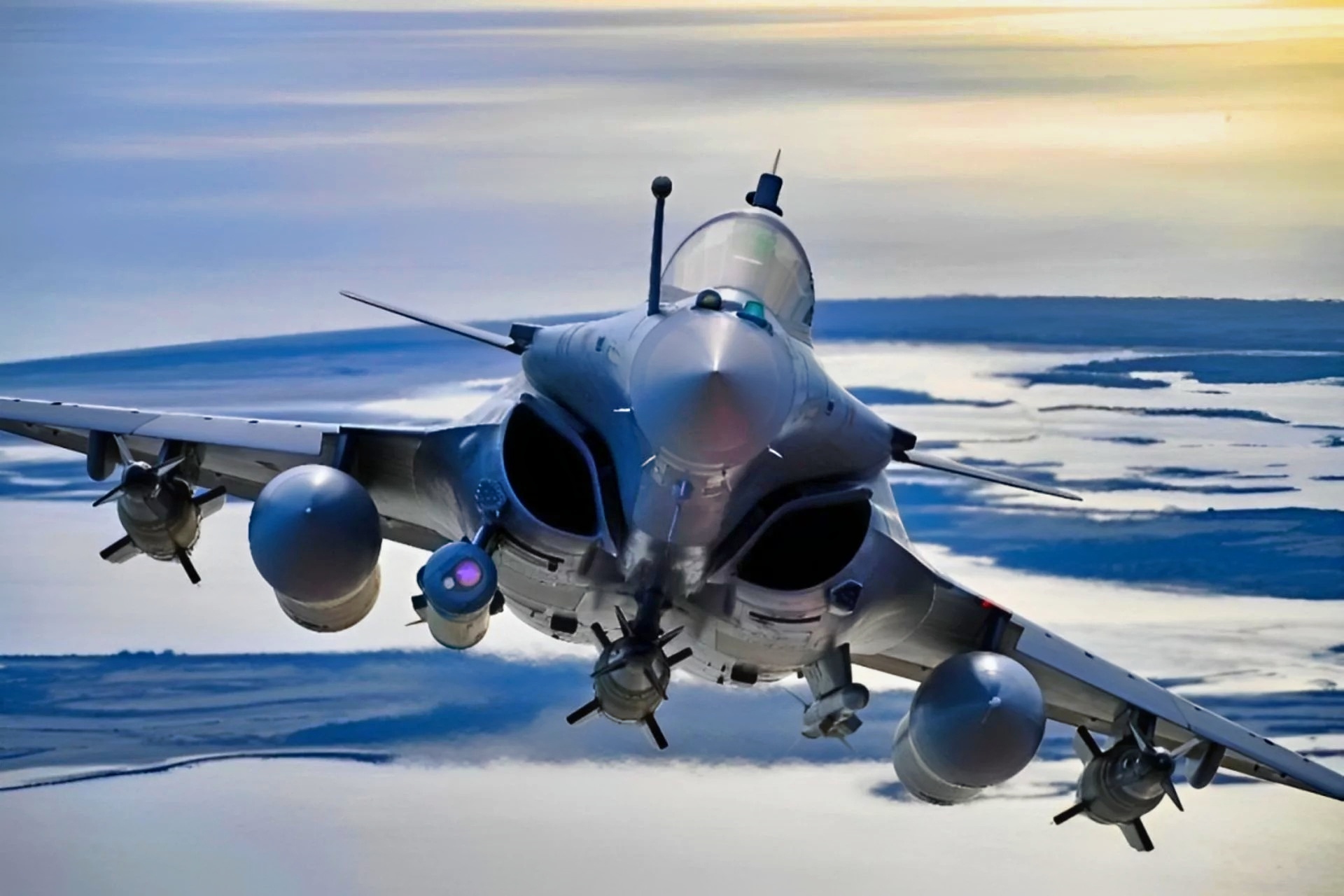
The Rafale’s cockpit has seen steady innovation aimed at maximizing pilot situational awareness and mission effectiveness. Critical to this evolution is the integration of the Scorpion helmet-mounted display and the TALIOS long-range targeting pod, two systems that transform how pilots interact with their environment and engage targets. The Scorpion helmet offers real-time data directly in the pilot’s line of sight, displaying targeting reticles, threat alerts, and navigational information without the need to look away from the action. This heads-up approach cuts down reaction times in complex dogfights and strike missions, allowing pilots to maneuver aggressively while keeping track of multiple threats and friendly assets. Complementing the helmet is the TALIOS pod, renowned for its high-performance infrared and electro-optical sensors. TALIOS excels in target identification at extended ranges, providing laser designation and tracking capabilities that allow precision-guided munitions to hit their marks with surgical accuracy. This pod also enhances night and all-weather mission readiness, expanding operational windows without compromising safety or effectiveness. In addition to raw hardware improvements, software-defined radios like the Thales CONTACT system within the Rafale’s F4.3 variant greatly improve interoperability with allied forces. This facilitates seamless communication between ground controllers, other aircraft, and command centers, ensuring the pilot remains connected even in complex joint operations.
The synergy of these cockpit technologies helps reduce pilot workload, boosts survivability, and heightens lethality, making the Rafale a formidable asset in high-tempo combat scenarios.
- Real-time situational awareness through helmet display
- Long-range target identification with TALIOS pod
- Enhanced communication using software-defined radios
- Effective night and all-weather operations enabled
What makes the Super Rafale stand out from other modern fighters?
The Super Rafale is unique because of its advanced fiber-optic data systems, integration with Loyal Wingman drones, hypersonic missile capability, and a highly evolved sensor suite designed for maximum survivability and effectiveness in diverse combat scenarios.
How does the Rafale F5 handle stealth fighters like the J-20?
Thanks to the RBE2-XG GaN radar and improved sensor fusion, the Rafale F5 can detect and track stealth fighters like the Chengdu J-20 more effectively than earlier models, giving it a tactical advantage in contested airspace.
Why is manned-unmanned teaming important for future air combat?
Manned-unmanned teaming increases battlefield awareness and firepower by allowing a pilot to control drones that can carry out reconnaissance, jamming, or strike missions, effectively multiplying combat capabilities without overburdening the pilot.
What export markets are most significant for the Rafale in 2026?
Key markets include the United Arab Emirates, Indonesia, Serbia, and potentially Ukraine—all seeking advanced multi-role fighters to upgrade their air forces in challenging geopolitical environments.
How has the 2025 India-Pakistan conflict influenced Rafale upgrades?
The intense air battle revealed survivability weaknesses against beyond-visual-range missiles, prompting Dassault to enhance electronic countermeasures, radar capabilities, and add hypersonic weapons for future versions like the Super Rafale.
