
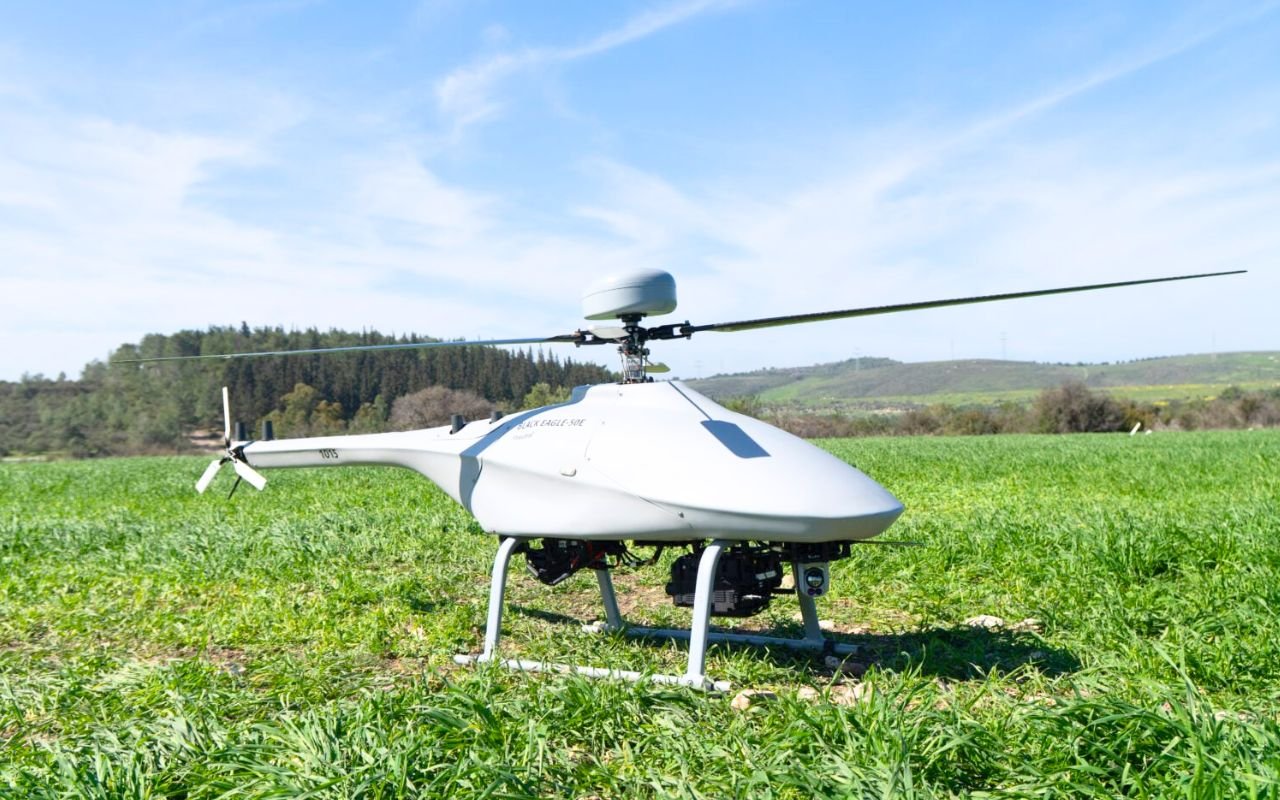
An Israeli drone manufacturer is making headlines by securing a crucial agreement to showcase the Black Eagle 50E drone in the United States, highlighting a new era in rotary unmanned aerial vehicle technology.
The strategic move by Israeli company Steadicopter to demonstrate its Black Eagle 50E drone capabilities on U.S. soil marks a significant step in expanding global awareness and adoption of advanced rotary unmanned aerial systems (RUAS). This all-electric UAV is designed to cater to a broad scope of missions, from defense to homeland security and commercial applications.
How the black eagle 50e represents a breakthrough in rotary unmanned aerial vehicle technology
The Black Eagle 50E is no ordinary drone. It blends the versatility of rotary-wing flight with fully electric propulsion, setting new standards in silent operation, range, and payload adaptation. Unlike fixed-wing drones, rotary UAVs can hover, maneuver in tight spaces, and take off and land vertically, making them invaluable for missions that demand flexibility. Steadicopter’s emphasis on an all-electric configuration also addresses growing concerns about environmental impact and operational costs. The silent motor significantly reduces detection risks during covert operations while cutting down fuel expenses. This is especially critical in defense and homeland security contexts where stealth and endurance are vital. Equipped with modular features, the Black Eagle 50E supports integration with a wide range of sensors and payloads. For instance, surveillance cameras, thermal imaging devices, communication relay systems, and even electronic warfare modules can be swiftly installed or swapped out depending on mission requirements. This adaptability is a game-changer, particularly for military and law enforcement agencies that require multi-faceted UAVs capable of handling diverse roles. Moreover, the drone’s design focuses on maximizing endurance and operational range. While specific range figures remain classified, sources suggest that its electric powertrain offers an impressive flight duration outmatching many hybrid or combustion engines. This endurance enables longer surveillance or patrol missions without frequent returns to base, resulting in more efficient coverage and resource utilization. For example, during trials, the Black Eagle 50E demonstrated flawless ability to hover for extended periods while maintaining stable flight in challenging wind conditions, showcasing its robustness. Its vertical takeoff capability also enables deployment in constrained urban environments, a critical asset for border control and urban reconnaissance tasks. This UAV’s combination of rotorcraft flexibility, electric propulsion benefits, and payload versatility solidifies the Black Eagle 50E as a milestone in RUAS development, making Steadicopter a noteworthy player on the global drone stage.
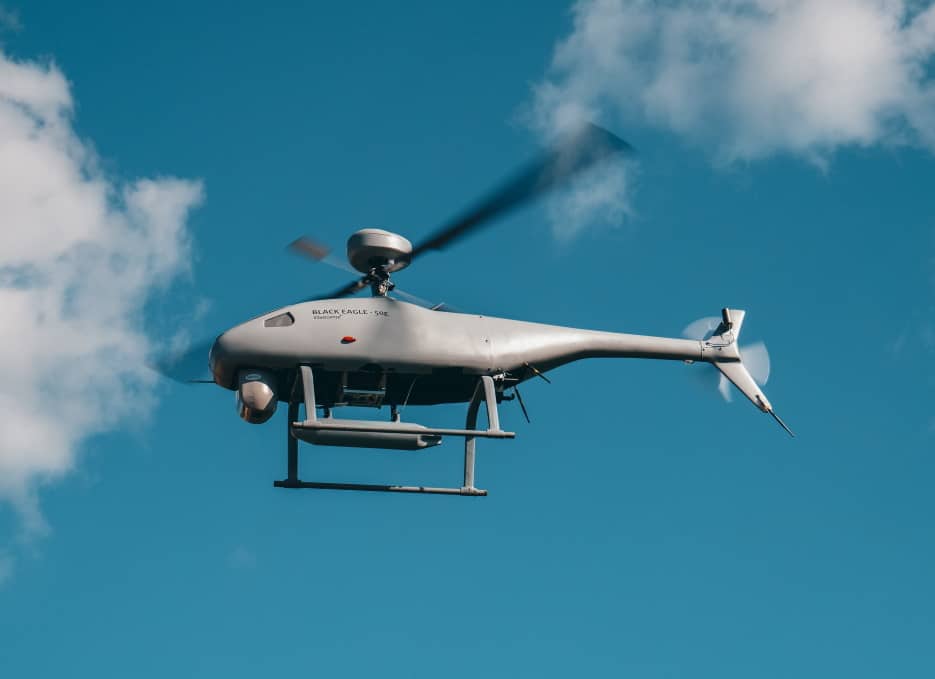
The strategic partnership between Steadicopter and US firm flyAlchemy to boost operational testing
Steadicopter’s recent deal with flyAlchemy, a U.S.-based advanced UAV solutions company, marks a concerted effort to bring the Black Eagle 50E into American defense and commercial markets. This partnership centers on operational deployment, flight demonstrations, and customer engagement during evaluation programs, all critical steps in proving the drone’s efficacy outside its home market. FlyAlchemy’s deep expertise in UAV operational logistics combined with its advanced payload adaptation capabilities complements Steadicopter’s technological innovation. Through extensive collaboration, the two companies aim to ensure that the Black Eagle 50E adapts seamlessly to the specific needs and regulatory environment of the U.S. For instance, flyAlchemy is assisting with the fine-tuning of the drone’s avionic systems to meet Federal Aviation Administration (FAA) regulations and optimize performance in American airspace. They are also managing risk assessments and operational test flights in various U.S. environments, ranging from urban centers to remote areas. This alliance not only enables broader flight demonstrations but also helps cultivate relationships with potential end-users such as security agencies, military branches, and commercial operators. By tailoring mission development activities to the diverse operational requirements in the U.S., the partnership increases the likelihood of successful adoption and deployment. One compelling aspect is the mutual exchange of data and feedback during these trials, allowing for iterative improvements. FlyAlchemy’s firsthand field insights are invaluable for Steadicopter engineers to refine software, optimize battery management, and enhance payload integration interfaces. In essence, this partnership represents a crucial bridge connecting cutting-edge Israeli drone tech with the American market’s operational realities, setting the stage for long-term strategic presence and growth.
Revolutionizing autonomous logistics with the DropAir precision airdrop system integration
The Black Eagle 50E recently received a remarkable upgrade: integration with ParaZero’s DropAir system, a precision payload delivery module that allows the drone to perform autonomous, accurate mid-air drops. This advancement elevates the drone from traditional reconnaissance or surveillance roles to a potent airborne logistics platform. The DropAir system utilizes advanced drop algorithms and a dual-mode parachute deployment mechanism to ensure minimal drift during payload release, even in adverse weather or GPS-denied environments. This reliability is critical when mission-critical supplies like medical kits, ammunition, or spare parts need to reach precise locations without endangering ground personnel. In military contexts, precision supply drops reduce the need for risky manned delivery missions into contested or hazardous areas. For instance, frontline units cut off from resupply can receive essential equipment mid-battle, maintaining operational momentum and saving lives. Commercially, this capability opens new avenues in disaster relief and remote area logistics where timely delivery is paramount. During natural disasters, Black Eagle 50E drones equipped with DropAir can deliver supplies to trapped civilians or hard-to-reach zones without relying on ground transportation. The autonomy granted by DropAir also minimizes operator workload. The system’s precision allows for fully automated payload deployment sequences, freeing pilots to concentrate on navigation and surveillance tasks. This technological leap represents a significant step toward future unmanned aerial logistics fleets that operate with minimal human intervention. An example of its potential was recently demonstrated in a controlled test where the Black Eagle 50E successfully delivered emergency medical supplies to a remote mountainous region, navigating challenging wind conditions while achieving pinpoint drop accuracy. Such innovations underscore a future where rotary UAVs transcend traditional roles, becoming indispensable assets for rapid, flexible, and autonomous logistics operations across various sectors.
Operational versatility of the Black Eagle 50E in defense, homeland security, and commercial sectors
One of the defining characteristics of the Black Eagle 50E is its *multi-mission utility* across a broad spectrum of applications. Its modular design and advanced systems enable seamless adaptation to various operational roles, which include but are not limited to defense reconnaissance, border patrol, infrastructure monitoring, and commercial delivery services. In defense scenarios, the drone plays a critical role in intelligence gathering and battlefield reconnaissance. Its quiet electric propulsion makes it less detectable, allowing operations close to sensitive targets. The ability to switch payloads rapidly from high-resolution cameras to electronic warfare packages—equips military personnel with real-time battlefield intelligence crucial for informed decision-making. In homeland security, the drone aids border surveillance, critical infrastructure protection, and anti-terrorism efforts. Its vertical takeoff and landing capabilities mean it can operate from constrained locations, such as remote border outposts or urban rooftops. The platform’s endurance allows long patrol missions, reducing personnel deployment needs and increasing situational awareness continuously. Commercially, the Black Eagle 50E offers reliable options for companies seeking to perform aerial inspections, deliver urgent parcels, or monitor environmental conditions. For instance, energy companies use it for pipeline inspections in remote areas, while logistics firms employ its precision airdrop ability for last-mile deliveries in inaccessible locations. Its ability to perform in GPS-denied or contested environments significantly expands operational possibilities. The Black Eagle 50E’s onboard navigation and redundancy systems ensure mission continuity under challenging conditions, setting it apart from many competitors. The combination of stealth, endurance, and payload versatility ensures that operators across sectors can rely on a single platform tailored precisely for their needs, reducing costs and complexity associated with maintaining multiple specialized drone fleets.
Key technical specifications and operational milestones of Black Eagle 50E in 2026
The technical prowess of the Black Eagle 50E stems from Steadicopter’s commitment to in-house design and engineering excellence. Key features notably contribute to its growing reputation as an advanced RUAS platform for 2026 and beyond.
| Specification | Detail |
|---|---|
| Type | All-electric rotary unmanned aerial vehicle |
| Maximum takeoff weight | Approximately 50 kg |
| Payload capacity | Up to 15 kg modular payloads |
| Endurance | Up to 4 hours flight time |
| Operational altitude | Up to 3,000 meters |
| Range | 50+ km operational radius |
| Navigation system | Advanced GPS and inertial navigation with GPS-denied environment capability |
| Payload integration | Modular plug-and-play compatible sensor suites including electro-optical, infrared, and relay systems |
| Deployment time | Under 5 minutes from standby to mission start |
Among operational highlights, the Black Eagle 50E has successfully completed numerous flight demonstration campaigns across diverse weather and geographical conditions, validating its reliability and versatility. Its performance in the recent U.S. demonstration campaign conducted jointly with flyAlchemy showcased its ability to operate safely within regulated airspaces and adapt quickly to mission demands. The integration of the DropAir system stands out as a strategic milestone, making it one of the few rotary UAVs with validated autonomous aerial delivery capabilities. This places Steadicopter ahead in a competitive market crowded with fixed-wing drones lacking such flexible payload delivery options. With ongoing software updates, battery improvements, and sensor suite expansions planned for future releases, the Black Eagle 50E is poised to maintain its technological edge throughout the decade.
Advantages and challenges associated with the operation of the Black Eagle 50E in the U.S. market
Introducing a sophisticated drone like the Black Eagle 50E into the highly regulated U.S. aerospace and defense ecosystem presents both opportunities and hurdles. Understanding these factors is essential for stakeholders considering its adoption.
Advantages include:
- Cutting-edge technology: The electric propulsion and modular payload design offer unique operational benefits over many legacy systems.
- Operational flexibility: Vertical takeoff and landing, silent flight, and long endurance enable diverse mission profiles.
- Precision logistics: The DropAir system adds autonomous supply delivery, rare in rotary UAVs.
- Partnership synergy: Collaboration with an established U.S. firm aids market integration and compliance with FAA norms.
- Environmental friendliness: All-electric propulsion aligns with growing demands for sustainable defense technologies.
However, challenges are also significant:
- Regulatory compliance: Navigating FAA regulations for fully autonomous flight and airspace integration remains complex.
- Market competition: Numerous UAV manufacturers target the U.S. market, requiring continuous innovation and strong marketing.
- Infrastructure readiness: Ensuring necessary ground support equipment and trained operators are available can delay deployment.
- Technological adaptation: Further tuning of software and payloads may be needed to accommodate specific user requirements.
Addressing these challenges requires coordinated efforts involving regulatory bodies, industry partners, and end-users. Steadicopter’s collaboration with flyAlchemy exemplifies how strategic partnerships can mitigate entry barriers and foster acceptance. By focusing on rigorous testing, compliance, and user feedback integration, the Black Eagle 50E is carving a credible path into the American drone ecosystem.
What missions is the Black Eagle 50E best suited for?
The Black Eagle 50E excels in multi-purpose roles including surveillance, reconnaissance, supply drops, and infrastructure monitoring due to its modular payload and vertical flight capabilities.
How does the DropAir system improve drone logistics?
DropAir allows precise, autonomous mid-air payload delivery with minimal drift, enabling safe, efficient resupply operations even in challenging conditions.
What makes the Black Eagle 50E environmentally friendly?
Its all-electric propulsion produces no emissions during flight, reducing environmental impact and operational noise compared to combustion-powered drones.
How does the partnership with flyAlchemy benefit the drone’s deployment?
FlyAlchemy provides operational expertise, regulatory guidance, and field testing support in the U.S. market, smoothing integration and user acceptance.
What are the main challenges for the Black Eagle 50E in the U.S.?
Navigating regulatory compliance, market competition, infrastructure development, and technical adaptation pose primary challenges for its U.S. adoption.
