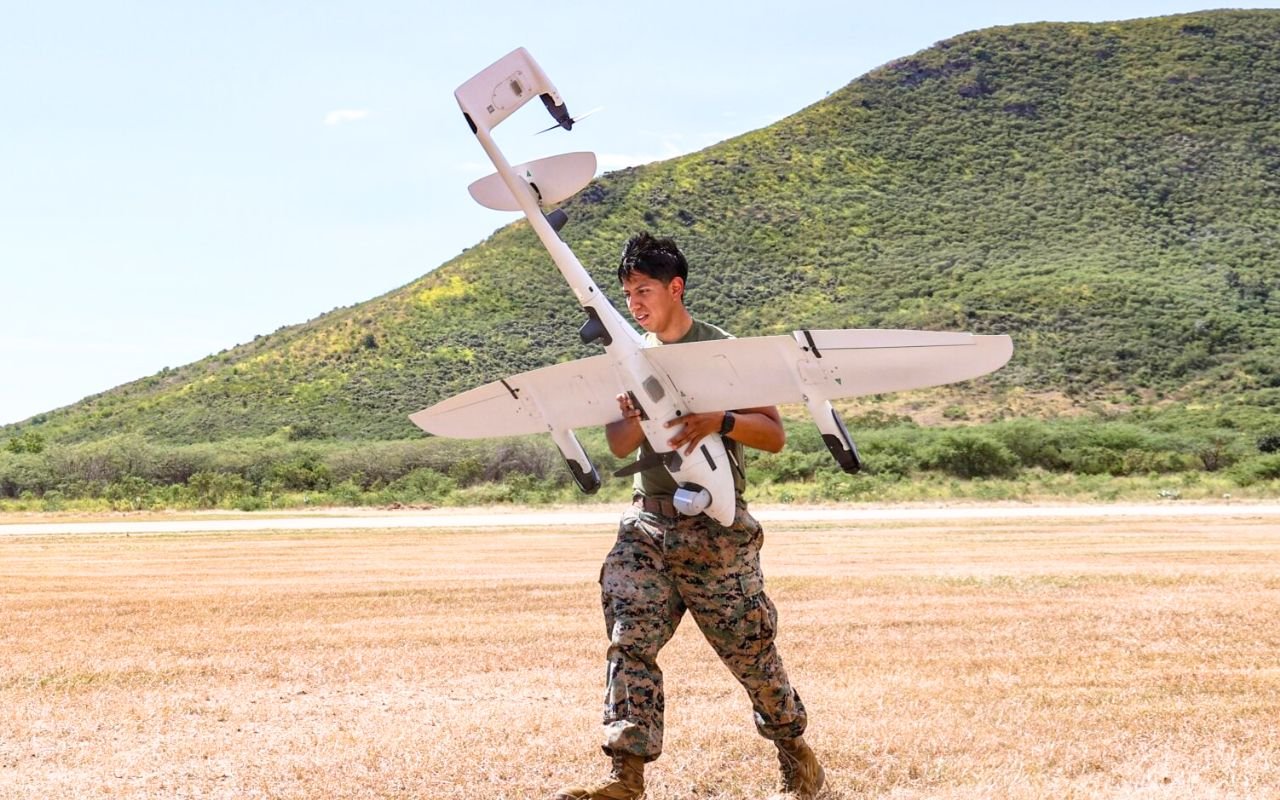
The U.S. Marines have integrated cutting-edge Vector drones into their strategic operations in Puerto Rico, marking a significant advancement in counter-trafficking and homeland security efforts.
In recent years, the U.S. military has increasingly turned to drones as a critical asset in modern warfare and security operations. The deployment of Quantum Systems’ Vector drone by the Marines in Puerto Rico exemplifies this trend, showcasing how smaller, more agile unmanned aerial systems (UAS) are reshaping surveillance and reconnaissance missions. Operating from Camp Santiago, these high-tech drones have become instrumental in disrupting illicit trafficking routes and enhancing situational awareness, directly supporting U.S. Southern Command’s objectives in the Caribbean region.
Innovative capabilities of the Vector eVTOL drone reshaping military reconnaissance
The Vector drone, developed by German firm Quantum Systems, stands out with its electric vertical takeoff and landing (eVTOL) capabilities. Unlike traditional fixed-wing or rotary drones, this hybrid design allows the Vector to hover like a helicopter while enjoying the range and speed of a fixed-wing platform. This dual functionality dramatically increases operational flexibility for the Marines operating in complex environments such as Puerto Rico’s rugged terrain and coastal zones. One of the critical features of the Vector drone is its advanced sensor suite, which includes high-resolution optical cameras and sophisticated AI-driven image processing tools. These allow the drone to deliver real-time intelligence with remarkable detail, enabling rapid decision-making. Military intelligence analysts can monitor illicit trafficking routes, suspicious activities, and shifting patterns of movement with precision. Moreover, the Vector’s endurance, over two hours of flight time per sortie, provides persistent surveillance capabilities that traditional aerial patrols cannot match. For the Marines leveraging Battalion Landing Team 3/6 from the 22nd Marine Expeditionary Unit (Special Operations Capable), these drones extend their operational reach significantly without exposing personnel to unnecessary risk. By integrating such advanced technology, the Marines are not only modernizing their reconnaissance capabilities but also altering the playing field for asymmetric warfare and counter-narcotics missions. The Vector drone’s combination of agility, range, and sensor sophistication makes it an ideal tool for operating in Puerto Rico’s varied environments, from dense forests to urban settings.
Voir cette publication sur Instagram
Strategic role of drone deployment in counter-trafficking operations
Illicit trafficking remains a pervasive challenge throughout the Caribbean, particularly in regions surrounding Puerto Rico. The strategic deployment of Vector drones marks a pivotal advancement in combating narcotics and contraband smuggling by allowing the U.S. Marines to monitor remote trafficking corridors more efficiently than ever before. With real-time data streaming from the Vector to command centers, Marines can quickly identify, track, and intercept suspicious vessels and vehicles involved in smuggling operations. This approach reduces the time needed to verify intelligence reports, making interdiction missions more proactive rather than reactive. The Battalion Landing Team 3/6’s operations incorporate the Vector alongside other reconnaissance assets, enabling a multi-layered surveillance system. This layered approach improves homeland security by closing gaps in maritime and overland monitoring, which traffickers historically exploited to avoid detection. The drone’s discreet footprint also ensures operations remain covert, a vital factor in gathering actionable intelligence. Moreover, the integration of artificial intelligence and automated pattern recognition in the Vector’s software facilitates the detection of anomalies that may signify trafficking activities. These capabilities empower Marines to predict potential trafficking attempts, increasing the efficiency and success rate of interdiction actions. In practice, successful missions supported by the Vector drone have resulted in seizures of narcotics, apprehension of traffickers, and improved collaboration with U.S. Southern Command’s broader efforts in the region. These successes underscore the growing reliance on drone technology as an indispensable tool in modern military operations aimed at securing U.S. borders and interests.
Camp Santiago as a pivotal hub for advanced drone training and operations
Camp Santiago in Puerto Rico has evolved into a crucial training ground and launch site for the U.S. Marines’ drone operations. Positioned strategically near the Caribbean’s vital maritime routes, this base allows Marines to conduct rigorous exercises designed to test and refine rapid response and reconnaissance capabilities with the Vector drone. The training program at Camp Santiago involves coordination among several Marine units, including the 2nd Marine Division and the Marine Corps Attack Drone Team. They focus on mastering drone piloting, real-time data analysis, and seamless integration of drone intelligence into ground and naval operations. This immersive training is instrumental in certifying Marines to operate the Vector and other unmanned aerial systems effectively. Realistic simulation scenarios at Camp Santiago often replicate counter-narcotics missions, humanitarian assistance, and even anti-terrorism contingencies, ensuring that Marines are prepared for the full spectrum of potential challenges in the Caribbean theater. This comprehensive approach to training enhances interagency cooperation, as the Marines coordinate closely with U.S. Southern Command, Coast Guard, and local law enforcement officials. Furthermore, Camp Santiago’s location uniquely positions it for rapid deployment responses not only throughout Puerto Rico but across the wider Caribbean and Atlantic regions. This agility is paramount in countering illicit trafficking networks that operate fluidly across multiple jurisdictions, requiring prompt, coordinated tactics and technological support. Investments in infrastructure and technology at Camp Santiago have also set the stage for future advancements, including the anticipated incorporation of next-generation attack drones and expanded AI-driven mission planning tools. This ongoing modernization highlights the evolving nature of warfare and security operations centered on unmanned systems.
The impact of small unmanned aerial systems on modern military strategy
The deployment of small unmanned aerial systems (sUAS) like the Vector drone represents a major paradigm shift in military strategy. These platforms offer distinct advantages in agility, cost-efficiency, and risk mitigation compared to traditional manned aircraft or larger drones. One key impact is the democratization of aerial intelligence. Smaller units such as the 22nd Marine Expeditionary Unit (Special Operations Capable) can independently deploy these drones without needing extensive logistical support. This rapid deployability means forces can adapt to emerging threats on the fly, responding with precision and speed previously unattainable. Another important advantage is the ability to operate covertly in contested environments. The Vector’s electric propulsion system makes it exceptionally quiet, enabling surveillance missions in sensitive areas without alerting adversaries. This stealth aspect is particularly beneficial in counter-trafficking and reconnaissance efforts where surprise is vital. Cost considerations also play a significant role. With each Vector drone costing significantly less than conventional military aerial assets, the military can procure larger fleets, ensuring continuous coverage and redundancy in missions. Simultaneously, risks to personnel are reduced as unmanned systems handle the most dangerous aspects of reconnaissance and interdiction.
Key advantages of using Vector and other small UAS in military operations
- High mobility and ease of deployment: Compact design enables quick launch and recovery in diverse environments.
- Extended flight endurance: Over two hours of continuous operation allows sustained missions.
- Superior real-time data delivery: Onboard AI processes imagery for instant intelligence updates.
- Low acoustic and visual signature: Silent operations minimize detection risk.
- Cost-effectiveness: Enables purchase and deployment at scale.
The growing presence of sUAS like the Vector is compelling military strategists to rethink traditional doctrines, emphasizing distributed operations and networked reconnaissance. Units gain unprecedented situational awareness that fundamentally changes how battlefield intelligence is gathered and exploited.
Technical specifications and operational performance summary of Vector drone in Puerto Rico
A thorough understanding of the Vector drone’s technical capabilities provides insight into why it has become a favorite tool for Marines operating in Puerto Rico.
| Feature | Specification | Operational Benefit |
|---|---|---|
| Type | Electric vertical takeoff and landing (eVTOL) fixed-wing | Versatile takeoff/landing in confined areas, extended range |
| Weight | Approx. 5.5 kg | Highly portable, easy to deploy in field conditions |
| Flight endurance | Up to 2.5 hours | Sustained surveillance without frequent returns |
| Range | Up to 60 km | Long-range reconnaissance and operational reach |
| Sensor suite | High-resolution EO/IR cameras with AI-driven image processing | Real-time intelligence and anomaly detection |
| Noise level | Low acoustic signature due to electric propulsion | Stealthy operation in sensitive environments |
These specifications highlight the blend of endurance, precision, and operational adaptability that make the Vector drone an indispensable asset for U.S. Marines engaged in Caribbean operations. Its performance in Puerto Rico demonstrates how advancements in drone technology translate directly into strategic and tactical advantages on the ground.
What missions is the Vector drone primarily used for in Puerto Rico?
The Vector drone is mainly used for reconnaissance, surveillance, and supporting counter-trafficking operations conducted by the U.S. Marines and U.S. Southern Command.
How does the Vector drone enhance maritime surveillance capabilities?
Its long flight endurance and high-resolution sensors enable persistent monitoring of coastal areas, identifying suspicious vessels and activity to aid interdiction efforts.
What benefits do electric vertical takeoff and landing drones bring to military operations?
eVTOL drones like the Vector combine the ability to operate in confined spaces with efficient, quiet flight, offering flexibility and stealth not possible with traditional aircraft.
How does AI contribute to the Vector drone’s effectiveness?
AI-enabled image processing allows real-time detection of anomalies and suspicious patterns, increasing the speed and accuracy of intelligence gathering.
What makes Camp Santiago an ideal location for drone operations?
Camp Santiago’s strategic location near critical trafficking routes and access to maritime and land areas creates an optimal environment for drone training and rapid deployment.
