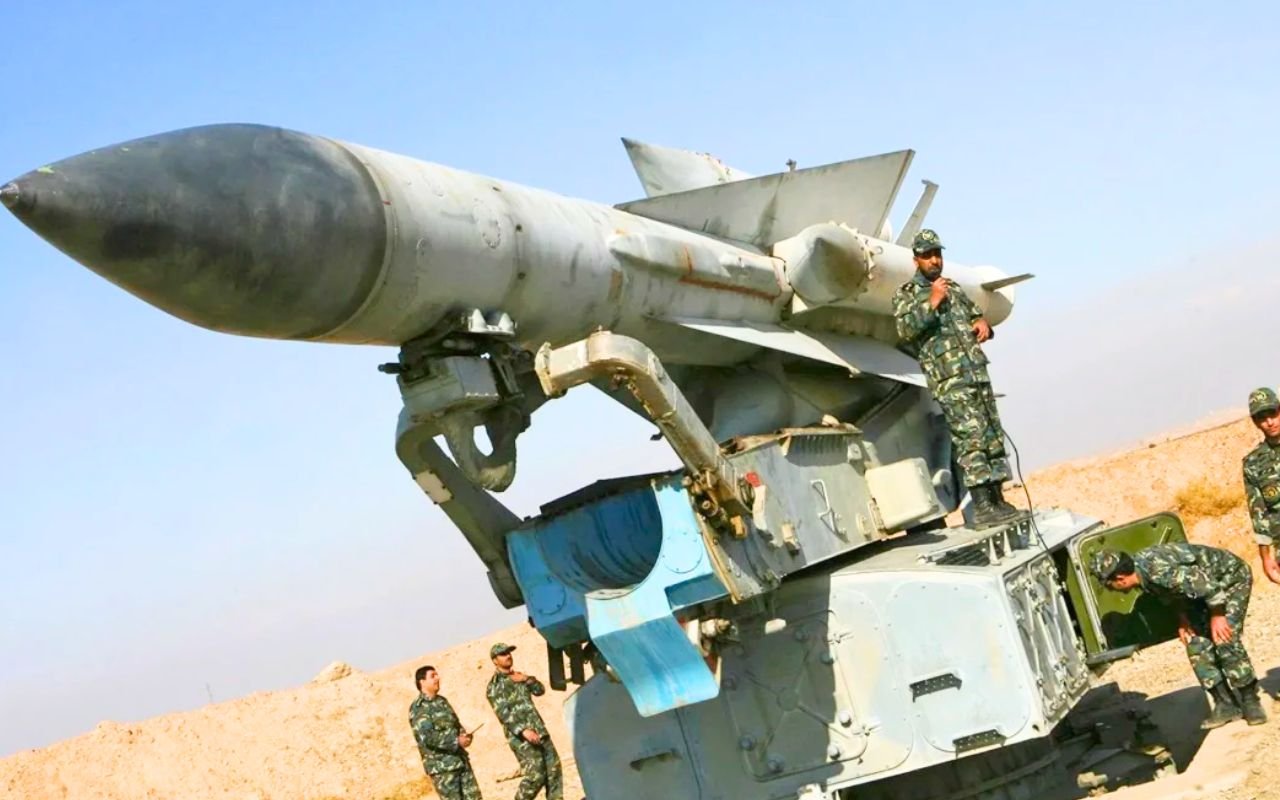
The recent strike by U.S. forces on an SA-5 missile launcher near a sensitive Iranian nuclear site has stirred intense international debate and geopolitical tension.
Far from being just another military maneuver, this targeted attack encapsulates the broader struggle over nuclear proliferation, regional dominance, and the evolving nature of modern warfare. The precision strike, reportedly aimed at degrading Iran’s air defense capabilities, has raised questions about the effectiveness of international sanctions, the strategic calculations of Middle Eastern powers, and the protective measures surrounding nuclear facilities. As nations worldwide watch these events unfold, understanding the intricacies of the SA-5 system, the specifics of the strike, and its geopolitical ramifications becomes essential.
Understanding the SA-5 Surface-to-Air Missile system and its strategic importance near Iranian nuclear sites
The SA-5, or S-200 series, represents a class of long-range, high-altitude surface-to-air missile systems originally developed by the Soviet Union in the 1960s. Designed to target strategic bombers and aircraft at distances exceeding 300 km, the system remains a critical asset for countries like Iran to shield high-value installations. Iran’s deployment of the SA-5 near its nuclear facilities underscores the weapon’s strategic importance. The missile launcher provides layered defense against potential air strikes, enhancing the security envelope around facilities that are vital for uranium enrichment and nuclear research. One of the key features of the SA-5 system is its radar tracking and missile guidance capabilities. It utilizes multiple radars capable of long-range detection and tracking of hostile aircraft, thus offering early warning and engagement capabilities. This is especially crucial near sensitive nuclear sites, which are likely targets in any conflict or pre-emptive strike scenario. However, despite its advanced technology for its time, the SA-5 faces significant challenges when confronted with modern stealth aircraft and precision-guided munitions deployed by U.S. forces. The strike near Iran’s nuclear facility reportedly exploited these technology gaps, delivering a blow to the missile launcher while minimizing collateral damage. Assessing this system’s continuing role involves considering how age and regional upgrades interact with evolving threats. While Iran has made efforts to maintain and upgrade the SA-5’s radar and communications systems, it remains vulnerable to sophisticated electronic warfare and stealth technology. This vulnerability may partly explain why the U.S. chose to target this launcher specifically, aiming to weaken air defenses before potential larger operations. Furthermore, the placement of such missile systems close to nuclear sites reflects Iran’s defensive doctrine: to create formidable air defense layers that deter or delay hostile incursions, buying critical time for their operational nuclear programs to continue unimpeded. This strategy signals how intertwined defense technologies and nuclear ambitions have become, complicating diplomatic efforts but offering revealing insights into Iran’s strategic priorities.

The tactical details and execution of the U.S. strike targeting Iranian air defense near nuclear infrastructure
Understanding the operation against the SA-5 launcher requires a closer look at the tactical elements behind the strike. U.S. forces, likely deploying a blend of intelligence, surveillance, reconnaissance (ISR) assets, and precision-guided munitions, carefully coordinated the timing and method of attack to neutralize the launcher without escalating into a broader conflict. Modern U.S. military doctrine emphasizes precision and minimizing collateral damage, and this strike appears aligned with that priority. The use of long-range, stealth-capable aircraft and possibly cruise missiles enabled forces to remain out of range of Iranian retaliatory systems while achieving their objective. One notable aspect is the intelligence gathering prior to the strike. Satellite imagery, signal intercepts, and drone surveillance likely played crucial roles in confirming the launcher’s operational status and assessing vulnerabilities. Execution details, although not officially disclosed, suggest a multi-layered approach involving electronic warfare to degrade communications and radar capabilities concurrently with missile strikes. The timing near a nuclear facility adds complexity. Military planners must have evaluated the risk of radioactive contamination, potential civilian collateral damage, and international legal ramifications before proceeding. Moreover, this strike highlights the evolving use of unmanned aerial vehicles (UAVs) in the operational theater. Drones are increasingly integral to both ISR and strike missions in contested environments, providing flexibility, persistence, and reduced risk to manned assets. It’s hypothesized that the strike utilized a combination of assets to achieve surprise and overwhelming force in a short timeframe, effectively degrading Iranian air defenses while sending a strategic message about U.S. resolve in the region. Such operations demonstrate the complexity of modern warfare, combining intelligence, technology, and precise execution to shape the battlefield with minimal escalation risk.
Geopolitical implications of targeting Iranian air defenses near nuclear facilities
The strike on the SA-5 launcher bears significant geopolitical weight. It is not merely a tactical military action but one embedded in broader issues surrounding nuclear non-proliferation, U.S.-Iran relations, and Middle Eastern stability. Iran’s nuclear ambitions have long been a focal point for regional and global security concerns. This attack clearly signals that the U.S. and its allies will not tolerate unchecked development or defensive posturing that could embolden further nuclear advancements. The targeting of air defenses near nuclear sites also complicates Tehran’s strategy, reducing its ability to shield crucial facilities from follow-on strikes. This action raises questions about escalation — could it provoke retaliatory missile launches or asymmetric warfare tactics? Allies in the Gulf region watch closely, balancing support for measures limiting Iran’s nuclear capability with fears of destabilizing conflicts spilling over borders. This dynamic triggers a delicate diplomatic dance where each actor reassesses risks and opportunities. International actors like the European Union and United Nations are pressured to respond, potentially impacting sanctions frameworks or diplomatic negotiations. The incident likely adds urgency to ongoing talks, pushing policymakers to consider renewed or redefined accords. Moreover, such military actions influence Iran’s internal politics by bolstering hardliner narratives that portray the regime as under siege, potentially impacting domestic policy and reform movements. Therefore, this strike resonates far beyond the immediate military objective, echoing through diplomatic channels, strategic alliances, and public perception in multiple countries.
Technological advancements in U.S. precision strike capabilities revealed by recent actions near Iran
The precision and effectiveness of the strike on the SA-5 launcher underscore notable advancements in U.S. military technology over recent years. These breakthroughs have reshaped how conflicts are approached, minimizing risk and maximizing impact with surgical precision. Recent developments in UAV technology, stealth aircraft, and hypersonic missiles have provided unparalleled strike options. For example, stealth platforms evade defensive radar while delivering strikes far from hostile airspace. Meanwhile, electronic warfare tools disrupt enemy sensors and communication, blinding defenses before missile launches. Additionally, integration of artificial intelligence (AI) and machine learning into targeting and threat assessment accelerates decision-making and enhances accuracy. These systems analyze vast amounts of data in real-time, refining strike targets and reducing collateral damage. The use of network-centric warfare capabilities links satellites, aircraft, and command centers into a cohesive operational picture, enabling dynamic reaction to tactical changes. Moreover, miniaturization of precision-guided munitions has allowed deployment of multiple smaller strikes, saturating defenses and overwhelming enemy systems. This blend of technologies ensures that precision strikes such as the one near the Iranian nuclear facility are not isolated events but part of a broader doctrinal shift toward smarter, more agile warfare. The U.S.’s focus on these capabilities also serves as a deterrent, signaling to adversaries the cost of aggression or nuclear proliferation attempts.
Risk factors and international legal perspectives on targeting missile launchers near nuclear sites
While the tactical and technological dimensions of the strike are impressive, they bring forth complex questions regarding international law, sovereignty, and collateral risks. Strikes close to nuclear facilities inherently carry the potential for catastrophic outcomes, including radioactive leaks and humanitarian crises. Legal considerations focus on the justification for using force, proportionality, and precautionary principles under international humanitarian law. The U.S. must demonstrate the strike’s necessity to pre-empt hostile actions or prevent nuclear weapon development perceived as threatening. Moreover, proximity to civilian populations and critical infrastructure necessitates stringent measures to avoid unintended harm. Failure to uphold these can lead to international condemnation or accusations of war crimes. Risk factors include potential escalation spirals, where targeted nations retaliate beyond the initial scope, triggering broader conflicts. Iran’s response options range from missile launches to proxy attacks across the region. These legal and diplomatic challenges highlight the fragile balance in applying military force within contested spaces containing sensitive installations. To navigate these complexities, ongoing dialogue with allies, adherence to intelligence rigor, and transparent communication with international bodies are crucial components of operational planning. These considerations are increasingly relevant as advancements in military technology make such precise strikes more feasible yet potentially more consequential.
Essential breakdown: key aspects involved in the U.S. strike on the Iranian SA-5 launcher
- Precision targeting: Use of advanced surveillance and strike technology to neutralize the missile launcher.
- Technological edge: Integration of stealth aircraft, drones, and electronic warfare systems in the operation.
- Geopolitical ramifications: Impact on Middle Eastern power balances and international diplomacy surrounding Iran’s nuclear program.
- Legal and ethical challenges: Concerns over international law, sovereignty, and humanitarian risks near nuclear infrastructure.
- Future deterrence: Message to Iran and other actors about consequences of escalating nuclear activities or regional aggression.
| Date | Event | Location | Impact |
|---|---|---|---|
| 2026, April 12 | U.S. forces strike SA-5 launcher | Near Iranian nuclear complex | Degradation of Iran’s air defense capabilities |
| 2026, March 29 | Satellite imagery detects SA-5 activity | Southwestern Iran | Intelligence gathering for strike planning |
| 2026, April 14 | International diplomatic response | UN and European capitals | Calls for restraint and renewed negotiations |
What is the SA-5 missile system and why is it important?
The SA-5 is a long-range surface-to-air missile designed to protect strategic sites from aerial attacks. It plays a central role in Iran’s defense architecture near its nuclear facilities.
Why did the U.S. target the SA-5 launcher specifically?
Targeting the SA-5 system weakens Iran’s air defense, particularly around nuclear sites, making it harder for Iran to defend against future air strikes.
What risks are involved in striking near nuclear facilities?
Striking near nuclear sites risks radioactive contamination and escalated conflict; it requires precise planning to minimize collateral damage and abide by international law.
How do technological advances influence modern military strikes?
Advances in stealth, drones, and AI-driven targeting enable more precise, efficient strikes with reduced risk to civilian infrastructure and personnel.
What impact does this strike have on global diplomacy?
The strike increases pressure on international communities to address nuclear proliferation and can either stall or spur diplomatic negotiations with Iran.
