Unexpected naval presence as Turkish warships traverse strategic waterways, signaling complex military intentions and stirring geopolitical intrigue.
The southern coast recently witnessed a stunning maritime display involving several Turkish naval vessels cruising through a crucial shipping channel. These maneuvers coincide with NATO military exercises and have drawn significant attention from defense analysts and local observers alike. The deployment highlights Ankara’s emerging naval capabilities and underscores Turkey’s evolving role in regional security dynamics.
Unpacking the strategic implications of Turkish naval movements near southern maritime routes
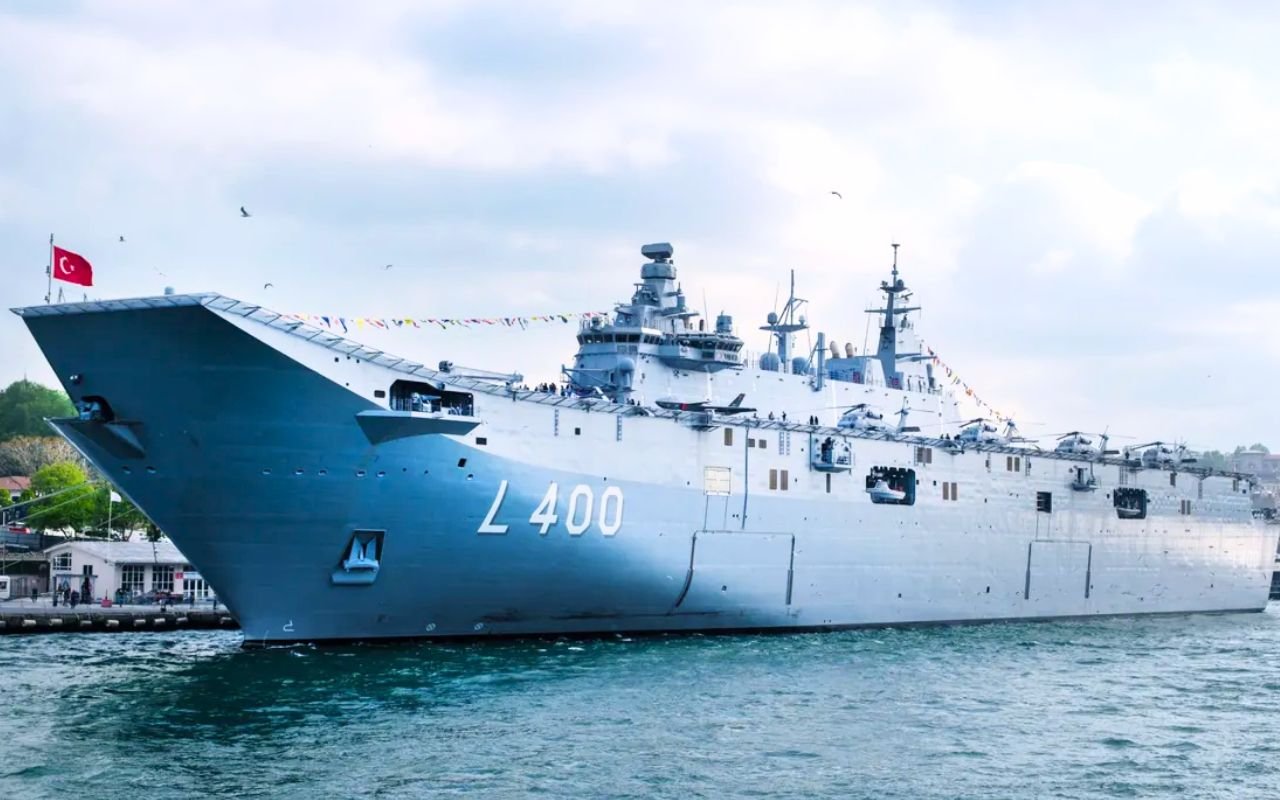
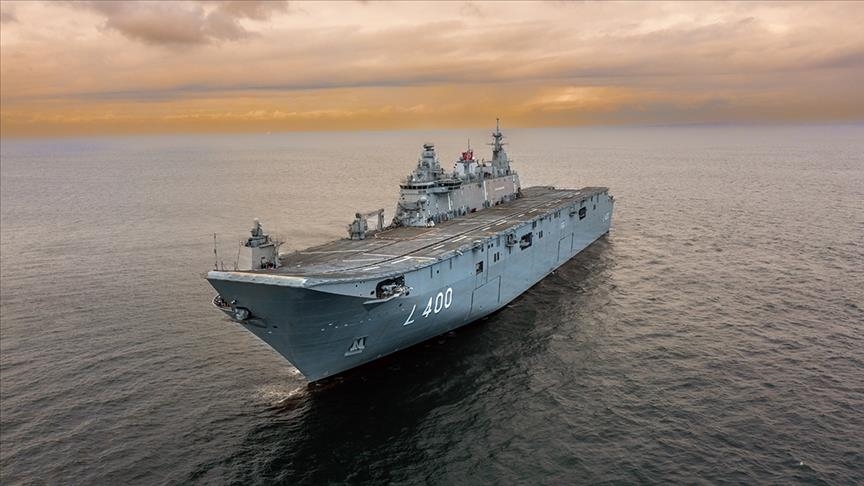
The recent sighting of a four-ship Turkish flotilla near the Solent maritime corridor sent ripples across European coastal monitoring stations. Among these vessels, the flagship dominated discussions: the TCG Anadolu, Turkey’s largest warship to date. This remarkable drone carrier, boasting a displacement of 27,000 tonnes and a price tag exceeding 1.15 billion euros, marks a significant leap in Turkey’s naval projection capabilities. Equipped to operate multiple drones and helicopters, the Anadolu not only serves as a potent symbol of Turkish maritime ambition but also represents the technological advances Ankara has achieved. The strategic timing of these ships’ transit toward Southampton, likely to participate in the NATO Steadfast Dart exercises, points to a decisive message from Turkey, to both allies and rivals, about its naval prowess and operational readiness. The accompanying warships, including the frigates TCG Istanbul and TCG Oruçreis, as well as the supply ship TCG Derya, reflect a balanced group formation capable of a wide range of maritime operations. This well-rounded flotilla, moving from deployments in Baltic waters, reinforces Turkey’s ability to sustain prolonged naval presence along critical European coastlines. Observation of these maneuvers brings forward discussions about NATO’s internal dynamics. Turkey’s active participation in such exercises balances its independent strategic pursuits with alliance commitments, signaling Ankara’s nuanced approach to collective defense while asserting its regional maritime influence. This naval show of force near the UK coast therefore underscores a subtle power play, highlighting a Turkey confident in its military modernization and looking to cement its place as a vital partner within European security frameworks.
Examining the capabilities and technological edge of the TCG Anadolu and allied ships
The TCG Anadolu stands as a milestone in Turkey’s naval evolution, operating as both an aircraft carrier for drones and a helicopter platform. Its size—nearly 750 feet long—and advanced sensor suite give it a footprint rarely seen in regional navies. This enormous vessel can launch and recover unmanned aerial vehicles, which have become crucial in modern reconnaissance and combat operations. The presence of the TCG Istanbul and TCG Oruçreis frigates further enhances the task force’s multi-dimensional threat capabilities. These warships are equipped with sophisticated radar, anti-aircraft missiles, and anti-submarine warfare technology. The TCG Derya, as a replenishment vessel, ensures sustained operational endurance, supplying fuel, ammunition, and other essentials that allow the fleet to remain at sea for extended periods. Such equipment amalgamates to create a formidable maritime force capable of power projection, area denial, and sustained naval combat. For instance, the drone platforms aboard Anadolu enable reconnaissance missions deep into contested zones, reducing the risk to human pilots while increasing situational awareness. Modern naval warfare increasingly depends on unmanned systems and multi-role frigates. Turkey’s investment in these technologies reflects a strategic foresight and readiness to engage in complex maritime scenarios. The newly enhanced fleet functions not only as a deterrent but also as a force multiplier within NATO’s broader operational schema. This technological leap also hints at Turkey’s ambitions beyond mere territorial defense, illustrating aspirations for a blue-water navy projection that could influence Mediterranean and Black Sea power balances in coming decades.
Insights into NATO’s Steadfast Dart exercise and Turkey’s evolving role
Steadfast Dart is a recurring NATO exercise aimed at enhancing coordination and interoperability among allied naval forces. In 2026, the drills have expanded, including more complex simulations of combined arms operations and multinational task forces. Turkey’s engagement, symbolized by the recent flotilla’s participation, reflects Ankara’s commitment to maintaining strong alliance ties while also showcasing its growing operational capabilities. The NATO exercises serve multiple purposes: they boost readiness, demonstrate unified defense posture, and, not least, allow countries to share maritime best practices. Turkey’s unique position as a bridge between Europe and Asia makes its participation strategically critical, especially amid evolving threats in the Black Sea and eastern Mediterranean regions. Despite occasional political tensions within NATO, Turkey’s navy plays a crucial role in regional security architectures. The multinational exercises provide not just training opportunities but also diplomatic platforms for Ankara to assert its maritime concerns and showcase advances like the TCG Anadolu. Moreover, Steadfast Dart fosters interoperability essential for real-world crisis responses. Turkish warships integrated into these operations improve collective capability against asymmetric threats such as maritime terrorism, uncontrolled migration, and territorial disputes, ensuring the alliance remains agile in the face of 21st-century challenges. These exercises further cement Turkey’s maritime footprint as both a regional power player and a loyal NATO ally, navigating complex diplomatic waters while strengthening naval competencies.
Assessing geopolitical ripple effects of Turkish naval deployment along European shores
The appearance of such a significant Turkish naval force off the southern coast of the United Kingdom has sparked a wave of analysis regarding its broader geopolitical implications. European nations, particularly those bordering the Mediterranean and North Sea, are closely scrutinizing Ankara’s naval ambitions and technological progress. Turkey’s strengthened maritime presence challenges traditional naval balances, compelling NATO members and regional actors to revisit strategic calculations. The ability to project power far from home ports demonstrates Ankara’s ambition to influence Mediterranean, Black Sea, and Atlantic passageways. Countries like the UK, France, and Germany are now closely monitoring Turkish naval deployments, considering operational adjustments in light of an increasingly assertive Turkish fleet. The interplay between alliance cooperation and independent national priorities generates complex dynamics, especially with Turkey balancing its NATO commitments against autonomous strategic objectives. Furthermore, this naval activity signals Turkey’s readiness to play a more prominent role in safeguarding, or potentially contesting, key maritime routes critical for trade and energy transport. The timing, coinciding with broader NATO maneuvers, intimates a dual-use strategy, blending alliance collaboration with sovereign signaling. Regional analysts also note the subtle diplomatic undertones beneath these maneuvers. Statements of support for partnership coexist alongside displays of autonomy and technological self-sufficiency, revealing Turkey’s intention to influence not only military affairs but also regional diplomatic arenas.
Understanding the operational logistics and future prospects of Turkey’s naval advancements
The operational journey of the Turkish fleet, from Baltic deployments to southern coast approaches, showcases a remarkable logistical feat. The sustained naval presence across thousands of kilometers reflects enhanced command, control, and supply chain capabilities within the Turkish navy.
The role of support vessels like TCG Derya cannot be overstated in this context. Replenishment ships ensure continuous fuel, ammunition, and provisions supply, enabling prolonged deployments which are critical for blue-water naval ambitions. This logistical backbone is integral to Turkey’s objective of maintaining persistent maritime engagement beyond its immediate waters. Looking ahead, the Turkish navy aims to expand its drone carrier programs and aggiornamento frigate designs, building upon technological gains demonstrated by the Anadolu and its escort ships. Future projects intend to further integrate unmanned combat systems, artificial intelligence-driven maritime surveillance, and advanced anti-missile defenses. With investments exceeding several billion euros planned for naval modernization, Ankara appears set on transforming its maritime forces into a versatile and resilient power projection tool. This trajectory not only bolsters Turkey’s naval independence but also enhances its standing within NATO and global maritime affairs. Crucially, operational experiences gathered during multinational exercises like Steadfast Dart underpin the continuous improvement cycle, enabling adaptation to emerging threats while strengthening alliance interoperability. Such efforts illustrate a forward-looking strategy that embraces innovation, endurance, and maritime diplomacy as pillars of future security posture.
| Ship name | Type | Displacement (tonnes) | Function | Flag number |
|---|---|---|---|---|
| TCG Anadolu | Drone carrier | 27,000 | Deploy drones, helicopters, command flagship | L400 |
| TCG Istanbul | Frigate | 3,500 approx. | Air defense, surface warfare | F-515 |
| TCG Derya | Replenishment ship | 7,000 approx. | Logistical support, refueling | A-1590 |
| TCG Oruçreis | Frigate | 3,000 approx. | Anti-submarine warfare, patrol | F-245 |
Key facts on Turkish naval presence and exercise participation
- Four Turkish ships recently transited the Solent waterway, generating significant attention from local and international observers.
- The flagship, TCG Anadolu, is Turkey’s largest warship and a pioneering drone carrier with a displacement of 27,000 tonnes.
- This deployment corresponds with the Steadfast Dart NATO exercise, underscoring Ankara’s commitment to alliance cooperation and military modernization.
- The warships’ transit from northern deployments in the Baltic Sea to southern European waters illustrates Turkey’s expanding maritime reach.
- The flotilla consists of two frigates, a replenishment ship, and a drone carrier, demonstrating Turkey’s growing naval operational complexity.
The Turkish fleet movements and exercise involvement exemplify a blend of strategic signaling, alliance loyalty, and technological progress, embodying Turkey’s ascent as a formidable maritime actor on the European stage.
What is the significance of the TCG Anadolu in Turkey’s naval strategy?
The TCG Anadolu represents Turkey’s leap into modern naval warfare as its first drone aircraft carrier. It enhances the navy’s reconnaissance and strike capabilities by deploying unmanned aerial vehicles, marking a new era of maritime power projection.
How does Turkey’s participation in NATO exercises affect its geopolitical standing?
Turkey’s active role in NATO drills like Steadfast Dart bolsters its reputation as a key ally capable of contributing to collective security while simultaneously allowing it to showcase its independent military advancements.
What logistical challenges does a Turkish naval task force face during extended deployments?
Sustained naval operations over long distances require complex coordination of supplies such as fuel, ammunition, and food. Support vessels like the TCG Derya are essential in maintaining operational readiness and endurance.
Why is the Turkish naval fleet’s presence off southern European coasts politically sensitive?
Such naval deployments may be perceived as assertive power projection, influencing regional security dynamics and prompting neighboring nations and NATO members to reassess maritime strategies and diplomatic relations.
What future developments are expected in Turkey’s naval technology?
Turkey is focusing on expanding its drone carrier programs, integrating AI-driven maritime systems, and enhancing its frigates with advanced weapons and surveillance technology to solidify its maritime influence.
