
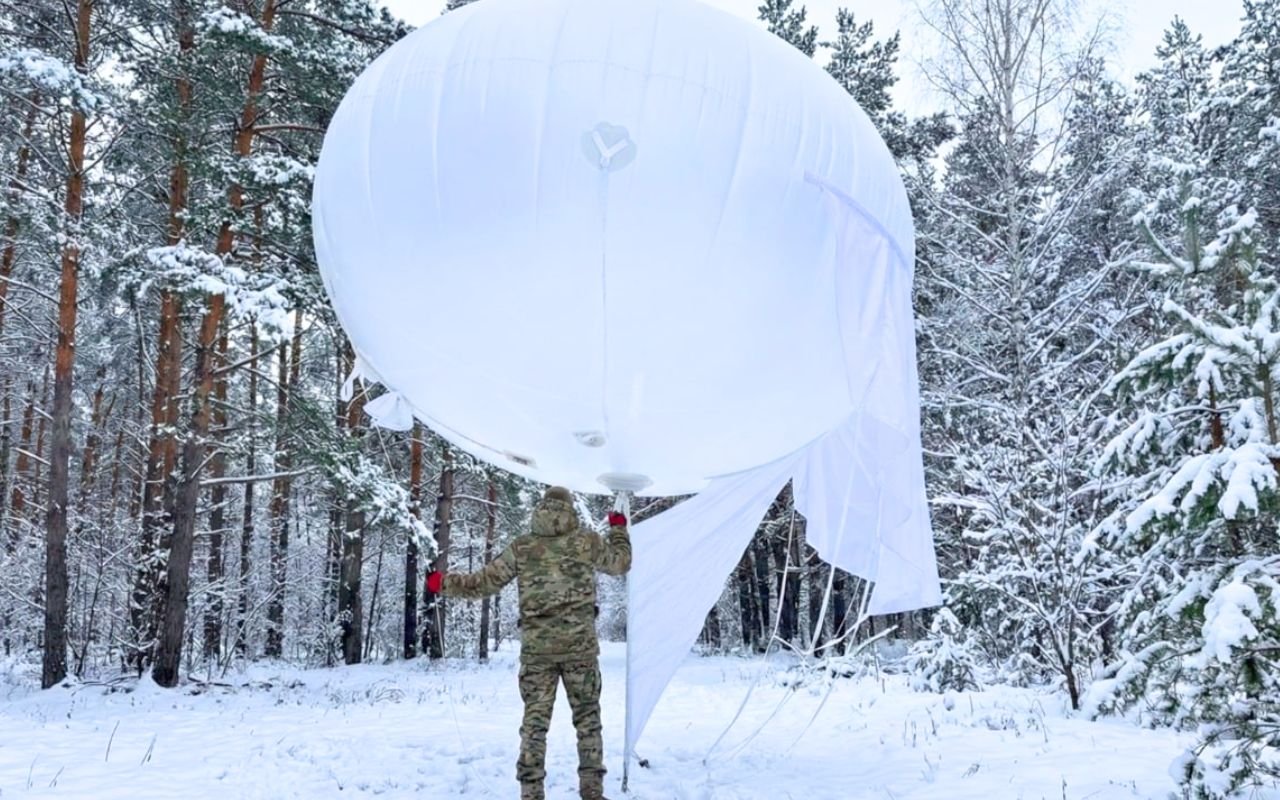
How a Ukrainian company is transforming aging aerostat technology into an essential modern warfare asset, offering a surprising blend of low-tech simplicity and cutting-edge battlefield advantage.
In a conflict zone where technology needs to be both innovative and cost-effective, a Ukrainian firm has breathed new life into the classic aerostat, a tethered balloon once seen as relics of the past. Far from being obsolete, these aerostats are now instrumental in electronic warfare, reconnaissance, and communication across contested areas. With the continuous evolution of electronic warfare (EW) tactics and signals intelligence (SIGINT) methods, tethered aerostats equipped with specialized payloads have found renewed relevance, providing troops with persistent surveillance and communication advantages. This development signals a strategic pivot that maximizes simplicity and effectiveness on a high-tech battlefield.
Reviving aerostat technology: from vintage balloons to modern force multipliers
The revival of aerostat technology by the Ukrainian company Aerobavovna demonstrates that innovation is not always about building something entirely new. Sometimes, it’s about revisiting older technologies and adapting them to meet current demands with fresh perspectives. Aerostats are helium-filled balloons tethered to the ground, able to hover at significant altitudes for extended periods, carrying light electronic payloads used for surveillance, communication relays, or electronic warfare purposes. What sets Aerobavovna apart is its commitment to improving these aerostats’ functionality, increasing payload capacity, and integrating sophisticated SIGINT and EW equipment. Traditional aerostats were limited by their altitude, stability, and payload size, but the firm has introduced platforms capable of lifting up to 30 kg of reconnaissance gear, compared to just 6 kg in their earlier models. This jump significantly enhances the operational scope by allowing deployment of more complex electronics, such as jammers, directional antennas, or signal analyzers. As battlefield dynamics in Eastern Europe constantly shift, the company’s innovations echo a renewed appreciation for “low-tech” solutions that deliver high-impact results. The aerostat platforms serve as critical nodes for expanding drone control ranges, offering electronic intelligence gathering, and maintaining battle communication lines in environments where infrastructure is otherwise compromised or too risky. Aerobavovna’s solutions prove that sometimes, subtle adaptations resonate more effectively with real combat demands than flashy new inventions. This resurgence of aerostat systems also challenges preconceived notions regarding modern warfare, where drones and satellites often steal the spotlight. By combining old principles with new materials and electronics, the company is offering frontline forces a sustainable, mobile, and inexpensive airborne resource that can be rapidly deployed and repositioned.

The strategic advantages of tethered aerostats in electronic warfare and reconnaissance
The integration of aerostats into contemporary electronic warfare (EW) frameworks provides a near-unique blend of flexibility, persistence, and affordability, making them formidable assets on the battlefield. Unlike free-flying drones that consume significant energy and have flight duration limits, tethered aerostats can remain aloft for days, functioning as stationary surveillance points. One core advantage lies in the ability of these platforms to serve as elevated communication relays and signal intelligence hubs. They extend the operational reach of unmanned aerial vehicles (UAVs) by boosting radio and control signals beyond line-of-sight limitations. Aerobavovna’s designs enable Ukrainian forces to control drones on the front lines more effectively, even when adversary countermeasures aim to jam or disrupt wireless communication. Moreover, their high loiter time grants sustained battlefield awareness, critical for timely threat detection or electronic attack operations. The aerostat payloads can house spectrum analyzers, electronic jammers, or intercept receivers, which are vital for tracking enemy signals or disrupting hostile communications without risking manned aircraft. For instance, during recent operations, Ukrainian troops stationed near contested front lines deployed these aerostats to create a protective bubble of electronic dominance, safeguarding troop movements and interfering with Russian drone reconnaissance. This tactic highlights how persistent aerial platforms can multiply the effects of electronic warfare by offering continuous data feeds and tactical updates. The devices’ simplicity also means maintenance needs are minimal, and production costs remain substantially lower than sophisticated UAVs or satellite systems. With individual units priced at around €2,700 to €2,900, they represent economical solutions for sustained electronic operations, particularly important for forces managing stretched budgets in prolonged conflicts. The scalable nature of aerostats also means forces can tailor their deployment according to specific missions—launching a network of smaller balloons for intelligence relay or fewer, larger platforms to carry advanced electronic suites. This operational flexibility is a key reason why Aerobavovna’s designs have moved from concept to essential frontline tools.
Engineering challenges and innovations in modern aerostat design
Transforming traditional tethered balloons into effective contemporary combat systems brings a host of complex engineering hurdles, all skillfully addressed by Aerobavovna’s team of specialists. The biggest challenges include enhancing payload capacity without compromising flight stability, ensuring the aerostat can endure harsh weather conditions while flying at altitude, and designing the tether systems to carry both physical strain and electronic signals. Increasing the payload from 6 kg to a hefty 30 kg posed significant design overhauls. This required using lightweight yet robust materials for the balloon envelope to maintain buoyancy and resilience. Additionally, stability issues at higher altitudes demanded improved aerodynamic shaping and tether management systems to minimize sway from the wind, which can affect electronic sensor performance. Helium scarcity and cost are notable constraints worldwide, but Ukraine’s domestic resource management enabled Aerobavovna to optimize helium usage efficiently, making the aerostats more sustainable for prolonged deployments. The company developed a rapid-launch process paired with modular payload integration, enabling front-line units to quickly swap equipment as mission needs dictate. Another major innovation lies in the tether technology. Traditional tethers served purely as mechanical anchors, but Aerobavovna integrated fiber-optic and power lines within the tethers, allowing real-time data transmission and remote power supply to the payload. This integration significantly increases operational bandwidth and reduces the need for bulky onboard batteries or other power sources, which directly saves weight. Finally, electronic packages are designed to be both rugged and adaptable. Modules spanning from simple signal recorders to active jamming devices can be fitted, making the aerostats multipurpose nodes that serve diverse combat roles. The modular approach also ensures that technological upgrades can be introduced without redesigning the entire platform.
Aerostat deployment scenarios shaping the future of warfare in Ukraine
With ongoing hostilities driving rapid tactical innovations, aerostats have firmly established themselves across several crucial use cases in Ukraine’s defense strategy. Their ability to operate persistently and discreetly makes them ideal for surveillance over vast front areas where conventional radar or UAV presence may be limited or vulnerable. One prominent use is in extending the operational range of long-endurance attack drones. By acting as airborne relays, aerostats circumvent obstacles, terrain interference, and enemy jamming attempts, allowing drone operators to strike from greater distances while maintaining situational awareness. This capability has proven vital against mobile targets and in disrupted communications environments. Additionally, aerostats support electronic warfare teams engaging in spectrum dominance. By intercepting and analyzing enemy communication frequencies from a superior vantage point, Ukrainian forces can anticipate enemy movements and disrupt command-and-control signals efficiently. In humanitarian terms, the technology also offers promise for disaster response and search-and-rescue operations, extending communication reach where conventional infrastructure fails. This dual-use nature underscores the versatility of Aerobavovna’s innovations beyond strictly military contexts.
Below is a generalized summary of typical aerostat deployment scenarios observed in Ukraine:
| Deployment Scenario | Main Purpose | Key Benefit | Operational Altitude (meters) |
|---|---|---|---|
| Drone relay extension | Communication boost for UAV control | Extended drone range and control reliability | 300 – 500 |
| Electronic warfare platform | Jamming and signal interception | Persistent battlefield surveillance | 400 – 600 |
| Reconnaissance support | Visual and electronic monitoring | Long-duration persistence over conflict zones | 250 – 450 |
| Communications network node | Relay for ground units | Improved communications in disrupted terrain | 200 – 400 |
These real-world missions reveal the strategic depth possible when old technology is smartly repurposed with advanced payloads tailored to contemporary warfare.
Economic impact and manufacturing challenges in sustained aerostat production
Beyond its tactical impact, Aerobavovna represents an important industrial milestone for Ukraine’s defense sector. The decision to mass-produce aerostats domestically has stimulated local manufacturing, innovation, and supply chain resilience amidst wartime pressures. The production cost advantage is stark; with individual aerostats costing roughly €2,900, they offer an accessible option to equip multiple units without straining defense budgets. This affordability contrasts with far more expensive drones or sophisticated airborne systems that require extensive maintenance and logistics support. Locally sourcing materials and streamlining assembly lines have allowed Aerobavovna to scale output quickly in response to fluctuating battlefield demands. The production lines embraced modular manufacturing techniques, which helped decrease lead times and increase platform customization capabilities. Another economic advantage lies in the durability and simplicity of aerostats. Their lower maintenance needs and fewer moving parts reduce long-term costs. Units can be repaired and redeployed rapidly with limited infrastructure, supporting Ukraine’s adaptive wartime economy. However, challenges remain. Raw material availability, especially for specialized fabrics and helium, can fluctuate depending on geopolitical and import conditions. The company continually strives to innovate around these constraints, focusing on alternative materials and efficient helium recycling systems. The broader impact extends to knowledge transfer and skilled workforce engagement, as engineers and technicians trained on these systems develop expertise applicable to other aerospace or defense domains.
What exactly is an aerostat?
An aerostat is a tethered, helium-filled balloon designed to carry payloads such as cameras, radar, or electronic warfare equipment into the air for extended periods, providing surveillance and communication support.
How does an aerostat differ from drones?
Unlike drones which fly freely and have limited operational time due to battery life, aerostats are anchored to the ground, enabling them to stay aloft for days or weeks, offering persistent surveillance with less energy consumption.
Why are aerostats important in Ukraine’s conflict?
Aerostats extend communication ranges, enable continuous electronic interception, and enhance battlefield awareness, especially where infrastructure is damaged or interference is common.
What payload capacities do modern Ukrainian aerostats have?
Recent models developed by Aerobavovna can carry payloads up to 30 kg, significantly increasing their utility for carrying sophisticated electronic warfare and reconnaissance equipment.
How cost-effective are aerostats compared to other military tech?
Aerostats typically cost around €2,700 to €2,900 each, which is considerably cheaper than advanced drones and satellite systems, providing a more sustainable and scalable solution for prolonged missions.
