
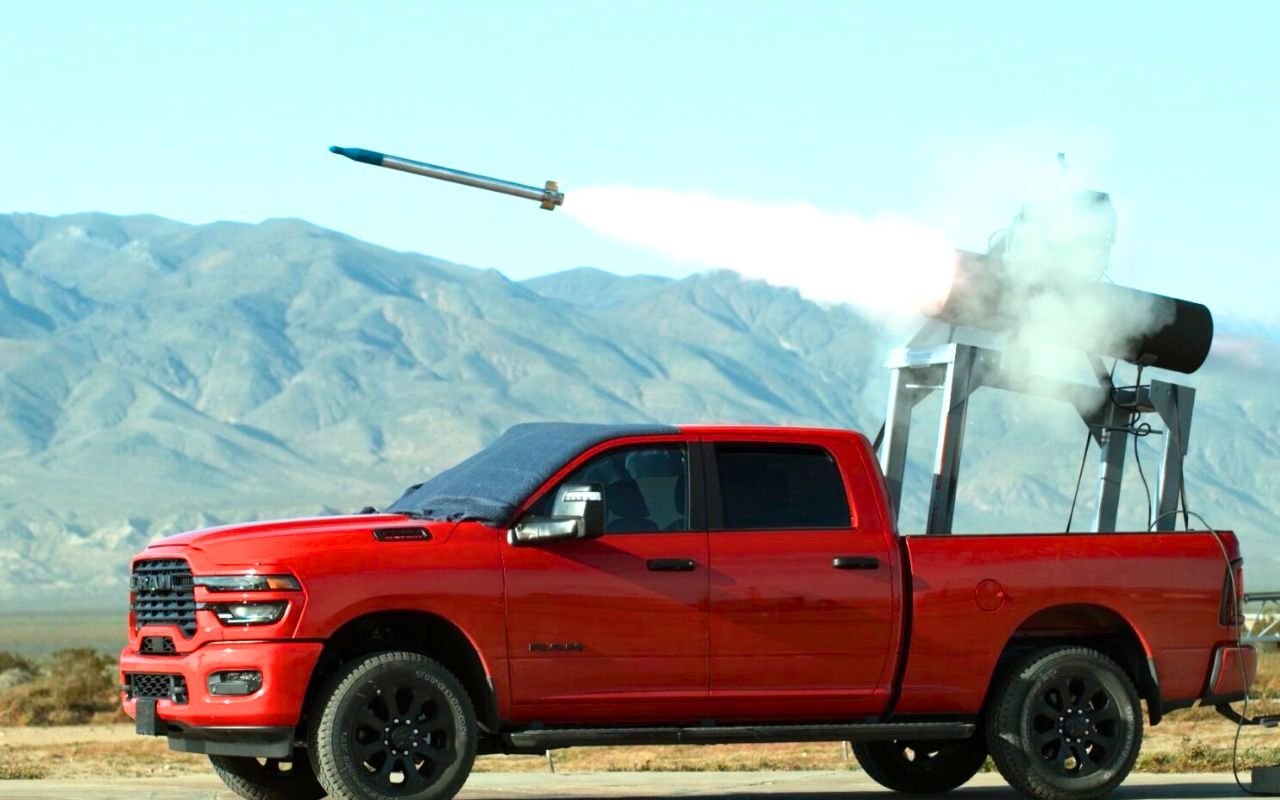
iRocket’s breakthrough test of the iRX-100 missile marks a significant leap forward in aerospace and defense technology, blending rapid innovation with practical military applications.
Within a remarkably short span of development, iRocket has achieved what many established companies strive for over years. The rapid advancement of the iRX-100 missile offers not just a glimpse of modern missile technology but also a strategic pivot in how innovative aerospace startups can reshape defense capabilities. With a blazing Mach 2 speed and a targeted range that bridges both short and medium operational fields, the iRX-100 could become a staple in many defense arsenals. The collaboration with Arnold Defense further underscores the integration potential of the missile with existing launch platforms, pushing forward operational readiness.
How the iRX-100 missile redefines rapid aerospace innovation and what it means for missile technology
The iRX-100 missile is a striking example of what rapid iterative design, cutting-edge materials, and advanced propulsion systems can accomplish today. Developed, tested, and launched within just six weeks, this missile exemplifies the intersection of speed, efficiency, and precision. Achieving such a feat in aerospace development is nothing short of revolutionary, especially considering the complexity of missile engineering. Typically, missile development cycles span years due to the intricate processes involved: aerodynamics testing, propulsion system optimization, guidance system fine-tuning, and the integration of warhead safety mechanisms. iRocket’s ability to conduct this entire process under a compressed timeline signals a breakthrough in aerospace automation and advanced manufacturing techniques. The use of additive manufacturing—also known as 3D printing—plays a crucial role in this accelerated production.

Accelerated development cycles with advanced manufacturing
Manufacturing the iRX-100 missile in weeks instead of months or years illustrates the benefits of automated, digital design-to-production environments. Using simulation software, engineers optimized the missile’s aerodynamics and material usage before a single physical prototype was created. This process not only saves time but also dramatically reduces the cost of iterative testing and prototyping. Such techniques have been increasingly adopted in aerospace fields but iRocket’s application for missile design sets a new standard. This agility allows smaller companies to challenge long-established aerospace giants and pushes the defense industry toward flexible, modular designs adaptable to evolving combat scenarios. The iRX-100’s flight at Mach 2 means it can outpace many adversary systems that rely on subsonic missile technology. Furthermore, the quick turnaround between concept and flight test signals potential for custom, on-demand missile manufacturing for specific missions. This could change how armed forces prepare for conflicts, especially in theaters requiring rapid deployment of new technologies.
The strategic implications of iRX-100 missile’s integration with Arnold Defense launcher systems
The successful test of the iRX-100 missile using Arnold Defense’s 70mm launcher introduces varied strategic advantages. Arnold Defense, known for its modular, field-deployable launchers, offers a flexible platform that enhances the missile’s tactical use in diverse operational settings — from counter-drone missions to precision strikes. Integration testing is often the most challenging phase in missile deployment, since mismatches between missile electronics, propulsion, and launcher can lead to failures. The iRX-100’s seamless compatibility with Arnold Defense’s launcher reinforces operational reliability. It also indicates a shared vision between aerospace startups and defense contractors aimed at modularity and rapid field adaptation.
Expanding tactical flexibility on the battlefield
The Arnold Defense launcher is renowned for being lightweight and easily transportable, which paired with the iRX-100 missile’s speed means armed forces could enjoy swift strike capabilities even in remote locations. The range of approximately 6 kilometers (or about 3.7 miles) optimizes the missile for short-range engagements, especially those centered on countering small, fast-moving aerial threats such as drones. This combination opens up new battlefield strategies. For example, infantry units could carry launcher systems on the march, supported by rapidly deployable missile strikes that neutralize enemy surveillance and attack drones before they pose significant risks. This capacity to respond quickly to threats in dynamic environments can shift power balances in conflict zones. Moreover, Arnold Defense’s open architecture launchers allow adaptation for different missile types, potentially enabling the same launcher platform to handle future missile variants developed by iRocket or its partners. Such interoperability reduces logistics burdens and fosters cost-effective modernization across military fleets.
Technical insights: propulsion, design, and Mach 2 capability of the iRX-100 missile
The propulsion system driving the iRX-100 missile to Mach 2 is a critical component shaping its performance. Solid-fuel propulsion technology remains a dominant choice for short-range tactical missiles, due to its quick ignition, simplicity, and reliability under various conditions. iRocket’s expertise in solid rocket motors has been instrumental in pushing the iRX-100’s operational envelope. Through advanced chemistry formulations for the propellant and optimized nozzle design, this missile attains impressive velocity while maintaining structural integrity and flight stability.
Design considerations for speed and maneuverability
Achieving Mach 2 is not purely about engine power; aerodynamic design plays an equal role. The iRX-100’s sleek profile minimizes drag, supported by sharp nose cones and stabilizing fins engineered using computational fluid dynamics (CFD) to optimize airflow. Such aerodynamic fine-tuning allows the missile to retain precision during high-speed flight, crucial when engaging small, maneuvering targets. Additionally, the missile’s size and weight have been balanced to extend range without sacrificing agility — a vital trade-off in missile engineering. The use of lightweight composite materials further reduces mass and increases payload capacity. These materials also provide thermal protection to components exposed to intense heat from air friction at supersonic speeds, ensuring reliable performance throughout the missile flight.
Market potential and defense industry impact of the iRX-100 missile development
The test success of the iRX-100 missile positions iRocket as an emerging influential player in the defense aerospace sector, one traditionally occupied by long-established multinational corporations. This rapid prototyping and deployment model could disrupt traditional supply chains and procurement cycle timelines. Defense budgets around the world are under continuous pressure to innovate cost-effectively while addressing fast-evolving threats like drones, hypersonic weapons, and cyber warfare. The iRX-100’s use case as a counter-drone missile provides a timely solution aligned with these needs.
Potential clients and operational scenarios
Various military branches and private security firms emphasize protection against drone incursions, making the missile attractive to special forces, border security units, and even naval applications where small, fast targets operate dangerously close. Convertible launch platforms and modular missile designs offer contract flexibility.
- Cost-efficiency: The compressed development time lowers costs, making procurement more accessible.
- Rapid deployment: Missile systems can be adapted swiftly to different theaters of operation.
- Interoperability: Compatibility with third-party launchers enhances operational adaptability.
- High-speed interception: Mach 2 velocity increases effectiveness against advanced drone threats.
This trend could usher in an era where smaller firms innovate rapidly, driving a broader defense ecosystem that’s more agile and responsive than the traditional, bureaucratic model. Governments looking to maintain technological superiority will closely monitor iRocket’s progress.
Challenges and future outlook for the iRX-100 missile and similar aerospace innovations
Despite the promising test results, challenges remain before the iRX-100 becomes a widespread operational missile. Mass production requires securing supply chains for advanced materials and expanding testing for varied environmental conditions beyond initial trials. Furthermore, integration with diverse military hardware worldwide necessitates compliance with strict international standards and regulations, including export controls tied to missile technology. Navigating this complex landscape demands careful planning and strategic partnerships.
Looking ahead: scaling production and evolving missile roles
iRocket plans to leverage lessons learned from the iRX-100 prototype to evolve its flagship satellite launch vehicles while diversifying its missile portfolio. Future versions could include enhanced range, improved guidance systems, or adaptations for electronic warfare roles.
Balancing rapid innovation with reliability will be critical as iRocket moves from prototype to mainstream production. The company’s flexible manufacturing approach and partnerships with established defense contractors like Arnold Defense represent a promising formula for sustained growth and influence in aerospace defense markets.
| Milestone | Date | Outcome |
|---|---|---|
| Missile concept design start | August 2025 | Completion in under 2 weeks |
| Prototype manufacturing | September 2025 | 3 weeks using additive manufacturing |
| Integration with Arnold Defense launcher | Early February 2026 | Successful software and hardware sync |
| Test flight launch | March 9, 2026 | Mach 2 speed, 6 km range achieved |
What makes the iRX-100 missile stand out compared to other short-range missiles?
Its remarkably rapid development cycle, Mach 2 speed, and seamless integration with established launchers like Arnold Defense’s make it particularly innovative and agile for modern defense needs.
How does iRocket achieve such fast development times?
They utilize advanced manufacturing methods such as 3D printing and digital design tools, allowing rapid prototyping and iterative testing in weeks rather than years.
What are the primary operational uses for the iRX-100 missile?
The missile is designed mainly for short-range tactical strikes, countering drones and other small aerial threats, offering rapid response in dynamic military environments.
Will the iRX-100 missile be available internationally?
International availability depends on export regulations and strategic partnerships, but the missile’s modularity makes it adaptable to various global defense needs.
How does the iRX-100 contribute to the future of aerospace defense?
It exemplifies a shift towards agile, cost-effective missile systems developed by innovative startups, reshaping the aerospace and defense industry landscape.
