
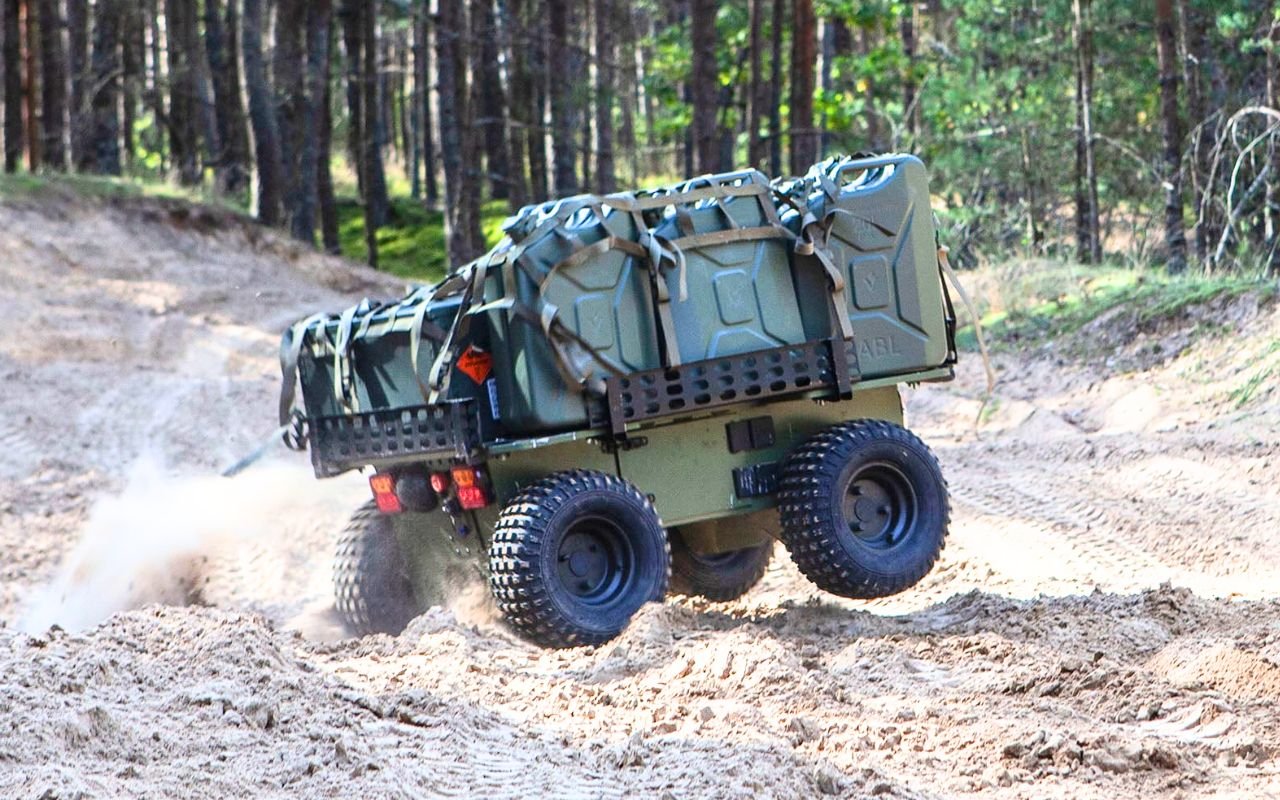
Latvia is making waves in military innovation with its latest breakthrough in battlefield logistics technology, introducing a vehicle designed to transform how front-line support is managed.
In a bold move that reflects Latvia’s growing role in defense technology, a local company has launched a new battlefield logistics vehicle aimed at boosting operational efficiency and troop survivability. This groundbreaking development showcases Latvia’s commitment to advancing military capabilities while supporting NATO allies. The vehicle’s design and functionality are setting new standards, raising expectations across European defense circles and signaling a shift in logistics strategies on modern battlefields.
Design innovations that redefine battlefield logistics efficiency
Latvia’s new logistics vehicle combines advanced engineering and modular design to solve persistent challenges faced by military support units. Traditional logistics vehicles often struggle with terrain adaptability and payload versatility, but this innovation is engineered to overcome those barriers with ease. Featuring a state-of-the-art chassis and suspension system, the vehicle can navigate rugged landscapes that typically slow down supply convoys. The modular design allows rapid reconfiguration based on mission requirements, whether transporting ammunition, medical supplies, or fuel. A crucial feature is the vehicle’s autonomous driving capability, which leverages AI systems to reduce crew risk during dangerous resupply missions. This balance between automation and crew control provides tactical flexibility, enabling the vehicle to switch seamlessly between manual and self-driving modes. Examples from recent military exercises illustrate the vehicle’s adaptability. In simulated combat zones, it successfully completed supply runs through dense forests and muddy tracks that immobilized older logistics vehicles. Commanders praised its performance, noting that rapid supply delivery under adverse conditions can shift the momentum during engagements. The vehicle’s compact size also enhances stealth and reduces its logistical footprint. This makes it particularly valuable for rapid deployment forces requiring quick, discreet resupply. Its electromagnetic shielding technology minimizes electronic signatures, protecting it from enemy electronic warfare tactics. Innovations like these highlight the sophistication embedded in modern battlefield logistics and exemplify Latvia’s drive to stay at the forefront of military technology advancements.
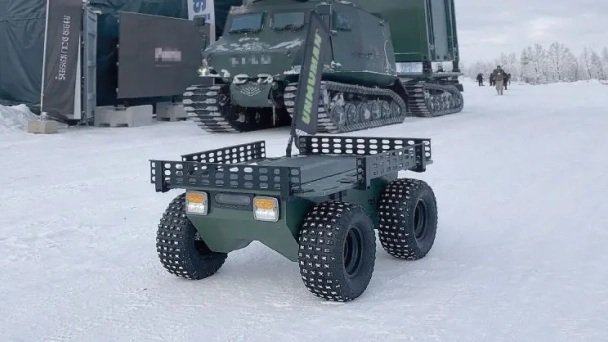
Built in Europe with Cordura, mil-spec components, and field-tested ergonomics to protect your gear and perform in demanding operational environments.
How modularity and AI reshape military logistics support
The modular approach allows units to tailor the vehicle for diverse payloads in minutes, significantly reducing turnaround time between missions. For example, one day the vehicle might carry medical evacuation pods, while the next it supports artillery units with ammo boxes. This flexibility not only improves efficiency but also cuts down operational costs by eliminating the need for multiple specialized vehicles. Incorporating AI-driven navigation systems enhances safety and precision. The vehicle’s AI software interprets real-time terrain data and enemy threat patterns, dynamically adjusting routes to avoid ambushes. Additionally, the self-driving option allows seamless resupply during low-visibility or high-risk scenarios, keeping soldiers out of harm’s way. This technology echoes advances seen in unmanned aerial vehicles but for ground logistics—ushering in a new era of autonomy on the battlefield.
Latvia’s strategic role in European defense manufacturing
By developing and producing advanced battlefield logistics vehicles locally, Latvia is cementing its position as a key player in European military manufacturing. This effort aligns closely with NATO’s objectives to strengthen supply chains and interoperability among member countries. The new vehicle exemplifies how smaller nations can contribute high-tech solutions tailored to the specific geographic and tactical needs of Northern and Eastern Europe. The production leverages a skilled workforce at Defence Partnership Latvia, a joint venture with international partners, ensuring cutting-edge quality and innovation. With over 200 units planned for procurement through upcoming defense contracts, the initiative not only boosts Latvia’s defense autonomy but also stimulates its economy through job creation and technology transfer. Furthermore, collaboration with European suppliers enhances component standardization, easing maintenance and integration with allied forces’ logistics networks. This harmonization reduces downtime in joint operations, providing a tactical advantage in multinational engagements. Latvia’s success story here serves as a blueprint for how medium-sized countries can harness niche expertise and strategic partnerships to punch above their weight in defense technology. Such localized production also supports a rapid upgrade cycle. The military can implement improvements swiftly in response to operational feedback without long supply delays. For instance, planned software updates for the vehicle’s AI navigation are expected to integrate seamlessly, enhancing performance during winter conditions especially prevalent in Baltic environments.
Boosting local industry through defense innovation
Investment in vehicle manufacturing is driving technological advancements across Latvia’s industrial base. The integration of robotics, AI, and materials science in production lines sets new benchmarks for high-tech manufacturing. Skills development programs ensure that the workforce remains at the forefront of the latest industry trends, creating a sustainable ecosystem around defense technology. This industrial momentum also benefits civilian sectors, with innovations often finding applications in emergency response, infrastructure maintenance, and automotive technology. The dual-use nature of the technology supports a diversified economy and provides resilience in fluctuating global markets. For a country balancing security concerns and economic growth, this synergy is invaluable.
Practical battlefield applications and operational impact
On the battlefield, rapid, reliable logistics can determine the outcome of combat, and Latvia’s new vehicle is designed to excel in exactly this role. It supports front-line troops by ensuring supplies reach them promptly despite harsh conditions. For artillery units relying on steady ammunition flow, or medics needing quick casualty evacuations, this vehicle represents a game-changing asset. Recent field exercises demonstrated how its speed and endurance reduce supply delays, cutting average resupply times by up to 40%. Soldiers noted improved morale, knowing critical resources were delivered consistently. The vehicle’s enhanced off-road mobility enables it to reach units isolated by damaged infrastructure or natural obstacles, maintaining operational momentum. In scenarios involving electronic warfare, where GPS signals may be jammed, the vehicle’s advanced navigation algorithms rely on inertial measurement and terrain mapping to maintain course. This resilience is crucial in modern conflicts characterized by hybrid threats and contested environments. Moreover, its armor and self-defense systems provide protection against small arms fire and shrapnel, allowing it to operate closer to forward positions than conventional logistics vehicles. This proximity increases mission tempo and flexibility, giving commanders more tactical options when planning engagements.
Key features enhancing operational resilience
- Autonomous convoy capability: Enables secure resupply without continuous crew presence.
- Multi-terrain adaptability: Capable of traversing forest, mud, and urban rubble.
- Modular payload system: Fast reconfiguration for diverse mission-specific cargoes.
- Advanced navigation suite: Resists jamming and provides accurate route planning.
- Armored protection: Shields crew and cargo from light ballistic threats.
The road ahead: future upgrades and expanding capabilities
Looking forward, Latvia plans to enhance this logistics vehicle with next-generation technologies to maintain operational superiority. Upcoming enhancements include integrating energy-efficient hybrid powertrains, which will reduce the vehicle’s thermal and acoustic signatures, critical for stealth operations. This upgrade also extends operational range and reduces dependency on fuel convoys. Another focus is further development of AI-based decision support systems. These will analyze battlefield data in real time, helping commanders optimize supply chain routes dynamically. Enhanced sensor packages for threat detection and situational awareness are also in the pipeline, improving both vehicle and crew survivability. Collaborations with European partners aim to adopt emerging materials like lightweight composite armor to boost protection without sacrificing mobility. Expansion of the vehicle family to include specialized variants—such as mobile command posts and electronic warfare platforms—is envisioned, broadening tactical utility.
Through continuous innovation, Latvia is positioning itself to meet the evolving demands of modern warfare. The battlefield logistics vehicle stands as a testament to this forward-looking military-industrial strategy, promising not only to reinforce national defense but also to contribute significantly to NATO’s collective capabilities across challenging theatres.
| Feature | Description | Impact on battlefield operations |
|---|---|---|
| Modular payload system | Allows rapid switching between cargo types (ammo, fuel, medevac) | Increases logistic agility and mission flexibility |
| Autonomous driving capability | Supports self-driven supply runs to high-risk zones | Enhances crew safety and operational continuity |
| Advanced navigation suite | Resists GPS jamming and uses terrain mapping | Improves route reliability under electronic warfare |
| Armored protection | Light ballistic armor against small arms and shrapnel | Allows operation closer to front lines |
| Hybrid powertrain (upcoming) | Reduces signatures and extends range | Improves stealth and operational endurance |
What makes this Latvian logistics vehicle different from others?
Its modular design combined with AI autonomous driving and advanced navigation systems allows unparalleled adaptability and safety on the battlefield.
How does Latvia’s defense industry benefit from this project?
The initiative boosts local manufacturing capabilities, creates jobs, and encourages technology transfer, strengthening both defense and civilian sectors.
Can this vehicle operate in electronically contested environments?
Yes, its advanced navigation system can resist GPS jamming by using alternative terrain-based navigation methods.
What future upgrades are planned for this vehicle?
Future versions will feature hybrid powertrains, enhanced AI decision support, and improved armor using lightweight composite materials.
Is this vehicle intended only for Latvian forces?
While primarily developed for Latvia, it aligns with NATO standards and can be integrated into allied armies’ logistics networks.
Source:
- https://labsoflatvia.com/en/news/latvias-outsized-opportunity-in-defence-tech-spotlighted-in-the-tough-ten-report
- https://brasadefence.com/
