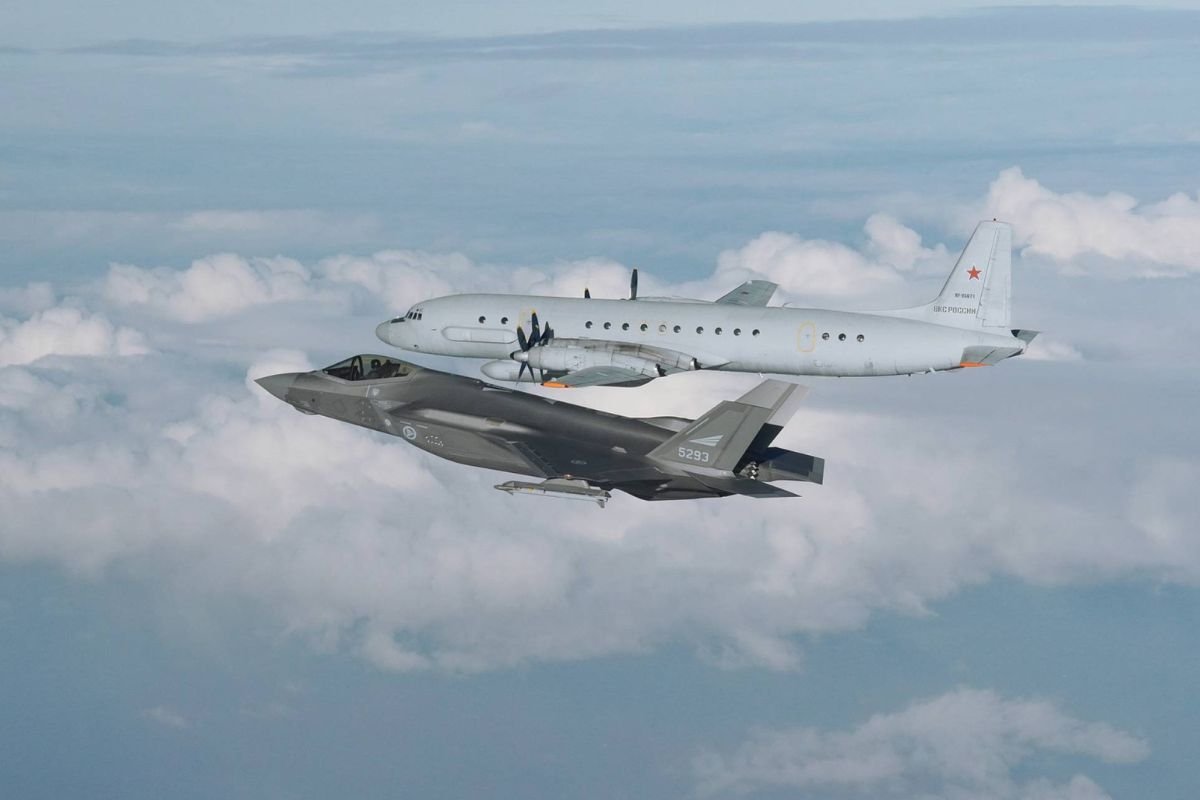
Norwegian F-35 fighter jets intercepted a Russian spy plane for two consecutive days in a high-stakes airspace vigilance operation near Northern Norway, underscoring rising tensions and intelligence gathering activities in the Arctic region.
Norway’s air defenses have been on high alert amidst a string of NATO exercises aimed at maintaining security and readiness in the strategically significant Arctic zone. The rapid detection and interception of a Russian Il-20M reconnaissance aircraft, also known by NATO as the Coot-A, highlight the intense surveillance efforts between NATO members and Russian military forces. This event not only demonstrates the advanced capabilities of the Norwegian F-35 fleet but also brings to light the complexities of sovereignty, intelligence warfare, and military preparedness in international airspace.
Tracking Russian reconnaissance aircraft: A close look at Norwegian airspace defenses
For two consecutive mornings, Norwegian F-35 fighter jets scrambled from Evenes Air Station to intercept and shadow a Russian Il-20M reconnaissance plane operating in international airspace off the Finnmark coast. This location is a critical chokepoint in the Arctic, where the Russian Northern Fleet maintains a notable presence, and NATO monitors maritime and aerial maneuvers closely.
The F-35s carried out Quick Reaction Alert (QRA) missions prompted by ground-based radar systems and other electronic surveillance technologies that detected the Russian aircraft around 09:30 local time. These interceptions serve as a standard deterrence and identification practice within international law, ensuring no unauthorized airspace violations occur near national borders.
Operating at the cutting edge of military aviation technology, the Norwegian F-35s are equipped with stealth capabilities, superior sensors, and electronic warfare suites, enabling them to identify, track, and shadow foreign reconnaissance assets effectively. Such capabilities were crucial during the intercept missions, enabling Norwegian pilots to maintain contact with the Il-20M while ensuring they did not escalate the situation unnecessarily.
This vigilant approach is vital for maintaining situational awareness of Russian intelligence operations, which often involve collecting electromagnetic, radar, and communications data. The Il-20M, designed for multi-sensor reconnaissance, has long been a component of Russia’s surveillance strategy, capable of monitoring NATO military movements and communications.
The Norwegian Armed Forces’ swift and professional responses not only protect national airspace integrity but also contribute to allied situational awareness during large-scale NATO exercises like Cold Response 2026. This maneuver emphasizes the importance of interoperability and rapid coordination among NATO members in detecting and managing foreign intelligence assets near alliance territories.
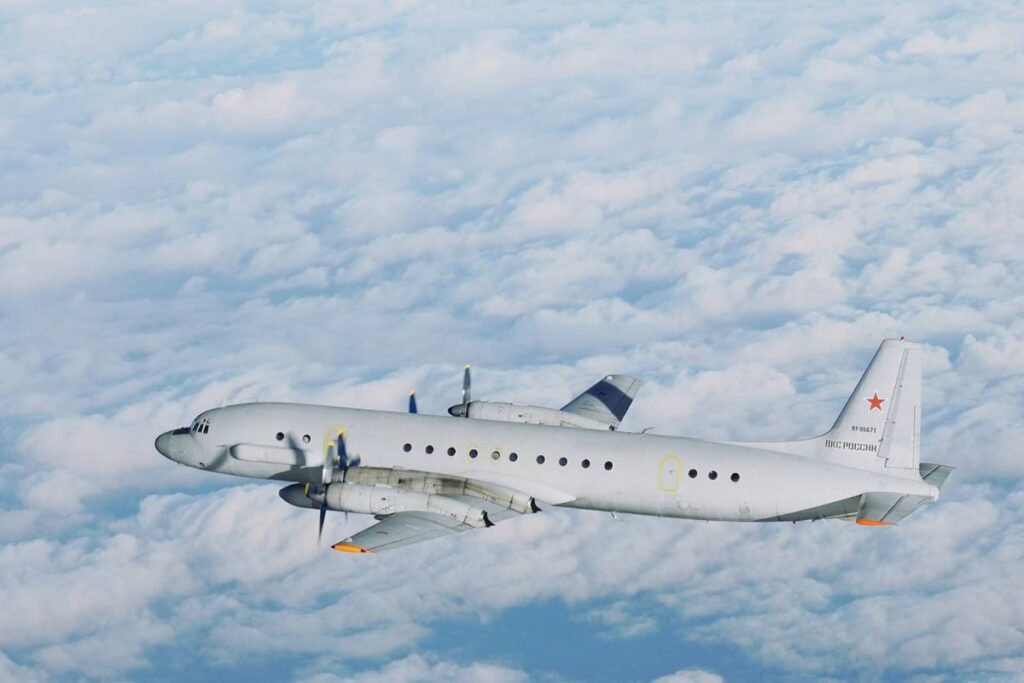
The operation highlights growing Arctic surveillance tensions between NATO and Russia, as the region becomes a strategic hotspot for intelligence gathering and military readiness.
The strategic importance of Northern Norway and the Arctic for NATO and Russia
The Arctic region, particularly Northern Norway, has become a geopolitical hotspot due to its proximity to Russia’s Northern Fleet bases and vital maritime routes. As Arctic ice continues to melt due to climate change, this area is opening up for increased naval traffic, resource exploration, and strategic military movements.
The region’s significance is underscored by the presence of NATO military exercises aimed at bolstering defense readiness and deterring potential adversarial actions by Russia. The Cold Response 2026 exercise, during which the intercepts took place, is one such operation that involves large troop deployments and complex maneuvers emphasizing joint capabilities among NATO allies.
The Russian military’s routine dispatch of Il-20M reconnaissance planes near NATO airspace strengthens their ability to gather intelligence on alliance activities, test response times, and project power in the High North. Such aircraft transmit collected data on electronic emissions, radar signatures, and military movements back to command centers to inform strategic decisions.
Moreover, this activity aligns with Russia’s broader Arctic strategy, which includes military modernization, development of new bases, and assertive patrols. These efforts aim to solidify control over shipping lanes and resource-rich subsea territories.
At the same time, NATO’s increasing presence aims to balance this assertiveness with deterrence, peacekeeping, and maintaining freedom of navigation. The Norwegian interceptions symbolize this delicate balance, illustrating the real-time contest between surveillance, deterrence, and diplomacy.
How geography shapes defense postures in the Arctic
Norway’s extensive coastline and proximity to Russia create a natural frontline necessitating rigorous airspace monitoring. The harsh environment and low visibility conditions demand advanced technologies such as the F-35’s advanced sensors and stealth features to maintain an edge.
Norwegian radar and sensor networks provide early warning of any unauthorized aircraft approaching sensitive sectors, supporting fast QRA launches. The Arctic’s complex geography also influences flight paths, requiring aircraft interceptions to be carefully managed to avoid escalation or accidents in the demanding environment.
Capabilities of the F-35 and the challenge of monitoring multi-sensor spy planes
The Norwegian Air Force’s F-35s represent one of the most advanced fighter platforms currently operating within NATO. These 5th-generation aircraft feature an amalgam of stealth design, sensor fusion, and electronic warfare capabilities that make them ideal for detecting and intercepting low-visibility targets such as intelligence-gathering aircraft.
In the case of tracking the Il-20M, the F-35’s AESA radar, electronic support measures (ESM), and infrared search and track (IRST) systems allow pilots to conduct close surveillance with minimal detection risk. This capability is critical since the Il-20M employs sophisticated electronic countermeasures and operates on the periphery of national boundaries, where careful identification is mandatory.
Norwegian pilots undergo intense training for Quick Reaction Alert missions that demand rapid scramble, precise navigation, and clear communication with command and control units. This ensures that intelligence-gathering planes like the Coot-A are identified swiftly and their intentions assessed without escalating tensions.
Moreover, the interoperability of NATO air defense systems facilitates rapid information sharing, enhancing threat detection and coordinated responses throughout the alliance. When Norwegian F-35s intercept a Russian reconnaissance aircraft, the data collected contributes to a broader intelligence picture shared among NATO members.
This combined approach underlines the critical role of technology in modern air defense strategy, where electronic warfare, real-time data analysis, and stealth capabilities intersect to create a comprehensive surveillance and interception system.
Modern NATO exercises and how they test air defense readiness in the High North
Cold Response 2026, a NATO-led military exercise, brings together thousands of troops, aircraft, and naval vessels operating in Arctic conditions to simulate defense scenarios and enhance multinational coordination. This exercise focuses on high readiness in extreme terrain, testing everything from logistics to electronic warfare capabilities across the alliance.
Within this context, the interception of the Russian Il-20M demonstrates the dynamic airspace challenge NATO forces face, where surveillance and counter-surveillance activities constantly interplay. Such exercises provide critical opportunities for training pilots and troops on recognizing, tracking, and responding to foreign military aircraft activities in sensitive areas.
Cold Response scenarios simulate multiple threats, including incursions by foreign intelligence planes, cyber attacks on communications, and naval maneuvers, stressing the importance of rapid threat assessment and integrated defense networks. The lessons learned lead to enhanced readiness and stronger deterrence, particularly in the geopolitically sensitive Arctic zone.
The exercise also emphasizes interoperability, requiring smaller NATO members like Norway to seamlessly operate alongside larger powers such as the US, UK, and Germany. This cooperation is essential given the complexity of modern air and maritime domains, which involve a variety of sensors, drones, satellites, and advanced fighter jets.
The operations push the limits of endurance, coordination, and technology, preparing NATO for any scenario that might occur in real-world Arctic confrontations. By tracking suspicious aircraft like the Il-20M, NATO forces demonstrate their ability to maintain situational awareness and respond decisively to potential threats.
Key takeaways from the recent intercept missions and their impact on regional security
The two consecutive interceptions of the Russian Il-20M spy plane by Norwegian F-35s underline several important themes in contemporary Arctic security dynamics. They reveal the continuous intelligence contest between NATO and Russia, where airspace vigilance serves both as a defensive measure and a form of strategic signaling.
Such missions reinforce Norway’s role as a crucial NATO frontline state, equipped with cutting-edge technology and trained personnel ready to respond to fast-changing scenarios. The ongoing intelligence-gathering flights by Russia highlight the strategic importance of maintaining robust air defense capabilities and constant situational awareness.
Moreover, these events stress the necessity for comprehensive intelligence sharing and coordination among NATO allies. The swift identification of foreign reconnaissance flights prevents surprises and preserves territorial integrity without initiating physical conflict.
The intercept missions also serve as reminders of the frail balance between military deterrence and diplomatic channels. Each flight and interception sends messages that reverberate through high-level strategic dialogues, impacting future policies and alliances.
Below is a summary timeline detailing the key events related to the recent Coot-A interceptions:
| Date | Time (Local) | Event | Location |
|---|---|---|---|
| March 10, 2026 | 09:30 | First interception of Russian Il-20M by Norwegian F-35s | International airspace off Finnmark coast |
| March 11, 2026 | 09:30 | Second consecutive interception of Russian Il-20M | Same area near Northern Norway |
- Rapid reaction and sustained surveillance capabilities are vital for effective airspace control in contested regions.
- Integrated NATO command and sensor networks improve detection and joint threat responses.
- Advanced fighter jets like the F-35 enable nuanced identification missions while minimizing provocations.
- Ongoing intelligence flights signify continuous contest over Arctic strategic advantage between NATO and Russia.
What is the role of the Il-20M Coot-A aircraft?
The Russian Il-20M, known as Coot-A by NATO, is a multi-sensor reconnaissance plane used for electronic and signals intelligence gathering, tracking NATO military activities, and transmitting data to Russian command centers.
How do Norwegian F-35 jets detect and intercept spy planes?
Norwegian F-35s use stealth, advanced AESA radar, infrared search and track systems, and electronic support measures to detect and track reconnaissance planes like the Il-20M, enabling quick reaction interception missions.
Why is Northern Norway strategically important for NATO?
Northern Norway’s proximity to Russia’s Northern Fleet bases and strategic Arctic maritime routes makes it a critical point for surveillance and defense, serving as a frontline against potential military incursions or intelligence operations.
What is the purpose of NATO’s Cold Response exercises?
Cold Response exercises test the readiness and interoperability of NATO forces in harsh Arctic conditions, focusing on air, sea, and land operations to enhance collective defense capabilities.
Do these intercepts indicate rising tensions between NATO and Russia?
The interceptions reflect ongoing intelligence competition and surveillance activities. While they demonstrate military vigilance, they also highlight the delicate balance of deterrence without escalation in a tense geopolitical environment.
Source: https://www.forsvaret.no/en/news/articles/qra-core
