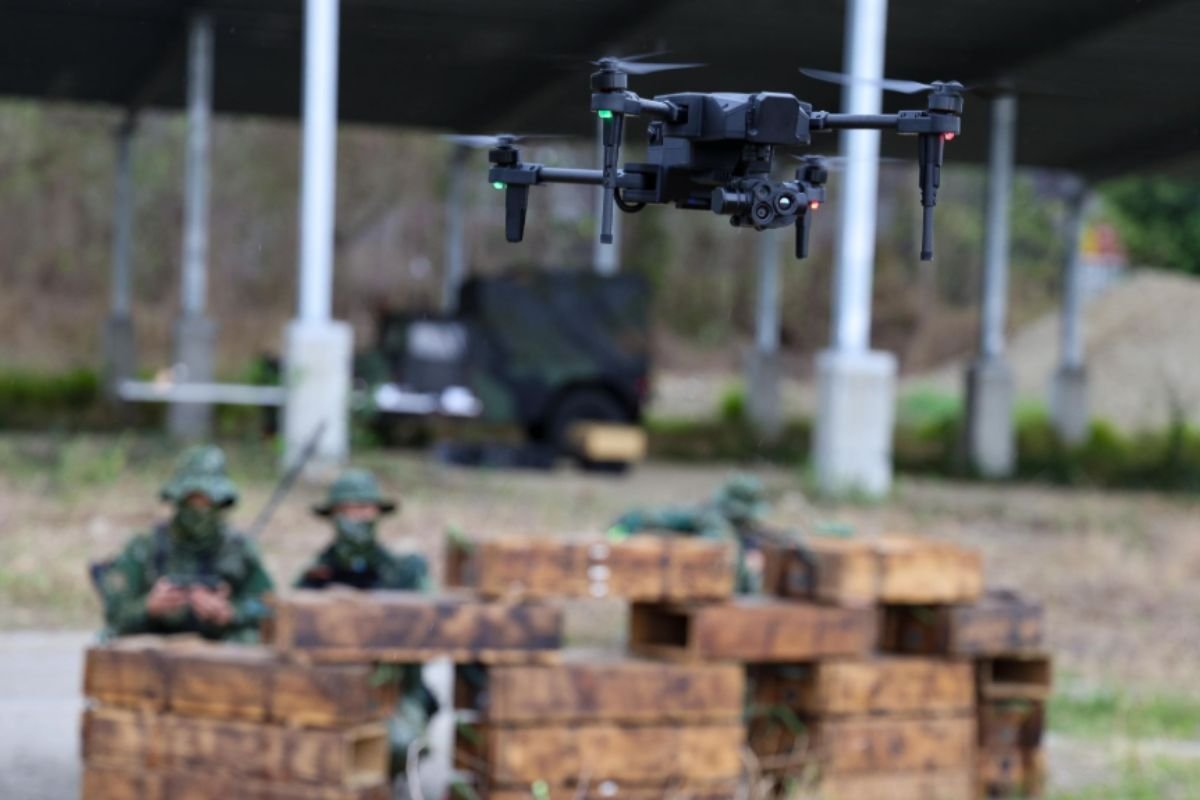
Taiwan’s military is revolutionizing its urban warfare tactics by incorporating sophisticated drone strike drills into realistic urban combat simulations, signaling a monumental shift in its defensive strategy.
As tensions escalate in the Asia-Pacific region, Taiwan is ramping up its military readiness through innovative and technologically advanced exercises. These drills, which emphasize drone strike capabilities within crowded urban environments, reflect a clear response to evolving security threats. The integration of unmanned aerial vehicles (UAVs) in urban warfare scenarios showcases Taiwan’s commitment to modernizing its forces and strengthening civil-military coordination. The following sections unpack various aspects of this strategic evolution, from the capabilities of the drones themselves to the implications for Taiwan’s defense posture and regional security dynamics.
Transforming urban combat: Why drones are a game changer in Taiwan’s defense strategy
Urban combat presents unique challenges that traditional military forces have struggled to overcome effectively. Taiwan, facing a potential threat of invasion that could heavily impact sprawling cities with dense populations, is adopting drones to gain a tactical edge in these complex settings. The use of advanced drone strike drills in urban environments enables precision targeting while minimizing collateral damage, a crucial consideration in safeguarding civilian lives and infrastructure.
Drones such as the Albatross II provide extended operational capabilities, allowing for both reconnaissance and strike missions without risking pilot lives. With an endurance of up to 16 hours and a maximum range near 2,000 kilometers, these UAVs cover extensive territory and can swiftly respond to emerging threats. Their ability to function during diverse weather conditions and varied urban topographies enhances mission flexibility.
One example is the integration of air-launched attack drones like the Jingfeng, which can be deployed from UAV platforms to extend strike reach deeper into contested zones. This layered approach to unmanned operations empowers Taiwan’s armed forces to disrupt enemy movements, neutralize artillery, and protect vital nodes such as command centers and supply routes.
The adoption of drones is not only about offensive capabilities but also improving defensive measures. Drones equipped with advanced sensors and anti-submarine warfare variants enable the military to detect and respond to covert threats more efficiently, even under the stealth tactics favored by potential adversaries. This versatility makes drones indispensable in Taiwan’s shifting focus toward a more integrated, technology-driven battlefield.
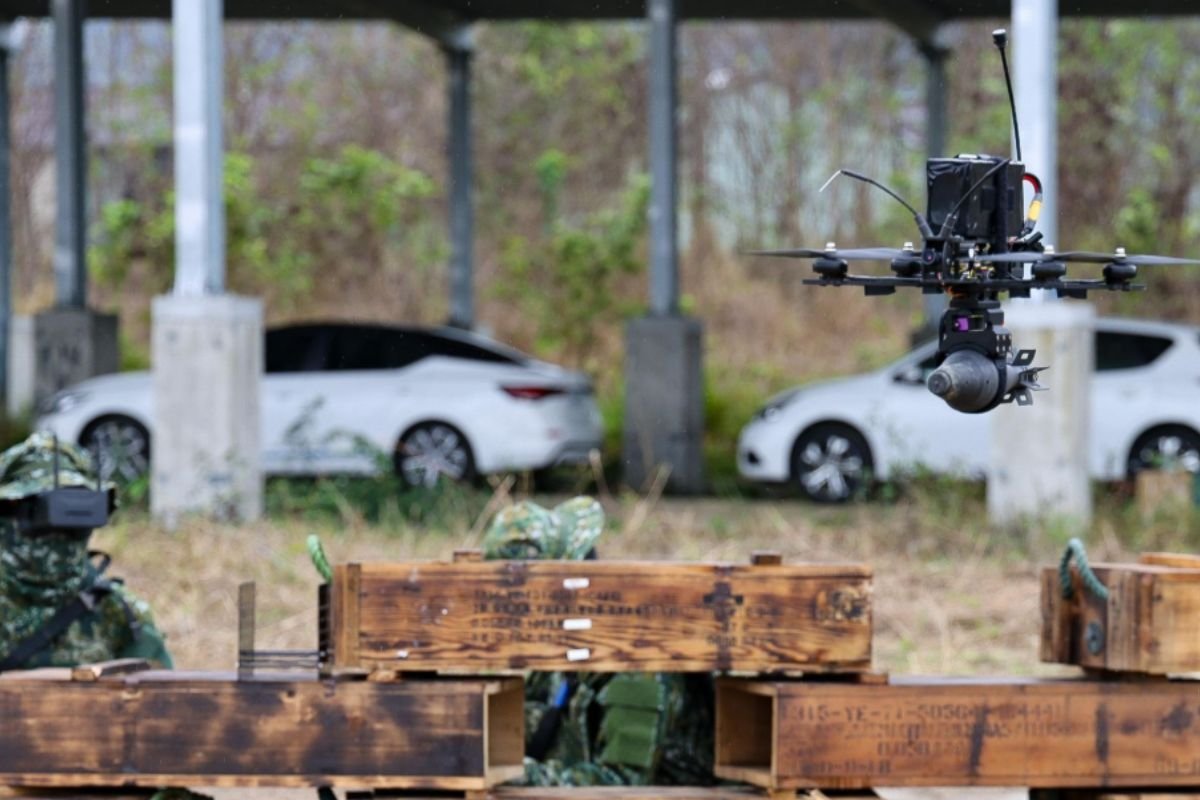
(Photo: Wang Zichang)
Preparing the force: Comprehensive training in drone operations and urban warfare integration
Incorporating drones into military operations requires extensive training beyond traditional combat drills. Taiwan’s military now includes detailed drone strike exercises alongside precision missile training, fostering inter-unit coordination necessary for modern warfare. These drills are designed to ensure that land, sea, and air forces operate seamlessly with unmanned platforms, achieving synchronized strike and reconnaissance missions in urban contexts.
Training focuses heavily on real-time data sharing, operational planning amid tight urban constraints, and overcoming communication network disruptions. By simulating realistic combat situations, including surprise incursions reflecting gray-zone tactics used by China, Taiwan prepares its forces for the multifaceted challenges of urban warfare.
The scale of these exercises is unprecedented in Taiwan. Mobilizing nearly 22,000 reservists signifies a robust commitment to maintaining a ready and adaptable force. Beyond military personnel, these drills extend to civilian populations, enhancing urban resilience and emergency preparedness. Citizens participate in shelter drills and learn to navigate air raid scenarios, contributing to a collective defense framework that blends military and civilian efforts.
This holistic approach reduces the response time to urban crises, ensuring that both soldiers and civilians can minimize risks and maintain operational continuity even under duress. The increasingly common use of drones in these drills reflects a belief that unmanned technologies will be central to future combat environments, necessitating their routine incorporation into training programs.
Strategic and geopolitical implications of Taiwan’s drone-focused urban combat drills
Taiwan’s escalating reliance on drone technology and urban combat readiness sends potent messages across the geopolitical landscape. These initiatives underscore Taiwan’s proactive stance in countering potential Chinese military aggression, particularly in light of Beijing’s evolving grey-zone warfare tactics.
By showcasing the ability to conduct precise and sustained operations within urban settings, Taiwan signals deterrence capabilities to its adversaries and reassures its allies of its regional robustness. The capability to integrate UAVs not only disrupts traditional invasion strategies but also complicates Beijing’s military calculations, potentially raising the costs of any hostile endeavor.
Moreover, Taiwan’s military modernization, illustrated through simultaneous live-fire drills and extended wargames lasting over two weeks, represents a significant escalation in preparedness unmatched in recent decades. This endurance training allows for testing technological integration and operational endurance while sharpening coordination among various branches of the armed forces.
Beyond Taiwan, these developments influence security dynamics in the broader Asia-Pacific region. They compel neighboring countries to reconsider their defense postures, particularly as unmanned systems become more prevalent in military doctrines. Taiwan’s approach could set a precedent for urban defense strategies worldwide, especially for smaller states facing larger, more conventional threats.
The international community closely watches these drills, interpreting them as a barometer for Taiwan’s resilience and technological advancement. Success in these exercises may drive further military aid or collaborative defense initiatives, strengthening Taiwan’s position as a pivotal actor in regional stability.
Technological advances powering Taiwan’s drone warfare capabilities
At the heart of Taiwan’s evolving strategy is a wave of technological innovation that propels its drone warfare capabilities into a new era. Indigenous platforms like the Albatross II and Jingfeng reflect Taiwan’s commitment to self-reliance in defense technology, a priority amid increasing geopolitical isolation from traditional arms suppliers.
These UAVs are equipped with cutting-edge sensors, communication suites, and weapon systems that enable autonomous navigation, target identification, and coordinated attacks across contested urban terrain. The integration of anti-submarine variants illustrates Taiwan’s recognition of multifaceted threats, addressing vulnerabilities in both maritime and terrestrial domains.
Emerging software improvements allow drones to operate under network-denial conditions, maintaining functionality despite enemy efforts to jam or disrupt communications. This resilience is a critical differentiator in high-stakes urban environments where electromagnetic interference is common.
The modular design of these drones facilitates rapid upgrades and mission-specific configurations, enabling the armed forces to adapt swiftly to changing threat landscapes. This flexibility extends to payload options, ranging from surveillance equipment to precision-guided munitions, expanding tactical utility.
Investment in drone technologies also catalyzes Taiwan’s broader defense industrial base, fostering innovation spillovers into civilian sectors such as robotics and telecommunications. These developments enhance overall national resilience and technological sophistication, amplifying the impact of military advancements beyond the battlefield.
Key components of Taiwan’s urban drone strike drills and their operational benefits
Analyzing the core elements of Taiwan’s urban drone strike exercises reveals a complex blend of technology, tactics, and interagency collaboration designed to maximize operational effectiveness. Here are some fundamental aspects driving success in these drills:
- Multi-layered surveillance: Continuous real-time intelligence gathered by drones provides commanders with comprehensive situational awareness, allowing informed decisions.
- Precision targeting: Advanced targeting software ensures minimal collateral damage while neutralizing selected threats swiftly within chaotic urban landscapes.
- Rapid deployment: Air-launch capabilities facilitate quick strikes against high-value targets, extending reach beyond line-of-sight constraints.
- Joint-force integration: Seamless coordination between air, land, and naval units enhances operational synergy across domains.
- Civilian protection strategies: Integrating civil defense protocols during exercises reduces civilian casualties and damage to infrastructure.
- Electronic warfare resilience: Drones designed to operate under jamming conditions maintain mission integrity despite enemy interference.
These components not only demonstrate technological prowess but also define the evolving doctrine shaping Taiwan’s military operations. The drills emphasize not just destruction but also preserving urban infrastructure and safeguarding civilian lives, acknowledging the strategic and humanitarian dimensions of modern warfare.
| Exercise phase | Duration | Key focus | Units involved |
|---|---|---|---|
| Reconnaissance missions | 4 days | Collecting real-time intelligence on urban terrain and threat locations | Drone operators, intelligence units |
| Precision strike exercises | 3 days | Target identification, rapid strike coordination | Air force strike units, UAV attack squads |
| Urban resilience drills | 3 days | Civil-military coordination, emergency response | Reservists, civilian volunteers |
| Electronic warfare trials | 2 days | Testing drone communications under jamming conditions | Electronic warfare teams, drone pilots |
What types of drones does Taiwan use in these drills?
Taiwan deploys advanced drones such as the Albatross II for reconnaissance and the Jingfeng for air-launched attack missions, capable of precise strikes and extended range operations.
How do these drone drills improve civilian safety?
The drills incorporate urban resilience training and civil defense coordination, equipping both military personnel and civilians to respond effectively during urban conflicts, thereby reducing casualties.
Why is electronic warfare resilience important for drone operations?
Electronic warfare resilience ensures that drones can operate effectively even under enemy attempts to jam communications, maintaining mission integrity during high-stakes urban combat.
What is the significance of Taiwan’s focus on urban combat in its military exercises?
Given the demographic and infrastructural realities of Taiwan’s cities, shifting focus to urban combat prepares the military for realistic conflict scenarios, enhancing tactical adaptability and national defense.
How do these exercises affect regional security?
Taiwan’s enhanced drone capabilities and urban combat preparations influence regional defense dynamics by demonstrating deterrence and driving neighboring countries to bolster their own military strategies.
Source: https://www.ydn.com.tw/tw/News/ugC_News_Detail.aspx?ID=630175
