A British Royal Navy warship recently showcased unmatched defense capabilities by successfully neutralizing a relentless drone attack during an intense live-fire exercise off the Welsh coast.
In the wake of rising maritime threats worldwide, particularly from drone swarms and missile attacks, the Royal Navy’s recent training exercise stands as a testament to its evolving defense strategies and technological prowess. Centered around the Type 45 destroyer HMS Duncan, this 72-hour operation off Wales pushed the limits of modern naval defense systems, illustrating the tight coordination between advanced weaponry and tactical ingenuity.
Sharpshooter exercise: a milestone in naval readiness against drone warfare
The recent Sharpshooter exercise conducted in the coastal waters near Cardigan Bay and the Aberporth range was no ordinary drill. The 72-hour operation, orchestrated with precision by the Royal Navy and its partners QinetiQ and Inzpire, placed HMS Duncan and her crew under intense pressure to defend notional UK critical infrastructure against rapid drone and missile swarms.
Such an exercise was inspired largely by real combat encounters, particularly the HMS Diamond incident in 2024 in the Red Sea where emerging threats exposed vulnerabilities to swarm attacks. This background added a heightened sense of urgency to the Sharpshooter drills. HMS Duncan, homeported in Portsmouth, was supported by the 815 Naval Air Squadron’s Wildcat helicopter and cutting-edge drone systems including the Hammerhead and Banshee Whirlwind.
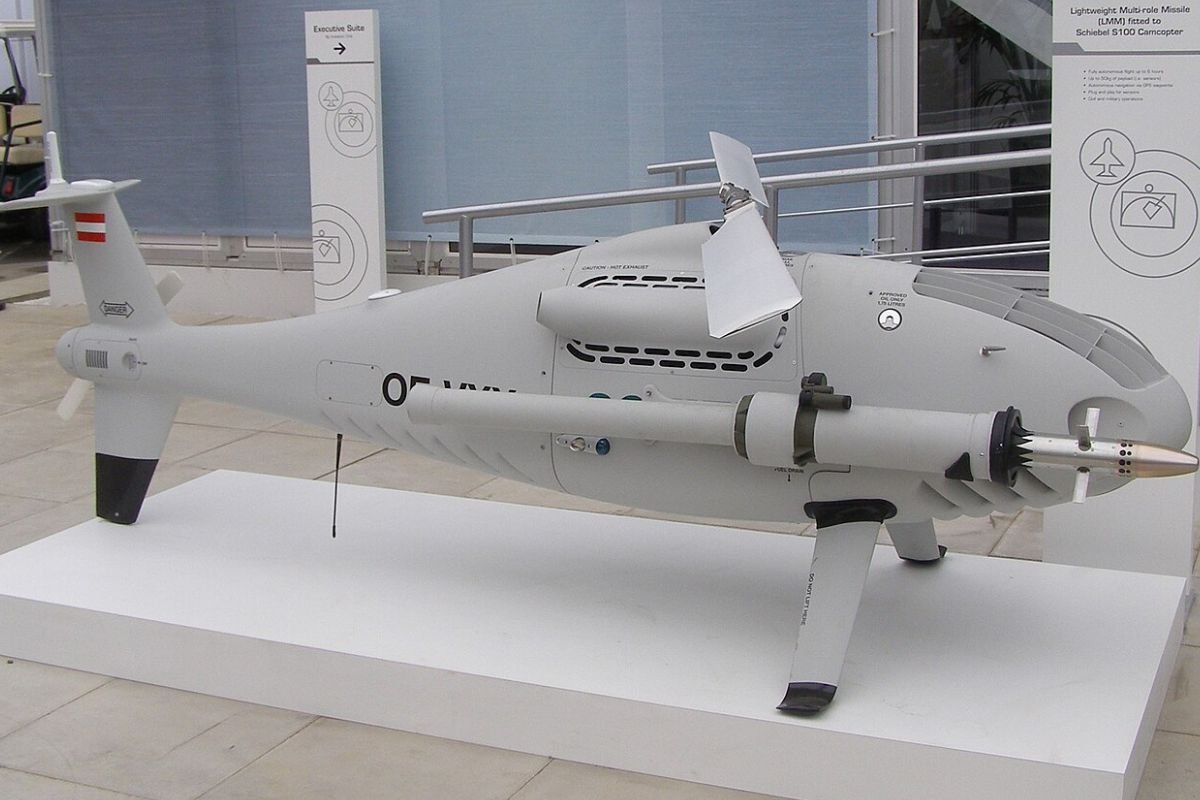
Laser-guided and highly versatile, it can be launched from aircraft, ships, ground vehicles, or by individual soldiers.
The importance of this operation was underscored by the rigorous scenario planning by the Fleet Operational Standards and Training team. Instead of predictable simulations, the team integrated complex, dynamic challenges mimicking real-world battle conditions with waves of unmanned aerial and surface drones moving at speeds exceeding 322 km/h. This approach tested the ship’s reactive capacity and system reliability comprehensively.
To maintain such defense under persistent attack, HMS Duncan had to maximize all onboard resources. This included coordination between radar sensors, the helicopter’s surveillance abilities, and multiple weapon systems to create a multi-layered shield of protection. The combined efforts under continuous threat conditions embodied a new era of maritime security against drone warfare.
The technological backbone: how HMS Duncan neutralized swarms of drones
Defending a naval asset against hundreds of fast-moving unmanned threats requires an arsenal that blends firepower, precision, and rapid response. HMS Duncan is equipped with state-of-the-art weaponry designed explicitly for such high-stakes encounters.
The destroyer’s defense setup includes Martlet missiles for short-range aerial threats, a 114 mm main naval gun for versatile target engagement, a 30 mm medium-caliber gun, and close-in weapon systems (CIWS) like the Phalanx, renowned for their rapid-fire capability against fast-moving targets. Additionally, heavy machine guns provide a last line of defense against surface drones.
During Sharpshooter, these systems worked in harmony. As swarms of drones approached at high speeds, radar systems detected and tracked multiple targets concurrently. The Wildcat helicopter played a crucial role by extending detection range and engaging threats before they reached critical proximity. The synergy between aviation and shipboard defenses created a layered security barrier that was both adaptive and robust.
This combination of technologies exemplifies why layered defense is key to modern naval combat. Instead of relying on a single system, HMS Duncan’s blend of sensors, missiles, and rapid-fire guns allowed for successive waves of drones and simulated missile strikes to be repelled effectively, reinforcing the Royal Navy’s dominance in controlling contested maritime space.
As Commander Dan Lee remarked, “The extensive use of technologies here was vital to overcome multifaceted challenges. Sharpshooter demonstrated the crew’s resilience and the systems’ reliability in rapidly evolving scenarios.”
Training under real threat conditions: the evolving challenge of maritime drone attacks
Maritime security is increasingly complicated by the proliferation of drones capable of coordinated swarm attacks. These unmanned aerial systems (UAS) and unmanned surface vessels (USV) create multiple vectors of attack that traditional defense mechanisms often struggle to counter simultaneously.
Recent geopolitical tensions and incidents—such as the 2024 Red Sea clashes—highlight the real threat posed by hostile forces using swarms of drones and missile attacks targeting commercial shipping lanes and naval vessels. These evolving threats demand rigorous preparation and innovative defense strategies, which shaped the Sharpshooter exercise’s design.
The exercise simulated realistic conditions where HMS Duncan had to maintain continuous awareness while responding immediately to simultaneous threats, including aerial and surface drones moving at speeds > 322 km/h. Operators were tested on their decision-making under stress, not just their technical capabilities.
One critical lesson learned is the importance of integrating human judgment with automated systems. While radar and AI-assisted weapons can lock on to targets swiftly, human crews are essential for interpreting complex scenarios, managing resource allocation, and adapting tactics mid-operation.
The live-fire element added authenticity to the drills, with HMS Duncan deploying a range of missiles, CIWS bursts, and medium-caliber rounds to physically destroy drone targets, thereby providing invaluable feedback on system performance in high-pressure environments.
Coordination and cooperation: key factors behind successful anti-drone defense
The success of the Sharpshooter exercise was not solely due to technology but also stemmed from seamless teamwork and broad cooperation across military and industry partners. The collaboration between the Royal Navy, QinetiQ, and Inzpire exemplifies how defense innovation thrives with public-private partnership.
At the heart of this effort was rigorous command and control coordination under Commander Dan Lee’s stewardship. The crew executed multiple simultaneous operations, integrating data feeds from helicopters, radar, and on-board sensors to make real-time decisions.
Using cutting-edge communication networks, the team ensured that weapon systems fired where they were most effective, minimizing response time and maximizing defense coverage. This sophisticated choreography was critical in managing threats moving at speeds over 322 km/h and involving complex attack profiles.
Moreover, the use of unmanned systems like Hammerhead and Banshee Whirlwind drones not only provided target practice but also helped the crews improve strategies for identifying friend or foe in chaotic environments. This reflects a forward-looking approach to naval warfare where unmanned assets play dual roles in offense and training.
In essence, Sharpshooter revealed that advanced technology combined with expert teamwork is the modern formula to countering the swarm threat challenging navies worldwide. The integration of systems and personnel in such exercises lays the groundwork for future maritime security operations.
Breaking down the defense strategy: layers, tactics, and response times
The layered defense strategy used by HMS Duncan is an exemplary model of how to handle complex and fast-moving threats like drone swarms. This approach leverages multiple tactics combined in sequence to neutralize varied attack types effectively.
Key elements of this defense strategy include:
- Detection and early warning: Advanced radar and the Wildcat helicopter play a pivotal role in spotting threats at long ranges, providing critical reaction time.
- Intercept with missiles: Martlet missiles serve as the first line of defense against fast aerial targets, capable of precise short-range engagements.
- Close-in weapon systems: CIWS like the Phalanx offer rapid-fire gun coverage for threats that penetrate missile defenses.
- Surface gunfire: Medium and heavy machine guns engage drones on or near the water surface, preventing them from approaching the ship.
- Damage control protocols: The crew maintains constant readiness for ship protection and repairs, reflecting the reality of sustained attacks.
| Defense layer | System used | Function | Range/Speed capability |
|---|---|---|---|
| Long-range detection | Radar and Wildcat helicopter | Early identification and tracking | Up to 100 km; drones up to 322 km/h |
| Missile interception | Martlet missiles | Fast aerial target neutralization | Short-range; milliseconds response |
| Close-in defense | Phalanx CIWS | Rapid-fire counter to fast threats | Up to 1.5 km; rapid bursts |
| Surface engagement | Heavy machine guns, 30 mm cannon | Counter drones near sea surface | Short range; flexible targeting |
| Damage control | Ship’s crew and systems | Maintain operational readiness | Continuous |
This tactical layering ensures that incoming threats are engaged at multiple points, increasing the odds of successful defense exponentially. The real-time responsiveness of HMS Duncan’s crew and systems is critical to thwarting fast, sophisticated drone incursions in modern naval environments.
What kind of drones was HMS Duncan defending against?
HMS Duncan was defending against advanced military-grade unmanned aerial and surface drones capable of speeds exceeding 322 km/h. These drones simulate the real threat posed by hostile groups in regions like the Red Sea.
How does the Wildcat helicopter enhance the ship’s defense capability?
The Wildcat extends the ship’s detection range, spotting threats early and engaging targets at a distance, which complements the ship’s onboard weapon systems and improves layered defense effectiveness.
Why is a layered defense strategy important?
Layered defense allows a naval vessel to engage threats at multiple ranges and modalities, improving the chances of neutralizing attackers before they can cause damage.
What lessons were learned from this exercise?
The exercise highlighted the critical need for real-world scenario training, seamless integration of human and automated systems, and the importance of persistent readiness under sustained attacks.
Source: https://www.royalnavy.mod.uk/news/2026/february/26/20260226-hms-duncan-faces-onslaught-as-they-defend-national-infrastructure
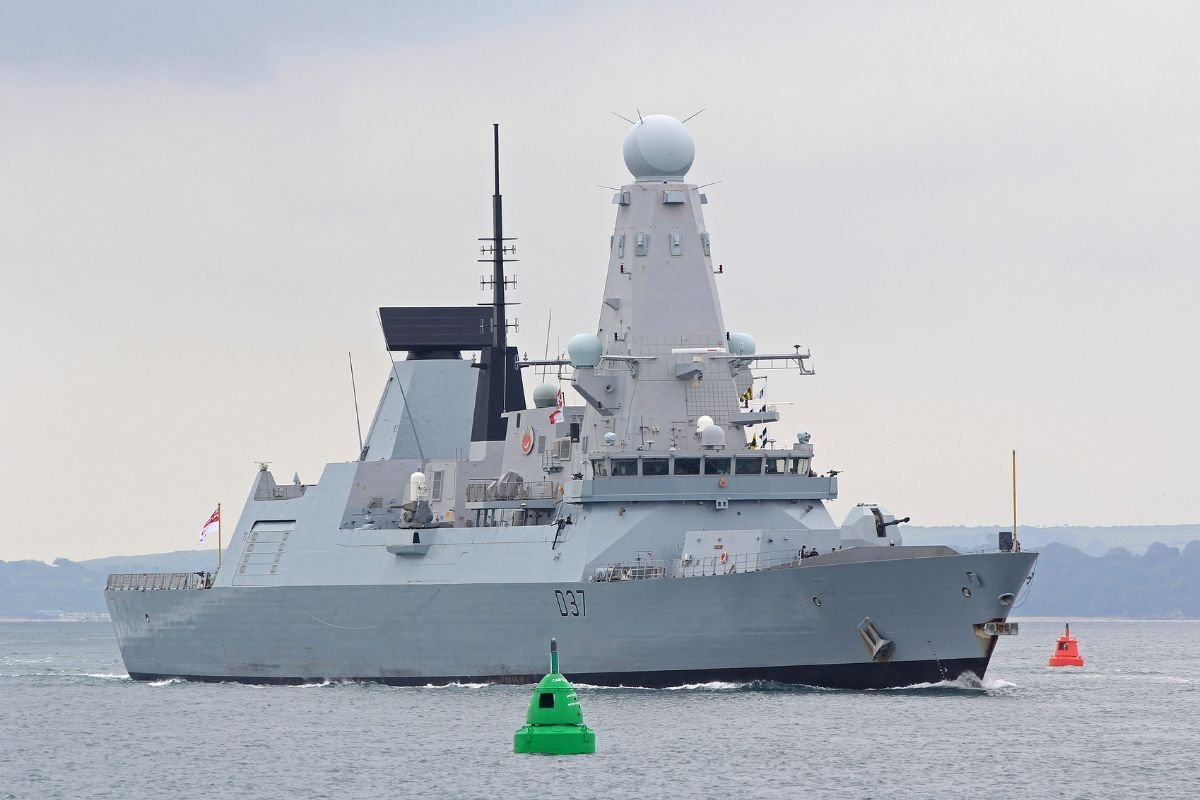
Image: HMS Duncan (D37) is a Type 45 air-defence destroyer of the Royal Navy, commissioned in 2013 and named after Admiral Adam Duncan, victor of the Battle of Camperdown (1797).
Designed primarily for advanced air and missile defence, it protects naval task groups using the Sea Viper system with Aster missiles, while also carrying helicopters and other weapons for multi-role naval operations.
