
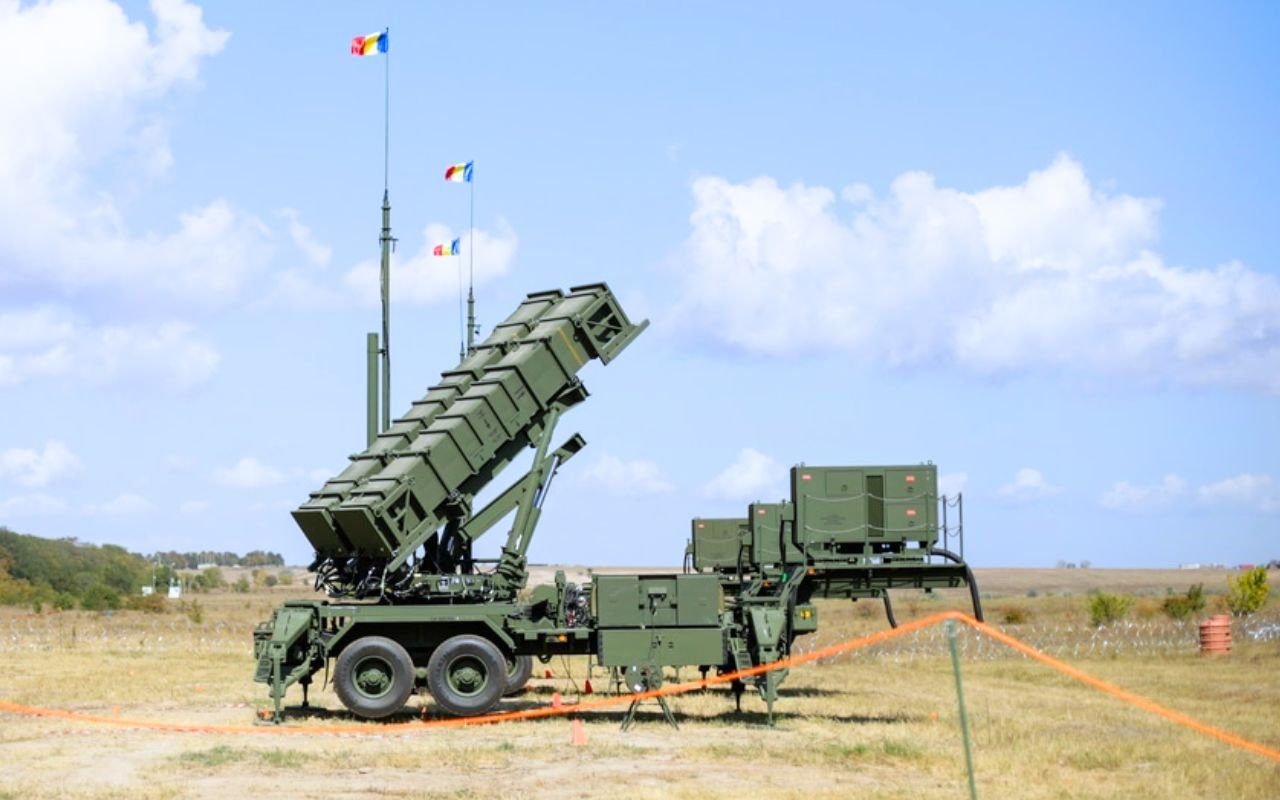
France and Italy are pushing hard to accelerate the production of surface-to-air missiles to meet the growing demand for stronger air defense systems in today’s volatile geopolitical environment.
In the shadow of mounting international tensions and emerging aerial threats, France and Italy are spearheading efforts to boost their missile production capabilities. Central to this initiative is the SAMP/T NG system, a cutting-edge surface-to-air missile platform developed through Franco-Italian collaboration. This move reflects both countries’ commitment to fortifying their airspace defenses amid evolving challenges posed by advanced cruise missiles, drones, and ballistic threats. Together with the UK, they have placed considerable orders for Aster missiles, reinforcing European strategic autonomy and industrial resilience.
Why the surge in European surface-to-air missile production is crucial now
The demand for enhanced surface-to-air missile production by France and Italy is a direct response to rapidly shifting threat landscapes. Across Europe, defense officials recognize the pressing need to bolster air defense systems amidst ongoing conflicts in regions like Ukraine and the Middle East. These conflicts demonstrate how missile technology, particularly cruise missiles and drones, has transformed modern warfare. Governments are thus urgently re-evaluating current stockpiles and manufacturing capabilities to ensure rapid, reliable response options.
The combined air forces of France, Italy, and the UK recently ordered over 200 additional Aster missiles to replenish reserves and prepare for heightened future demand. This significant order underscores how European nations are no longer content with fragmented industrial efforts. Instead, they aim to harmonize their missile production chains to maintain a technological edge. Limited existing stocks mean that sustained, large-scale production is now a core strategic priority, not just a supplementary measure.
To give concrete context, consider how missile defense systems like SAMP/T NG face challenges posed by a variety of aerial threats: high-speed cruise missiles that evade detection, swarms of drones executing coordinated tactics, and ballistic missiles capable of striking with devastating speed. Only by accelerating production and development can European forces maintain effective deterrence and protection for their critical infrastructures. France and Italy’s push is also a message to defense industries to ramp up manufacturing investments for this new age of competition.
Another driving factor is industrial sustainability. The need to ensure continuous supply amid global supply chain disruptions has energized this bilateral effort. Achieving faster production cycles reduces dependency on unpredictable external factors, enabling these nations to independently field sophisticated air defense layers.
The SAMP/T NG: redefining air defense with Franco-Italian innovation
At the heart of this production surge lies the SAMP/T NG system, a next-generation air defense platform reflecting a seamless Franco-Italian partnership. Developed jointly by MBDA and Thales, the system integrates a network of radars, command centers, and missile launchers designed to combat a full spectrum of airborne threats. This technology is evolving to replace the older SAMP/T models and tailor responses to emerging challenges.
The missile family powering SAMP/T NG is the renowned Aster series, which includes variants like the Aster 15 and the advanced Aster 30 B1NT. These missiles can strike targets ranging from enemy aircraft and drones to tactical ballistic missiles. The design fosters flexibility with its rapid-fire launch capability, ensuring European forces can counter multiple simultaneous threats effectively.
One of the most striking elements of the SAMP/T NG system is its sophisticated radar, developed by Thales. This “Ground Fire Radar” features a 400-kilometer surveillance radius, providing full 360-degree coverage. Its advanced detection abilities enable early threat identification, allowing the command center to deploy interceptors with precision and speed. During recent live tests conducted in France and Italy, the system demonstrated high effectiveness against simulated cruise missile and ballistic missile attacks, building trust in its real-world viability.
The collaboration also extends to industrial innovation. MBDA’s factories in Bourges and Selles-Saint-Denis in France and Fusaro in Italy are critical nodes in this manufacturing network. Significant investments have been poured into these facilities to enhance production capacity, introduce automation, and ensure supply chain robustness. Early batches of the Aster missiles have already been delivered to Italian forces, signaling the industrial ecosystem’s readiness to scale up quickly to meet new orders.
Strategic impacts of ramping up missile production on European defense
The decision to accelerate production of surface-to-air missiles has ripple effects far beyond manufacturing lines. For France and Italy, as well as their European partners, it spells a broader structural shift in defense priorities and strategic posturing. Investing heavily in missile technology strengthens deterrence and reinforces Europe’s ability to operate independently amid global tensions.
With missile threats increasing in sophistication — including hypersonic speeds and unpredictable flight paths — the Aster missile family represents a vital bulwark in layered defenses. Their ability to engage targets beyond 100 kilometers away protects not only military assets but also civilian infrastructure and population centers. This robustness aligns with growing public concerns over national security, influencing political will and funding allocations.
Moreover, this enhanced missile production supports interoperability among European military systems. By standardizing Aster missiles and the SAMP/T NG across multiple countries, logistics become more streamlined. Training programs, maintenance protocols, and operational doctrines can align more closely, providing a unified European front against air threats. This cooperation also helps mitigate costs, allowing smaller nations access to top-tier defense capabilities through pooled resources.
This industrial and strategic alignment also serves an economic purpose. It preserves and creates highly skilled jobs across France and Italy, securing expert workforces in missile technology, manufacturing, and defense electronics. In the long term, a well-funded and productive missile sector ensures lasting European competitiveness in the global arms market.
How does this production ramp-up translate to battlefield advantages? Enhanced production means faster replenishment of expended missiles during sustained conflicts. It also supports iterative upgrades as field feedback shapes missile improvements, making the systems adaptable to new challenges over time. This cycle of production and innovation is vital for maintaining superiority in unpredictable conflict environments.
Key challenges to rapidly increasing missile production and how France-Italy collaboration tackles them
Boosting missile production at scale is no simple task. France and Italy face a web of challenges, ranging from technical complexities to supply chain constraints and workforce availability. The fast pacing of military demand means factories must balance quality and quantity without compromising system integrity — a difficult equation in complex missile technology.
Raw materials, high-precision components, and electronic subsystems require stringent quality controls. Any disruption in supply can delay production lines. To address this, the Franco-Italian defense consortium has prioritized securing stable supplier relationships and diversifying sourcing options. Efforts to localize critical parts minimize dependence on external vendors and reduce risk.
Workforce skills are another vital piece. Missile construction demands experts in rocket propulsion, guidance systems, and electronics testing. France and Italy have doubled down on workforce development with specialized training programs tailored for defense manufacturing. Partnerships with technical institutes and universities aim to cultivate a pipeline of engineers and technicians to sustain long-term production needs.
On the technical front, continuous innovation is embedded in the production process. Automated assembly lines shorten build times, while rigorous testing protocols ensure reliability for each missile produced. Collaborative research between MBDA, Thales, and other industry players enhances manufacturing methods and integrates feedback from military users to refine systems.
Politically, coordinating joint contracts across France, Italy, and the UK requires diplomatic finesse. The Organisation for Joint Armament Cooperation (OCCAR) plays a key oversight role, managing contracts and ensuring equitable distribution of work. This multi-national governance model helps avoid bottlenecks and keeps production synchronized with military demand.
List of core strategies enabling accelerated missile production:
- Investment in advanced automated manufacturing technologies
- Securing diverse and localized supply chains
- Targeted workforce training and recruitment
- Strong multi-national coordination through OCCAR
- Ongoing R&D for system upgrades during mass production
Comparing delivery timelines and production schedules for Aster missile batches 2024-2026
Understanding the scheduling and delivery expectations clarifies how swiftly France, Italy, and the UK plan to bolster their air defenses. Below is a summary of key milestones related to recent missile orders and production ramps:
| Year | Event | Missile Type | Quantity | Purpose |
|---|---|---|---|---|
| 2022 (late) | Initial joint contract signed | Aster 15 and Aster 30 | 700 missiles | Delivery to French and Italian forces |
| 2023 | First batch delivered to Italy | Aster 15 and 30 | Initial quantities | Operational deployment |
| 2024-2025 | Production ramp-up phase | Aster 30 B1NT, Aster 15 | Additional 218 missiles ordered (including 134 for 2025-2026 deliveries) | Stock replenishment and modernization |
| 2026 and beyond | Enhanced deliveries continue | Aster 30 B1NT | Ongoing production to meet demand | Long-term air defense capability |
This timeline highlights how swiftly France and Italy are scaling up production in coordination with UK forces. The combined efforts ensure a solid defensive posture ready to face emerging threats over the next decade.
What makes the Aster missile family unique in European defense?
The Aster missile family combines long-range engagement with flexibility to neutralize diverse aerial threats, including aircraft, drones, and tactical ballistic missiles. Developed through Franco-Italian cooperation, it is a cornerstone of Europe’s air defense.
How does the SAMP/T NG system enhance missile defense compared to previous generations?
SAMP/T NG boasts improved radars with wider surveillance ranges, 360-degree coverage, and advanced command systems, making it more adaptable to modern threats like hypersonic missiles and drone swarms.
What challenges do France and Italy face in speeding up missile production?
Challenges include securing high-quality raw materials, maintaining precision in manufacturing, ensuring skilled workforce availability, and coordinating multinational contracts through organizations like OCCAR.
Why is the Franco-Italian partnership significant for European defense?
The partnership leverages combined industrial strengths, harmonizes technology, and ensures sustainable production capacity, thus strengthening Europe’s autonomous air defense capabilities.
How will increased missile production affect European security?
Faster missile production supports replenishing stockpiles, adapting to evolving threats, and fostering greater military interoperability among European nations, ultimately enhancing regional security.
