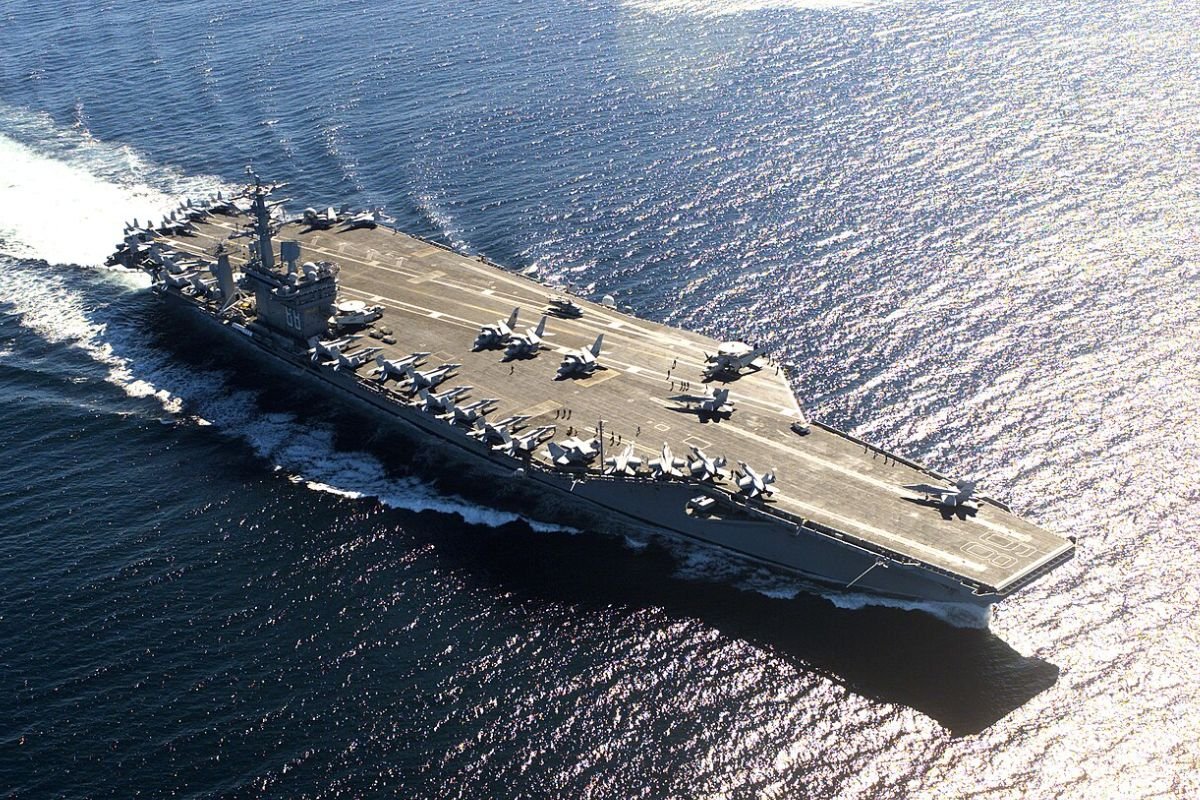
The scheduled 2026 decommissioning of the USS Nimitz marks a critical turning point for the U.S. Navy, highlighting severe strains on its carrier fleet amid rising global challenges.
As the oldest nuclear-powered aircraft carrier prepares to retire after over five decades of service, the Navy faces a shrinking fleet and increasing operational pressures. This development exposes the growing risks linked to a reduced carrier presence at sea, particularly as geopolitical confrontations intensify across multiple theaters. The U.S. must navigate these uncharted waters, balancing fleet sustainability, maintenance challenges, and emerging threats from rival navies.
Overstretched operations amid a shrinking carrier fleet
The USS Nimitz (CVN-68), the United States Navy’s oldest active nuclear-powered carrier, is on its final mission before retirement in May 2026, reducing the carrier count from 11 to 10. While this fleet reduction might seem minor on paper, it deepens a dangerous overextension already gripping the Navy’s carrier force. At any moment, only about half of this already diminished fleet is operational at sea; the remainder undergoes maintenance or upgrades, further restricting active deployment capability.
Operational tempo (OPTEMPO) is a key strain factor. Recent missions, such as Operation Epic Fury in the Red Sea, have pushed carriers like the USS Gerald R. Ford and USS Harry S. Truman to extreme deployment lengths with few breaks. USS Gerald R. Ford endured technical problems like sewage system failures requiring 19-hour crew shifts for repairs, underscoring the toll on both ship systems and personnel.
Even newer carriers of the Ford class face consistent maintenance hurdles. A 2022 Government Accountability Office (GAO) report highlighted a staggering $1.8 billion backlog in maintenance, with 75% of aircraft carrier scheduled upkeep between 2015 and 2019 completed late by an average of 113 days. The wear of continuous deployment cycles translates into technical failures, reduced readiness, and lower morale within crews.
Such overextension raises critical questions about mission sustainability. The Navy’s carrier strike groups remain the most flexible and potent tools of American naval power projection. However, pushing aging carriers beyond their limits weakens their ability to deter rivals or respond rapidly to crises. The Navy’s dilemma is clear: retain the Nimitz class as a safety valve or embrace newer systems despite their growing pains.
Legacy vessels versus the new generation: battle of capacity and capability
The scheduled retirement of the USS Nimitz spotlights the broader tension between legacy vessels and newer carrier programs. The Nimitz class carriers have served with distinction since the 1970s, combining nuclear propulsion with extensive air wing capabilities. Their sheer endurance and combat-tested reliability remain unmatched by any modern alternative.
Yet, the Ford-class carriers, designed to replace and surpass Nimitz’s capabilities, have encountered persistent challenges. Beyond massive construction costs nearing €13.3 billion per ship, these carriers have suffered technological setbacks and maintenance delays that hinder rapid integration into operational cycles. Issues such as crew fatigue and supply chain strains compound these problems.
The Navy’s shrinking shipyard capacity exacerbates these supply and repair issues. This industrial shortfall results from decades of reduced investment, leading to aging facilities and workforce shortages. For example, some vessels face delays of up to three years in dry dock maintenance, pushing carrier availability lower at a time when demand for presence peaks.
Comparing the fleet’s composition reveals critical vulnerabilities:
- Oldest carriers, like USS Nimitz and John C. Stennis, are nearing or past mid-life Refueling and Complex Overhauls (RCOH), raising maintenance costs and risks.
- Newer Ford-class carriers offer advanced systems but bear growing pains as shipbuilders and crew adapt to novel technologies.
- The U.S. Navy’s carrier count is its smallest since World War I, magnifying pressure on each platform’s deployment cycle.
Balancing these competing demands reveals a complex strategic challenge: maintain aging vessels longer with rising upkeep costs or accelerate reliance on still-maturing newer assets. This choice carries wide-ranging consequences for forward naval presence and rapid response capability in contested regions like the Indo-Pacific.
Global strategic risks amplified by the shrinking carrier presence
The reduction from 11 to 10 carriers might not sound drastic out of context, but the strategic landscape makes this shift far more consequential. The U.S. Navy faces a rising Chinese naval threat that is rapidly expanding the People’s Liberation Army Navy’s (PLAN) carrier and missile capabilities. The PLAN’s growing deployment of hypersonic and anti-ship missiles, such as the CM-302, challenges the historical dominance of U.S. carrier strike groups.
For example, missile salvos fired by Iran—reportedly launching 50 Chinese-made CM-302 anti-ship missiles at American naval assets—were largely neutralized by U.S. defenses. Despite this defensive success, it underscores how such threats force carriers to operate under increasingly perilous conditions. Emerging missile technologies diminish their survivability without constant air and missile defense support.
Operational pressures also extend across multiple regions simultaneously. For instance, three carriers were recently stationed in operations near Iran, stretching the fleet thin while maintaining commitments in the Indo-Pacific and Mediterranean. This dispersion also means that delays in one ship’s maintenance amplify vulnerabilities in others that cannot fill the operational gaps quickly.
This precarious situation is further complicated by morale and human factors. Prolonged deployments and deployment cycles are wearing down personnel and their families, leading to decreased morale and operational effectiveness. Extended absence, fatigue, and psychological stress form invisible but significant threats to mission readiness.
The outcome is a strategic calculus where fewer carriers must counter more sophisticated adversaries and respond swiftly across a global theatre that demands persistent US presence. This makes each ship’s availability and operational health a national security imperative.
Impact of shipyard capacity and construction bottlenecks on fleet sustainability
Behind the visible plight of the fleet lies a U.S. shipbuilding and maintenance ecosystem struggling to keep pace. Maintaining nuclear-powered supercarriers requires specialized dry docks, skilled labor, and sustained investment—resources dwindling since the Cold War’s end. The backlog of €1.8 billion in deferred maintenance manifests as late repairs, prolonged outages, and eventual operational restrictions on key assets.
Workforce shortages in shipbuilding yards compound these issues, as the pool of skilled tradespeople diminishes due to retirements and insufficient recruitment. Aging infrastructure further increases repair time and costs, while fluctuating defense budgets introduce unpredictability in scheduling and resource allocation.
These systemic problems create a cascading effect on carrier availability:
| Factor | Impact on Carrier Readiness | Example/Statistic |
|---|---|---|
| Maintenance backlog | Delays in scheduled upgrades and repairs | €1.8 billion deferred maintenance as of 2022 |
| Workforce shortage | Reduced shipyard productivity and slower turnaround | Long maintenance delays averaging 113 days on carriers |
| Aging infrastructure | Increased downtime and repair costs | Limited dry dock availability, causing maintenance bottlenecks |
Strategic collaboration with allied shipbuilders in Japan and South Korea is gaining traction to ease smaller vessel production, freeing U.S. yards to focus on large carriers. However, extending this cooperation remains both politically sensitive and logistically complex.
Ultimately, sustained investment in the industrial base is crucial for reversing downward trends in fleet availability and ensuring the U.S. Navy matches its strategic ambitions.
Future naval force structure: adapting to evolving threats and missions
The mounting challenges facing the U.S. carrier fleet have catalyzed significant debate about the future of naval power projection. Analysts argue that the era of massive aircraft carriers is challenged by new defensive technologies and budgetary constraints, suggesting a pivot toward smaller, more agile ships and unmanned systems.
While aircraft carriers remain central to projecting power—thanks to their ability to deploy aircraft rapidly worldwide—the balance is shifting. The prospect of drone carriers or frigate-sized vessels optimized for specific mission sets is gaining interest within the Navy and defense circles.
Key drivers shaping this evolution include:
- Emergence of hypersonic missiles and advanced anti-ship weapons that threaten large, slow-moving targets.
- Budget limitations that curtail the construction of billion-euro supercarriers beyond a certain number.
- The need for distributed lethality, spreading naval firepower across a fleet of smaller, numerous platforms.
- Technological advancements in unmanned aerial systems that expand the carrier’s reach without risking crew.
The Navy’s official stance remains that carriers are vital for deterrence and operational flexibility. However, with each retirement like the USS Nimitz, the strategic community must rethink how best to integrate legacy platforms with innovative concepts to maintain naval dominance amid growing threats from China, Russia, and other strategic competitors.
Why is the retirement of the USS Nimitz significant?
The USS Nimitz is the oldest active nuclear-powered aircraft carrier, and its retirement reduces the fleet size from 11 to 10. This reduction exacerbates the already stretched U.S. Navy carrier operations, impacting global naval presence and strategic readiness.
What challenges does the U.S. Navy face in maintaining its aircraft carriers?
The Navy faces a $1.8 billion maintenance backlog, workforce shortages, aging shipyard infrastructure, and extended deployment cycles for carriers. These factors delay repairs and reduce fleet readiness.
How do new missile threats affect aircraft carrier survivability?
Emerging hypersonic and anti-ship missiles increase risks to large carriers by enhancing adversaries’ strike capabilities. However, recent incidents show U.S. defenses remain effective at intercepting missile salvos.
Is the future of U.S. naval power centered on aircraft carriers?
While aircraft carriers continue to anchor naval power, there is growing interest in diversifying naval forces through smaller ships and unmanned systems to meet evolving threats and budget realities.
Can allied shipbuilders ease U.S. naval construction bottlenecks?
Collaboration with allies like Japan and South Korea is helping to distribute the production workload, freeing U.S. yards to focus on large vessels. However, such partnerships require careful coordination and political agreement.
Source: https://www.stripes.com/branches/navy/2026-02-27/nimitz-gap-retirement-oldest-aircraft-carrier-20894757.html
Image: The USS Nimitz (CVN-68) is a nuclear-powered aircraft carrier and the lead ship of the Nimitz-class, commissioned into the U.S. Navy in 1975.
One of the largest warships ever built, it can carry up to 90 aircraft and operate globally thanks to its nuclear propulsion system.
