
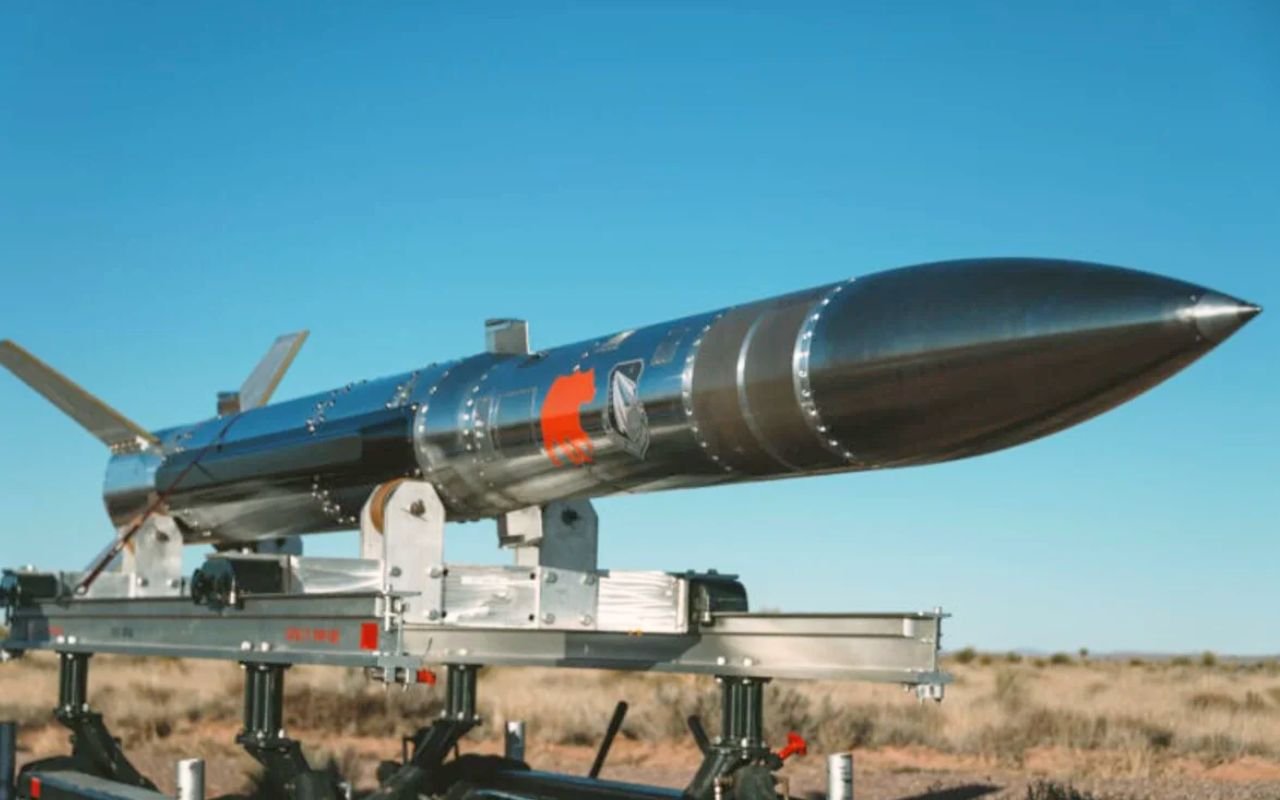
The U.S. Air Force has taken a major leap in missile technology with the recent unveiling of the Advanced Rapid Missile Demonstrator (ARMD), a low-cost hypersonic missile concept designed for rapid deployment and enhanced tactical advantage.
In the ongoing global race to develop hypersonic weaponry, the U.S. Air Force’s latest project reveals a strong commitment to affordable propulsion technologies and faster integration of battlefield-ready systems. The ARMD, powered by a liquid rocket engine developed by Draper and tested by Ursa Major Technologies, symbolizes a significant shift toward scalable missile platforms that could redefine the strategic landscape for years to come. This article delves into the intricacies of this groundbreaking system, its development challenges, potential battlefield applications, and its role within broader defense innovation efforts.
Design innovation and technological breakthroughs in ARMD’s propulsion system
The heart of the ARMD missile demonstrator lies in its cutting-edge propulsion system, specifically the Draper liquid rocket engine. Unlike traditional solid-state rockets, this liquid-fueled engine provides superior control and the ability to modulate thrust dynamically during flight, translating into greater maneuverability and efficiency at hypersonic speeds.
This focus on liquid propulsion marks a strategic divergence in missile technology. Most hypersonic projects utilize solid propellants for their simplicity and reliability, but with compromises in flexibility. The Draper engine allows for a more adaptable flight profile which is crucial when engaging rapidly changing threats or evading sophisticated missile defense systems. By offering the capability to make mid-course trajectory adjustments, the ARMD can engage targets with increased precision.
Ursa Major Technologies, based in Colorado, completed a successful static fire test of this engine, validating the design and integration within the missile’s architecture. This static test is a critical milestone, demonstrating that the engine can sustain the intense thermal and mechanical stresses associated with hypersonic propulsion. The successful “hot fire” confirms readiness for the next phase: live flight testing. The choice of liquid propulsion and rapid test cycles reflects the broader Air Force strategy to rapidly iterate and scale effective missile designs.
Besides raw performance, affordability plays a central role in the ARMD project. The Air Force Research Laboratory (AFRL) aims to develop hypersonic systems that balance cutting-edge capability with scalability and cost-efficiency. By leveraging modular designs and commercial off-the-shelf technologies within the propulsion system, ARMD hopes to lower barriers for mass production, allowing the military to deploy multiple units without prohibitive costs.
This propulsion innovation also points to a future where hypersonic missiles can be tailored in size and thrust for various mission scopes — from quick interception to long-range strikes. This flexibility could transform missile deployment strategies, enabling more adaptive and layered defense systems.
The strategic significance of ARMD in U.S. defense and global military balance
Hypersonic weapons represent a fundamental shift in warfare dynamics due to their extreme speed – typically above Mach 5 – which reduces enemy reaction time drastically. The ARMD program shines a spotlight on how the U.S. Air Force intends to maintain strategic superiority against adversaries who are rapidly advancing their own hypersonic capabilities.
Since Russia and China have tested and deployed hypersonic missiles with significant ranges and maneuvering capabilities, the U.S. must develop comparable or superior systems to deter aggression and ensure battlefield dominance. The ARMD allows the U.S. to advance on several strategic fronts, including quick responsiveness, penetration of sophisticated enemy air defenses, and affordability allowing for widespread deployment.
The missile demonstrator program aligns with high-priority defense initiatives focused on hypersonic development, electronic warfare, and integrated missile defense networks. Hypersonic missiles like ARMD can potentially bypass traditional radar and missile shields due to unpredictable trajectories and rapid terminal phases. This escalates the importance of creating countermeasures and detection technologies in tandem.
The cost-effectiveness of ARMD also raises intriguing questions about the future missile stockpiles. Historically, hypersonic systems have been extremely expensive and complex, limiting numbers to a handful of prototypes or operational units. ARMD’s rapid development cycle and modular design could see a transition toward not just “high-end” missile units but also mass-deployable weapons that sustain prolonged conflict readiness.
Moreover, this program enhances the broader concept of multi-domain operations, where air, space, cyber, and ground forces operate in synchronicity. A missile capable of delivering fast, precise strikes increases the flexibility of U.S. tactical planners and forces a rethink of existing defense paradigms among both allies and rivals.
Testing milestones and the path to deployment for ARMD
The development of advanced missile technology is marked by a rigorous and staged testing process. The recent static fire test performed by Ursa Major Technologies confirmed critical attributes of engine performance, propellant efficiency, and structural integrity under extreme conditions.
Following this, ARMD’s upcoming flight tests will be scrutinized for real-time propulsion behavior, guidance system accuracy, and thermal management at hypersonic speeds. These live-fire demonstrations are pivotal, as they simulate actual combat scenarios and evaluate the missile’s ability to respond and adapt in the air against moving targets and countermeasures.
The Air Force Research Laboratory has emphasized that these tests not only aim to validate the hardware but also to refine operational doctrines and integration into existing platforms. Plans include compatibility with current launch systems on aircraft, ground-based launchers, and possibly naval vessels to ensure multi-platform flexibility.
A phased approach will gradually increase test complexity, beginning with short range flights and progressing to longer distances surpassing hundreds of kilometers. Each phase gathers data critical to improving guidance algorithms, propulsion efficiency, and survivability against electronic jamming.
Here is a summary of key testing phases planned for ARMD:
| Test phase | Objective | Expected timeline | Key focus areas |
|---|---|---|---|
| Static fire test | Validate engine thrust and stability | Completed 2026 Q1 | Propulsion performance, structural integrity |
| Short-range flight test | Assess guidance and flight control | 2026 Q3 | Flight trajectory, avionics, thermal shielding |
| Extended range flight test | Evaluate maneuverability and endurance | 2027 Q1 | Thrust modulation, mid-course adjustments |
| Operational readiness test | Confirm integration with platforms | 2027 Q3 | Compatibility, deployment procedures |
Each stage intends to reduce risks and identify weaknesses early, streamlining the route to an operational weapon system that can be produced rapidly and reliably.
Economic impact and affordability challenge in hypersonic missile development
A major challenge in hypersonic weapons lies not just in engineering but also in controlling production costs. The ARMD program tackles this head-on by prioritizing affordability alongside performance. This approach stems from lessons learned in previous hypersonic efforts that often resulted in prohibitively expensive prototypes with limited mass production potential.
The drive toward low-cost hypersonic missile alternatives reflects military budget realities, which demand striking a balance between technological advances and realistic acquisition strategies. ARMD’s concept of modular components, commercial off-the-shelf parts, and streamlined manufacturing processes has attracted significant attention for potentially reshaping the missile market.
Cost containment also matters because hypersonic weapons will likely require substantial stockpiling to build a credible deterrent. Combat scenarios often demand multiple launches to overwhelm defenses or respond quickly to emergent threats. Without affordable production, military planners face the risk of trading quantity for quality in ways that may handicap operational readiness.
Additionally, the growing demand for rapid manufacturing cycles and flexible supply chains underscores ARMD’s role as a testbed for innovative industrial methods. The program pushes forward concepts like additive manufacturing, digital twins, and advanced materials that both improve product reliability and reduce lead times and costs.
Here’s a list summarizing ARMD’s affordability-driven design priorities:
- Use of commercial off-the-shelf components where possible to reduce specialized part fabrication
- Standardized modular missile architecture allowing rapid assembly and interchangeability
- Streamlined testing protocols to compress development timelines
- Focus on liquid propulsion systems for flexibility and reusability advantages
- Integration of advanced manufacturing techniques like 3D printing to cut material waste and build complexity
Collaborations and technological partnerships driving the ARMD initiative
The ARMD program exemplifies a growing trend toward public-private partnerships in defense technology development. The collaboration between the Air Force Research Laboratory and Ursa Major Technologies highlights how government agencies increasingly rely on innovative, nimble aerospace companies for rapid prototyping and responsive engineering.
Ursa Major’s expertise in liquid rocket propulsion systems combined with AFRL’s broad strategic oversight creates a synergy allowing accelerated maturation of complex technologies. This partnership model reduces bottlenecks and fosters open innovation pathways, critical for maintaining technological edges amidst intense international competition.
Beyond propulsion, ARMD integrates a wide range of inputs, including guidance systems, thermal shielding materials, and telemetry feedback loops. These components often come from subcontractors and specialized startups who add niche capabilities, enabling a diverse and resilient development ecosystem.
The importance of this cooperative approach is underscored by delays and challenges in other hypersonic projects such as the AGM-183A Air-Launched Rapid Response Weapon (ARRW), which have struggled with budget and technical uncertainties. By fostering a “fast-fail-fast-learn” culture, ARMD aims to minimize waste and optimize design iterations rapidly.
Going forward, the success of ARMD could set a precedent for future programs, encouraging further industrial collaboration and creating a competitive marketplace of hypersonic missile producers. This climate innovation not only supports current defense objectives but also nurtures the foundational technologies needed for next-generation aerospace systems.
What makes ARMD different from other hypersonic missiles?
ARMD uses a liquid propulsion system that offers improved maneuverability and propulsion control, combined with a strong focus on affordability and rapid development.
How does ARMD’s affordability impact US military strategy?
By enabling more widespread deployment of hypersonic missiles, ARMD allows the U.S. to maintain strategic superiority while controlling costs and ensuring operational readiness in prolonged conflicts.
What role does Ursa Major Technologies play in the ARMD program?
Ursa Major Technologies develops and tests the liquid rocket engine powering ARMD and collaborates closely with the Air Force Research Laboratory to accelerate missile development.
When are live flight tests for ARMD expected?
Flight tests are planned throughout 2026 and 2027, with short-range tests in late 2026 and extended-range evaluations in 2027 as detailed in the testing timeline.
How does ARMD fit into broader U.S. hypersonic defense efforts?
ARMD complements other hypersonic projects by focusing on scalable, affordable options to ensure diversified missile capabilities and enhances multi-domain operational strategies.
