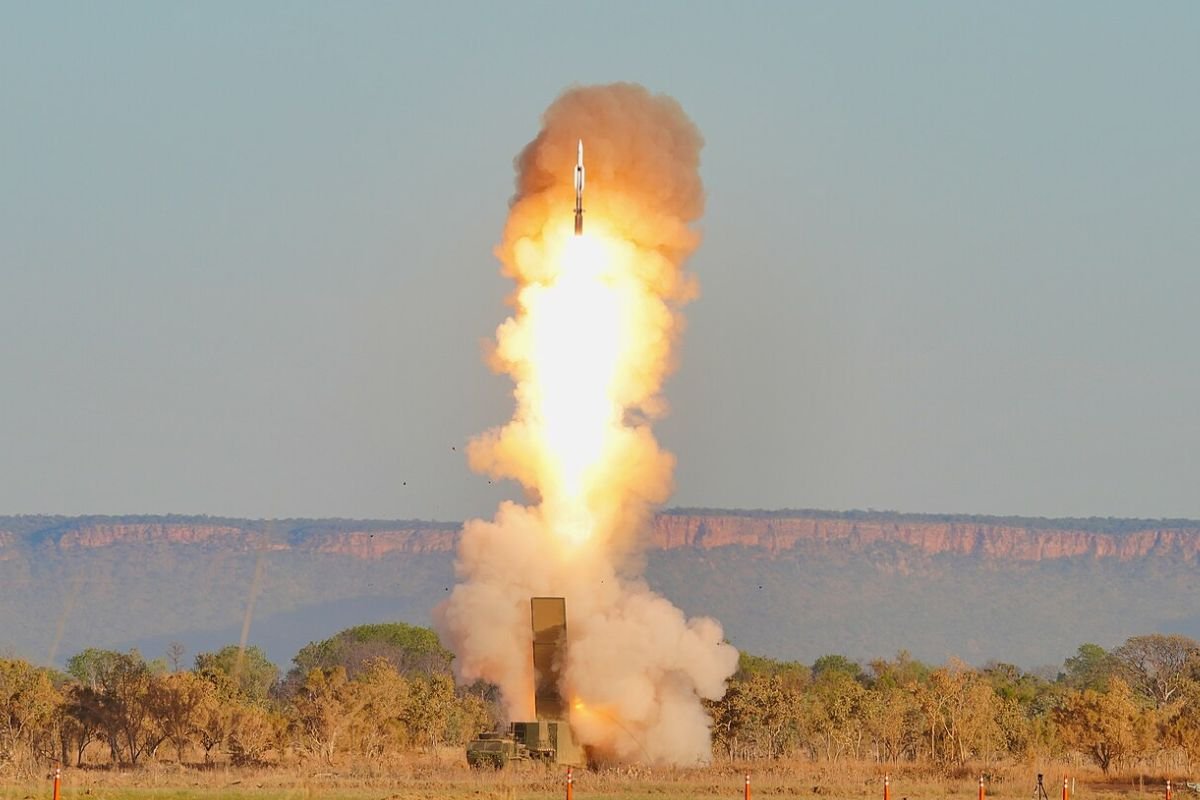
The Typhon missile system stands as a revolutionary leap in modern military capability, enabling the U.S. military to strike targets over 1,200 miles away with unprecedented precision and mobility.
In the evolving landscape of global military power, the Typhon missile system embodies the cutting edge of land-based long-range strike technology. Deployed strategically across the Indo-Pacific, this system enhances the U.S. Army and Navy’s ability to challenge adversaries far beyond traditional battlefield boundaries. Combining mobility with a versatile missile arsenal, Typhon allows targeting of moving naval vessels, coastal infrastructure, and other critical assets deep into contested regions. Such capability is redefining deterrence and operational strategy in a tense geopolitical environment shaped primarily by China’s maritime ambitions.
How the Typhon system transforms U.S. long-range strike capabilities across the Indo-Pacific
The Typhon Mid-Range Capability (MRC) missile system is a mobile ground-launcher that provides the U.S. military with a flexible and potent strike platform, able to engage targets as far as 1,200 miles (about 1,930 km) away. This reach is significant because it enables forces stationed in locations like the Philippines and Japan to threaten key areas along China’s eastern seaboard and vast portions of the South China Sea.
Introduced in 2023, it forms part of the Army’s Long Range Precision Fires program, providing the ability to strike targets hundreds to over a thousand kilometers away from land-based platforms.
What sets Typhon apart is its ability to launch a variety of missiles, including the Precision Strike Missile (PrSM), the Standard Missile-6 (SM-6), and the Tactical Tomahawk (Block IV). Each of these complements the system’s core mission with unique operational advantages. For example, the SM-6 offers anti-air and anti-ship capabilities at hypersonic speeds, while the Tomahawk missile brings in long-endurance loitering and precision strike capacities against both stationary and moving targets.
This range and versatility fill a critical gap between short-range missile systems and broader strategic assets like air wings or submarines. Land-based missile deployment enables the U.S. to project power more discreetly and rapidly than relying solely on naval vessels or aircraft, which may be constrained by geopolitical or operational factors.
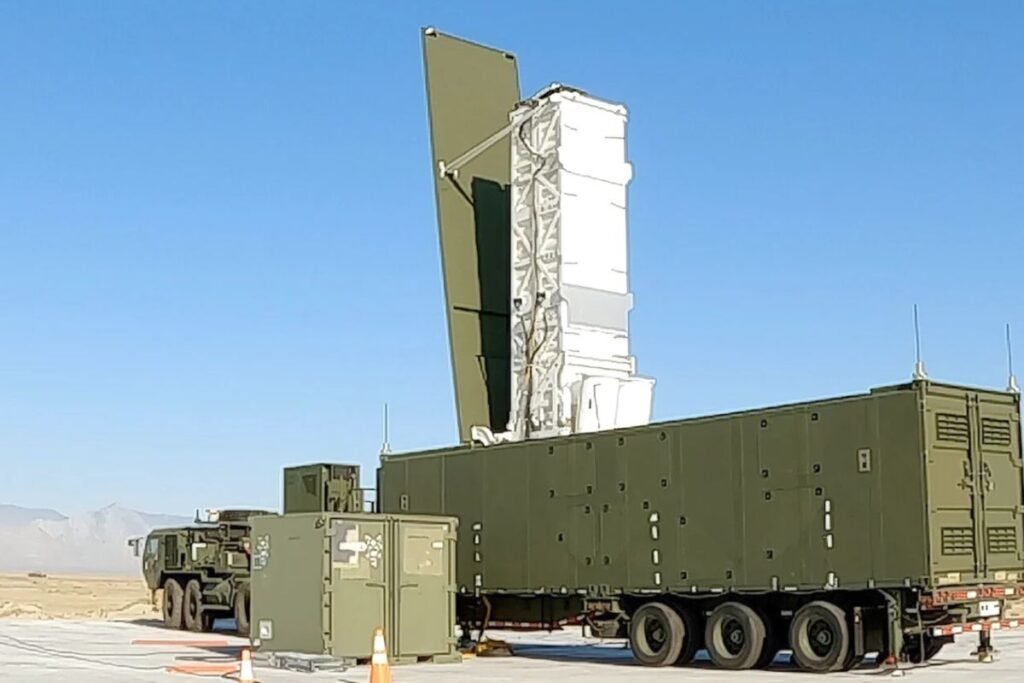
Moreover, the mobility of the Typhon launcher enhances its survivability. Mounted on a transporter erector launcher (TEL) container compatible with air and sea transport, it can reposition rapidly to evade detection and countermeasures—a feature vital when facing advanced adversarial missile and reconnaissance systems.
This system is also adaptable for future integration with hypersonic weapons, increasing its complexity and lethality from a tactical standpoint. Hypersonic missiles, capable of traveling at speeds exceeding five times the speed of sound, would make the Typhon system a formidable deterrent by virtue of their near-imperviousness to current missile defense networks.
To sum up, Typhon redefines the operational landscape by offering multi-domain strike capabilities on land with rapid deployment options. This shifts traditional paradigms, encouraging joint Army-Navy coordination and presenting a layered threat that adversaries must reckon with both at sea and onshore.
Operational advantages of deploying Typhon missile batteries in the Philippines and Japan
Positioning Typhon missile batteries in the northern Philippines and Japan is a significant strategic move. Both locations are geographically advantageous for projecting U.S. military power into the western Pacific, especially when considering proximity to China’s vital maritime routes and naval bases. The Philippines, in particular, lies within striking distance of approximately two-thirds of the ocean stretches separating it from China’s eastern coast.
From these bases, Typhon missiles can target high-value enemy assets such as aircraft carriers, command centers, and logistical hubs. The ability to engage moving targets, especially naval vessels, marks a massive improvement compared to fixed-target strikes. The incorporation of the Tactical Tomahawk’s enhanced targeting system, capable of mid-flight trajectory adjustments, empowers the system to pursue and eliminate agile adversaries at sea.
The mobility of Typhon batteries also complicates enemy targeting and destruction efforts. By frequently repositioning, these ground units avoid easy detection from satellites or drones and reduce vulnerability to counterstrikes. This persistent threat means adversaries must continually expend resources on surveillance and defense, stretching their capabilities thinner across the maritime theater.
Operationally, the Typhon system enables commanders to conduct precision strikes without solely relying on air wings, which might face logistical challenges or political restrictions. It also provides redundancy if naval missile platforms are overwhelmed or otherwise engaged, thus diversifying the U.S. strike portfolio.
Such deployments are not merely about offensive reach but also about shaping deterrence psychology. The visible presence of a capable, mobile strike platform acts as a potent signal to potential adversaries, primarily China, that any attempt at regional escalation may be met with swift and precise repercussions from multiple vectors.
This enhanced deterrent value aligns with broader U.S. strategic concepts focusing on distributed maritime operations. By having land-based strike systems integrated into joint naval-air task groups, forces can saturate enemy defense systems with simultaneous strikes from sea, air, and land, increasing the likelihood of mission success.
In practice, this might look like coordinated salvoes where ship-launched missiles soften an area while Typhon batteries on shore target secondary threats or critical infrastructure, forcing defenses to split their attention and resources.
Typhon’s missile arsenal: precision, speed, and tactical flexibility
A defining feature of the Typhon system is its integration of several missile types, each bringing a unique contribution to modern warfare’s demands on range, precision, and adaptability. Here’s a detailed look:
- Precision Strike Missile (PrSM): Designed to replace shorter-range ballistic missiles, PrSM offers a ground-launched, precision-guided capability optimized for penetrating contested environments. Its agility and guidance systems facilitate destruction of enemy air defenses or missile sites at ranges exceeding traditional artillery.
- Standard Missile-6 (SM-6): Originally a ship-launched interceptor, the SM-6 variant adapted for Typhon is key in anti-air and maritime strike roles. It’s capable of hypersonic speeds, engaging fast-moving targets and offering enhanced maneuverability, allowing strikes against incoming threats or hostile vessels far from shorelines.
- Block IV Tactical Tomahawk: Known for its long loitering time and adaptability, this missile can change course mid-flight to pursue moving targets. It features a two-way datalink, enabling targeted adjustments, making it ideal for striking mobile or time-sensitive objectives like aircraft carriers or command centers deep in enemy territory.
Integrating these missile types in one launcher platform amplifies the system’s versatility. Commanders can choose the appropriate missile based on mission parameters, ranging from disabling enemy missile batteries to sinking a warship or neutralizing critical logistics nodes miles inland. This multi-faceted attack capability enhances the tactical toolbox available to U.S. forces in the region.
As technology progresses, the prospect of merging hypersonic weapons onto the Typhon launcher promises even greater operational range and speed. This evolution could drastically shorten reaction times and increase strike efficacy, ideal in fast-paced, high-threat scenarios in contested maritime zones.
Strategic impact on U.S. Navy and Army cooperation in contested maritime domains
The Typhon missile system marks a shift in how the U.S. military approaches joint operations in maritime domains fraught with increasing tension and competition. By offloading long-range strike responsibilities from ships to land-based mobile batteries, the Navy can realign and concentrate naval power on sea control, air defense, and escort missions instead of simultaneous strike operations.
This Army-Navy synergy introduces a layered approach to defense and offense. Naval vessels equipped with Tomahawks and long-range missiles can coordinate strikes with Typhon batteries onshore, presenting adversaries with multiple, unpredictable attack trajectories. Such complexity in attack vectors forces defensive systems to struggle to parse credible threats from decoys.
This integration provides a decisive advantage in the Indo-Pacific, where China’s rapid naval expansion and anti-access/area-denial (A2/AD) capabilities have posed enduring challenges. By increasing the density and diversity of precision fires available from land and sea, U.S. forces can sustain offensive momentum even under contested conditions.
The system also enhances operational endurance and resilience. Ships loaded with long-range missiles often have to divert significant space and resources for ammunition storage and reload cycling. If the Army’s Typhon can provide overlapping firepower, naval vessels are freed to focus more on patrol, escort, and fleet defense roles, enhancing overall mission effectiveness.
Joint training exercises conducted in 2025, including live-fire drills in Australia and the Philippines, have demonstrated the functional cooperation between Army Typhon units and Navy task forces. These exercises validated not only the technological interoperability but also the doctrinal adjustments needed to maximize combat effectiveness in a high-stakes operational theater.
The result is a more adaptable, resilient, and integrated joint force capable of projecting influence deep into contested waters and swiftly responding to emerging threats with coordinated precision strikes.
Table: Key specifications and strategic capabilities of the Typhon missile system in 2026
| Attribute | Value / Description |
|---|---|
| Maximum Strike Range | 1,200 miles (1,930 km) |
| Missile Types | Precision Strike Missile, SM-6, Block IV Tactical Tomahawk (hypersonic capable) |
| Launch Platform | Mobile Transporter Erector Launcher (TEL) container (40-foot ISO standard) |
| Deployment Locations | The Philippines, Japan, Australia (exercises) |
| Target Types | Moving ships, coastal infrastructure, land-based military assets |
| Mobility | High — rapid relocation capability for survivability |
| Hypersonic Integration | Enabled, with ongoing developmental testing |
Typhon missile system’s role in shaping deterrence against China’s maritime ambitions
The presence of the Typhon missile system in strategically sensitive regions sends a powerful message to China, which has aggressively expanded its naval capabilities and established extensive territorial claims in the South China Sea. By placing precision-guided, long-range strike systems within close reach, the U.S. dilutes China’s perceived advantage in regional power projection.
From a deterrence perspective, the Typhon complicates Beijing’s strategic calculations. The threat of losing critical naval units, such as aircraft carriers or missile platforms, to rapid and precise ground-launched attacks acts as a significant check against provocative maneuvers or military escalation.
Additionally, integrating land-based missile batteries expands the operational footprint in the Indo-Pacific without the political complications of sending additional ships or aircraft permanently. This flexibility is crucial as the U.S. balances presence with diplomatic sensitivities from regional allies.
The multi-domain attack potential also means any Chinese attempt to neutralize one vector of U.S. power would be met with counterstrikes from others, raising the stakes of any conflict.
This evolving deterrent posture will likely continue advancing as new missile technologies, including hypersonic glide vehicles and enhanced sensor networks, become fully operational within the Typhon system.
Thus, the Typhon system acts not only as a weapon but also as a diplomatic instrument—projecting strength, reassuring allies, and deterring adversaries with the credible threat of rapid, precise, and hard-to-intercept attacks.
What is the maximum range of the Typhon missile system?
The Typhon missile system can engage targets up to 1,200 miles (approximately 1,930 km) away, enabling strikes deep into contested maritime and land areas.
Which missiles can the Typhon launcher fire?
It can launch the Precision Strike Missile (PrSM), the Standard Missile-6 (SM-6), and the Block IV Tactical Tomahawk, including versions capable of targeting moving ships and integrating hypersonic weapons.
How does the Typhon system enhance joint Army-Navy operations?
By offloading long-range strike roles from naval vessels to mobile ground launchers, it enables coordinated attacks from land and sea, complicating enemy defenses and allowing naval forces to focus on sea control and patrol missions.
Why is deployment in the Philippines and Japan strategically important?
These locations provide geographical advantage enabling U.S. forces to cover key maritime routes and significant portions of China’s coastline, enhancing deterrence and rapid strike capability in the Indo-Pacific.
What future capabilities are expected for the Typhon system?
Ongoing integration of hypersonic missiles will increase speed and survivability, making Typhon even more effective against advanced missile defense systems and dynamic targets.
Source: https://www.19fortyfive.com/2026/03/typhon-the-u-s-army-and-u-s-navy-have-missiles-that-can-strike-china-or-aircraft-carriers-from-1200-miles-away
Image:
