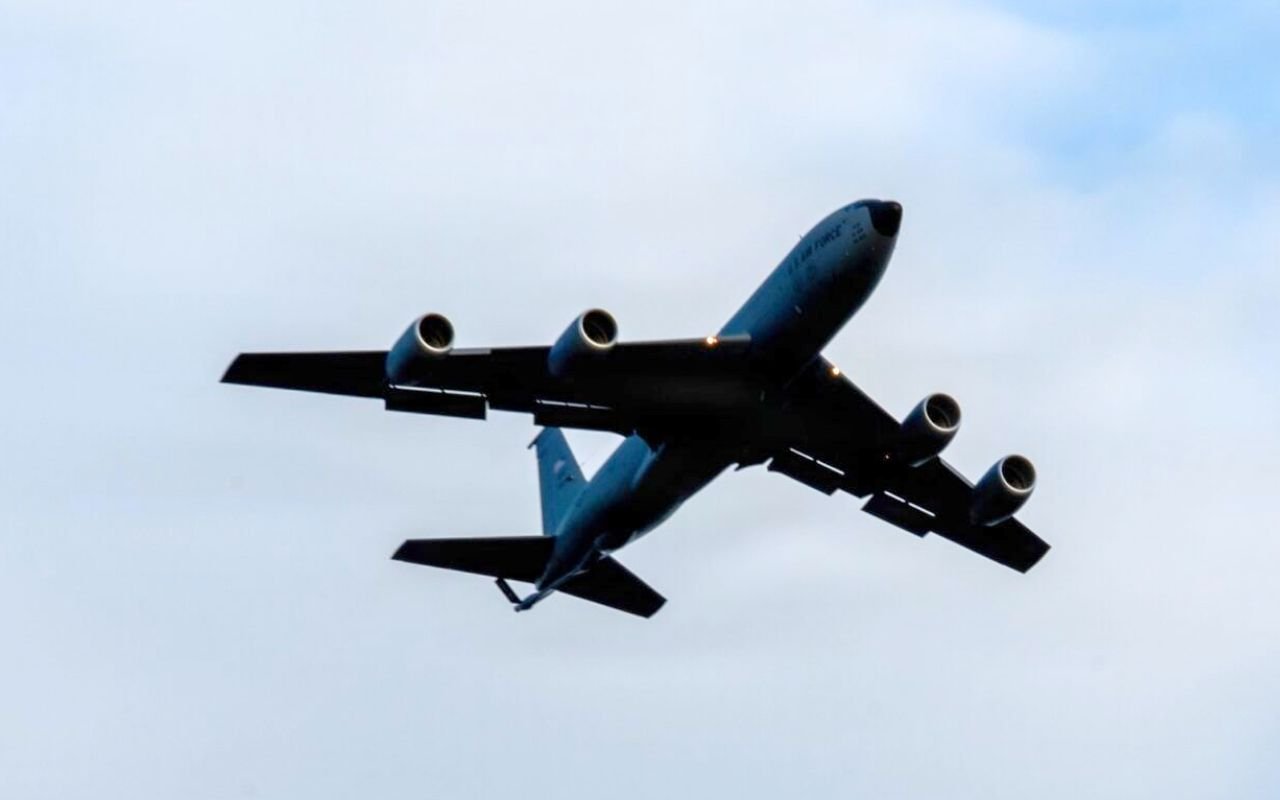
The sudden crash of a KC-135 Stratotanker over western Iraq has sent shockwaves through military circles, sparking a closer examination of aerial refueling risks amid ongoing operations in the region.
On a seemingly routine mission, a U.S. Air Force KC-135 Stratotanker, a critical component in aerial refueling capabilities, tragically went down in Iraqi airspace. Confirmed to be unrelated to hostile fire, the incident has raised pressing questions about the operational safety, technical challenges, and broader implications for U.S. military missions in the Middle East. As rescue teams work feverishly to locate the crew, the unfolding details shed light on the complexity and high stakes of air operations in contested regions.
Behind the scenes of the KC-135 Stratotanker’s crucial role in aerial refueling operations
The KC-135 Stratotanker has been an indispensable part of the U.S. Air Force’s aerial refueling fleet for decades, providing vital mid-air fuel support that extends the range and endurance of combat and reconnaissance aircraft worldwide. Introduced during the Eisenhower administration, the KC-135’s legacy stretches over half a century, underpinning a variety of global operations.
Aerial refueling is a sophisticated and delicate maneuver. The KC-135 must carefully align in flight with a receiver aircraft, often a fighter jet or bomber, to transfer fuel through a specially designed boom mechanism. This process involves split-second precision from highly trained crews, managing shifts in speed, altitude, and turbulence.
Operating in a hostile or contested environment, such as parts of Iraq near conflict zones, complicates these refueling missions. Pilots must navigate unpredictable weather, avoid potential enemy threats, and maintain constant communication with multiple entities. The KC-135’s versatility ensures that even advanced aircraft like the F-35 and B-52 can stay airborne longer, executing missions that otherwise would require inconvenient stops or compromised mission timelines.
Despite its proven track record, the KC-135 is a platform showing signs of age with maintenance and modernization challenges prompting the Air Force to look towards newer tankers like the KC-46 Pegasus. Nevertheless, its role remains paramount on the frontline, especially during operations such as “Epic Fury,” where sustained air presence is essential.
Examples abound where the Stratotanker kept missions operational at critical moments—for instance, during the recent surge in anti-ISIS operations, when F-16s and other aircraft needed constant mid-air refueling to maintain pressure on targets without return trips to base. This flexibility has been crucial in maintaining air dominance and tactical advantages.

Understanding the circumstances behind the Iraq crash: non-hostile causes in complex airspace
Details surrounding the crash reveal that the KC-135 was lost after an incident involving another aircraft, with the second plane landing safely. The U.S. Central Command explicitly stated the incident was “not due to hostile fire or friendly fire,” an important clarification dispelling initial fears of enemy action in a volatile zone.
This assertion points toward the highly intricate nature of flight operations over western Iraq. The airspace there, marked by simultaneous combat sorties, transport missions, and reconnaissance flights, is a sensitive corridor where coordination and communication are paramount.
Mid-air collisions or close encounters, while extraordinarily rare, remain risks in such busy environments. Factors contributing to such incidents may include mechanical failure, pilot error, miscommunication, or unpredictable weather disturbances. Each possibility requires detailed investigation, ascertaining not only what occurred but how similar risks can be mitigated going forward.
Military aviation experts highlight several challenges that complicate safe navigation in these air corridors:
- Demanding aerial refueling procedures requiring extreme precision.
- The presence of multiple aircraft types with different flight envelopes operating simultaneously.
- High operational tempo increasing pilot fatigue and reduced reaction time.
- Communication barriers and technical glitches involving flight management systems.
Moreover, areas like western Iraq can suffer from sudden sandstorms or turbulence that challenge aircraft stability, especially during close-proximity maneuvers like refueling. The interlocking complexities call for rigorous protocols and contingency training to cope with dynamic in-flight variables.
Assessing the circumstances of the KC-135 crash thus hinges on a comprehensive review of flight data recorders, radar logs, and crew testimonies from the other involved aircraft. The incident underscores how even the most routine-seeming missions bear an inherent unpredictability when carried out under high-stakes conditions.
Impact on U.S. military strategy and ongoing operations in the Middle East
The loss of a KC-135 Stratotanker during active military operations reverberates across strategic calculations in the region. Aerial refueling is not just a logistical support mechanism but a major force multiplier that shapes mission planning and execution.
Without reliable refueling assets, fighter jets and bombers face shortened range and duration. This can constrain surveillance capabilities, limit rapid strike options, and complicate multi-national coordination efforts where air assets are shared across allied forces.
Strategically, the incident spotlights vulnerabilities in aging assets during high-demand scenarios. Replacing or supplementing KC-135s with the more modern KC-46 Pegasus has been a priority, but production delays and technical hurdles have slowed this transition. Such gaps could temporarily reduce air support capacity or increase operational costs due to reliance on ground refueling or modified flight patterns.
The crash also has political ramifications, as U.S. operations in Iraq involve complex international partnerships. Any incident potentially draws scrutiny from Iraqi authorities, regional powers like Iran, and global observers monitoring the volatile geopolitical landscape. Ensuring transparency and expeditious SAR (search-and-rescue) responses mitigates negative fallout and preserves cooperative ties.
In practical terms, an immediate operational response includes:
- Heightened in-flight safety protocols and air traffic control coordination.
- Reassessment of aerial refueling mission scheduling to minimize congestion and risks.
- Accelerating maintenance and upgrade schedules for remaining KC-135s.
- Expanding training for crews to handle emergency contingencies.
- Enhanced intelligence sharing among coalition partners to anticipate risks in shared airspace.
These measures help maintain continuous air support while addressing emergent vulnerabilities arising from the loss.
Technical challenges and maintenance concerns for the aging KC-135 fleet
Operating an aerial refueling fleet with aircraft designed during the 1950s introduces significant maintenance hurdles. The KC-135 Stratotanker, while rugged and reliable, encounters increasing mechanical fatigue and parts obsolescence that require rigorous upkeep.
These technical challenges have direct implications for flight safety and mission readiness. The airframe endures millions of flight hours, with structural elements subjected to metal fatigue, outdated avionics, and propulsion systems that strain under continuous operation.
For example, the complex refueling boom system demands regular inspections and calibrations. Any misalignment or malfunction could jeopardize a mid-air transfer, risking collisions or fuel spills. Moreover, modern electronic warfare and navigation environments require upgrades to keep the KC-135 operational in contested theater settings.
The cost of maintaining such aging aircraft also has budgetary consequences, as spare parts become scarce and specialized technicians grow fewer. The Air Force’s logistics chain must juggle preserving legacy systems while transitioning toward newer platforms, striking a balance between reliability and innovation.
Anecdotally, crews report that rigorous pre-flight checks and enhanced simulation training have become essential practices to cope with the aircraft’s quirks and preserve safety standards. The challenge lies in that the KC-135 remains the backbone of refueling despite these logistical and technical obstacles.
Efforts to upgrade the fleet have included:
- Installation of modern communication and navigation systems.
- Strengthening structural components using advanced materials.
- Integrating digital flight management and safety systems.
- Repair and replacement of engines for improved fuel efficiency.
These upgrades aim to prolong operational lifespan while ensuring performance that meets modern combat demands.
What the ongoing rescue operation reveals about emergency response in hostile regions
The search-and-rescue (SAR) mission launched immediately after the crash is a vivid illustration of how military forces tackle emergencies in hostile or politically delicate environments. These operations test coordination, speed, and risk assessment under extreme conditions.
Rapid deployment of SAR teams is vital to recover personnel and minimize casualties in aerial incidents. In the case of western Iraq, efforts must also carefully consider local security risks, potential hostile interference, and logistical challenges posed by terrain and climate.
The complexity of rescue is evident in various facets:
- Coordination between air and ground forces to pinpoint exact crash location using reconnaissance drones and satellite imagery.
- Securing the area against threats, including insurgent activity or unexploded ordinance.
- Medical evacuation preparedness and timely extraction capabilities.
- Communication with Iraqi counterparts to align operations within sovereign airspace.
The unfolding rescue mission not only reflects the dedication and resilience of U.S. military personnel but serves as a reminder of the inherent dangers faced daily in complex theaters. It further emphasizes the continuous need for improved emergency protocols and investment in advanced SAR technology.
Rescue missions in these contexts often use specialized assets such as HH-60 Pave Hawk helicopters and HC-130 aircraft, which provide both rapid insertion and long-range search capabilities. Advances in night-vision and terrain mapping technologies have also enhanced success rates.
The successful recovery of crew members impacts morale significantly, fostering confidence in the military’s ability to protect its personnel amid ongoing conflict situations.
| Date | Event | Details |
|---|---|---|
| March 12, 2026 | KC-135 Stratotanker crash in western Iraq | Incident involved collision with another aircraft, no hostile fire detected |
| March 13, 2026 | Search-and-rescue efforts intensified | Multiple military units deployed to locate and extract the downed crew |
| March 15, 2026 | Preliminary investigation launched | Initial findings to be reviewed for flight safety enhancements |
| March 20, 2026 | Maintenance review and upgrade acceleration | Focus on aging KC-135 fleet maintenance and future replacement strategies |
| March 25, 2026 | Operational impact discussions within military command | Assess long-term effects on aerial refueling capabilities |
What is the primary role of the KC-135 Stratotanker?
The KC-135 Stratotanker’s main role is to provide mid-air refueling to extend the operational range and endurance of U.S. military aircraft during missions.
Was the KC-135 crash caused by enemy fire?
No, the U.S. Central Command confirmed that the crash was not due to hostile or friendly fire but resulted from an incident involving another aircraft.
How does aerial refueling enhance military operations?
Aerial refueling allows aircraft to remain airborne longer, enabling extended missions without the need to land for fuel, thereby increasing operational flexibility and effectiveness.
What challenges are involved in maintaining the KC-135 fleet?
Maintaining the aging KC-135 involves addressing mechanical fatigue, outdated avionics, parts scarcity, and the need for technological upgrades to meet current mission demands.
What steps are taken during search-and-rescue after a crash like this?
Search-and-rescue efforts include rapid deployment of specialized teams, securing the crash site, coordinating air and ground units, and working closely with local authorities to safely recover crew members.
