North Korea has emerged as a major arms supplier to Russia, generating billions of euros through an extensive and ongoing military trade that deeply influences global geopolitical dynamics.
In the shadowed corridors of international arms commerce, one of the most surprising and closely watched developments in recent years has been the vast military partnership between North Korea and Russia. North Korea, often characterized by its isolation, has found an unusual yet lucrative niche supplying Russia with a substantial volume of weaponry amid Moscow’s ongoing military conflicts. This deal has not only reshaped the economic landscape for the Hermit Kingdom but also thrown up critical questions about global security, clandestine diplomacy, and the shifting tides of international alliances.
How North Korea’s Arms Exports Transformed Its Economic and Military Presence
North Korea’s dramatic rise as an arms exporter capable of moving billions of euros worth of weapons to Russia signals a significant shift in its economic and military stature. This country, traditionally isolated due to heavy sanctions and diplomatic embargoes, found an extraordinary channel to monetize its military-industrial complex by supplying artillery shells, ballistic missiles, rocket launchers, and other heavy armaments to Russia. Reports suggest shipments amounting to as much as 9.8 billion euros have been sent since the beginning of the alliance, marking an unprecedented volume that far exceeds previous records of North Korea’s export capabilities.
One reason North Korea manages to maintain this scale of military commerce despite international sanctions lies in the intricate and covert logistics network established between the two countries. Ports like Rajin in North Korea reportedly serve as pivotal hubs for massive shipments that evade global detection systems. Moreover, the synergy between North Korean military manufacturing and Russia’s increasing demand for ammunition, especially in protracted conflicts requiring sustained artillery firepower, has created a lucrative supply-demand cycle. This economic lifeline is particularly crucial for North Korea, which suffers from crippling sanctions limiting its other export avenues.
Beyond the economic factors, this arms deal enhances North Korea’s geopolitical influence. The transaction not only bolsters the military capacity of Russia but also cements Pyongyang’s role as an indispensable ally in challenging Western powers. This aligns with North Korea’s strategic objectives of securing powerful partnerships that can counterbalance U.S. and NATO influences. For Moscow, the reliance on North Korean arms represents a workaround for Western sanctions disrupting traditional supply chains, especially in high-demand munitions such as artillery shells where Russian stockpiles have been heavily depleted.
Yet, the economic gains for North Korea are not without significant costs. The volume of arms delivered, reportedly in the realm of millions of artillery shells, rockets, and missiles, suggests an extensive diversion of North Korea’s military resources. Analysts note that these exports potentially weaken North Korea’s own defense readiness, raising questions about long-term sustainability. However, the immediate influx of billions of euros offers a tempting compensation, enabling development of new military projects and providing critical hard currency that supports the regime’s broader objectives.
The logistics and covert operations enabling such massive arms transfers
Executing these large-scale transfers requires a sophisticated network of clandestine operations, blending maritime routes, land transport, and diplomatic channels. It involves false declarations, the use of unmarked container ships, and secure transfer points that evade international surveillance. These tactics ensure the arms reach Russian hands without attracting sanctions enforcement attention. This complex web not only highlights Pyongyang’s logistical ingenuity but reveals significant vulnerabilities in the global arms control regime.
An example of this surgical precision is the use of mixed cargo shipments, where military hardware travels among civilian goods, reducing suspicion. Satellite images have depicted convoys moving unorthodoxly heavy and large loads at night, indicating covert operations designed to slip past detection. This strategy illustrates the lengths both countries are willing to pursue for mutual benefit, despite the risk of global backlash.
The asymmetrical benefits: Why North Korea’s gains are dwarfed by Russia’s advantages
While North Korea has reaped an estimated up to 5.5 billion euros annually from these massive arms deals, the scale and nature of compensation pale against the value Russia draws from these provisions. Moscow secures a steady pipeline of essential military equipment and manpower that has greatly revitalized its artillery capabilities, pivotal in its ongoing conflict zones. In return, North Korea’s acquisitions—primarily monetary—reflect a narrower margin, underscoring an imbalanced partnership heavily weighted towards Russian strategic gains.
Examining the substance of returns, Russia has been able to deploy North Korean troops on Ukrainian battlefields, presenting a human dimension to this alliance. Despite providing billions of euros of weapons, North Korea’s direct military support in the form of troops, estimated in thousands, reflects a tangible but risky investment. This significant commitment of personnel extends Pyongyang’s military footprint beyond its borders but also exposes soldiers to conflict risks that can have political and social repercussions back home.
From a strategic standpoint, Russia achieves several objectives: bolstering depleted artillery stocks, supplementing manpower shortages, and creating a proxy linkage that complicates Western diplomatic responses. Meanwhile, North Korea, largely dependent on financial inflows, often faces logistical challenges in receiving equivalent Russian technology or goods due to sanctions and economic barriers.
Many analysts assert this disparity exemplifies a “raw deal” for North Korea, wherein monetary compensation does not fully offset the massive outflow of military hardware and manpower, highlighting the vulnerability of Pyongyang in any geopolitical transaction with a far more resourceful power like Russia.
Impact on North Korea’s domestic economy and military priorities
Despite the apparent imbalance, the injection of billions of euros into North Korea’s coffers cannot be dismissed lightly. This massive inflow supports critical state functions and funds ongoing military programs, including nuclear development projects. It also provides a buffer against economic collapse exacerbated by decades of sanctions.
Nevertheless, the reliance on arms exports places considerable strains on North Korea’s limited industrial base. The focus on fulfilling Russia’s demands can divert resources from domestic defense needs and complicate internal military priorities. Balancing the immediate financial benefits with long-term sustainability remains a delicate challenge for Pyongyang’s leadership.
Global ramifications of North Korea’s rising role as an arms merchant
North Korea’s extensive military trade relationship with Russia sends ripples across the international community, affecting regional security, alliances, and global arms control efforts. This partnership exemplifies how sanctioned states can circumvent restrictions and build mutually beneficial, if controversial, relationships that defy diplomatic isolation strategies.
The surge in arms flow elevates concerns about escalating conflict intensities, not just in Ukraine but potentially in wider theaters influenced by Russian interests. Allied nations worry that prolonged access to large supplies of artillery shells and advanced missiles will enable Russian forces to sustain their operations longer, prolonging warfare and human suffering. Countries supporting Ukraine have voiced alarm, noting that North Korea’s role undermines non-proliferation efforts and sanctions regimes designed to starve aggression of resources.
Furthermore, this arms trade weakens the credibility of international agreements aimed at halting weapons proliferation. It exposes loopholes in maritime and customs enforcement and challenges global governance bodies to update strategies and tools to prevent similar deals. The existence of this covert collaboration also emboldens other isolated regimes considering arms exports as a survival strategy in a hostile global economy.
Regional security dynamics and the escalation of proxy conflicts
Asia-Pacific nations watch these developments with heightened anxiety. North Korea’s newfound role as a major arms supplier has the potential to destabilize regional security balances. The wealth accumulated through arms deals could fuel Pyongyang’s military modernization, heightening tensions with South Korea, Japan, and the US military presence in the region. Although the immediate connection concerns Russia, ramifications extend far beyond Europe’s borders.
Moreover, this arms trade paves the way for stronger military alliances that may conflict with established international orders. It risks increasing militarization in volatile zones and encourages proxy conflicts, where state and non-state actors use allied support to wage indirect wars. The growing sophistication and quantity of weapons flowing from North Korea could shift battlefield equations in various underreported conflicts, exacerbating instability and complicating peace efforts.
The mechanics behind the numbers: Breakdown of weapons, shipments, and financial flows
A detailed understanding of the scale and nature of arms transactions between North Korea and Russia comes from numerous intelligence assessments and expert analyses. They collectively report shipments that include:
- Millions of artillery shells – Addressing Russia’s shortage and increasing firepower capacity on the front lines.
- Long-range ballistic missiles – Newly developed and reportedly integrated into the Russian arsenal.
- Multiple rocket launcher systems (MRLS) – Adding precision and volume to Russian strike capabilities.
- Heavy weapons including howitzers and rocket projectors – Filling gaps in the Russian land forces armament.
| Weapon type | Estimated quantity | Estimated value (€ billion) | Purpose/use |
|---|---|---|---|
| Artillery shells | Over 1,000,000 units | 3.2 | To replenish Russian front-line firepower |
| Ballistic missiles | Hundreds | 2.8 | Long-range strategic strikes |
| Rocket launcher systems | Thousands | 1.5 | Area saturation and precision attacks |
| Howitzers and heavy weapons | Several hundred | 2.3 | Support for land battles and sieges |
This inventory highlights just how deeply embedded North Korea’s arms manufacturing has become in sustaining the Russian military effort. The multi-billion euro worth of weaponry has arguably shifted battlefield dynamics, demonstrating the potency of this covert cooperation.
Forthcoming challenges and the future of this arms relationship
Looking ahead, the trajectory of this military alliance remains uncertain. Trends indicate continued dependency, but geopolitical shifts—such as emboldened sanctions regimes, diplomatic pressures, or changes in leadership—could alter the calculus. Additionally, the long-term impact on North Korea’s internal stability and military capacity is an important factor that analysts monitor carefully.
The persistence of such trade streams forces global powers to rethink their approach to sanctions enforcement and arms control mechanisms. The case exemplifies how determined states can exploit loopholes and benefit from partnerships that defy conventional norms, potentially inspiring other regimes to follow similar paths, thereby complicating global efforts to prevent conflict escalation and arms proliferation.
How has North Korea managed to supply such a large quantity of arms to Russia?
North Korea has established covert logistical routes involving maritime ports like Rajin, used container shipments mixed with civilian goods, and employed active evasion tactics to bypass international sanctions and surveillance, enabling the massive transfer of military weapons to Russia.
What kind of weapons is North Korea sending to Russia?
The shipments include millions of artillery shells, ballistic missiles, multiple rocket launch systems, and heavy weapons such as howitzers, all significantly aiding Russia’s operational capabilities in ongoing conflicts.
Why is the financial compensation for North Korea much smaller than the value of arms supplied?
While North Korea has sent weapons worth nearly 9.8 billion euros, it is estimated to have received only around 1.2 billion euros in return, indicating a heavily imbalanced arrangement that favors the strategic interests of Russia more than North Korea.
What are the global implications of North Korea’s arms deals with Russia?
This arms trade challenges international sanctions regimes, undermines global arms control frameworks, and risks escalating conflicts by prolonging Russia’s military operations, thereby affecting broader regional and global security.
Could this partnership between North Korea and Russia influence other countries’ foreign policies?
Yes, the partnership sets a precedent for other sanctioned or isolated nations to seek similar military and economic alliances, potentially destabilizing international diplomatic efforts and prompting shifts in global security dynamics.
Sources:
- https://militarnyi.com/en/articles/europe-south-korea-defense-industry
- https://thedefensepost.com/2025/09/19/north-korea-arms-russia-3/
Image:
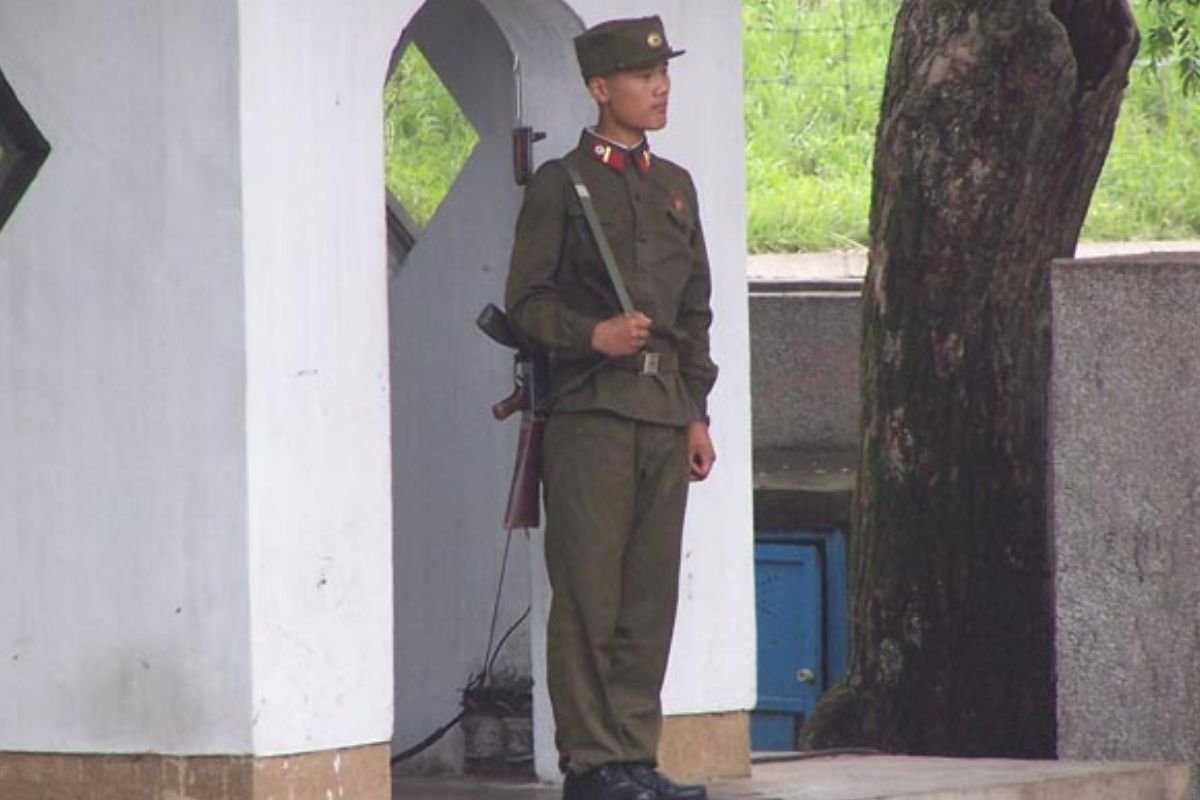
The KPA includes several branches:
- Korean People’s Army Ground Force
- Korean People’s Navy
- Korean People’s Air and Anti-Air Force
- Strategic missile forces
- Special operations forces
- Worker-Peasant Red Guards
According to commonly cited estimates, the force counts around 1.1 million active personnel and several million reservists, making it one of the largest standing armies in the world. The page also outlines the organization of command bodies, the structure of army corps deployed along the Korean Demilitarized Zone, and the country’s heavy emphasis on ballistic missiles, nuclear weapons development, and large artillery forces.
