
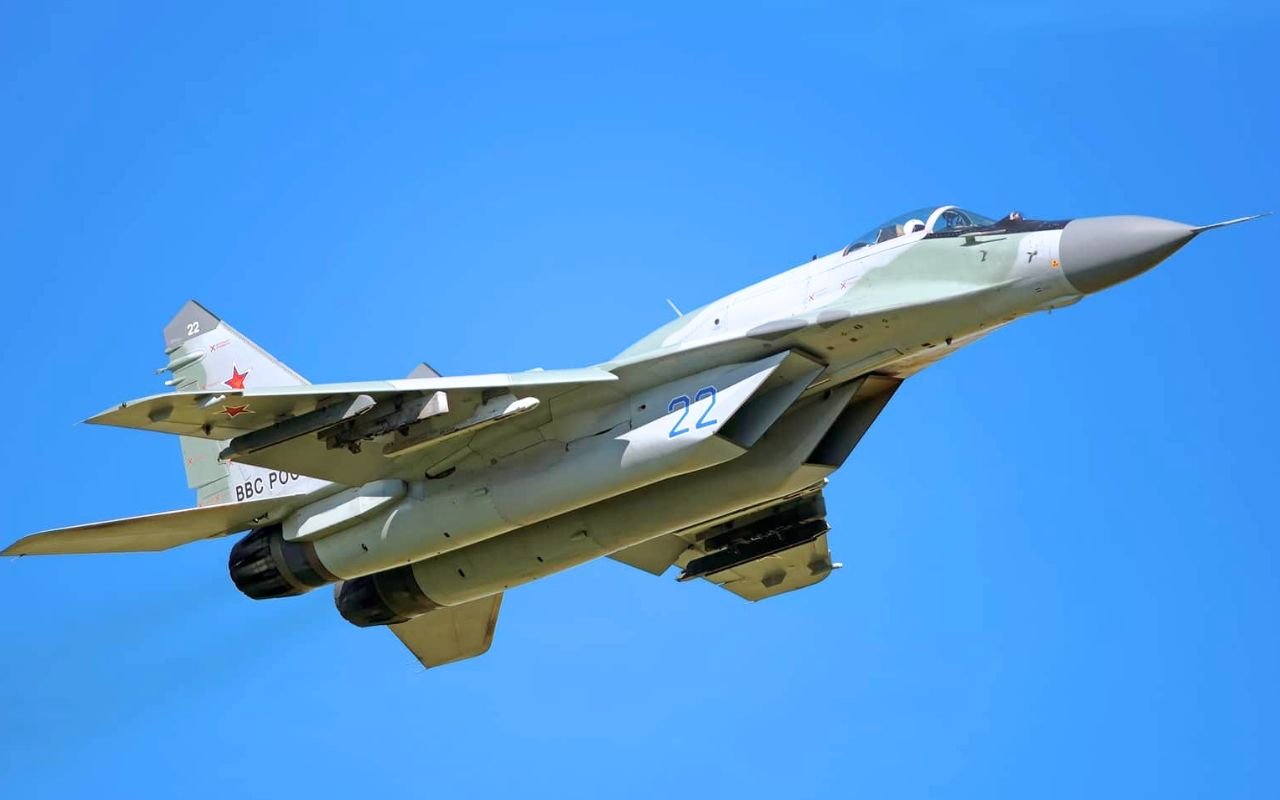
Serbia ignites regional defense dynamics by arming its MiG-29 fighters with China’s cutting-edge supersonic cruise missiles, reshaping military balances in Europe.
In March 2026, startling images circulated online, revealing Serbian MiG-29 aircraft armed with unfamiliar weaponry. Shortly thereafter, Serbian President Aleksandar Vučić publicly confirmed that the nation’s air force now wields advanced Chinese supersonic cruise missiles. This announcement signals a significant transformation in Serbia’s aerial combat capabilities and marks a new chapter in deepening military cooperation between Belgrade and Beijing. The integration of the Chinese CM-400AKG missile on Soviet-era jets challenges traditional defense strategies and offers a fresh perspective on how older airframes can evolve with innovative armaments.
The strategic leap: repurposing MiG-29s for long-range supersonic strike missions
The MiG-29, originally engineered as a nimble air superiority fighter in the late 1970s, has been a stalwart of many Eastern European air forces. Serbia operates roughly 14 of these jets, valued for agility and close combat prowess. However, the recent installation of the Chinese CM-400AKG missile redefines their role. With these high-velocity, long-range missiles attached beneath their wings, Serbian MiG-29s transcend their conventional domain of dogfighting, emerging as formidable platforms capable of striking ground or maritime targets at significant distances.
This transition from air dominance to multi-role strike capability is consequential. Rather than engaging enemy aircraft directly, Serbian pilots can now launch attacks from beyond enemy air defenses, drastically reducing risk to both pilot and machine. The MiG-29s’ operational envelope broadens, combining speed, maneuverability, and standoff precision strike—all within one airframe.
Such repurposing aligns with a global trend: countries adapting legacy fighters with new technological assets rather than procuring entirely new fleets. This approach balances modernization with economic considerations, enabling smaller militaries to enhance firepower without the steep price tags of next-generation jets.
Moreover, integrating a supersonic missile on a system designed decades earlier presents formidable engineering challenges. Yet, by leveraging an innovative interface system crafted by China’s CATIC corporation, Serbian engineers seamlessly fitted the CM-400AKG onto the MiG-29’s weapon pylons without extensive avionics overhaul. This plug-and-play compatibility offers important lessons for export markets and allied forces seeking similarly economical upgrades.
Essentially, this evolution rebrands the MiG-29 from a traditional dogfighter to a stealthy, high-speed missile carrier capable of reshaping battlefield dynamics across the Balkans and beyond.
Imágenes de MiG-29SM serbios con misiles antibuque CM 400 y bombas guiadas LS6-500 de fabricación china. pic.twitter.com/dYLmuEFORQ
— DefensaNAC (@DefensaNAC) March 10, 2026
Technical marvel: the supersonic CM-400AKG missile powering Serbia’s new strike force
The heart of Serbia’s newfound aerial potency lies in the CM-400AKG missile, a product of China’s aerospace sector. Weighing approximately 910 kilograms and stretching over 5 meters in length, this missile packs a lethal punch with warheads ranging from 150 to 200 kilograms. Capable of targeting both terrestrial and maritime objectives, it elevates Serbia’s offensive reach dramatically.
Its speed is particularly impressive. Capable of reaching around Mach 4.5 and potentially peaking close to Mach 5 during terminal phases, the CM-400AKG is among the fastest supersonic cruise missiles in operational service worldwide. This velocity slashes defensive reaction time, leaving adversaries minimal opportunity to intercept or counter incoming strikes.
Range estimates fluctuate depending on deployment profiles, with credible sources indicating distances between 100 and 250 kilometers. This flexibility ensures the missile can be deployed either in relatively close support roles or as a deep-strike option, amplifying strategic options for Serbian commanders.
The missile’s design incorporates advanced guidance systems, combining inertial navigation with terminal active radar homing, which sharpens accuracy against moving targets like naval vessels. This multi-domain capability is especially relevant in the increasingly contested waters of the Adriatic Sea, where regional powers monitor and protect maritime interests.
Comparatively, few supersonic missiles offer this blend of speed, precision, and versatility on such compact platforms. Countries like Pakistan, which deploy similar missiles on their JF-17s, have demonstrated how such weapons extend tactical reach without necessitating heavy bombers or ground-based launchers.
The CM-400AKG’s integration onto Serbian MiG-29s thus effectively rifles their combat utility, injecting a potent standoff strike ability into an otherwise vintage air fleet.
Political reverberations: the impact of Serbian missile upgrades on Balkan security dynamics
Belgrade’s step to substantially improve its air power resonates well beyond military circles. In a region historically marked by tension among Balkan states, this move reverberates through political and security spheres. The capability to project force swiftly and at range introduces new variables into the equation of regional balance.
Strategically, Serbia’s acquisition has several implications:
- Deterrence enhancement: The ability to threaten adversaries from afar promotes caution among neighboring countries in potential confrontation scenarios.
- Shift in power perception: By far surpassing old stockpile arsenals, Serbia signals greater technological sophistication and readiness.
- Regional arms dynamics: Neighboring states are likely compelled to revisit their defense doctrines and investment priorities in response to Serbia’s capabilities.
- International partnerships: The blend of Western Rafale fighters on order alongside Russian and Chinese systems showcases Serbia’s multipolar acquisition approach, intentionally balancing diversity over dependence.
This multifaceted procurement strategy highlights Serbia’s ambition to assert strategic autonomy, emphasizing independence from any single bloc’s influence. Moreover, the military integration tightens political ties between Belgrade and Beijing, signaling China’s expanding influence in European defense sectors.
Meanwhile, Western observers are closely scrutinizing this development. The missile capability could complicate NATO’s strategic calculus in southeast Europe, especially since Serbia remains a non-aligned country with a complex relationship with both the West and Russia.
Ultimately, the missile upgrade is more than a technical milestone; it reshapes security mindsets and foreshadows recalibrations in diplomatic and military tactics throughout the Balkans.
Economic and industrial ripple effects of integrating Chinese missile technology into Serbian forces
The decision to adopt the CM-400AKG missile system goes beyond immediate military efficacy; it sends tactical and economic signals. By selecting Chinese weaponry renowned for cost-effectiveness compared to Western alternatives, Serbia can boost its defense capabilities without straining budgets excessively.
This choice exemplifies how defense procurement in emerging markets increasingly blends price, performance, and strategic partnership rather than outright preference for legacy suppliers. For countries with ambitious upgrade goals but limited finances, such collaborations offer a practical path forward.
Furthermore, the use of a CATIC-developed interface for missile integration sidesteps expensive avionics modifications typically required when equipping foreign munitions on existing aircraft. This technological bridge lowers logistical hurdles, accelerates deployment timelines, and fosters knowledge transfer between Serbian and Chinese defense industries.
Longer-term, Serbia may capitalize on this cooperation to develop domestic maintenance and production capabilities around missile systems, potentially sparking growth in the local aerospace sector. The benefits could ripple into employment, innovation, and even export potentials down the road, positioning Serbia as a technology hub within the Balkan defense ecosystem.
Such industrial synergies demonstrate how strategic weapons acquisitions are increasingly intertwined with broader economic ambitions, where military modernization dovetails with national development goals.
Effective deployment and operational mechanics behind the missile-MiG-29 integration
Deploying the CM-400AKG missile on the MiG-29 involves sophisticated operational planning and precise technical cooperation. The missile’s integration hinges on the advanced interface developed by CATIC, which aligns the missile’s guidance and control requirements with the MiG-29’s avionics. This process circumvents major hardware changes, allowing Serbian pilots to operate the missile systems with minimal retraining.
Launch procedure and tactical utility
Once at launch range, the pilot acquires the target through onboard radar or linked targeting data. With missile lock confirmed, the CM-400AKG detaches and accelerates to supersonic speeds, employing a terminal radar seeker to home in on the designated target. Speed and maneuverability during the final phase make interception challenging for enemy air defenses.
This standoff capability means MiG-29 fighters can strike critical naval assets, coastal installations, or infrastructure without exposing themselves to hostile firepower for prolonged periods. After missile release, the jet can swiftly disengage and return to safe airspace.
Training and maintenance adaptations
Serbian forces have adjusted their pilot training programs to accommodate the new launch protocols, emphasizing fast decision-making and enhanced coordination between intelligence and air units. Maintenance crews underwent technical workshops jointly held with Chinese engineers to master missile preparation, loading, and system diagnostics.
This smooth operational integration reflects a high degree of interoperability, showcasing Serbia’s ability to meld cutting-edge foreign technologies with its legacy hardware successfully.
| Feature | CM-400AKG missile | MiG-29 integration |
|---|---|---|
| Length | 5.1 meters | N/A |
| Weight | 910 kg | Approx. 11,000 kg empty fighter |
| Warhead weight | 150-200 kg | N/A |
| Top speed | Mach 4.5 – Mach 5 | Mach 2.3 max |
| Range | 100-250 km | Combat radius approx. 700 km |
| Launch method | Air-launched cruise missile | Hardpoint under wings |
What makes the CM-400AKG missile supersonic and effective?
Its unique propulsion system allows speeds near Mach 5, reducing defensive reaction windows and improving strike chances.
How does the integration affect Serbia’s military stance in Europe?
It significantly enhances Serbia’s strategic reach and deterrence, marking a shift in regional power dynamics.
Are these missiles exclusive to Serbia in Europe?
As of now, Serbia is the first known European operator of the CM-400AKG, with Pakistan being the only other foreign user.
Do these upgrades require major changes to MiG-29 avionics?
No, thanks to the CATIC interface system, integration is streamlined without deep avionics modifications.
What future developments could this lead to?
It may trigger further modernization of Serbian forces and encourage greater tech cooperation with international partners.
