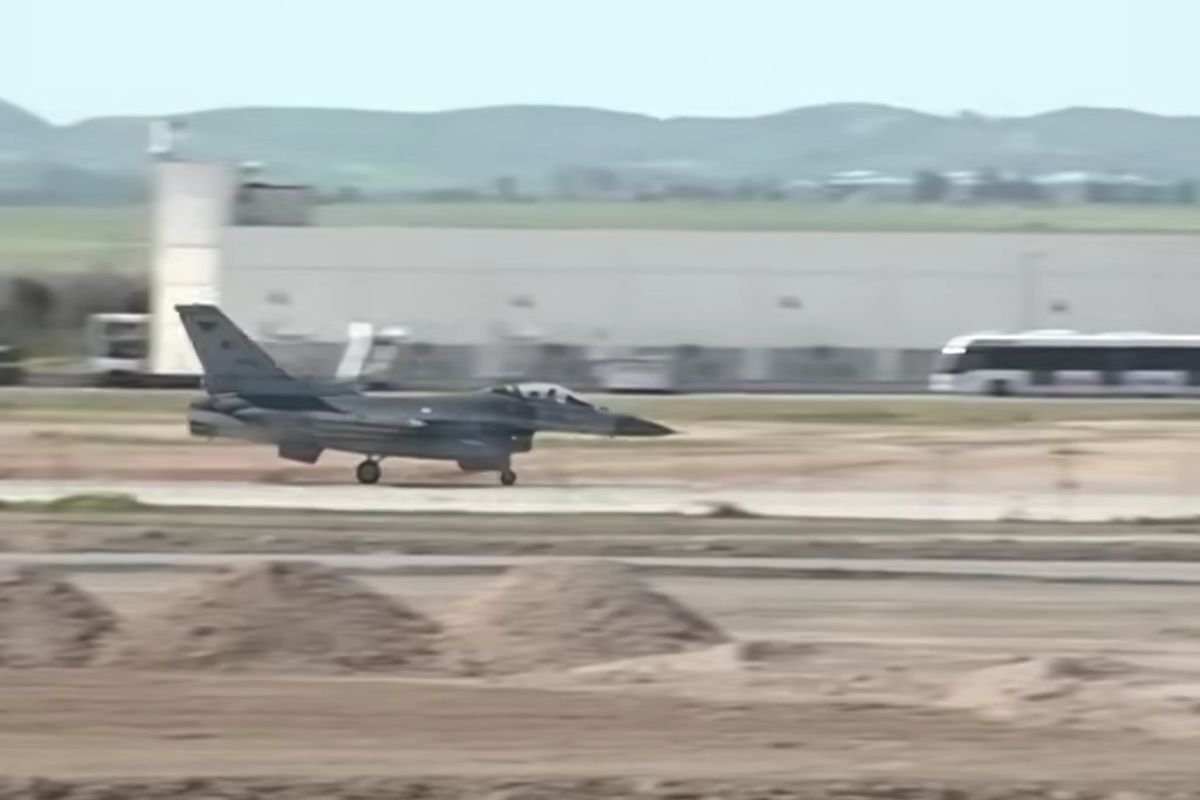
Turkey’s recent deployment of six F-16 fighter jets and advanced air defense systems to northern Cyprus sharply escalates military tensions in the eastern Mediterranean, spotlighting the fragile security situation amid ongoing regional conflicts.
Amid rising tensions in the Middle East and the eastern Mediterranean, Ankara has taken decisive steps to reinforce its military footprint on northern Cyprus, a territory only recognized by Turkey as the Turkish Republic of Northern Cyprus (TRNC). This deployment focuses heavily on securing Turkish interests and protecting allied military infrastructure after a series of worrisome incidents, including missile threats aimed at Turkish bases and drone attacks on NATO installations. The move has triggered concern and responses from regional and global powers, who view the island as a crucial strategic point in ongoing geopolitical rivalries. Alongside Turkey’s militarization push, France and the United Kingdom have increased their presence, reflecting the multiplicity of actors involved in the escalating security challenge.
Turkey’s strategic military reinforcement to secure northern Cyprus airspace
Turkey’s decision to deploy six F-16 fighter jets along with integrated air defense systems to northern Cyprus marks a significant enhancement in military capabilities on the island. Such reinforcement goes well beyond routine patrols, signaling Ankara’s intent to assert air superiority and rapid response readiness in a region increasingly volatile due to ongoing conflicts in neighboring countries.
The F-16 jets, known for their versatility and combat effectiveness, enable Turkish forces to cover large areas quickly and provide robust air policing over the Turkish-controlled part of Cyprus. The deployment aims to shield vital military bases and allied infrastructures, especially the airspace around Lefkosia (Nicosia), where the TRNC government operates. This move underscores Turkey’s commitment to preserving its geopolitical foothold despite international calls for de-escalation.
The Turkish Ministry of National Defense emphasized that the deployment responds to recent security threats, including intercepted missiles and drone strikes linked to the broader Middle Eastern conflict involving Iran and its allies. By bolstering northern Cyprus with advanced fighter jets and air defenses, Ankara aims to deter aerial intrusions or provocations that could destabilize the region further.
The strategic rationale for this buildup includes:
- Quick-reaction alert coverage: The F-16s can scramble rapidly to intercept hostile aircraft or drones, preventing attacks on sensitive targets.
- Strengthening airspace control: Consolidating authority over contested skies, especially at a time when the wider Mediterranean is a hotbed of naval and air movements.
- Deterrence against regional adversaries: Demonstrating military readiness to dissuade potential aggressors from exploiting vulnerabilities in Cyprus’s divided political landscape.
By reinforcing the Turkish Cypriot region’s air defenses, Ankara accentuates how developments in northern Cyprus are part of bigger regional fault lines, with Cyprus serving as a flashpoint for power projection and alliance-balance between NATO members and Middle Eastern actors.
Escalating regional tensions and the chain of provocations triggering the military move
The deployment follows a wave of security incidents involving missile and drone activity tied to the ongoing conflicts affecting Turkey’s southern flank. One notably alarming episode was when NATO air defenses intercepted an Iranian missile targeted at a critical Turkish military installation. This site is strategically significant as it hosts both Turkish and American forces, underscoring the complex intertwining of alliances and threats in the region.
Adding to the unease, an Iranian drone reportedly struck the runway at the British RAF base in Akrotiri, Cyprus, causing minor material damage but massive political fallout. This event reflects Iran’s attempt to challenge Western military presence and influence in the eastern Mediterranean.
Such provocations feed into the narrative justifying Turkey’s enhanced air deployment. Ankara views these strikes as direct threats to its security and that of its allies, validating the combat readiness upgrade.
The overall context of these antagonistic actions is a broader Middle East conflict whose ripple effects have reached Cyprus, making it a frontline area in proxy confrontations. We observe how local security is becoming inseparable from the expansive geopolitical chessboard that involves Iran, Turkey, NATO, and European powers.
Turkey’s military tightening has prompted reciprocal steps from other nations stationed on or near Cyprus:
- France mobilized its frigate Languedoc, projecting naval strength in the region to reassure its presence and interests.
- The United Kingdom deployed the HMS Dragon and Wildcat helicopters equipped with Martlet anti-drone missiles, signaling readiness to counter aerial threats.
- European allies vowed increased military cooperation with Cyprus to uphold stability and deterrence on the strategically vital island.
This military buildup situates Cyprus not only as an island divided by decades-long tensions but also as a pivot where new security dynamics driven by regional conflicts increasingly manifest.
The geopolitical ramifications of Turkey’s military posture on Cyprus and the Eastern Mediterranean balance
Turkey’s fortified military presence in northern Cyprus influences several geopolitical dimensions in the eastern Mediterranean. The island itself remains a divided territory following Turkey’s 1974 military intervention and the 1983 self-proclamation of the TRNC, recognized only by Turkey. This deployment revives contentious debates about sovereignty, territorial integrity, and international law.
Turkey’s actions deliver a robust message about its unwavering support for the Turkish Cypriot administration and its readiness to defend its interests with military means if necessary. Yet, this stance risks deepening divisions with Cyprus’s internationally recognized government in the south, escalating political sensitivities further.
The broader geopolitical effects include:
- Strengthening Turkey’s leverage in negotiations over Cyprus and regional security questions.
- Complicating NATO dynamics, as Turkey’s unilateral military steps contrast with the alliance’s goals of unity and restraint.
- Fueling regional rivalries, especially with Greece and Cyprus, which maintain close ties with the EU and the West.
This military escalation reflects the complex web of alliances, mistrust, and competing ambitions in the eastern Mediterranean, where resources like gas reserves and strategic maritime routes add layers to the conflict.
Cyprus’s divided status also draws international attention given the critical role the island plays in bridging Europe, Asia, and the Middle East. Turkey’s assertive maneuvers challenge the balance on the island and test the commitment of Western powers to preserve regional stability.
Military capabilities and regional defense dynamics fueled by increased air defense systems
The addition of air defense systems to northern Cyprus amplifies the island’s strategic value and complexity in military terms. These systems serve as a layered shield capable of detecting, tracking, and neutralizing incoming aerial threats like missiles and drones.
Turkish air defenses complement the F-16 fighters by:
- Offering early warning alerts and surveillance capabilities to anticipate attacks.
- Engaging hostile projectiles with surface-to-air missile systems, mitigating collateral damage to critical infrastructure.
- Supporting integrated command and control networks for seamless coordination of airspace protection.
The integration of such air defense technologies speaks volumes about Turkey’s intent to establish holistic control over its northern Cyprus enclave. This layered defense approach enhances deterrence, forcing any potential adversary to calculate the significant risks involved in provoking Turkish forces there.
Across the eastern Mediterranean, neighboring countries also continuously upgrade their defense architectures, resulting in a modernized, if fragmented, security landscape. The competitive drive to maintain technological edge means potential flashpoints like Cyprus become even more sensitive to disruptions.
Historical context and the lasting impact of the 1974 intervention on contemporary Cyprus tensions
Understanding Turkey’s military deployments today requires revisiting the origins of the Cyprus dispute. The 1974 Turkish invasion, triggered by a Greek-backed coup, resulted in the division of the island that remains unresolved decades later.
Following the intervention, the Turkish Republic of Northern Cyprus was declared in 1983, solidifying the island’s partition. Only Turkey recognizes this self-declared state, while the Republic of Cyprus remains the internationally recognized authority for the entire island.
The military presence, including Turkey’s current F-16 deployment, stems directly from this historic fracture. The ongoing division perpetuates a security dilemma: each side sees military strength as essential to safeguarding its existence and political aspirations. This entrenched positioning fuels periodic tensions and hampers reconciliation efforts.
Future diplomatic initiatives confront the challenge of balancing sovereignty claims with on-the-ground realities shaped by decades of military occupation and political isolation of the north.
| Key events in Cyprus conflict timeline | Date | Significance |
|---|---|---|
| Greek-backed coup attempt | July 1974 | Precipitated Turkish invasion |
| Turkish military intervention | July-August 1974 | Island division into north and south |
| Proclamation of Turkish Republic of Northern Cyprus | 1983 | Only recognized by Turkey |
| Recent deployment of F-16 jets and air defense | March 2026 | Escalation amid regional tensions |
Why has Turkey deployed fighter jets to northern Cyprus?
Turkey aims to strengthen the security of the Turkish-controlled north of Cyprus amid rising regional tensions and recent missile and drone attacks threatening its military bases.
How do Turkey’s actions affect the stability of the eastern Mediterranean?
Turkey’s military reinforcement increases militarization in a volatile region, complicating diplomatic efforts and heightening rivalry among NATO and neighboring states.
What international reactions have followed Turkey’s deployment?
France and the UK have increased their military presence, deploying naval assets and helicopters equipped with anti-drone weapons to support regional security.
What is the historical background of the Cyprus division related to this deployment?
The division dates back to Turkey’s 1974 intervention after a Greek-backed coup, leading to the establishment of the Turkish Republic of Northern Cyprus, a state recognized only by Turkey.
What role do air defense systems play in Cyprus military tensions?
Air defense systems provide a critical layer of protection against missiles and drone threats, complementing fighter jets and heightening deterrence on northern Cyprus.
Sources:
- https://www.i24news.tv/en/news/international-stories/artc-turkey-deploys-f-16-jets-and-air-defenses-to-northern-cyprus-amid-regional-tensions
- https://defence24.com/defence-policy/turkiye-sends-f-16s-to-cyprus-new-security-architecture-in-the-eastern-mediterranean
