The sinking of the Iranian frigate Dena by a U.S. nuclear-powered submarine off the coast of Sri Lanka marks a critical moment in modern naval warfare, illustrating timeless principles of undersea combat and the complexities of international maritime law.
In early March 2026, a swift and unprecedented action by a U.S. nuclear attack submarine sent waves through geopolitical waters. The event not only showcased the lethal effectiveness of submarine warfare but also reignited debates about maritime conduct, neutrality, and the balance of power in the Indo-Pacific region. The incident’s reverberations reached capitals from Washington to New Delhi and Canberra, sparking both condemnation and analysis. Deep beneath the surface, this confrontation reflected a complex interplay of strategy, law, and alliance dynamics, making the sinking of IRIS Dena a poignant study in contemporary naval operations.
Legal frameworks and maritime conduct shaping submarine engagement
Understanding the sinking of the Iranian frigate Dena requires a deep dive into the international legal norms and maritime customs that govern naval warfare today. Far from being a haphazard strike, the U.S. submarine’s engagement adhered closely to the Newport Manual on the Law of Naval Warfare, a key reference that outlines rules for naval conflict and conduct at sea. One of the chief principles highlighted by the Newport Manual is the notion of “undue hazard.” When the U.S. submarine launched its Mark 48 torpedo, it did so from a submerged position to minimize the risks to both its own crew and to neutral actors within the vicinity. Remaining submerged also meant the submarine avoided exposing itself to counterattack, which is essential under naval warfare rules that discourage unnecessary risks. Additionally, the submarine crew coordinated rescue efforts through U.S. Indo-Pacific Command, ensuring survivors were cared for according to international expectations. Such actions comply with longstanding maritime traditions, rooted in the recognition of the sea as a realm demanding respect even amid conflict. Though 87 Iranian crew members tragically lost their lives, 32 were rescued, partly thanks to rapid notification and assistance from Sri Lankan rescue operations. Despite accusations that the submarine neglected its humanitarian responsibilities, the realities of undersea warfare and the dangers posed by the armed frigate created a scenario where immediate rescue by the attacking submarine was deemed too hazardous. Historical precedents, including the protocols developed from the World War II Laconia incident, justify this approach to balancing combat objectives with humanitarian law. In the context of maritime law, warships like IRIS Dena are sovereign floating territories, fully entitled to carry arms during peacetime visits or joint exercises, such as India’s Milan exercise the Dena had recently participated in. This dispels claims that the ship was unarmed or non-threatening when it was engaged, underscoring the legitimacy of its identification as a target.

Strategic significance of the indian ocean and regional geopolitical tensions
The location of the engagement in international waters near Sri Lanka thrust the Indian Ocean’s strategic importance into the spotlight. This vast maritime arena has become a crucial theater for power projection, economic security, and military posturing among major actors, including the United States, India, China, and Iran. The sinking of the Dena is not just a demonstration of military capability but an unmistakable signal about dominance and deterrence in this region. The frigate’s recent involvement in India’s Milan exercise, which brought together over a dozen navies for joint drills focusing on maritime security and anti-submarine operations, highlights the interconnected nature of regional naval alliances and rivalries. New Delhi expressed considerable unease following the sinking, as it had hosted the Iranian vessel only days before the incident. This reaction underscores the delicate balance India must maintain between engaging various regional players and preserving neutrality amid intensifying U.S.-Iran tensions. Sri Lanka, too, found itself at a diplomatic crossroads, being the immediate geographical neighbor to the event and a long-time port of call for naval vessels transiting the Indian Ocean basin. The presence of Australian sailors on board the U.S. submarine, due to collaborative efforts under the AUKUS pact, introduced an additional layer of diplomatic complexity. Canberra’s officials stressed that these personnel were explicitly ordered not to participate in the combat engagement, maintaining Australia’s official stance of non-involvement in the conflict. This multifaceted scenario demonstrates how undersea warfare today is inseparable from intricate geopolitical webs and alliance sensitivities. The Indian Ocean, already a nexus of trade and diplomacy, now stands as a pivotal maritime domain where naval actions carry pronounced political consequences.
Technology and tactical mastery behind u.s. submarine strikes
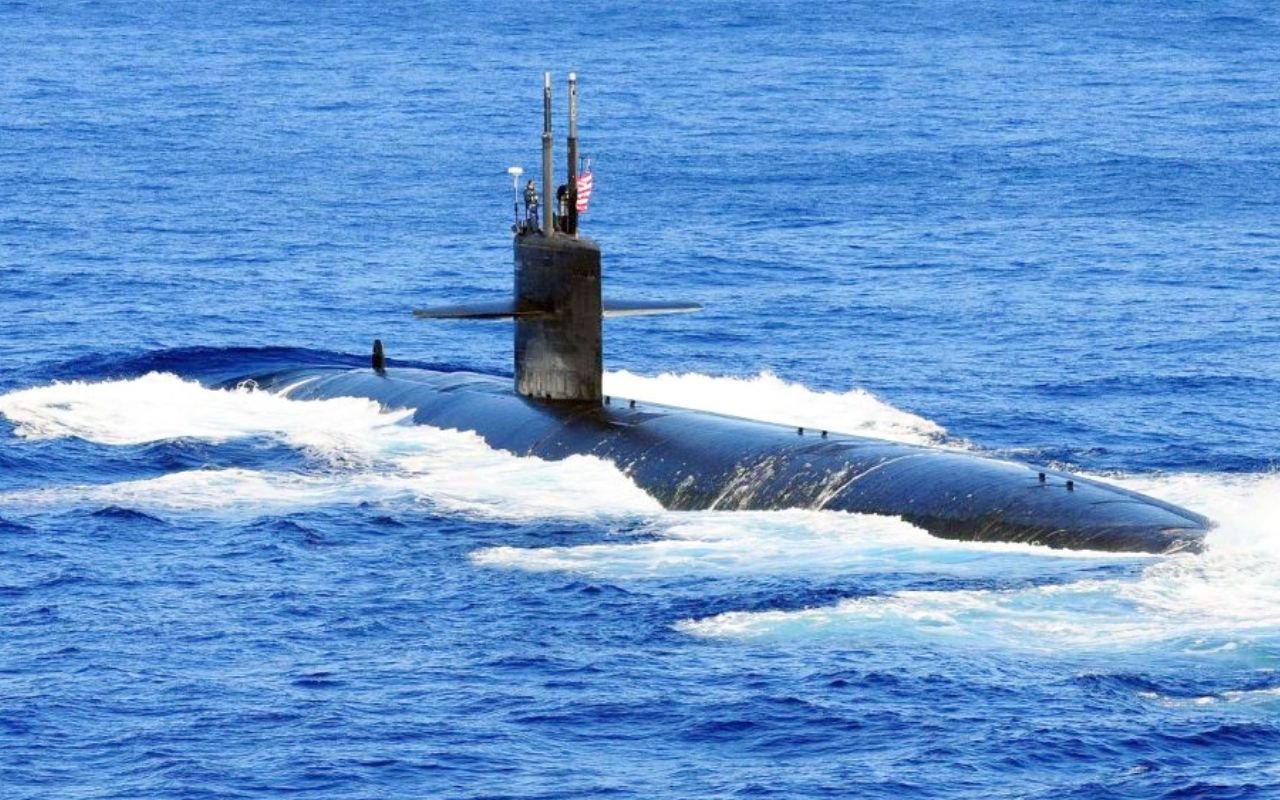
The successful strike on the IRIS Dena rested heavily on cutting-edge technology and time-proven tactics of undersea warfare. The U.S. employed a Los Angeles-class nuclear-powered attack submarine, renowned for its stealth, speed, and precision in both surveillance and offensive operations. The use of the Mk 48 torpedo—a heavyweight, wire-guided torpedo capable of sharp maneuvers and depths reaching several hundred meters—enabled the submarine to deliver a lethal blow with surgical precision. Footage released shows the torpedo striking the frigate near the stern, causing catastrophic damage that rapidly sank the vessel. The choice to engage submerged indicates a deliberate tactical calculus balancing surprise, protection, and mission success. The U.S. submarine’s ability to maintain silent running minimized detection risks during the attack phase, while communications with U.S. Indo-Pacific Command ensured coordination and situational awareness. Naval warfare experts point to this engagement as a textbook example of classic submarine tactics adapted to modern maritime contexts: silent approach followed by an unexpected, speedy strike targeting critical weaknesses of enemy vessels. This incident stands as a stark reminder of the potency submarines continue to hold in controlling maritime domains. That said, the operation also reflects the continued importance of human decision-making and training. Despite advanced technology, the submarine crew’s restraint and adherence to international protocols illustrate disciplined command and respect for the laws of war, critical in avoiding escalation and collateral damage.
Neutral countries, port laws, and iranian naval presence post-engagement
Concerned with the fate of the two Iranian warships still present in the region—the Bushehr and the Lavan—the incident raises questions about naval diplomacy and neutral port policies. Both vessels had docked in Sri Lanka and India, respectively, and have overstayed their 24-hour limit imposed by the Hague Convention of 1907 on belligerent warships visiting neutral ports. This legal boundary under article 12 mandates that warships engaged in hostilities cannot linger beyond one day in neutral harbors. The extended stay of these vessels challenges host nations to navigate between international law compliance and maintaining diplomatic relations with Iran. These complexities harken back to historical naval incidents such as the famous USS Graf Spee episode during World War II, where port neutrality, ship internment, and naval battle outcomes intersected drastically. The Bushehr and Lavan now face uncertain futures with the likelihood of political pressure on Indian and Sri Lankan governments to take measures ranging from eviction orders to impoundment. The issue underscores the continuing relevance of century-old maritime laws in present-day naval conflicts, emphasizing how neutrality and port access remain crucial strategic tools—not merely legal technicalities—in maintaining regional stability.
Key considerations for neutral countries handling belligerent vessels
- Strict adherence to time limits for foreign warships in neutral ports
- Balancing diplomatic relations with international obligations
- Enforcing disarmament or restrictions if necessary to prevent escalation
- Monitoring movements and intentions of belligerent forces
- Coordinating with allied and international security partners to ensure maritime security
Operational lessons and insights from the dena sinking
The Dena engagement delivers several valuable lessons for naval strategists, policymakers, and international law experts. First, it confirms that classic submarine warfare strategies remain potent in modern conflicts, especially when combined with state-of-the-art technology and disciplined command. Second, the episode highlights the complex interplay among alliances, neutrality, and the rules of engagement in maritime environments—a factor increasingly significant as regional and global power contests intensify near critical sea lanes. The successful coordination between the U.S. submarine and allied command to manage both attack and humanitarian response sets a precedent in military operational conduct. The emphasis on legal compliance, even in the heat of conflict, signals a broader commitment to maintaining maritime order.
Additionally, the incident illustrates how public narratives may clash with operational realities. Early misinformation—like claims that the Dena was unarmed or survivors abandoned—reveal the necessity of expert analysis in such complex situations.
| Aspect | Details |
|---|---|
| Location | International waters near Sri Lanka |
| Date of sinking | March 4, 2026 |
| Submarine class | Los Angeles-class nuclear attack submarine |
| Torpedo type | Mark 48 heavyweight torpedo |
| Iranian crew casualties | 87 |
| Rescued survivors | 32 |
| Recent Iranian naval activity | Participation in India’s Exercise Milan |
| Neutral ports overstayed | Sri Lanka and India (Bushehr and Lavan warships) |
| International legal reference | Newport Manual on the Law of Naval Warfare |
Future naval engagements will likely continue to involve such complex legal and operational dimensions. The 2026 sinking of the Dena thus stands as an instructive episode proving the enduring relevance of submarine warfare in asserting maritime dominance.
Why did the U.S. submarine attack the Iranian frigate Dena?
The U.S. submarine engaged the Dena because it was an armed warship operating in contested international waters during an active conflict between the U.S. and Iran. The strike was consistent with international law and naval warfare protocols.
Did the U.S. submarine crew abandon survivors after the attack?
No. The submarine coordinated rescue efforts through U.S. Indo-Pacific Command to alert nearby authorities. Immediate rescue by the submarine was not possible due to the risk of counterattack, but survivors were eventually rescued by Sri Lankan forces.
What role did Australian sailors have on board the U.S. submarine?
Australian sailors were present as part of the AUKUS initiative but were ordered not to participate in the attack, preserving Australia’s neutrality in the conflict.
How do neutral ports handle warships from countries at war?
Neutral ports must enforce international law, including limiting the stay of belligerent ships to 24 hours to avoid being drawn into conflict. Extended stays can prompt diplomatic or legal action by the host nation.
What does the sinking of the Dena tell us about the future of submarine warfare?
It demonstrates that traditional submarine tactics combined with modern technology remain a formidable force in naval strategy, emphasizing stealth, precision, and adherence to international law.
