
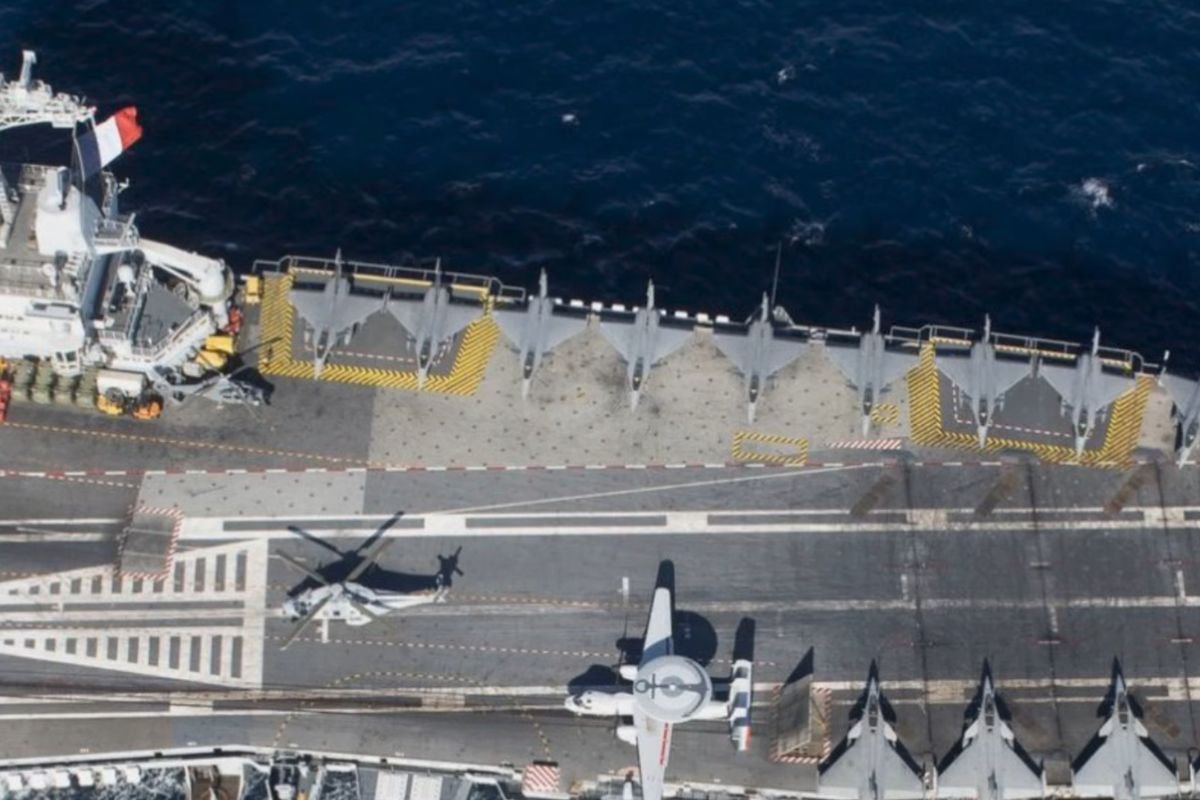
France is preparing to launch its most ambitious naval project to date, with the next-generation aircraft carrier poised to rewrite Europe’s military investment records.
The announcement of France’s future aircraft carrier has sent ripples through defense circles worldwide. This massive undertaking, with a price tag exceeding 12 billion euros, is not just a symbol of maritime power but a strategic pivot for the French Navy, set to replace the aging Charles de Gaulle by 2038. Representing a leap forward in naval technology, the new carrier will redefine the standards of European maritime sovereignty and military capability.
Unprecedented military spending on France’s next-generation carrier
The French government’s commitment to building a new aircraft carrier marks an unparalleled surge in military expenditure. According to the 2026 budget plans, the base cost of this vessel is estimated at a minimum of € 12.2 billion ($13,8 billion), a figure that excludes the expenses of onboard aircraft and necessary port infrastructure upgrades. The final financial impact will undoubtedly extend beyond this starting point, considering the integration of advanced systems and allied facilities.
This enormous budget stems from the ship’s complex technological demands and its size. Weighing in at approximately 78,000 tonnes, it stands significantly larger than the current Charles de Gaulle. Its nuclear propulsion system will grant it nearly limitless operational endurance, a rare capability mastered only by the US and France within the aircraft carrier elite. This autonomy empowers the French Navy to maintain a formidable presence across global waters without compromising on speed or range.
To handle such a colossal investment, the French government has decided to adopt a phased financing approach. This plan involves multi-year budget allocations starting as early as 2025, spreading out the costs to alleviate fiscal pressure at any one time. The strategy reflects the broader economic realities France faces today, dealing with public finance constraints while prioritizing defense modernization.
Further financial strategies under consideration include partnership models with key industrial players, aiming to offset some funding and stimulate economic benefits across the defense sector. However, given the project’s sensitive nature and strategic importance, any industrial collaboration will demand rigorous controls to safeguard national security interests.
Advanced operational capabilities promise to transform French naval power projection
The forthcoming aircraft carrier steps beyond just size and cost with operational enhancements set to revolutionize the French Navy’s combat readiness and flexibility. It is projected to carry around 40 aircraft, including the latest Rafale M fighters, surveillance planes, helicopters, and next-generation drones. This diverse air wing will enable multidimensional maritime operations across reconnaissance, air superiority, and anti-submarine warfare.
One standout feature will be the revamped flight deck and launch systems, designed for simultaneous launch and recovery of multiple aircraft, a significant improvement over the current carrier’s single-plane cyclic operations. This upgrade will notably increase sortie rates, enhancing France’s ability to execute sustained air campaigns during crisis deployments.
The carrier is also future-proofed to adapt quickly to emerging technologies. It is planned to integrate cutting-edge electronic warfare suites, advanced digital command systems, and artificial intelligence tools for autonomous operations and real-time threat assessment. These capabilities not only optimize decision-making but also boost survivability in contested maritime zones.
From an industrial standpoint, the construction and maintenance of this vessel will catalyze a rich ecosystem of defense enterprises. Nearly 800 companies are expected to contribute, particularly small and medium enterprises (SMEs) and intermediate-sized firms that form the backbone of France’s naval industry. During peak construction phases, the workforce could expand to 14,000, spanning engineers, technicians, and skilled labor.
This industrial engagement ensures a wide geographic distribution of economic impact, notably benefiting regions like Pays de la Loire, Brittany, and Provence-Alpes-Côte d’Azur. An estimated 90% of expenditures will circle back into the national economy, reinforcing France’s defense industrial base and stimulating technological innovation.
Strategic and geopolitical significance of France’s new flagship
Beyond technical mastery and industrial impact, the upcoming aircraft carrier embodies a crucial pillar of France’s maritime sovereignty. In an increasingly uncertain global security environment, possessing an independent and highly capable carrier ensures France’s freedom to act autonomously in protecting interests across vast intervention zones.
The vessel is expected to be a force multiplier in projecting French power in contested areas such as the Indo-Pacific, Mediterranean, and North Atlantic. It allows France to maintain a continuous presence, bridging diplomacy with military strength. This ability to influence global security dynamics independently is vital given shifting alliances and evolving threats worldwide.
Critically, the carrier signals France’s ambition to uphold its status among the few nations wielding nuclear-powered carrier capabilities. This exclusivity enhances France’s strategic leverage within NATO and European defense frameworks, offering a forward base for rapid response operations and multinational cooperation.
Such a platform also invigorates France’s defense diplomacy, as future joint exercises, and multinational maritime missions can pivot around this asset. The ship’s technologies and operational prowess will likely attract interest from allied navies and partners, further cementing French leadership in maritime defense innovation.
How the new carrier’s technology surpasses previous naval standards
France’s next carrier not only leaps ahead in size but also in technical innovation. Nuclear propulsion remains a significant hallmark, ensuring exceptional endurance without refueling constraints—a feature highly prized in global naval strategy circles.
The ship is expected to feature the latest electromagnetic aircraft launch systems (EMALS), replacing traditional steam catapults. EMALS offers smoother launches with less stress on airframes and greater launch flexibility, accommodating a broader range of aircraft types including heavier drones and future-generation fighters.
Digital automation will permeate the ship’s operations, from propulsion control to weapons systems management. Sophisticated cybersecurity frameworks will safeguard operational integrity against modern electronic threats, a critical concern in contemporary naval warfare.
Innovative hull design and stealth materials will reduce radar signatures, enhancing survivability in hostile environments. These features collectively enable the carrier to operate with heightened discretion and efficacy, making it a formidable mobile base far from home shores.
Such advancements highlight a broader trend in naval engineering—combining power with intelligence, endurance with adaptability. France’s choice to prioritize cutting-edge technology within a sovereign framework emphasizes its commitment to maintaining a competitive edge for decades to come.
Industrial benefits and employment boost from this mega defense project
The construction of the next French aircraft carrier is not only a defense initiative but a major economic stimulant. With nearly 800 companies involved, primarily SMEs and medium-sized businesses, this project stands as a catalyst for sustained employment and industrial growth over the next decade.
The shipbuilding process is expected to peak with a workforce of around 14,000 specialists, including engineers, craftsmen, and logistics teams. This surge will revive traditional shipbuilding hubs and promote regional development in areas historically linked to naval construction.
Key regions like Pays de la Loire, Brittany, and Provence-Alpes-Côte d’Azur will witness substantial economic influx. More than 90% of the project’s spending promises direct reinvestment into the national industry, ensuring benefits remain largely within France’s borders.
The program also pushes forward innovation by encouraging SMEs to develop specialized components and advanced technologies ranging from propulsion modules to digital command systems. This ecosystem ensures a high-tech pipeline that benefits other European defense programs and civilian sectors alike.
| Industrial Region | Expected Employment (Peak) | Economic Impact (€ Billion) | Type of Involved Firms |
|---|---|---|---|
| Pays de la Loire | 5,200 | 3.1 | Shipbuilders, Technicians, Engineering SMEs |
| Brittany | 4,500 | 2.6 | Marine Systems, Electronics, SMEs |
| Provence-Alpes-Côte d’Azur | 3,800 | 2.3 | Defense Electronics, Digital Systems |
- Phased financial commitment starting in 2025
- Investment exceeding 12 billion euros for hull and technology
- Approximately 78,000 tonnes displacement, largest French-built ship
- Nuclear propulsion technology mastered by only two countries
- Air wing capacity close to 40 aircraft, including drones and Rafale M fighters
- Integration of EMALS for advanced launch operations
- Projected employment of up to 14,000 workers during peak construction
What is the estimated cost of France’s new aircraft carrier?
The base cost is estimated at least 12.2 billion euros, excluding aircraft and port facilities, making it one of Europe’s costliest military projects.
How many aircraft can the new carrier accommodate?
It is designed to carry approximately 40 aircraft, including Rafale M fighters, surveillance planes, helicopters, and drones.
What technological advancements does the new carrier feature?
Notable innovations include nuclear propulsion for unlimited endurance, electromagnetic aircraft launch systems (EMALS), enhanced digital command systems, and future-ready artificial intelligence integration.
Which regions in France will benefit the most from this project?
Pays de la Loire, Brittany, and Provence-Alpes-Côte d’Azur will see significant economic and employment benefits, with over 90% of spending benefiting national industry.
When is the new aircraft carrier expected to enter service?
Scheduled to replace the Charles de Gaulle, the carrier is expected to enter service around 2038.
Sources:
- https://ukdefencejournal.org.uk/france-to-build-large-new-nuclear-aircraft-carrier
- https://www.navalnews.com/naval-news/2025/12/france-formally-green-lights-pa-ng-aircraft-carrier-production
