
Thales has firmly established itself at the forefront of military training aviation by winning the contract to equip European Pilatus PC-7 trainers with its advanced radio communication management systems.
For European military aviation, modernizing training aircraft communications has become an urgent priority in 2026. The Pilatus PC-7, a staple in pilot training programs throughout the continent, is undergoing a critical upgrade to meet the demands of contemporary operational environments. Thales’s recent selection by Pilatus Aircraft to provide an innovative radio management system marks a major shift towards enhanced connectivity and mission reliability. This decisive move reflects the ongoing transformation of military trainer aircraft into smart, interoperable platforms capable of simulating real combat conditions. The partnership between Pilatus and Thales represents not just a technological advancement but a milestone in European defense collaboration and secure avionics development.
How Thales’s radio management system revolutionizes communication in Pilatus PC-7 trainers
At the heart of the contract awarded on March 16, 2026, lies Thales’s comprehensive radio management solution, designed specifically to optimize communication continuity during military pilot training missions. The PC-7 aircraft, operated by several European air forces, will be upgraded with this system to ensure secure, robust, and flexible interaction between pilots and command centers, even under challenging operational conditions.
The system is engineered to function seamlessly in degraded communication environments, where bandwidth can be limited and signal interference is frequent. Such capabilities are critical when training pilots for real-world battle scenarios where communication reliability can influence survival. Thales has emphasized the system’s ability to adapt dynamically, conserving crucial communication channels and minimizing interruptions, therefore simulating authentic tactical conditions.
Moreover, this radio management technology is fully compatible with existing cockpit architectures, a key factor influencing Pilatus’s choice. Unlike older, clunky legacy radios, it integrates smoothly into modernized cockpits without requiring major overhauls, ensuring continuity of existing pilot interfaces while providing enhanced functionality. The system’s adherence to current military standards guarantees interoperability within NATO frameworks, which is essential for multi-national training exercises.
Pilatus and Thales engineers collaborated closely to tailor the equipment’s design to specific military requirements, focusing on reliability and user-friendly operation. During development, pilots tested the radio system extensively, confirming its resilience in high-stress, multi-tasking environments common in training flights.
This upgrade is a leap forward in cockpit connectivity, supporting advanced tactical training through real-time data exchange and encrypted communications, which prepares trainee pilots with the skills required for advanced combat aircraft.
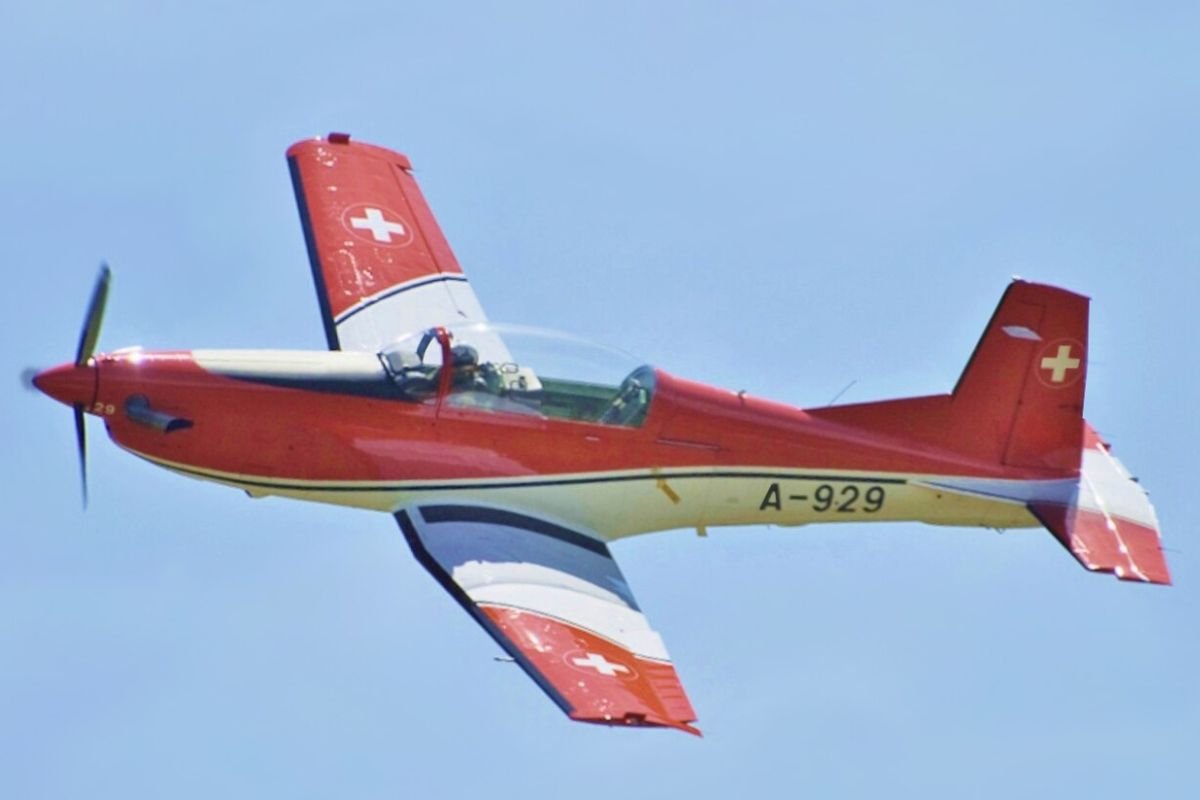
Introduced in 1978, it has been adopted by more than 20 air forces, with over 600 aircraft delivered, most still in service, and a global fleet exceeding one million flight hours.
The latest version, the PC-7 MKX, unveiled in 2021, has been ordered by the Netherlands, France, and Belgium.
Key advantages of a modernized radio system in pilot training
The new radio management installation delivers a spectrum of benefits: enhanced clarity, reduced signal loss, compatibility with secure military networks, and a simplified interface reducing pilot workload. These improvements translate to:
- Increased mission success rates during training by ensuring critical communications are uninterrupted.
- Elevated pilot situational awareness through better audio quality and automatic frequency management.
- Greater flexibility in adapting to evolving mission profiles and operational tactics.
- Reduced maintenance costs thanks to the system’s modular design and durability.
- Enhanced interoperability with NATO and allied air forces for joint exercises.
These benefits reinforce the importance of secure and resilient communication channels as foundational to effective pilot training, directly impacting operational readiness.
Why upgrading the Pilatus PC-7 MKX trainer is vital for European military aviation
The Pilatus PC-7 MKX is increasingly recognized as the backbone of initial military flight training across various European nations. Its selection for key training programs, like France’s ambitious Mentor 2 initiative, signals a commitment to modernizing pilot education for the foreseeable future. In this context, integrating Thales’s radio system becomes a strategic imperative.
France is set to receive 22 PC-7 MKX aircraft supported by 12 advanced simulators under a contract valued at approximately 795 million euros, spanning 17 years. This comprehensive package is designed to train an estimated 120 cadets annually, combining over 11,000 hours of actual flight time with 6,500 hours in simulated environments. The integration of reliable, secure communications is essential for managing this scale of training with precision and safety.
Not limited to France, other European countries including Belgium and the Netherlands have committed to procuring PC-7 MKX trainers — with numbers reaching 18 and 8 units respectively. This collective investment in a unified platform underlines a Europe-wide effort to harmonize pilot training standards and maximize interoperability.
As the PC-7 MKX becomes a widespread training solution, incorporating cutting-edge avionics such as Thales’s radio management system signals a transition to future-proof military training. It not only aligns with evolving NATO communication protocols but also lays the groundwork for seamless cooperation among NATO allies and partner nations.
The holistic upgrade, embracing both hardware and software improvements, supports the long-term vision where training aircraft serve as flexible, modular hubs that realistically replicate combat aircraft environments. This shift enhances pilot preparedness, drastically reducing the learning curve once trainees transition to more sophisticated platforms.
How simulator integration complements aircraft communication upgrades
Integral to the modern training syllabus is the synergy between live flight hours and high-fidelity simulators. The Mentor 2 program includes 12 state-of-the-art simulators allowing cadets to practice mission scenarios where communication systems play a vital role. Thales’s radio management system in the aircraft coordinates with simulator software to create consistent training environments.
This integration means that communication protocols remain consistent across real and simulated flights, reinforcing pilots’ familiarity with the radio system. The simulators provide a safe space to train for complex scenarios, such as communication jamming or frequency hopping, which are crucial skills in modern aerial warfare.
The combined approach prepares pilots more effectively, cultivating a deeper understanding of communication dynamics under pressure and training them to react swiftly and confidently.
Thales’s strategic growth reflected in its aerospace communication leadership
Thales’s selection for the PC-7 communications upgrade marks a significant milestone showcasing the company’s expanding role in secure avionics and cockpit connectivity. Strengthened by its April 2024 acquisition of Cobham Aerospace Communications, Thales has broadened its technological portfolio, enabling it to design and deliver cutting-edge solutions tailored to increasingly digital and networked military platforms.
This acquisition extended Thales’s expertise in secure, resilient communication technologies—an essential factor when adapting to evolving military user requirements. The union of Cobham’s specialized know-how with Thales’s global reach accelerated innovation, yielding integrated systems that meet stringent standards while offering scalability and adaptability for future upgrades.
The PC-7 contract reflects Thales’s ability to meld advanced technology with user-driven design. The radio system supports high operational reliability during training missions where technical failures can have cascading effects on safety and mission effectiveness.
Moreover, the partnership exemplifies European industrial autonomy in military aerospace. Choosing a European supplier like Thales underscores a strategic preference toward fostering intra-European technological capabilities and securing supply chains against global uncertainties.
What sets Thales apart in avionics communications innovation
Thales’s distinct advantage originates from decades of experience in avionics, combined with a proactive approach to research and development. Its investments in software-defined radio technologies and secure data links enable rapid adaptation to emerging threats and new communication environments. These capabilities are particularly valued in the military sector where innovation timelines often need to be compressed without compromising reliability.
Additionally, Thales’s focus on modular system design ensures that upgrades can be implemented incrementally, reducing disruptions while keeping pace with technological advancements.
This flexibility enhances the lifespan of training fleets like the PC-7 and allows air forces to benefit from state-of-the-art communication without requiring wholesale aircraft replacement.
European military training programs align with modern communications trends
The adoption of Thales’s radio management system coincides with a broader trend across Europe to unify military training tools and communication standards. NATO interoperability frameworks emphasize secure, resilient channels capable of adapting to electronic warfare threats, a priority mirrored in pilot instruction environments.
Equipping training aircraft like the PC-7 with upgraded communication systems helps bridge the gap between simulation and operational scenarios, preparing aviators for joint operations alongside allied nations. This connectivity standardization increases training efficiency, improves response times, and boosts overall defense readiness.
Some European air forces are already integrating these upgrades into existing training pipelines, viewing them as essential to maintaining the technological edge in multi-domain battlefields. By investing early in such communication innovations, countries mitigate future upgrades costs and technical risks.
| Country | PC-7 MKX Units Ordered | Training Program | Estimated Annual Trainees | Contract Value (€ million) |
|---|---|---|---|---|
| France | 22 | Mentor 2 | 120 | 795 |
| Belgium | 18 | National Training | 80 | NT Confidential |
| Netherlands | 8 | Military Flight School | 50 | NT Confidential |
Benefits of standardizing communication systems across European air forces
Deploying the same radio systems across multiple national fleets fosters several operational and strategic benefits:
- Improved cross-border training exercises thanks to uniform communication protocols.
- Streamlined maintenance and support due to common system components.
- Accelerated introduction of future upgrades benefiting all operators simultaneously.
- Enhanced security posture reducing vulnerabilities caused by disparate hardware.
How Pilatus and Thales collaboration impacts future aviation training developments
The Pilatus-Thales partnership also signals a shift in how military aviation training solutions are developed and integrated. Their close cooperation during this upgrade highlights the importance of flexible design philosophies that support evolving operational demands. This collaboration ensures that the pilot training fleet benefits from cutting-edge solutions without disruption to flight schedules or doctrine.
Looking ahead, lessons learned from the PC-7 integration are already informing new projects aimed at more sophisticated trainer aircraft and even next-generation fighter jets. This sets a precedent for ongoing modernization programs prioritizing avionics and communication systems as central pillars of pilot preparation.
Customizing communication management systems to meet specific regional and user needs, while maintaining broad compatibility, is setting the tone for future aerospace collaboration both within Europe and globally.
Emerging technologies shaping the next generation of training aircraft
Technologies such as artificial intelligence-assisted communication routing, cybersecure data links, and augmented reality interfaces are becoming integral parts of future pilot training systems. These innovations promise to further reduce pilot workload, enhance situational awareness, and simulate complex battlefield environments with higher fidelity.
The PC-7 upgrade represents a stepping stone towards this future by embedding advanced radio communication as a foundational capability upon which more sophisticated systems can be layered.
What capabilities does Thales’s radio management system bring to PC-7 trainers?
It offers robust, secure, and adaptable communications tailored for demanding pilot training environments while ensuring compatibility with current military standards and cockpit designs.
Why is upgrading communication systems important for military flight training?
Reliable communication ensures mission effectiveness, pilot situational awareness, and safe training operations under realistic conditions, particularly in contested or degraded environments.
How does the PC-7 MKX enhance pilot training in Europe?
With modern avionics and integration with simulators, the PC-7 MKX streamlines initial flight training, aligning it with NATO standards and preparing pilots for advanced operational aircraft.
What advantages does standardizing communication systems across European countries bring?
It improves interoperability during joint exercises, reduces maintenance costs, and ensures security consistency across allied air forces.
How will this collaboration influence future military aircraft development?
The successful Pilatus-Thales partnership sets a framework for modular avionics integration, driving innovation in upcoming trainer and combat aircraft programs.
Sources:
- https://www.thalesgroup.com/fr/actualites-du-groupe/communiques-de-presse/thales-selectionne-pour-equiper-la-flotte-europeenne
- https://www.aerocontact.com/en/aerospace-aviation-news/100299-pilatus-selects-thales-to-equip-the-pc-7-with-a-next-generation-radio-system
