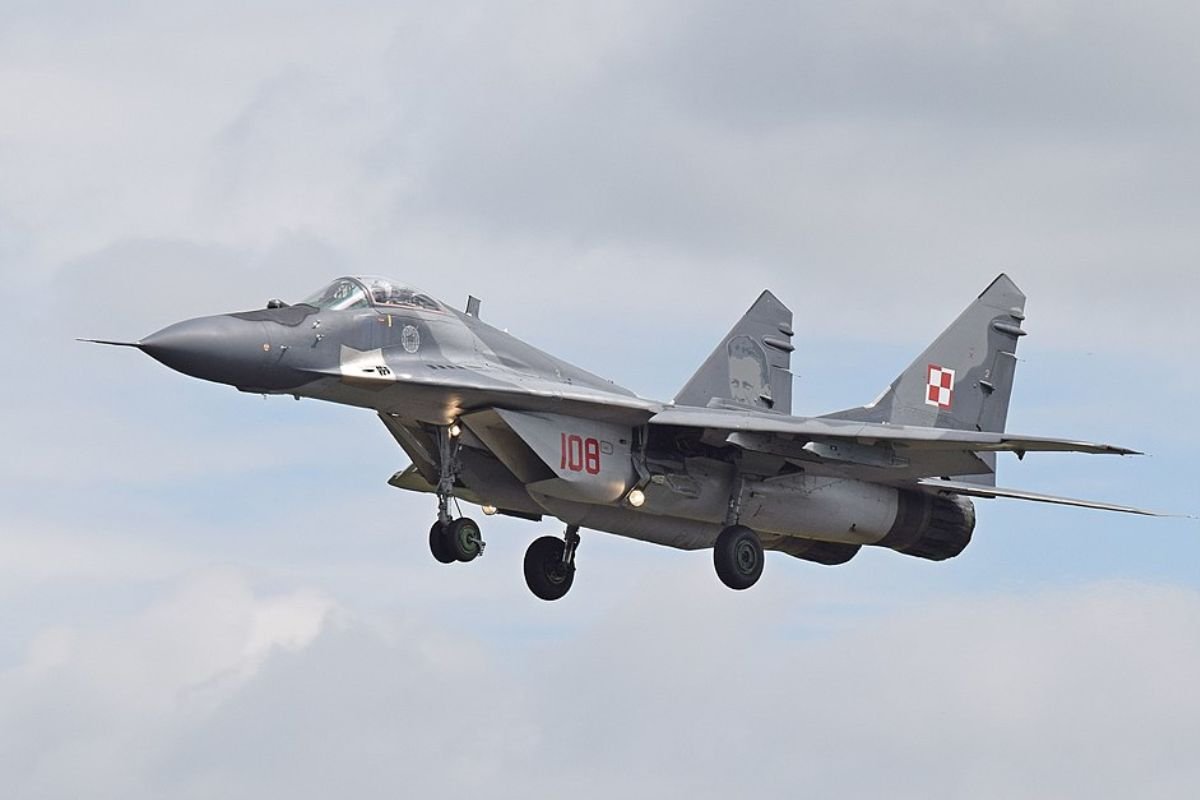
Poland has recently scrambled MiG-29 fighter jets to intercept a Russian Il-20 reconnaissance aircraft operating in the Baltic Sea region, marking another tense episode in Eastern Europe’s increasingly complex aerial dynamics.
The skies above the Baltic Sea have witnessed a growing number of encounters between NATO and Russian military aircraft. In late October, the Polish Air Force dispatched two MiG-29 fighters to intercept and escort a Russian Il-20 aircraft, which was conducting reconnaissance activities without filing a flight plan or activating its transponder. This incident highlights the persistent strategic challenges in maintaining airspace sovereignty and security in a geopolitically charged region.
Understanding the strategic role of MiG-29 fighters in Baltic airspace security
The MiG-29 fighter jets used by Poland are among the most advanced in their arsenal, serving as crucial components in the nation’s air defense strategy. These aircraft are designed for rapid response and interception missions, making them ideal for guarding Poland’s airspace and allied interests in the Baltic region. The decision to deploy MiG-29s to intercept the Il-20 underscores Poland’s commitment to maintaining strict control over its airspace amid ongoing tensions with Russia.
Intercepting an Il-20 reconnaissance plane is no casual maneuver. The Il-20 is a sophisticated electronic intelligence (ELINT) aircraft, equipped to gather signals intelligence and conduct radar surveillance. Operating such aircraft near NATO airspace without communicating intentions or following safety protocols is perceived as provocative and risks escalations. The MiG-29s’ mission is to visually identify, escort, and if necessary, compel the foreign aircraft to leave the area, ensuring national and allied security.
The importance of these interception missions goes beyond mere tactical responses. They serve as deterrents against unauthorized surveillance flights and demonstrate NATO member states’ readiness to respond swiftly to potential airspace violations. This strategic posture informs both Russia and the broader international community of the vigilance maintained by countries like Poland in their air defense operations.
Moreover, MiG-29 fighters’ role has been enhanced technologically over the years with upgrades in avionics, radar systems, and weaponry, enabling them to track, identify, and shadow intruding aircraft efficiently. In the context of the Baltic Sea, where airspace is tightly contested and closely monitored, such capabilities are essential to asse
W piątek, 13 marca 2026 roku para dyżurna myśliwców MiG-29 ✈️ Sił Powietrznych 🇵🇱 dokonała skutecznego przechwycenia, identyfikacji wizualnej oraz eskortowania z rejonu odpowiedzialności samolotu Federacji Rosyjskiej, który wykonywał lot nad Morzem Bałtyckim.
— Dowództwo Operacyjne RSZ (@DowOperSZ) March 16, 2026
Polskie myśliwce… pic.twitter.com/c0pSS7bctr
rt sovereignty and counter surveillance attempts.
The implications of Russian Il-20 reconnaissance flights in international airspace
The use of the Il-20 for reconnaissance flights near NATO borders reflects Russia’s intent to collect valuable military intelligence. These missions are often carried out in international airspace but skirt dangerously close to national territories, creating tension and diplomatic friction.
Russian ELINT operations with the Il-20 include intercepting communications, radar emissions, and other electronic signals critical for mapping NATO’s defense postures. Such surveillance aids Moscow in fine-tuning its military strategies, targeting systems, and preparing for possible contingencies. However, the methods employed—especially flying with transponders off and bypassing flight plans—raise international concerns about transparency and safety.
For Poland and its Baltic neighbors, these flights are constant reminders of the ongoing information warfare and the need for robust air defense readiness. The nature of these reconnaissance missions has evolved over decades, from conventional visual spying to sophisticated electronic intelligence collection involving multiple aircraft and satellites.
Historically, airspace incursions and interceptions have occasionally resulted in dangerous incidents, including close-proximity flying that risks miscalculation or accidents. Therefore, such reconnaissance flights not only challenge the legal and operational boundaries of airspace sovereignty but also test the diplomacy and crisis management mechanisms in place between NATO and Russia.
The Baltic Sea region, being a vital corridor both politically and economically, gains added complexity from these military maneuvers. NATO countries must balance deterrence and avoidance of escalation in an environment where aerial espionage is a regular feature. The continued presence and activity of Il-20 aircraft illustrate the ongoing contest for regional dominance in military intelligence.
How NATO and Poland manage repeated aerial reconnaissance incidents
NATO maintains a vigilant air defense posture in the Baltic Sea region, frequently scrambling fighter jets from member countries to monitor and escort foreign military aircraft approaching alliance airspace. Poland’s interceptor response exemplifies the coordinated efforts within NATO to manage and deter potential threats.
Rapid reaction alert units in Poland and neighboring states are tasked with responding immediately to unauthorized or suspicious aircraft. These units operate round the clock, ensuring continuous surveillance and readiness to act. Procedures involve scrambling fighters like the MiG-29s to intercept and visually identify the aircraft, then escorting them out of the area if needed.
This procedure adheres to international law, which permits the interception of aircraft in a country’s air defense identification zone (ADIZ) if they do not comply with flight regulations. The routine nature of these interceptions reflects NATO’s commitment to airspace integrity but also underscores the persistent aerial cat-and-mouse games with Russia’s intelligence-gathering efforts.
Poland’s response includes robust communication with NATO allies, sharing radar and operational data to maintain a comprehensive picture of air activity in the Baltic zone. This cooperative stance enables NATO to respond cohesively, mitigating escalation risks while protecting allied skies. Furthermore, Poland has invested heavily in upgrading air defense infrastructure, enhancing radar capabilities, and modernizing its fighter fleet to maintain operational superiority.
Preventing any accidental or deliberate airspace violations is critical to avoiding military confrontations. Therefore, NATO’s systematic interception and escort operations form a vital part of maintaining stability in a region where airspace security is essential for broader geopolitical safety.
Technical features of the MiG-29 and Il-20 — why interception matters technologically
The MiG-29 and Il-20 represent two very different classes of military aircraft with unique technological profiles that define their roles and interaction dynamics. Understanding these differences explains why interception missions are so critical and complex.
The MiG-29 is a twin-engine, supersonic fighter jet designed mainly for air superiority missions. Equipped with powerful radar, short and medium-range missiles, and superior maneuverability, the MiG-29 is built to quickly intercept and engage enemy aircraft. Its avionics and electronic countermeasure systems allow secure identification and adaptability to electronic warfare scenarios, essential when engaging shadowy reconnaissance planes like the Il-20.
On the other hand, the Il-20 is a large, multi-engine reconnaissance and ELINT platform based on the older Il-18 airframe but refitted with advanced electronic systems for signals collection, radar jamming, and communications interception. Compared to fast jets, it flies slower and relies on keeping distance from direct combat, depending on electronic sensor suites to gather intelligence.
The interception is thus a tactical challenge. Fighter jets need to approach closely enough to visually identify the Il-20, compel it to change course, and ensure it respects sovereign airspace norms without engaging in hostile actions. The technological interplay involves radar detection, communication jamming countermeasures, and electronic surveillance capabilities on both sides.
A clear understanding of this technology interplay helps explain why repeated interceptions occur and highlights the increasing sophistication in aerial reconnaissance and air defense that defines modern military confrontations.
| Aircraft Type | Role | Speed (km/h) | Operational Use | Key Features |
|---|---|---|---|---|
| MiG-29 | Multirole Fighter Jet | 2,400 | Air superiority, interception | Advanced avionics, radar-guided missiles, high maneuverability |
| Il-20 | Electronic Intelligence (ELINT) Recon Aircraft | 675 | Signals intelligence, radar jamming | Multiple radar, electronic sensors, communication interception |
Geopolitical ramifications of Poland’s MiG-29 interceptions amid NATO-Russia tensions
The frequent dispatch of Polish MiG-29s to intercept Russian reconnaissance aircraft like the Il-20 contributes to a delicate but high-stakes security environment along NATO’s eastern flank. These operations underscore the ongoing competition for intelligence dominance and airspace control in the Baltic region, a hotspot of NATO-Russian rivalry.
Poland’s strategic position as a frontline NATO country implies that its air force often serves as the first responder to Russian aerial provocations. These interception missions act as both a message of deterrence and a reassurance to allied countries that Poland remains vigilant and capable of defending shared airspace.
From a broader perspective, such incidents emphasize the need for continuous dialogue and crisis management mechanisms between NATO and Russia to avoid accidental escalations. With the Baltic Sea hosting significant military and economic activity, tensions here can ripple through the wider European security landscape.
The presence of surveillance aircraft like the Il-20 also reflects Moscow’s intention to keep a watchful eye on NATO’s response patterns and military readiness, which feeds into the strategic calculations of both sides. With increasing investments in airborne reconnaissance and electronic warfare capabilities, the risk of misinterpretation or mishaps grows, heightening the importance of clear communication and engagement protocols.
Ultimately, Poland’s use of MiG-29 fighters to maintain airspace integrity mirrors a larger NATO strategy aimed at preserving deterrence while managing complex relations with a resurgent Russia, which continues to assert its military capabilities in neighboring regions.
Why does Poland frequently intercept Russian aircraft in the Baltic region?
Poland is a frontline NATO member with airspace close to Russia. The interceptions are to ensure national and allied security by deterring unauthorized flights, especially reconnaissance missions like those of the Il-20.
What makes the Il-20 reconnaissance aircraft significant in surveillance operations?
The Il-20 is equipped with advanced signals intelligence equipment, radar sensors, and electronic warfare systems, allowing Russia to gather critical intelligence on NATO forces and electronic emissions.
How do MiG-29 fighters effectively intercept and escort the Il-20?
MiG-29s use their superior speed, radar, and communications to quickly approach, visually identify, and escort the slower Il-20 out of the designated airspace, ensuring compliance with airspace regulations.
Are these interceptions risky for international security?
While these interceptions are routine and conducted according to international law, they carry risks. Close encounters between military aircraft can lead to accidents or miscalculations, making communication and restraint essential.
Source: https://www.newsweek.com/poland-nato-jets-scrambled-russian-plane-11683911
