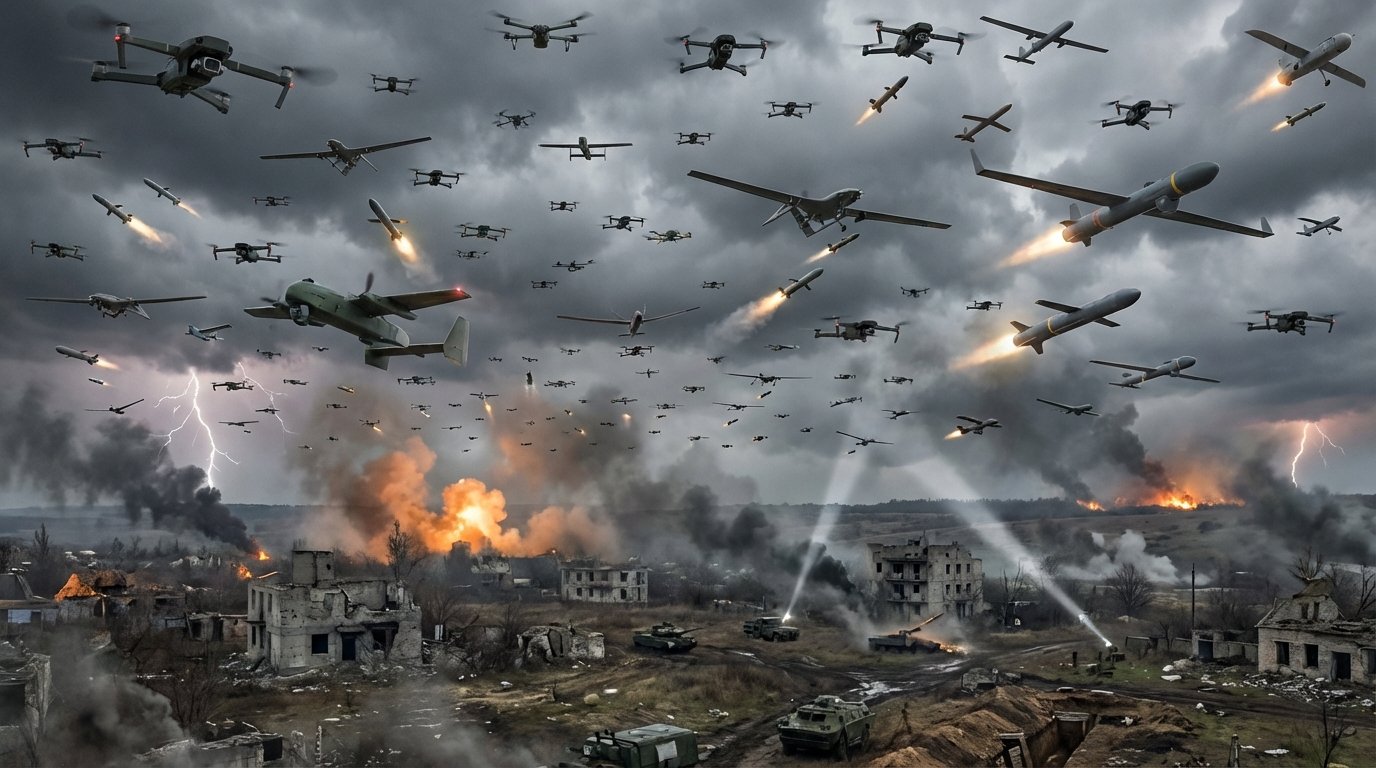
Russia launched an unprecedented wave of nearly 500 drones and missiles in a sweeping attack on Ukraine, marking one of the most intense escalations in recent years.
In a coordinated and large-scale military operation, Russian forces employed an impressive arsenal of unmanned aerial vehicles and missile strikes targeting multiple locations across Ukraine. This massive assault has intensified concerns about the evolving nature of modern warfare and the strategic use of drone technology in conflict zones. The scale and scope of this offensive suggest a deliberate effort by Russia to overwhelm Ukrainian defenses and assert dominance in the region.
Unpacking the scale of Russia’s drone and missile offensive on Ukraine
The recent assault involving nearly 500 drones and missiles represents a significant escalation in the ongoing conflict between Russia and Ukraine. This massive deployment is not just a numerical increase but reflects a tactical shift to incorporate unmanned systems on a large scale. Drones have become essential tools in modern military engagements for their ability to perform surveillance, deliver precise strikes, and gather intelligence without putting pilots at risk.
Russia’s use of hundreds of drones in concert with missiles suggests an attempt to saturate Ukrainian air defenses, forcing them to expend resources rapidly while leaving openings for some weapons to penetrate effectively. The operation targeted cities, military bases, and critical infrastructure, amplifying the damage potential by striking in multiple locations almost simultaneously.
Examples from this offensive illustrate the new dynamics of warfare. For instance, Ukraine’s air defense systems were reported to have intercepted many incoming threats but struggled to keep pace with the sheer volume. The use of smaller, cheaper drones combined with high-precision missile strikes underscores a strategic move aimed at overwhelming traditional defense tactics.
The scale of this operation also signals Russia’s increased investment in drone warfare technology. In recent years, Russia has been reported to develop and deploy various types of UAVs (unmanned aerial vehicles), from reconnaissance drones to armed platforms capable of delivering explosive payloads. The integration of these systems with missile strikes in such a seamless manner indicates a maturation of combined arms tactics that leverage technology advancements to maximum effect.
Furthermore, these attacks have intensified discussions about Ukraine’s air defense capabilities, emphasizing the urgent need for advanced counter-drone systems. The conflict highlights how emerging technologies are reshaping battlefield expectations and forcing nations to adapt rapidly to new threats.
The logistical challenges behind deploying hundreds of drones and missiles
Planning and executing an offensive involving nearly 500 unmanned aerial systems and missile launches requires enormous logistical coordination. Managing such a swarm of weapons demands secure communication networks, synchronized timing, and effective command and control centers. Russia’s capability to organize and deploy this quantity of equipment in a single wave reflects significant military-industrial resources and strategic planning.
Each drone mission, from launch to recovery or destruction, involves multiple stages: fueling or charging, data link establishment, navigation programming, and maintenance. Combining these with missile operations adds complexity due to different flight profiles, target engagement methods, and interoperability concerns.
Behind the scenes, logistical support consists of specialized units responsible for drone preparation, missile loading, and operational command. These must work flawlessly to avoid technical failures that could jeopardize the mission. The unprecedented scale also demands extensive intelligence gathering to select targets that maximize pressure on Ukrainian defenses while avoiding unnecessary redundancy.
To put the scale in perspective, most modern militaries operate drone systems in smaller squadrons far below the hundreds deployed here. Organizing such a massed assault therefore not only requires physical hardware but also technological coordination at the highest levels.
Moreover, this type of operation highlights how Russia is evolving its military doctrine to fit new realities of drone warfare and hybrid conflict strategies. The ability to orchestrate large-scale unmanned strikes, combined with missile fire, is a clear indicator of Moscow’s commitment to invest in and exploit these capabilities fully.
What Ukraine’s defenses reveal amid the continuous drone and missile barrage
Ukraine’s air defense systems have been critically tested by this aggressive wave of attacks. Armed with varied missile and anti-aircraft batteries, Kyiv’s forces have demonstrated resilience but also revealed inherent vulnerabilities against coordinated, saturating strikes.
The deployment of nearly 500 drones and missiles pushed Ukrainian air defense units to operate near or beyond their maximum capacity. Systems designed for conventional air threats, such as fighter jets or individual missile launches, struggled to simultaneously track and intercept multiple low-flying drones and fast-moving missiles.
Examples of Ukraine’s response indicate both adaptive strategies and the limits of current tech. Operators have had to prioritize high-value targets and employ layered defense strategies, including electronic warfare to jam drone controls or confuse missile targeting. However, maintaining persistent coverage over vast areas with limited assets has been a significant challenge.
This barrage has spurred calls for enhanced cooperation with Western allies to procure next-generation air defense systems capable of countering swarms of drones alongside fast missile threats. The evolving battlefield underscores how air defense paradigms need to adjust rapidly, incorporating AI and automated detection to remain effective.
Ukrainian forces also demonstrated ingenuity by employing inexpensive measures such as drone-hunting squads equipped with small arms or deploying commercial drones for reconnaissance and counter-strikes. This grassroots level of defense represents a hybrid war approach: combining high-tech systems with nimble, low-cost tactics to offset numerical disadvantages.
While many drones and missiles were successfully intercepted, the scale of the attack meant some launched warheads found their marks, causing damage to infrastructure and casualties. This underscores the precarious balance between defense and offense in such large-scale drone engagements and reflects the increasing significance of unmanned systems in modern warfare.
Ukrainian strategic response and adaptation to new warfare tactics
In response to the ongoing swarm tactics, Ukraine is rapidly rethinking its defensive posture. The military has focused on several key innovations:
- Integration of counter-drone technology such as radar detection, radio frequency jamming, and laser-based weapons aiming to neutralize drones before they can strike.
- Deployment of mobile air defense units capable of relocating quickly to respond to changing attack vectors and maintain coverage of critical areas.
- Collaboration with international partners to access intelligence sharing and advanced missile defense technologies, including systems like the Patriot or NASAMS.
- Training specialized personnel for rapid identification and neutralization of drone swarms, including cyber warfare experts.
These adaptive measures highlight the evolving nature of Ukraine’s defense efforts, combining international support, technological advancements, and tactical ingenuity to stay one step ahead of Russian offensive strategies.
The strategic implications of large-scale drone and missile use in modern warfare
The deployment of hundreds of drones and missiles in a coordinated attack poses profound implications for future conflicts worldwide. This operation on Ukraine could set precedents for how powerful nations exploit unmanned technology to gain battlefield dominance.
Firstly, the sheer volume of drones utilized illustrates the potential for military forces to overwhelm traditional air defense systems by saturating them. This tactic forces defenders to expend valuable interceptors and risks breaching protective layers. It calls for a rethinking of air defense doctrines that once focused on a limited number of high-value threats rather than hundreds of simultaneous ones.
Secondly, such attacks emphasize the declining role of manned aircraft in certain strike missions, especially where drone swarms can achieve similar or greater effects at lower cost and risk. This could accelerate trends in drone development and procurement worldwide as nations seek to integrate these systems into their defensive and offensive arsenals.
Thirdly, the integration of drones with missile strikes as part of a combined arms approach suggests a sophisticated level of coordination that maximizes damage and psychologically impacts opponents. The constant threat of invisible, hard-to-track drones combined with missile strikes can undermine civilian morale and military effectiveness.
Moreover, these large-scale operations highlight the importance of cyber warfare and electronic countermeasures as essential components of modern defense strategies. As drones rely on communication links and GPS, jamming or hacking these systems becomes a powerful tool in mitigating threats.
This escalation also underlines the geopolitical risk inherent in conflicts where drone proliferation can destabilize fragile security environments. The lessons learned in Ukraine could ripple into how military planners worldwide prepare for similar hybrid, technology-driven conflicts.
How countries are adapting military doctrine to drone warfare realities
Around the globe, militaries are recalibrating their doctrines to account for the rise of drone swarms and missile saturation attacks. Key trends include:
- Investment in multi-layered defense systems combining radar, electronic warfare, and kinetic interceptors to address various threat categories.
- Emphasis on rapid response capabilities enabling forces to detect, track, and neutralize multiple targets simultaneously.
- Increased research into AI-based target recognition for faster and more efficient engagements.
- Development of offensive drone swarms capable of autonomous operation and swarm tactics that overwhelm adversaries.
- Collaboration between air, land, and cyber forces to create integrated defense and attack systems.
This strategic evolution reflects the foundational impact of drone warfare on military planning, signaling a future where technology, speed, and adaptability will dominate combat scenarios.
The human toll and infrastructural damage resulting from mass drone and missile strikes
Beyond the technological and strategic aspects, the massive barrage of nearly 500 drones and missiles has inflicted significant human and infrastructural consequences in Ukraine. Civilian populations in targeted cities faced grave risks as key infrastructure, including power grids, communication lines, and transportation hubs, sustained damage.
Hospitals, schools, and residential areas have also been affected by collateral damage resulting from near-miss explosions or secondary fires, creating humanitarian crises in already vulnerable communities. Ukrainian emergency services have been stretched thin responding to these cascading effects, complicating efforts to maintain basic services and civilian safety.
The psychological impact on civilians living under the constant threat of drone and missile attacks is profound. Continuous alerts and air raid sirens disrupt daily life and deepen trauma within affected populations. This atmosphere adds pressure on government authorities to address both immediate security needs and long-term recovery plans.
Casualty figures fluctuate as the situation evolves, with confirmed reports of both military and civilian fatalities. The unpredictability and volume of attacks exacerbate medical challenges, forcing hospitals to prioritize emergency care and manage crises with limited resources.
From an infrastructure standpoint, damage to electrical grids causes widespread blackouts, affecting not only homes but also businesses and public services. Disrupted transportation routes hinder logistics and supply chains, compounding difficulties for defense operations and humanitarian relief.
Examples of resilience and recovery amid devastation
Despite the destruction, Ukraine’s communities and authorities have demonstrated remarkable resilience. Rapid repair crews work tirelessly to restore power and clear debris, while international aid organizations provide critical support for displaced populations.
Local innovations, such as community warning systems and volunteer networks, help mitigate risks and streamline response efforts. Psychological support programs have also been set up to address trauma endured by civilians amid ongoing hostilities.
These recovery efforts illustrate a determined will to withstand the consequences of drone warfare and maintain societal cohesion even under relentless pressure. The human spirit in conflict zones, while tested severely, often adapts and perseveres against overwhelming odds.
| Type of damage | Areas affected | Extent of damage | Response measures |
|---|---|---|---|
| Power grid disruptions | Kyiv, Kharkiv, Zaporizhzhia | Widespread blackouts for days | Rapid repair crews deployed, backup generators activated |
| Transportation infrastructure | Highways, railways in eastern Ukraine | Signal and track damage causing delays | Emergency maintenance and route diversions implemented |
| Residential damage | Populated urban districts | Partial destruction of buildings and utilities | Temporary shelters established, rebuilding programs initiated |
| Medical facilities | Multiple cities | Structural damage and overcrowding | Emergency triage centers set up, international aid requested |
How many drones and missiles were used in the Russian attack on Ukraine?
Nearly 500 drones and missiles were deployed in the massive assault, marking one of the largest known use of unmanned systems in a single offensive.
What challenges does Ukraine face in defending against drone swarms?
Ukraine struggles with tracking and intercepting numerous small, fast-moving drones simultaneously, requiring advanced detection and counter-drone technologies to improve defense.
How has the use of drones changed modern military tactics?
Drones enable saturation attacks, real-time intelligence gathering, and precision strikes, reducing the risk to pilots and challenging traditional defense systems.
What kinds of damage have drone and missile strikes caused in Ukraine?
The strikes have disrupted power grids, damaged transportation infrastructure, and caused destruction in residential and medical facilities, leading to casualties and humanitarian crises.
What steps is Ukraine taking to counter the drone and missile threat?
Ukraine is integrating advanced counter-drone systems, collaborating with allies for air defense upgrades, and employing innovative tactical responses such as mobile units and electronic warfare.
