Satellite evidence reveals Iran’s clandestine efforts to shield its Taleghan 2 facility with a massive concrete barrier, defying U.S. and Israeli attempts to cripple its hidden nuclear infrastructure.
Amid escalating tensions and ongoing skirmishes between Iran, the United States, and Israel, recent satellite images expose a significant transformation at the Parchin military complex. The Taleghan 2 site, integral to Iran’s covert nuclear activities, has been enveloped in layers of concrete and soil, creating what experts describe as a “concrete sarcophagus.” This aggressive fortification strategy poses challenges for Western military operations, particularly for precision strikes aimed at severing Iran’s nuclear ambitions. The following sections dissect the strategic, technical, and geopolitical dimensions of this evolving battleground.
Concrete sarcophagi as a revolutionary defense against aerial strikes in modern warfare
In recent years, Iran has adapted its military infrastructure by encasing critical sites such as Taleghan 2 within thick concrete shells, an approach reminiscent of Cold War-era bunker protection multiplied by advancements in construction technology. This “concrete sarcophagus” technique has become a cornerstone of Tehran’s defensive strategy amid increasing airstrike threats.
These concrete layers are not merely slabs of construction material but are specially engineered to withstand the devastating impact of bunker-busting munitions like the U.S. GBU-57B Massive Ordnance Penetrator (MOP). The MOP itself is one of the world’s most formidable non-nuclear bombs, weighing over 13,500 kg and designed to burrow deep underground to obliterate fortified targets. In response, Iran’s concrete shields span several meters thick, often supplemented with a layer of soil piled above to dampen shockwaves and conceal structures from satellite reconnaissance.
Experts have noted the strategic value of combining concrete with earth materials, which scatters and absorbs the blast energy, drastically reducing the bomb’s effectiveness. This layered shielding forces adversaries to escalate the magnitude of their attack or defer their objectives. Such enhancements also delay battle damage assessment (BDA), as traditional reconnaissance technologies struggle to evaluate underground damage in real-time accurately.
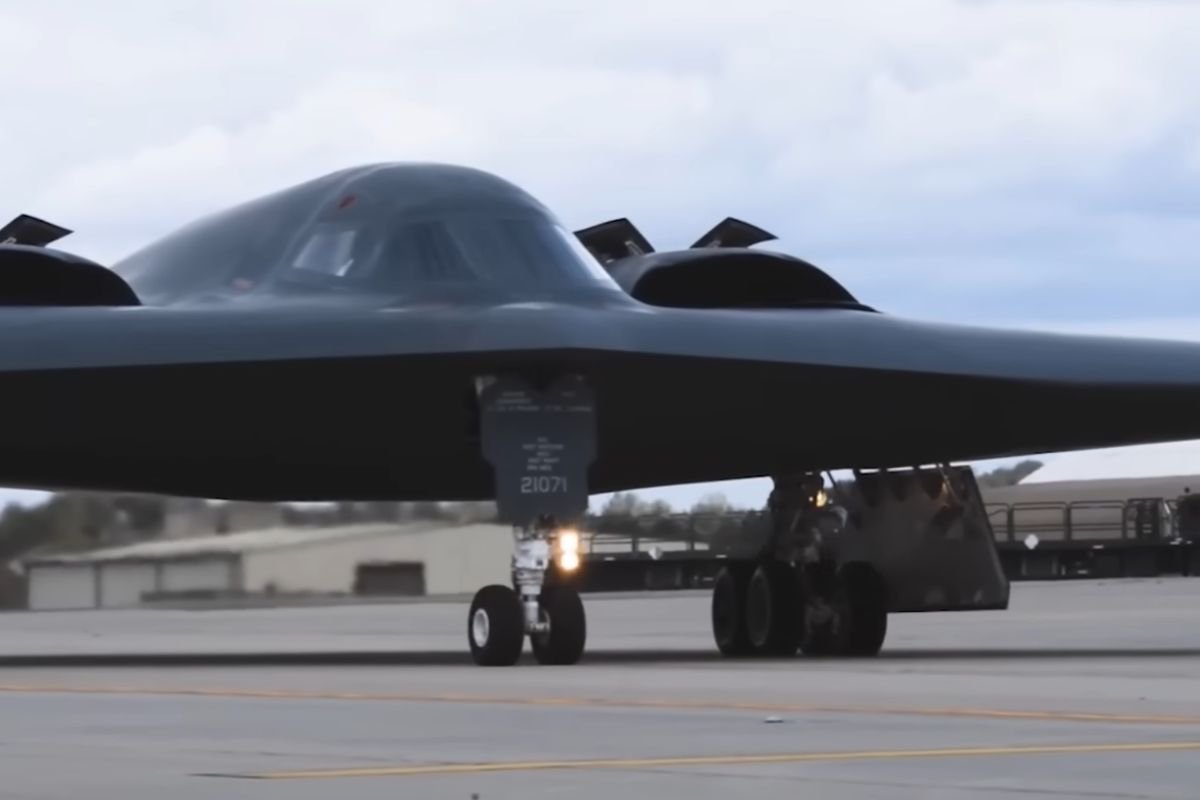
For instance, satellite imagery analyzed by intelligence experts reveals the Taleghan 2 complex slowly disappearing under thick layers of soil and concrete since mid-2025, leaving it virtually “unrecognizable.” This suggests a deliberate and costly investment toward transforming an exposed facility into a hardened, near-indestructible bunker. The U.S. Air Force’s reliance on the B-2 Spirit stealth bomber, the only known carrier of the MOP, underscores the challenge: the deeper and more reinforced a target becomes, the scarcer and more precious each bunker buster mission grows.
Such fortifications also symbolize Iran’s broader refusal to yield its strategic military assets, triggering a technological arms race. The cycle of offensive bunker-busting and defensive concrete fortification exemplifies the evolving cat-and-mouse game of modern aerial warfare.
Significance of Taleghan 2 in Iran’s nuclear infrastructure and Western strategic concerns
The Taleghan 2 facility lies within the Parchin site near Tehran, historically linked to nuclear weapons development under Iran’s covert Project Amad. Intelligence reports attribute the site’s activities to experiments with explosive mechanisms vital for nuclear triggers, making it a prime target for Western air strikes aiming to halt Iran’s weaponization ambitions.
Despite earlier U.S.-Israeli strikes, satellite reconnaissance confirms that Iranian engineers continuously rebuild and harden Taleghan 2, reflecting Tehran’s determination to preserve this node in its nuclear matrix. Reports suggest the facility played a pivotal role in manufacturing plastic explosives essential for nuclear detonations—a sensitive and critical component to any weapons program.
After the fierce air campaigns, including the 2023 strikes known under codenames like Operation Midnight Hammer and Epic Fury, Iran accelerated efforts to encase the new facility with concrete, moving tons of soil on top. Such actions indicated Tehran’s strategy to preserve vital infrastructure under a robust shell designed specifically to neutralize bunker-busting munitions.
This resilience conveys a clear message: Iran’s commitment to continuing its nuclear development despite ongoing military and diplomatic pressures. Western militaries now face increasing operational risks and complexities since failures to fully neutralize Taleghan 2 could allow Iran to advance its nuclear capabilities undetected.
On the geopolitical front, the defense and rebuild efforts escalate tensions between Tehran and Washington, intertwining military engagements with diplomatic deadlocks. The resurgence of fortified sites like Taleghan 2 also complicates any potential arms control negotiation, as verifying the integrity and function of subterranean sites grows more difficult with every fresh concrete layer.
The elusive use of the GBU-57B Massive Ordnance Penetrator against hardened Iranian facilities
The U.S. military’s GBU-57B Massive Ordnance Penetrator (MOP) remains a rare but crucial weapon in confronting deeply buried targets like Taleghan 2. Operating exclusively from B-2 Spirit stealth bombers, the MOP packs an enormous 13,600 kg explosive charge capable of penetrating up to 60 meters of reinforced concrete before detonating, a capability unmatched by other conventional weapons.
Satellite imagery analyzed by private intelligence firms like Vantor revealed what appear to be three precisely aligned impact points on Taleghan 2, fueling speculation that at least one MOP was deployed in recent strikes to inflict critical damage on the site. However, despite such open-source observations, the U.S. Central Command and allied partners, including the Israeli Defense Forces (IDF), publicly maintain ambiguity regarding specific strike details.
The retention of ambiguity serves multiple strategic interests:
- Minimizing operational exposure: Public confirmation of MOP use could signal to Iran the exact extent of Western technological capabilities.
- Preserving diplomatic flexibility: Opacity keeps open the possibility of back-channel negotiations without overt escalation.
- Media and political control: Reducing media speculation prevents unwanted pressure on military planning and policy discussions.
Nevertheless, experts like national security analyst Dr. Brent M. Eastwood argue the continued use of B-2-launched bunker busters is imperative. The repeated hardening of Iranian sites means that symbolic strikes may not suffice, and only increased deployment of penetrating munitions can ensure destruction or containment of nuclear weapons development.
Yet, each MOP is incredibly expensive to manufacture and limited in stockpiles. Deploying these bombers in recurring missions over hostile terrain also challenges U.S. air operations, as Iran’s evolving air defense systems become more sophisticated. This balance between necessity and capability frames the strategic dilemma faced by U.S. military planners.
Challenges in battle damage assessment and intelligence verification against underground nuclear bunkers
Battle Damage Assessment (BDA) against heavily fortified underground complexes like Taleghan 2 remains one of modern warfare’s most vexing problems. Unlike surface structures, hardened bunkers enclosed in concrete and soil can obscure signs of damage from satellite or aerial reconnaissance.
Intelligence analysts rely on high-resolution imagery, heat signatures, signal intercepts, and even seismic data to infer destruction levels, but the physical resiliency of concrete sarcophagi demands an extraordinarily comprehensive approach.
Some core challenges with BDA in this context include:
- Visual obscuration: Soil covers after strikes can mask crater formation and structural breaches.
- Misleading damage signatures: Partial collapse or superficial damage may not equate to full mission kill.
- Time lag in reconnaissance data: Delays between strike and imagery acquisition impede real-time assessment.
- Intel sharing and coordination: Differing capabilities and agendas between U.S. and Israeli forces complicate unified damage assessments.
This ambiguity fosters uncertainty in strategic decision-making. Military commanders risk underestimating Iran’s nuclear potential if damage is overestimated or unnecessarily escalating action if damage is underestimated.
Developing more advanced remote sensing technologies and improving allied communications are priority endeavors to bridge these gaps. Meanwhile, multiple strike campaigns may be necessary to confirm destruction, risking prolonged conflict duration and collateral damage.
The B-2 Spirit stealth bomber remains a key asset in delivering strategic strikes such as those against Taleghan 2, exemplifying the ongoing cat-and-mouse warfare over Iran’s nuclear infrastructure. Operation Epic Fury, a recent campaign, demonstrated escalating use of precision strikes aiming to offset Tehran’s fortifications.
Complex geopolitical interplay: Israeli claims and the ambiguity of recent strikes on Taleghan 2
The tale of who executed which strike on Taleghan 2 has become a murky chapter in the theater surrounding Iran. The Israeli Defense Forces (IDF) have publicly claimed responsibility for several attacks targeting the Taleghan 2 facility, citing its role in the advanced development of explosives and experimental phases essential to Iran’s alleged nuclear weapons program.
This assertion juxtaposes with U.S. military silence regarding the deployment of bunker-busting bombs, suggesting either joint operations masked by secrecy or distinct campaigns with overlapping objectives. The Israel Defense Forces’ narrative emphasizes persistent efforts to curb Tehran’s nuclear advances through air strikes, a move acknowledged in international media outlets such as The Times of Israel and The Jerusalem Post as pivotal interventions.
The lack of clarity about the source of the strikes—whether American B-2 Spirit bombers or Israeli aircraft—underscores a strategic ambiguity beneficial to both nations. This opacity allows plausible deniability, reduces diplomatic fallout, and sustains pressure on Iran without triggering overt escalation or retaliation.
Nonetheless, this convoluted dynamic highlights the broader challenge in the region: that Iran’s persistent nuclear infrastructure rebuilding, despite recurrent bombardments, fosters a continuous state of conflict tension. Western and Israeli policymakers must adapt to this reality, calibrating military, diplomatic, and intelligence strategies with nimble responsiveness.
| Date | Operation | Target | Claimed by | Weapon used |
|---|---|---|---|---|
| 2023 | Operation Midnight Hammer | Fordow, Natanz nuclear sites | U.S. | GBU-57B MOP (Multiple) |
| March 2024 | Operation Epic Fury | Taleghan 2, Parchin complex | Israel and possibly U.S. | Speculated GBU-57B MOP |
| June 2024 | Unconfirmed air strikes | Various Iranian nuclear-related sites | Unclaimed | Unknown |
What is the GBU-57B Massive Ordnance Penetrator?
The GBU-57B Massive Ordnance Penetrator (MOP) is a highly specialized U.S. bunker-busting bomb designed to destroy deeply buried, fortified underground targets, such as nuclear facilities, by penetrating thick layers of concrete and earth before detonation.
Why does Iran fortify sites like Taleghan 2 with concrete and soil?
Iran fortifies sites like Taleghan 2 to protect critical military and nuclear infrastructure from aerial bombardments, especially against powerful bunker buster weapons. The concrete and soil layers absorb and mitigate the impact of strikes, making it harder to destroy these sensitive facilities.
Who controls the air strikes on Iranian nuclear sites?
Air strikes on Iranian nuclear sites are conducted by a combination of U.S. and Israeli forces. However, specific operations are often cloaked in secrecy, and both nations sometimes claim or deny responsibility to maintain strategic ambiguity and avoid escalation.
How effective are air strikes against fortified underground sites like Taleghan 2?
Air strikes can cause damage to fortified underground sites, but their effectiveness depends on the precision and power of weapons used, such as the GBU-57B MOP. Continuous fortification efforts by Iran complicate destruction efforts, often requiring repeated strikes and advanced munitions.
What makes battle damage assessment difficult against sites like Taleghan 2?
Battle damage assessment is challenging due to the concealment provided by soil and concrete coverings, limitations in satellite imaging resolution, time delays in reconnaissance, and coordination challenges between allied forces conducting the strikes.
Source: https://www.aljazeera.com/news/2026/2/19/iran-builds-concrete-shield-at-military-site-amid-acute-us-tensions
Image : A B-2 spirit Bomber
