
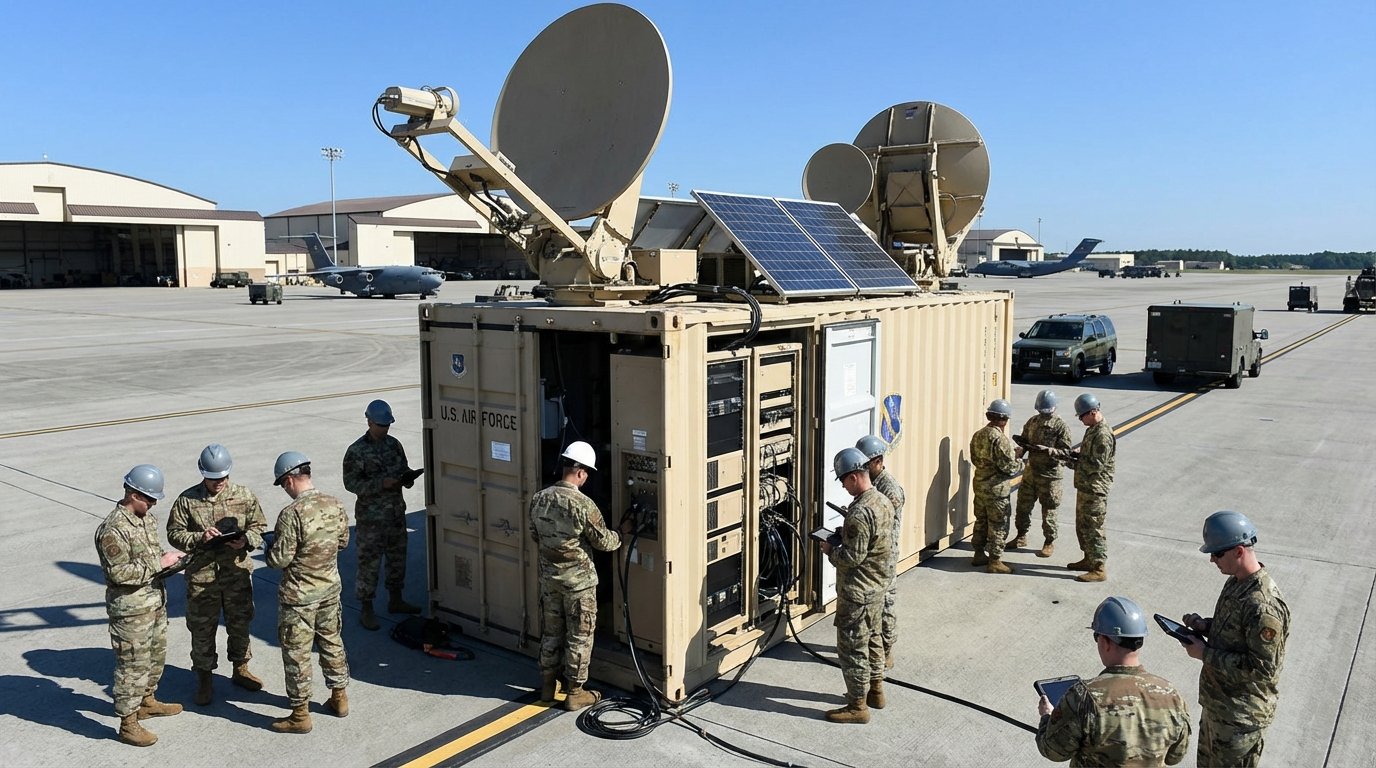
A groundbreaking $2 billion expansion is set to redefine global military communications as the U.S. Air Force significantly enhances its Advanced Extremely High Frequency (AEHF) terminal program.
In a move that could shift the strategic landscape of defense communications, the U.S. Air Force has dramatically increased its financial commitment to the AEHF terminal program by an additional €2 billion. This expansion comes amid growing demands for secure, jam-resistant, and strategically vital satellite communication networks. The AEHF system is recognized as a cornerstone of modern military communications, supporting high-priority airborne, maritime, and ground assets across multiple allied nations. The new contract expansion promises to accelerate development, deployment, and integration of enhanced terminal equipment, signaling a robust investment in defense communications infrastructure with far-reaching implications.
Expanding the AEHF terminal program: a cornerstone for global secure military communications
The AEHF program, overseen by the U.S. Air Force, delivers a next-generation satellite-based communication network that is secure, highly survivable, and jam-resistant. This system ensures continuous command and control capabilities for critical military operations worldwide. The recent €2 billion contract expansion targets enhancements in terminal production, allowing for widespread deployment across various military branches and allied forces.
The importance of the AEHF program cannot be overstated in today’s rapidly evolving warfare environment. Its secure communication links remain operational even under severe jamming or cyberattack threats, which could compromise conventional systems. These terminals serve as vital nodes, enabling encrypted, real-time transmission of sensitive information.
With this contract expansion, the Air Force is addressing the increased need for terminal units worldwide, particularly as the AEHF satellite constellation expands its footprint. The program connects command centers, aircraft, ships, and ground forces, ensuring interoperability between U.S. and coalition forces including the United Kingdom, Canada, and the Netherlands.
The scalability of the AEHF terminals represents a massive leap from previous generations. New terminals boast backward compatibility and enhanced bandwidth, enabling a broader range of secure communication applications. This effort illustrates a commitment to technological supremacy by investing in advanced satellite architecture coupled with resilient terminal hardware.
Technological advancements driving AEHF terminal capabilities
Technological innovation lies at the heart of the AEHF terminal program’s success. The terminals include sophisticated encryption methods, anti-jamming technology, and advanced signal processing tools. These improvements help maintain uninterrupted communication lines amid contested environments—a critical factor in modern warfare where electronic warfare tactics are prevalent.
Key features of the upgraded terminals include modular design architectures, which simplify maintenance and allow for rapid upgrades as new technologies emerge. Military operators benefit from enhanced user interfaces and improved integration with other communication systems, fostering quicker decision-making on the battlefield.
Moreover, advances in miniaturization have led to more compact and lightweight terminal components, making deployment feasible in diverse and challenging terrains, from remote outposts to mobile platforms. This adaptability extends operational reach and flexibility.
This latest expansion also encompasses investments in cybersecurity protocols embedded within terminal systems. With increasing cyber threats, protecting communications from interception and cyberattacks is paramount. The AEHF system uses multi-layered security measures to guarantee message confidentiality and integrity.
A notable example of technological progress is the introduction of improved antenna arrays capable of dynamic beam steering. These antennas optimize signal directionality and power, enhancing resistance to interference and boosting communication range beyond previous limits.
Practical applications and operational benefits of enhanced AEHF terminals
The expanded terminal inventory facilitates a broad range of military communication tasks. From strategic command and control to battlefield coordination and secure data transfer, these terminals act as the backbone of military communications security worldwide.
For instance, special operations units rely heavily on AEHF terminals for secure, low-latency voice and data links with headquarters, often operating in hostile environments where traditional communication infrastructure is unavailable. Naval fleets utilize AEHF terminals to coordinate complex maneuvers while maintaining stealth and protection against signal jamming.
The enhanced terminals also play a crucial role in joint multinational exercises, where interoperability among partner nations is critical. The consistent encryption standards and communication protocols supported by AEHF terminals enable seamless integration during coalition operations, reinforcing collective defense strategies.
Furthermore, the terminals support real-time intelligence sharing and situational awareness, increasing the responsiveness and effectiveness of military forces. The secure nature ensures that sensitive operational plans and reconnaissance data remain protected from adversaries.
Strategic geopolitical implications of bolstering AEHF capabilities
Investing €2 billion into the AEHF terminal program underscores the U.S. commitment to maintaining technological dominance in military communications amidst rising global tensions. As adversaries develop more sophisticated electronic warfare and cyber capabilities, secure satellite communications become a vital strategic asset.
This enhancement can also be viewed through a geopolitical lens, as the AEHF system forms part of the foundation for U.S. and allied military deterrence capabilities. Ensuring robust and secure communications across global theaters deters potential aggressive actions by adversaries who might otherwise exploit vulnerabilities in command and control networks.
Moreover, the AEHF initiative strengthens partnerships between the U.S. and allied nations, who share access to the system and participate in its development and deployment. This collaborative defense approach fosters interoperability and unified responses to global threats, reinforcing collective security frameworks such as NATO.
Critically, this contract expansion fuels innovation across the defense industrial base, supporting jobs and technological advancements. It stimulates the aerospace and defense sectors, encouraging continued development of cutting-edge communication technologies and ancillary systems.
Challenges and considerations for sustaining AEHF terminal growth
Despite the significant contract expansion, sustaining long-term success for the AEHF terminal program involves confronting several challenges. One major concern is the evolving threat landscape, with adversaries investing heavily in electronic countermeasures and cyber warfare tools specifically targeting satellite communications.
Ensuring terminals remain resilient against future threats requires continuous research, upgrades, and adaptive technologies. Balancing rapid development with rigorous testing is critical to avoid vulnerabilities. Additionally, logistical complexities present hurdles; deploying terminals across diverse environments demands effective supply chains and training for military personnel to optimize usage.
Financial stewardship also remains essential. While €2 billion is a hefty investment, efficient allocation and leveraging partnerships with allied countries are necessary to maximize program impact. Transparency and accountability in contract execution will determine the program’s success.
Finally, technical complexities involved in integrating AEHF terminals with emerging military networking systems require ongoing attention. Work must proceed carefully to ensure seamless interoperability with future technologies while guarding against obsolescence.
Comprehensive timeline and milestones of the AEHF terminal contract expansion
| Year | Milestone | Details |
|---|---|---|
| 2021 | Original contract award | Initial €960 million contract for AEHF terminal production awarded to RTX Corporation |
| 2023 | Program expansion announced | €2 billion contract increase approved to triple the original contract value |
| 2024 | Terminal prototype testing completion | Successful validation of new modular terminal designs and cybersecurity protocols |
| 2025 | Deployment to frontline units | First deliveries of enhanced terminals to key military units worldwide |
| 2026 | Full operational capability | Projected milestone for complete AEHF terminal integration and operational status |
- Secure communication upgrade: Improved encryption and anti-jamming features ensure invulnerable lines of defense.
- Modular design benefits: Streamlined maintenance and flexibility for future upgrades.
- Interoperability: Seamless integration with allied forces enhances multinational operational cohesion.
- Enhanced mobility: Compact terminals suitable for diverse military environments.
- Cyber defense focus: Robust cybersecurity layers safeguard communications against emerging cyber threats.
What is the AEHF terminal program?
The AEHF terminal program develops and deploys secure, jam-resistant satellite communication terminals used by the U.S. military and allied forces to enable protected command and control.
Why did the U.S. Air Force expand the AEHF terminal contract?
The expansion addresses higher demand for secure communication terminals worldwide and integrates advanced technology enhancements for improved resilience and functionality.
Who benefits from the AEHF system besides the U.S. Air Force?
Allied nations such as the United Kingdom, Canada, and the Netherlands also utilize AEHF satellite communications, enhancing their military communication capabilities.
What challenges could affect the AEHF terminal program’s success?
Threats like electronic warfare and cyberattacks require continuous upgrades and strategic planning, alongside logistical and financial management challenges.
When is the AEHF terminal program expected to reach full operational capability?
The program aims to achieve full operational status by 2026, delivering enhanced global secure communication capabilities to all military branches and partners.
