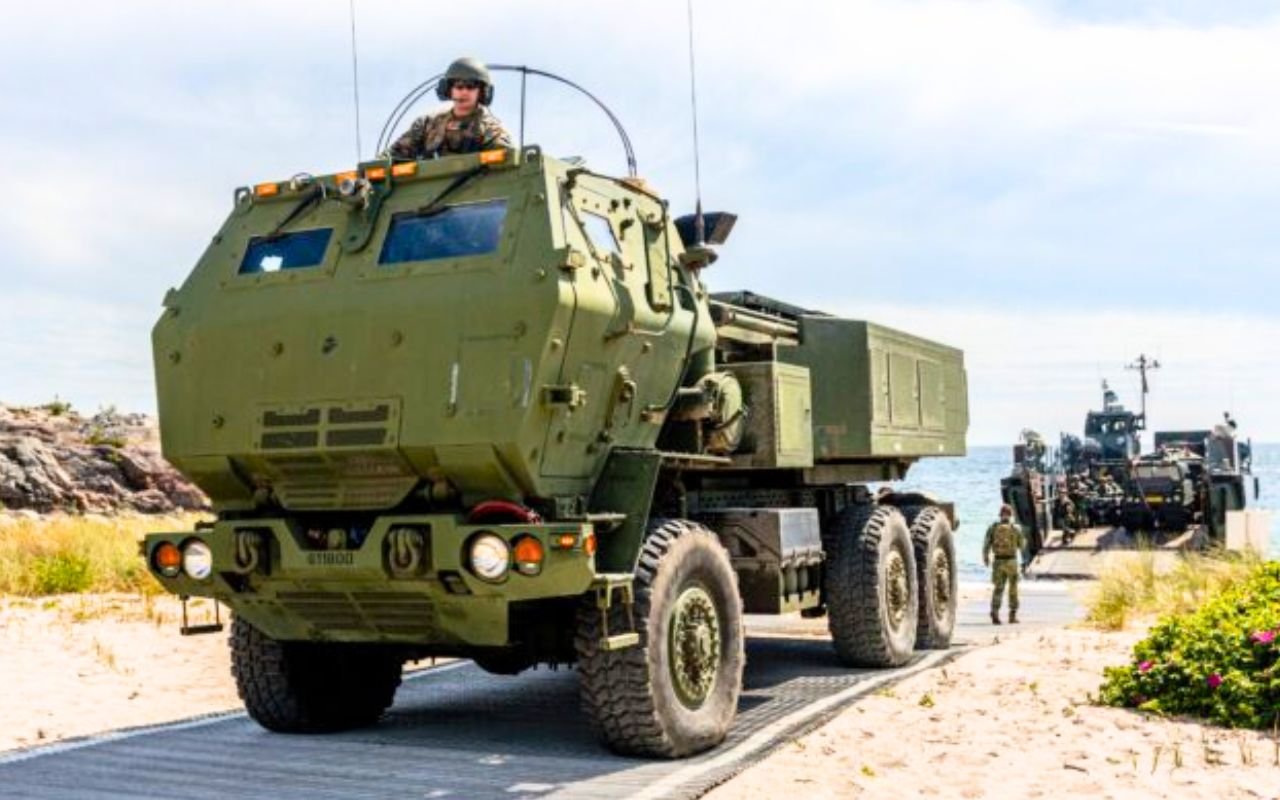
The United States has officially approved the sale of cutting-edge HIMARS rocket launcher systems to Sweden, marking a significant shift in the Nordic country’s defensive capabilities amid rising global tensions.
In a strategic move, the U.S. government authorized the transfer of advanced HIMARS (High Mobility Artillery Rocket System) units to Sweden, enhancing the latter’s military firepower and deterrence in an increasingly unpredictable security environment. This arms deal illustrates Washington’s commitment to bolstering European allies’ defenses, particularly those bordering Russia, amid ongoing regional instability.
The strategic significance of HIMARS deployment for Sweden’s defense
The approval for Sweden to acquire HIMARS represents a pivotal upgrade to its military arsenal, enabling long-range precision strike capabilities that were previously beyond its reach. The HIMARS system, known for its mobility and rapid deployment, fires rockets with remarkable accuracy and destructive power, capable of hitting targets over 300 kilometers away depending on the munition variant used. This development significantly shifts the defensive calculus in the Baltic Sea region. Sweden, a nation historically committed to neutrality, has increasingly leaned into bolstering its self-defense as tensions with Moscow escalate. This HIMARS acquisition fits into a broader trajectory of Swedish defense modernization since the early 2020s, including beefed-up air defense systems and expanded naval forces. The system’s integration promises a multi-dimensional upgrade, combining mobility, precision, and lethality — that would allow Swedish forces to engage high-value targets and provide counterbattery fire effectively. These capabilities translate into a far more threatening posture to potential aggressors, raising the stakes around any hostile incursions near Swedish territory or in the strategically crucial Baltic Sea corridor. It also sends a robust message of deterrence, signaling that Sweden is no longer relying solely on conventional defense but also leveraging advanced technology to maintain regional stability. This shift in Swedish defense not only strengthens national security but also contributes to the collective deterrence posture of NATO partners in Northern Europe, even though Sweden is not yet a formal member of the alliance. The move reflects an understanding that modern warfare in 2026 increasingly revolves around rapid response and precision strikes, capabilities in which HIMARS excels. Moreover, the system’s operational flexibility allows it to be deployed quickly in various terrains and scenarios, aiding Sweden in responding to emergent threats with agility. Given the uncertainties in European security dynamics, the HIMARS deal is seen as a vital step that aligns Sweden’s military posture closer to NATO standards and interoperability.
Technical prowess and operational benefits of HIMARS in modern conflicts
The HIMARS platform combines mobility, precision, and firepower in a package tailored for contemporary combat environments. Mounted on a lightweight 6×6 tactical truck chassis, it allows for rapid relocation after firing, minimizing vulnerability to counterattacks. This agility ensures the system avoids being a static target while maintaining readiness to deliver devastating strikes. The launcher can fire several types of munitions, ranging from the guided GMLRS (Guided Multiple Launch Rocket System) rockets to the longer-range ATACMS missiles, extending its strategic reach. The GMLRS rockets, accurate to within a few meters, allow engaging enemy infrastructure, troop concentrations, or command centers with minimal collateral damage, which is essential in densely populated areas or complex terrains. Operationally, HIMARS units offer real-time targeting supported by advanced fire control systems, including GPS guidance and automated targeting data integration, improving the speed and accuracy of strikes. This capability can disrupt enemy formations, logistics hubs, or missile batteries efficiently, resulting in significant battlefield advantages that can alter the course of a conflict. The system’s ability to reposition quickly after launching rockets is crucial, as modern adversaries possess advanced counter-battery radar and drone reconnaissance. HIMARS platforms typically fire a full salvo then relocate within minutes, reducing the likelihood of being targeted and destroyed by enemy retaliation. This ‘shoot and scoot’ tactic has become a hallmark of artillery survivability in contemporary warfare. Examples from recent conflicts illustrate how HIMARS has transformed battlefield dynamics. During late 2020s conflicts in Eastern Europe, several NATO-aligned forces used HIMARS to neutralize enemy artillery and missile sites with unparalleled accuracy and speed, significantly degrading enemy offensive capabilities. This real-world operational history builds confidence in the system’s efficacy as a defensive asset for Sweden. Additionally, training regimes incorporating HIMARS promote interoperability and sharpen joint operational tactics among allied forces, reinforcing collective responses during potential crises. Sweden’s military drills with HIMARS are likely to integrate closely with NATO exercises, enhancing future coalition effectiveness in the region.
Geopolitical ramifications of the U.S.-Sweden arms deal in 2026 Europe
The approval of HIMARS sales to Sweden signifies more than just a bilateral arms transaction; it is a potent political signal amid tense U.S.-Russia relations. Given Sweden’s geographic proximity to Russia and its strategic position in the Baltic Sea, this upgrade enhances NATO’s northern flank indirectly. Moscow has historically viewed Swedish military developments with suspicion, interpreting such moves as part of a broader NATO encirclement strategy. The introduction of HIMARS, with its precision strike and rapid deployment, complicates Russia’s calculus in the Baltic region and sends a clear message of Western technological and strategic superiority. Furthermore, this sale may accelerate Swedish moves towards full NATO membership, a topic already in heated discussion within Stockholm. Enhanced military capabilities like HIMARS fit neatly into NATO’s integrated defense framework, promising greater reciprocity and shared deterrence responsibilities. Such a development might trigger shifts in regional alliances and defense postures. This arms transfer also underscores the U.S. commitment to supporting democratic allies in Europe with advanced weaponry, signaling to other partners the importance of maintaining robust defense infrastructures. It reflects Washington’s strategic priority of containing potential aggression through partnership and military readiness rather than direct confrontation. Regional neighbors also watch this development closely. Finland, for example, which has similar security concerns and upgraded its own defense systems, may consider complementary acquisitions or strategic cooperation for joint Baltic defense. The sale might spark a new round of defense enhancements across Scandinavia, further stabilizing the region. On the diplomatic front, the deal adds layers of complexity to arms control debates, as the proliferation of advanced rocket systems could precipitate arms races or heighten tensions, forcing policymakers to balance deterrence with de-escalation efforts carefully.
Financial and logistical challenges surrounding the HIMARS acquisition for Sweden
Procurement of HIMARS is a high-investment endeavor, involving not only the purchase price of the launchers themselves but also support infrastructure, training, maintenance, and ammunition supply. The estimated value of the deal runs into the hundreds of millions of euros, emphasizing Sweden’s willingness to invest substantially in secure and modern artillery capabilities. Financial outlays must accommodate initial deliveries and ongoing lifecycle costs. Beyond hardware, Sweden must establish or upgrade training centers, develop operational doctrines specific to HIMARS, and integrate the system into national command and control frameworks. This side of the acquisition often challenges defense budgets and requires careful long-term planning to maximize return on investment. Logistically, HIMARS demands robust supply chains, especially for sensitive rocket munitions. Ensuring a consistent flow of supplies and replacement parts is vital to maintain operational readiness. Sweden’s defense industry and military acquisition agencies have to coordinate closely with U.S. manufacturers and logistics providers to streamline this process. Sweden will also need to upgrade communications and data integration systems for full effectiveness of HIMARS, linking targeting data across platforms and ensuring secure, real-time battlefield information sharing. This network modernization is a crucial but costly undertaking, necessary for the system’s advanced capabilities to reach full potential. Potential challenges include geopolitical risks affecting supply chains or technology transfers, requiring contingency measures such as diversified sourcing or increased domestic production where possible. Sweden’s defense sector may see this acquisition as an opportunity to foster local partnerships and stimulate high-tech sectors, balancing purchases with national industrial growth. Despite financial and logistical hurdles, integrating HIMARS aligns with Sweden’s strategic objectives and reflects a significant leap forward in defense modernization, offering substantial value over older artillery systems previously in use.
How Sweden’s military strategy adapts with advanced artillery systems like HIMARS
Incorporating HIMARS into Sweden’s military arsenal necessitates a fresh approach to operational planning and national defense strategy. Swedish military leaders emphasize agility, precision, and deterrence — principles embodied by HIMARS — as cornerstones of their evolving doctrine. Sweden has shifted from a static defense posture towards more dynamic, mobile forces capable of rapid response to various threat scenarios. HIMARS fits perfectly within this framework, providing strike capabilities that complement air and naval assets. This triangulation of forces ensures multi-dimensional defense coverage. Training programs are being redesigned to emphasize cross-branch cooperation, enabling ground forces equipped with HIMARS to coordinate seamlessly with intelligence, surveillance, and reconnaissance (ISR) units. This integration enhances situational awareness and speeds up target acquisition and engagement processes, improving battlefield effectiveness. Furthermore, Sweden is investing in advanced command systems that leverage data analytics and artificial intelligence to optimize HIMARS deployment. These technologies enhance decision-making speed and accuracy, increasing survivability and impact during operations. Adapting Swedish military strategy to HIMARS also involves enhanced cooperation with NATO partners on doctrine development and joint exercises. Such collaboration ensures interoperability and collective readiness in scenarios ranging from deterrence to crisis management.
The deployment flexibility of HIMARS aligns with Sweden’s focus on defense of its extensive archipelagos and rugged terrain, where rapid movement and precision strikes are essential. This capability bolsters Sweden’s deterrence in regions vulnerable to asymmetric threats or surprise incursions.
| Aspect | Old artillery systems | HIMARS capabilities |
|---|---|---|
| Mobility | Limited; towed or fixed positions | Highly mobile; 6×6 truck chassis |
| Range | Up to 30 km | Up to 300 km depending on munition |
| Precision | Basic unguided projectiles | Guided rockets with GPS targeting |
| Deployment time | Long setup and relocation | Rapid shoot and scoot capability |
What is the range of the HIMARS rocket launcher?
HIMARS can fire rockets up to 300 kilometers depending on the type of ammunition used, allowing for significant operational reach.
Why is the HIMARS system important for Sweden?
The system enhances Sweden’s precision strike capabilities, mobility, and integration with NATO forces, strengthening national and regional defense.
How does HIMARS improve battlefield survivability?
By enabling rapid relocation after firing (‘shoot and scoot’), HIMARS reduces vulnerability to counter-battery attacks.
What challenges does Sweden face in acquiring HIMARS?
Financial costs, logistical supply chains, and technological integration require careful planning and investment.
Could this deal influence Sweden’s NATO membership?
Yes, upgraded defense capabilities like HIMARS support Sweden’s alignment with NATO, potentially accelerating its membership process.
