
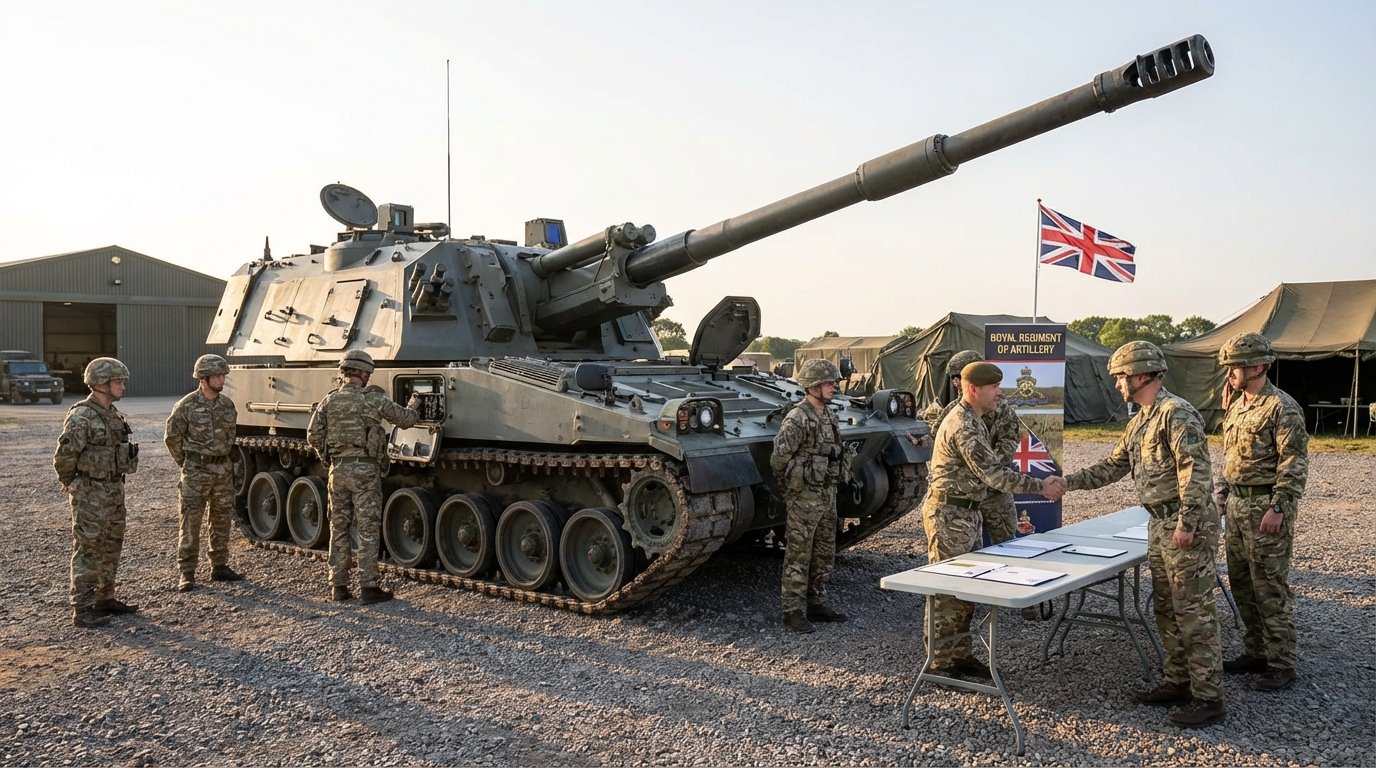
The UK Ministry of Defence has taken a decisive leap towards modernizing its artillery capabilities by securing a £52 million contract for the groundbreaking RCH 155 mobile artillery systems, in collaboration with Germany. This move marks a significant milestone in enhancing NATO interoperability and transforming the British Army’s firepower arsenal with cutting-edge mobile howitzers.
The British Army is preparing to upgrade from interim artillery systems with the acquisition of the RCH 155, a highly sophisticated and agile weapon platform. The joint UK-German contract embodies a modern approach to artillery warfare where mobility, precision, and extended striking range redefine battlefield dynamics. Transitioning away from older systems like the Archer, the UK’s investment signals a long-term plan centered on reliability, rapid deployment, and multi-theater effectiveness.
The strategic significance of the RCH 155 in modern artillery warfare
The RCH 155 is more than just a new howitzer; it represents a paradigm shift in artillery technology tailored for rapid, flexible, and precise engagement. Mounted on the armored Boxer 8×8 vehicle, the system offers unmatched operational mobility. With the capacity to fire while moving at speeds reaching 100 km/h, this self-propelled artillery system is designed to keep pace with fast-moving mechanized units, ensuring continuous fire support without compromising on the element of surprise or responsiveness.
Extended range capabilities are also a key highlight. The RCH 155 can strike targets at distances up to 70 km, a substantial improvement over legacy artillery pieces. This distance allows forces to engage high-value and strategically important targets deep within enemy territory, reducing risk for artillery crews while enhancing operational effect. The precision-guided munitions it supports further minimize collateral damage and enhance effective target neutralization.
Furthermore, the system embodies a step forward in NATO interoperability. By aligning their artillery acquisitions with Germany, the UK facilitates joint exercises, streamlined logistics, and shared tactical doctrines. This synergy is crucial in today’s strategic environment, where coalition operations demand seamless integration across allied forces. The joint procurement and testing underpin not only an economic partnership but also bolster collective defense frameworks across Europe.
This technological leap also marks a departure from the British Army’s earlier reliance on the Archer artillery system. While Archer served as a short-term solution, the complexity and demands of modern warfare make RCH 155 an essential advancement — one that lays the groundwork for the British Army’s future Mobile Fires Platform program. This program aims to develop artillery forces that are lighter, quicker to deploy, and vastly more accurate. The RCH 155 is thus a crucial building block in this transformative vision.
How the RCH 155 redefines battlefield mobility and firing efficiency
One notable feature of the RCH 155 is its firing on-the-move capability. Traditional artillery often requires units to stop, set up, and calibrate before firing. This process, while necessary, leaves forces exposed and vulnerable during repositioning. The RCH 155 overcomes these challenges by allowing continued fire while moving, which drastically reduces down time and enhances survivability on the battlefield.
This capability is supported by advanced stabilization and targeting systems. Using state-of-the-art inertial navigation and fire control technologies, the RCH 155 can maintain accuracy even when firing at high speeds or uneven terrain. Such precision is critical in modern combat scenarios, where split-second decisions and precise strikes can turn the tide.
The combination of vehicle armor and mobility also improves protection for the crew operating the system. The Boxer platform’s modular armor shields against small arms fire, shrapnel, and improvised explosive devices. This added resilience ensures that artillery teams remain operational longer, maintain morale, and support frontline units effectively.
Additionally, the RCH 155 features a modular design to accommodate future upgrades, including new sensors, munitions, and communication systems. This flexibility means the British Army will not face immediate obsolescence and can adapt with technological advancements rapidly, a vital feature given the fast-evolving nature of military technology.
Economic and geopolitical implications of the UK-Germany joint contract
The £52 million contract is symbolic of more than just a weapons deal; it’s a sign of deepening defense cooperation between the UK and Germany amid shifting geopolitical landscapes. Post-Brexit, the UK has sought new ways to maintain and strengthen strategic partnerships in Europe, and this joint procurement program delivers on that objective effectively.
This collaboration ensures cost-efficiency by sharing development, production, and testing expenses. The mutual benefits extend to industrial bases in both countries — fostering innovation and technological development within European defense industries. The contract also aims to support jobs and sustain critical manufacturing capabilities vital for national security.
The timing is crucial as well. With rising tensions in Eastern Europe and evolving hybrid warfare threats, bolstering artillery capabilities is a priority for NATO members. The shared investment enhances collective defense readiness while enabling the British Army to phase out outdated equipment and reduce reliance on foreign suppliers.
Moreover, this contract is part of a broader strategic vision under the Trinity House Agreement, a bilateral framework that facilitates collaborative development of advanced military platforms between the two nations. By working together on projects like the RCH 155, the UK and Germany set a precedent for future cooperation in areas such as air defense, cyber warfare, and unmanned systems.
This holistic approach builds a stronger NATO that can respond cohesively to modern threats ranging from territorial incursions to cyber-attacks, emphasizing interoperability and joint operational capability as essential components of defense policies across Europe.
Technical advancements embedded in the RCH 155 artillery system
The RCH 155 integrates a suite of advanced technologies that mark a significant leap from legacy artillery platforms. At its core is the 155mm L52 gun system, a proven design renowned for delivering powerful, accurate fire support. However, what differentiates this howitzer is its remote-controlled operation combined with cutting-edge fire control software.
The system’s remote operation capability means the crew can control the artillery from a protected environment within the armor, drastically reducing their exposure to battlefield hazards. This autonomy also accelerates the targeting process, allowing the RCH 155 to quickly adapt to changes in operational scenarios, including shifts in target priority or unexpected developments.
Key technical features include:
- Automated ammunition handling: This reduces reload times and crew fatigue, speeding up firing cadence during intensive engagements.
- Integrated targeting systems: Advanced sensors and GPS integration provide pinpoint accuracy, even under electronic warfare conditions.
- Network-centric warfare compatibility: The system communicates seamlessly with command and control centers, allowing real-time data sharing and coordinated strikes.
- Extended logistics support: Modular components allow easier maintenance and rapid replacement in the field.
These innovations ensure the RCH 155 remains flexible across diverse combat environments, including urban, desert, and mountainous terrains. This adaptability becomes critical as military operations grow increasingly complex and multi-dimensional.
Comparing the RCH 155 with legacy artillery and other modern systems
Understanding the RCH 155’s value requires benchmarking it against both its predecessors and contemporary artillery solutions in allied arsenals. The British Army’s current interim solution, the Archer system, is effective but limited in mobility and range. The RCH 155 surpasses Archer in several key aspects:
| Feature | Archer System | RCH 155 |
|---|---|---|
| Maximum firing range | 40 km | 70 km |
| Firing on the move | No | Yes |
| Platform mobility | Tracked, slower | Wheeled, up to 100 km/h |
| Crew protection | Armored but less advanced | Modular armor with remote control |
| Reload mechanism | Manual/limited automation | Fully automated ammunition handling |
When compared to other NATO artillery systems like the French CAESAR or the US M109 Paladin, the RCH 155 boasts equivalent or superior advantages in mobility, firing on the move, and digital connectivity benefits. The ability to quickly deploy, strike, and relocate enhances survivability and reduces vulnerability to counter-battery fire.
The joint UK-German development and acquisition strategy ensures that the RCH 155 remains at the cutting edge of artillery technology, integrating lessons learned from multiple national defense doctrines. This cooperation reduces redundancy in military expenditures and standardizes equipment across allied forces, creating a force multiplier effect on NATO’s collective artillery firepower.
What is the expected delivery timeline for the RCH 155 systems to the UK Army?
The contract includes the delivery of the Early Capability Demonstrator platform to the UK in the near term, with further production phases planned in the subsequent years to fully equip the British Army.
How does firing on the move improve artillery effectiveness?
Firing while moving allows artillery units to maintain continuous fire support without pausing for setup, reducing vulnerability to enemy attacks and increasing operational tempo.
What benefits does the UK gain from joint procurement with Germany?
Joint procurement leads to cost-sharing, interoperability enhancement, and strengthened bilateral defense ties, supporting industrial bases in both countries while boosting NATO collaboration.
Can the RCH 155 integrate future technological upgrades?
Yes, the modular design of the RCH 155 allows for the integration of new sensors, munitions, and communication technologies, ensuring long-term adaptability to evolving military needs.
How does the RCH 155 compare with the older Archer artillery system?
The RCH 155 offers double the firing range, firing on the move capability, superior mobility, enhanced crew protection, and automated ammunition handling, making it a significant upgrade over Archer.
