
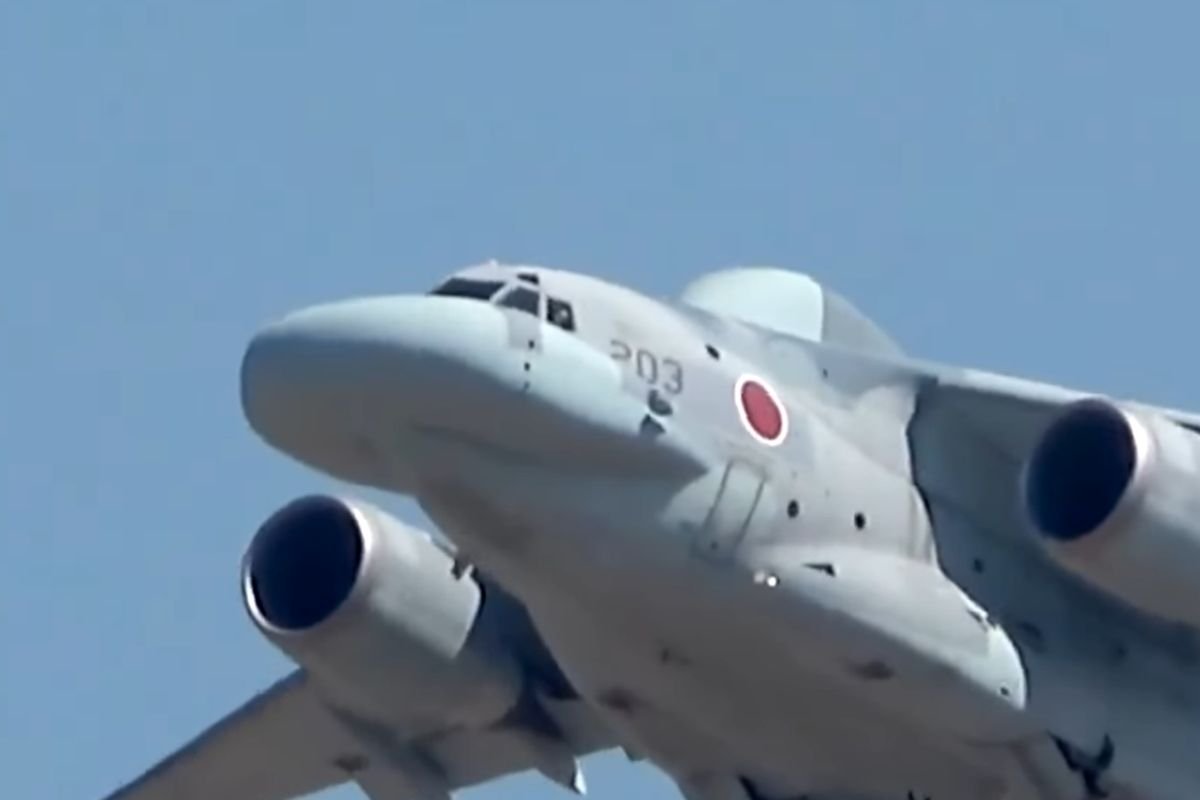
Japan’s unveiling of the EC-2 electronic warfare aircraft marks a transformative leap in airborne tactical capabilities, redefining the balance of power across the Indo-Pacific region.
The Japan Air Self-Defense Force (JASDF) has publicly revealed the Kawasaki EC-2, a highly sophisticated electronic warfare (EW) aircraft transformed from the existing C-2 transport airframe. As tensions intensify in the Indo-Pacific, this development signals Japan’s commitment to dominating the electromagnetic spectrum through advanced stand-off jamming and radar disruption. The EC-2 is expected to enter service by 2027, introducing a new era of electronic warfare in the Asia-Pacific.
Innovations driving the EC-2’s electronic warfare superiority
The EC-2 aircraft is designed around the proven Kawasaki C-2 airlifter, but outfitted with cutting-edge electronic warfare technologies that propel Japan’s capabilities to a new strategic level. Central to the aircraft’s mission is its role as a stand-off jammer: it disrupts enemy radar systems and communications from a safe distance, enhancing the survivability of allied air operations.
The aircraft features a distinctive bulbous nose section, housing advanced electronic payloads including wideband radar jammers, communications disruptors, and electromagnetic sensors. By focusing on long-range electronic attack, the EC-2 can neutralize enemy threats before they approach Japanese airspace or deployed forces. This capability is particularly valuable against increasingly sophisticated radar and missile systems deployed across the region.
Strong emphasis was placed on the EC-2’s ability to operate autonomously or in coordination with other platforms. Integration with JASDF’s network-centric operations allows data sharing and cooperative targeting, presenting the enemy with complex, multi-layered electronic countermeasures. This flexible mission design ensures the aircraft can adapt to rapidly evolving battlefield environments.
Examples from recent exercises show the aircraft’s software-defined jamming suites can recalibrate in real-time, countering different radar frequencies and communication protocols. This dynamic adaptability marks a leap beyond legacy EW systems and allows Japan to maintain a technological edge over peer adversaries.
Key innovations driving the EC-2’s superiority include:
- A large-area electronic antenna embedded in the bulging nose, enabling wideband jamming over hundreds of kilometers.
- Adaptive algorithms that identify and target enemy radar and communication frequencies in real-time.
- High-capacity onboard processing units supporting complex signal analysis and countermeasure deployment.
- Robust data link technologies for seamless coordination with fighter and reconnaissance aircraft.
- Modular payloads allowing future upgrades without major airframe modifications.
Together, these technologies not only permanently blind or disrupt adversary sensors but also degrade command and control systems, severely undermining enemy decision-making processes during conflict.
Strategic implications for Japan in the Indo-Pacific geoeconomic landscape
The introduction of the EC-2 electronic warfare aircraft cannot be seen in isolation; it reflects Japan’s broader strategic posture amidst shifting power dynamics in the Indo-Pacific. With growing rivalries fueled by expansive military modernization programs in neighboring countries, controlling the electromagnetic spectrum has become paramount for securing air superiority.
By enhancing its ability to disrupt hostile radar and communications at great distances, Japan extends the defensive umbrella over its critical infrastructure, naval assets, and allied forces in the region. This new capability acts as both a deterrent and a force multiplier for joint operations with the United States and regional partners.
Japan’s location near hotspots such as the East China Sea and the Taiwan Strait places it at a crossroads of potential conflict. Here, the EC-2’s stand-off jamming capacity becomes a decisive tool to deny enemies the situational awareness they need for effective strikes or ambushes. This capability also ensures the resilience of Japan’s multi-domain defense network—connecting air, sea, and land forces through real-time data and electronic protection.
Furthermore, the EC-2 aircraft fits squarely within Japan’s evolving “Multi-Domain Defense Force” plan, which combines cyber, space, and electromagnetic spectrum warfare to create an integrated defense strategy that anticipates and counters emerging threats.
By investing over €400 million in this program, Tokyo signals readiness for long-term technological competition in electronic warfare. It also hands a sophisticated new instrument to its diplomatic arsenal, enabling Japan to assert not only military strength but also dominance over critical defense technologies in Indo-Pacific security dialogues.
Technical specifications and modular design flexibility of the EC-2 platform
The EC-2’s technical configuration merges the robust transport capabilities of the Kawasaki C-2 with a specialized suite of EW systems. The base airframe provides a sizable payload capacity of over 27,000 kg, which translates to maximal storage for powerful jamming devices and accompanying electronic suites.
Equipped with next-generation electronic antennas capable of ultra-wide frequency coverage, the EC-2 can engage multiple radar bands simultaneously. This multi-band jamming ability counters both legacy and modern radar types, including phased array and synthetic aperture radars encountered in advanced missile guidance systems.
Onboard processors utilize artificial intelligence-driven algorithms to rapidly identify signal signatures, enhancing the precision of electronic attacks. This rapid identification shortens reaction times, critical in high-threat environments where seconds determine success or failure.
Designed with modular hardpoints and internal bays, the EC-2’s payloads are easily swappable, accommodating future improvements such as laser-based countermeasures or enhanced cyber-attack modules. This modularity ensures the platform remains technologically relevant amidst fast-paced advancements in EW science.
Below is a comparison table summarizing the EC-2’s core features relative to its predecessor, the C-2 transport:
| Feature | Kawasaki C-2 Transport | EC-2 Electronic Warfare Aircraft |
|---|---|---|
| Maximum payload capacity | 27,000 kg | 27,000 kg (dedicated to EW systems) |
| Range | 4,500 km | 3,200 km (due to extra EW gear weight) |
| Primary role | Transport | Stand-off radar and communication jamming |
| Avionics suite | Standard navigation and communication | Advanced electronic attack and countermeasure systems |
| Modularity | Low | High, future-proof design |
Modular adaptability is a critical factor in the EC-2 program, enabling Japan to keep pace with evolving threats without requiring the costly procurement of entirely new airframes. This flexibility is a model example of how modern military aviation is incorporating software-driven hardware upgrades for longevity and potency.
Collaborations and research efforts fueling the EC-2’s development
The EC-2 is a product of extensive collaboration involving the Japan Air Self-Defense Force, Kawasaki Heavy Industries, and specialized defense research agencies. Since the project’s inception, a dedicated Aviation Development and Testing Group has been at the forefront of the program, testing prototypes, validating operational tactics, and refining software suites.
Focused research into electromagnetic spectrum operations spawned innovative signal processing technologies critical to the aircraft’s jamming and deception capabilities. The cooperative melding of software engineers, electronic warfare specialists, and aerodynamicists has enabled the platform to marry its airframe’s robustness with disruptive EW functionality.
International collaborations have also indirectly influenced the EC-2’s design philosophy. Drawing lessons from US Air Force electronic attack programs and European stand-off jammers, JASDF tailored these insights to its regional requirements and operational doctrines.
Recent JASDF field exercises demonstrated the EC-2’s effectiveness in simulated contested environments, where its jamming disrupted enemy radar locks and blocked communication relays for extended periods, allowing friendly forces to maneuver unobserved.
Beyond military applications, research in related civilian electronic spectrum management and cybersecurity domains is being leveraged to enhance the aircraft’s threat detection and self-defense countermeasures, reinforcing its resilience against unintended electronic interference and hostile cyber incursions.
Operational challenges and future outlook for Japan’s electronic warfare ambitions
While the EC-2 promises a revolutionary advancement for Japan’s defense posture, it also comes with a slate of challenges that must be managed to realize its full potential. Chief among these is ensuring continuous software and hardware upgrades to counter adversaries that are rapidly enhancing their own electronic warfare and anti-jamming capabilities.
Maintaining operational security and protecting the aircraft’s sensitive technologies from cyber espionage requires stringent cybersecurity protocols and ongoing investment in defensive IT infrastructure. Given the EC-2’s role in offensive electronic attacks, safeguarding data integrity and command links is imperative.
Operationally, integrating the EC-2 within multi-national coalition frameworks—especially with US and Indo-Pacific partners—poses coordination hurdles in terms of data sharing and interoperability. However, successful joint exercises indicate growing confidence in these collaborative frameworks.
The outlook for the EC-2 is that it will remain a foundational asset within Japan’s multi-domain defense strategy well into the 2030s. With a projected service entry in 2027 and successive incremental upgrades planned, the aircraft is positioned to evolve in step with emerging EW threats.
Fiscal constraints and political negotiations will influence the pace of production and deployment numbers, but the emphasis on electronic warfare in contemporary conflicts suggests continued investment. The model set by the EC-2 could pave the way for similarly flexible platforms in maritime and ground electronic attack domains.
As new technologies such as quantum sensing and directed energy countermeasures mature, future EC-2 variants may incorporate these breakthroughs, keeping Japan at the forefront of electronic warfare innovation.
What is the primary mission of Japan’s EC-2 aircraft?
The EC-2 is primarily designed as a stand-off electronic warfare platform to disrupt enemy radar and communications from long distances, ensuring air superiority and protection for Japanese and allied forces.
How does the EC-2 differ from the Kawasaki C-2 transport aircraft?
While it shares the same airframe, the EC-2 carries specialized electronic warfare equipment, such as advanced jamming antennas and signal processors, repurposing the transport platform into a sophisticated EW asset.
What advantages does the modular design of the EC-2 offer?
The modular design allows easy upgrades and swapping of electronic payloads, enabling the EC-2 to adapt to new threats and incorporate emerging technologies without needing new airframes.
When is the EC-2 expected to enter active service?
The EC-2 is slated for service entry by 2027, with ongoing testing and developmental phases to finalize operational capabilities.
How does the EC-2 enhance Japan’s strategic defense posture?
By extending Japan’s ability to control the electromagnetic spectrum, the EC-2 plays a key role in protecting critical assets, deterring adversaries, and integrating multi-domain defense strategies across air, sea, and land forces.
Source: https://defencesecurityasia.com/en/japan-ec2-stand-off-jammer-electronic-warfare-aircraft-indopacific-ew-c2-soj-jasdf
