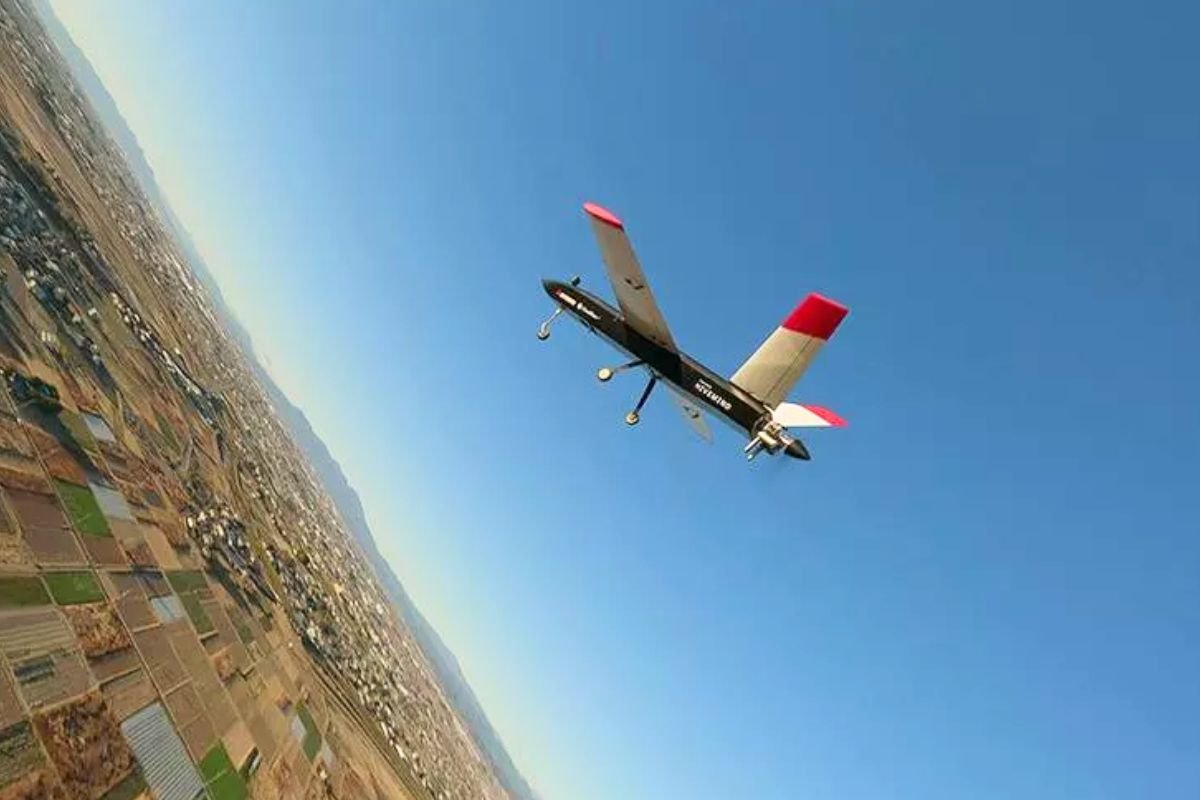
Mitsubishi Heavy Industries’ innovative leap in drone technology through Shield AI’s Hivemind integration signals a new era for autonomous military UAV operations worldwide.
As defense sectors globally race to enhance unmanned aerial vehicles’ (UAVs) intelligence and autonomy, Mitsubishi Heavy Industries (MHI) has emerged at the forefront of this technological upheaval. The company’s recent collaborations with US-based Shield AI Inc. have resulted in revolutionary strides in AI-powered mission autonomy. This advancement, achieved in under 60 days, highlights not just rapid development cycles but also the growing synergy between international aerospace technology firms aiming to redefine drone effectiveness in modern theaters. Let’s delve into how this breakthrough unfolds within Japan’s defense framework and its wider implications.
The rapid development and successful deployment of AI-driven autonomy in UAVs
The speed at which Mitsubishi Heavy Industries integrated Shield AI’s Hivemind autonomy software into their Affordable Rapid-Prototyping Mitsubishi-Drone initiative (ARMD) underlines a remarkable evolution in aerospace engineering efficiency. Within just eight weeks, the companies moved from concept to operational flight demonstrations, a timeline that drastically accelerates traditional UAV development.
Key milestones in the process included AI training, extensive simulation evaluations, and hardware-in-the-loop (HIL) testing to ensure the robustness of flight control systems before live deployment. This approach allowed engineers to detect and mitigate risks early, significantly reducing costly errors during actual flight missions.
The successful flight tests confirmed that the UAVs could autonomously manage complex mission scenarios, such as navigation, obstacle avoidance, and adaptive response to dynamic environments. This level of autonomy marks a paradigm shift, moving away from manual remote piloting toward smarter, mission-capable machines with minimal human supervision.
An example of the AI’s capability in real-world simulations was navigating rugged terrain while dynamically adjusting flight paths to evade sudden obstructions, a capability previously challenging for conventional drones relying heavily on pre-programmed instructions.
This rapid innovation cycle exemplifies how cutting-edge AI technologies like Hivemind are reshaping UAV design philosophies, emphasizing agility, autonomy, and adaptability—attributes essential in contemporary defense landscapes.
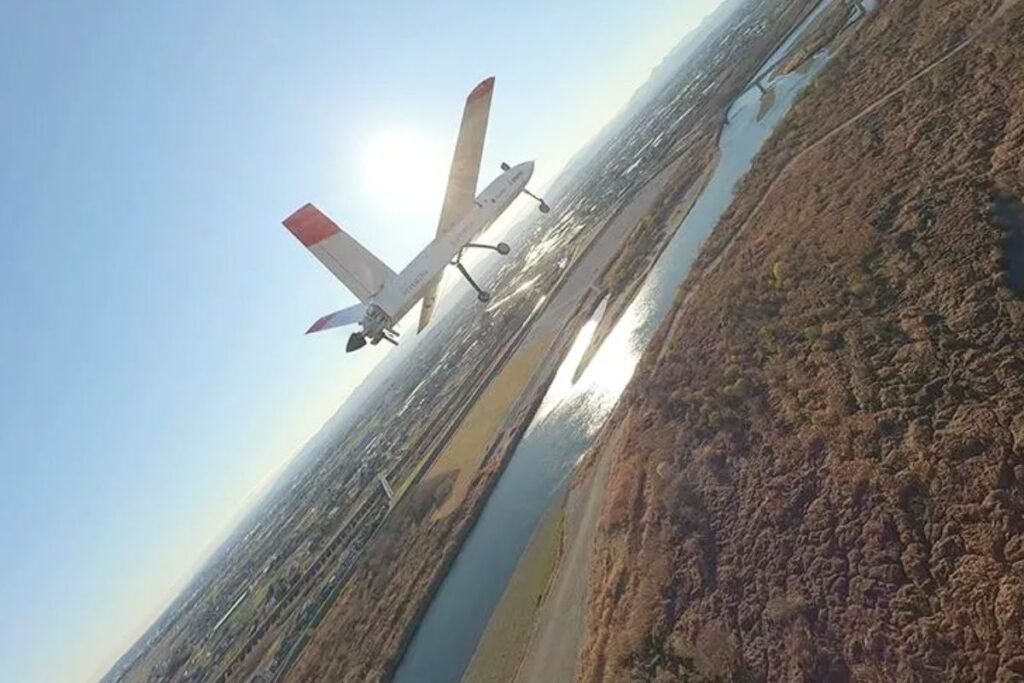
This breakthrough demonstrates how AI can enable drones to navigate, avoid obstacles, and execute missions independently, shifting from remote-controlled systems to highly autonomous platforms. It also highlights the strategic advantages of AI-driven UAVs, including faster decision-making, reduced risk to personnel, and the potential for coordinated swarm operations.
Exploring the strategic military advantages of AI-enabled drones
The integration of AI-driven autonomy into UAV fleets offers profound strategic advantages for armed forces. Mitsubishi’s success with the Hivemind system enhances Japan’s capability to conduct autonomous reconnaissance, surveillance, and combat support operations with heightened efficiency.
Strategic autonomy in drones allows military planners to deploy UAVs that can independently assess situations, make critical decisions, and execute missions without continuous human input. This capability enables faster operational tempos and reduces vulnerabilities linked to human operator fatigue or communication delays in contested environments.
For example, autonomous drones can identify and track targets using onboard AI-powered sensors and algorithms for target recognition, then relay real-time intelligence back to command centers with minimal latency. This capability is invaluable in fast-moving conflicts or covert surveillance missions where time-sensitive information could decide outcomes.
Another advantage lies in risk reduction: autonomous UAVs can perform high-risk operations like entering hostile airspace without endangering human pilots. Their ability to adapt mid-flight and respond to threats autonomously makes them strategic assets in complex combat zones.
Moreover, AI-equipped drones open doors to swarming tactics, where multiple units operate collaboratively, coordinating maneuvers intelligently. This transforms UAVs into force multipliers, capable of overwhelming adversaries with distributed, adaptive attacks that traditional systems could not orchestrate effectively.
Japan’s defense modernization increasingly leans on such autonomous solutions to maintain regional security, considering geopolitical tensions and the need for rapid, precise responses. The fusion of MHI’s aerospace heritage and Shield AI’s autonomy expertise spearheads this strategic evolution.
Technical challenges and solutions in integrating advanced AI with UAV platforms
Implementing Hivemind’s complex AI autonomy within the compact, resource-constrained environment of UAVs posed significant technical challenges. Balancing computational power, energy consumption, communication reliability, and real-time situational awareness requires sophisticated engineering solutions.
Computational limitations in UAVs typically restrict the onboard processing capabilities available for AI algorithms, which demand extensive data analysis and decision-making speed. To overcome this, Mitsubishi and Shield AI optimized the Hivemind software for efficiency, ensuring it could operate seamlessly on existing drone hardware without needing bulky or power-intensive processors.
Energy management was another critical concern. Drones must maintain flight endurance while running AI systems continuously; thus, lightweight, low-power components, coupled with optimized aerodynamic designs, extended operational times without compromising AI functionality.
Communication resilience was tackled by integrating secure, high-bandwidth data links capable of withstanding jamming or interference. This ensures the AI’s decisions receive proper updates and that mission-critical information transmits reliably during engagements.
Validation of AI behavior under unpredictable real-world conditions was performed through Hardware-in-the-Loop (HIL) testing, blending simulation environments with physical UAV components. This method verified that AI directives translate accurately into hardware responses, minimizing malfunctions or erratic behavior during missions.
These technological advancements illustrate the intertwined nature of AI development with aerospace engineering. The collaborative approach melds software innovation with practical hardware constraints, producing UAVs ready for operational deployment in complex settings.
Japan’s vision for autonomous drones enhancing national defense and civilian applications
The convergence of AI autonomy and UAV technology aligns closely with Japan’s national priorities, not only in defense modernization but also in broader applications ranging from disaster response to infrastructure monitoring.
Military modernization benefits heavily from autonomous drones capable of multifaceted missions, including intelligence gathering, electronic warfare support, and precision targeting. Such capabilities are crucial for national defense while managing regional tensions and maintaining deterrence without escalating force deployment.
On the civilian front, autonomous UAVs can aid in rapid situational assessments during natural disasters like earthquakes or typhoons, giving rescue teams accurate, timely data despite hazardous ground conditions. These drones can navigate dangerous or inaccessible areas to locate survivors or assess structural damage, accelerating response times.
Infrastructure inspection also stands to gain significantly as drones equipped with autonomous navigation and AI analytics can survey pipelines, power grids, and transportation networks repeatedly and efficiently without human operators’ constant oversight.
Japan’s investment in combining industry leaders like Mitsubishi Heavy Industries with tech innovators such as Shield AI demonstrates a commitment to developing multifaceted drone technologies serving both military and peaceful purposes.
This dual-use philosophy enhances resource utilization while steering UAV innovation toward public safety and economic resilience alongside defense objectives.
Unique elements setting Mitsubishi and Shield AI’s collaboration apart in global UAV innovation
The partnership between Mitsubishi Heavy Industries and Shield AI transcends typical defense contracts, showcasing an agile, integrated approach to AI development and drone deployment.
Speed of integration stands out as a defining characteristic of this collaboration. Achieving full mission autonomy integration from concept to flight in under 60 days is unprecedented, underscoring the effectiveness of Shield AI’s Hivemind Enterprise platform combined with MHI’s hardware expertise.
Moreover, the adaptability of the Hivemind AI system allows for rapid software updates and customization tailored to specific mission profiles or hardware configurations. This flexibility differentiates the collaboration from more rigid traditional UAV solutions, which often require lengthy reengineering cycles.
Another distinctive feature is the emphasis on comprehensive testing frameworks, including simulation, hardware-in-the-loop trials, and live demonstrations, ensuring reliability and robustness vital for operational deployment in demanding environments.
International collaboration between a Japanese aerospace giant and a US AI pioneer also reflects growing global trends in defense technology sharing and hybrid innovation ecosystems accelerating progress beyond national boundaries.
Such a model could inspire future partnerships focused on integrating software-driven autonomy with cutting-edge aerospace hardware, pushing UAV capabilities to new frontiers.
| Aspect | Mitsubishi Heavy Industries | Shield AI | Collaboration impact |
|---|---|---|---|
| Expertise | Advanced aerospace engineering and manufacturing | Cutting-edge AI autonomy software development | Seamless integration of hardware and software |
| Development speed | Robust, proven UAV platforms | Rapid AI iteration and deployment | From concept to flight in under 60 days |
| Testing methods | Extensive flight and operational trials | Simulation and hardware-in-the-loop testing | Ensured mission reliability and safety |
| Strategic outcomes | Enhanced military capabilities for Japan | Global advancement of drone autonomy technology | Boosted defense readiness and innovation |
What is Hivemind AI, and how does it enhance UAV capabilities?
Hivemind AI is an advanced autonomy software developed by Shield AI that allows drones to perform complex missions independently, improving operational efficiency and safety by reducing the need for human intervention.
How fast was Mitsubishi able to integrate Hivemind AI into their drone prototypes?
Mitsubishi Heavy Industries integrated Hivemind AI into their UAVs within 60 days, demonstrating rapid development and testing capabilities that accelerate the deployment of autonomous drones.
What kind of missions can autonomous UAVs handle?
Autonomous UAVs equipped with AI like Hivemind can conduct reconnaissance, target tracking, obstacle avoidance, swarm tactics, and high-risk operations in contested environments without constant human control.
Why is this partnership between Mitsubishi Heavy Industries and Shield AI significant?
The collaboration combines Mitsubishi’s aerospace expertise with Shield AI’s cutting-edge autonomy software, enabling rapid, reliable integration of AI into UAVs, driving innovation in both military and civilian drone applications.
Can AI-powered drones be used outside military contexts?
Yes, AI-powered drones have numerous civilian applications, including disaster response, infrastructure inspection, and environmental monitoring, benefiting public safety and economic resilience.
Source: https://www.mhi.com/news/26031702.html
