The U.S. Army’s deployment of the IFPC air defense system in South Korea marks a major upgrade in regional security dynamics and defense technology integration.
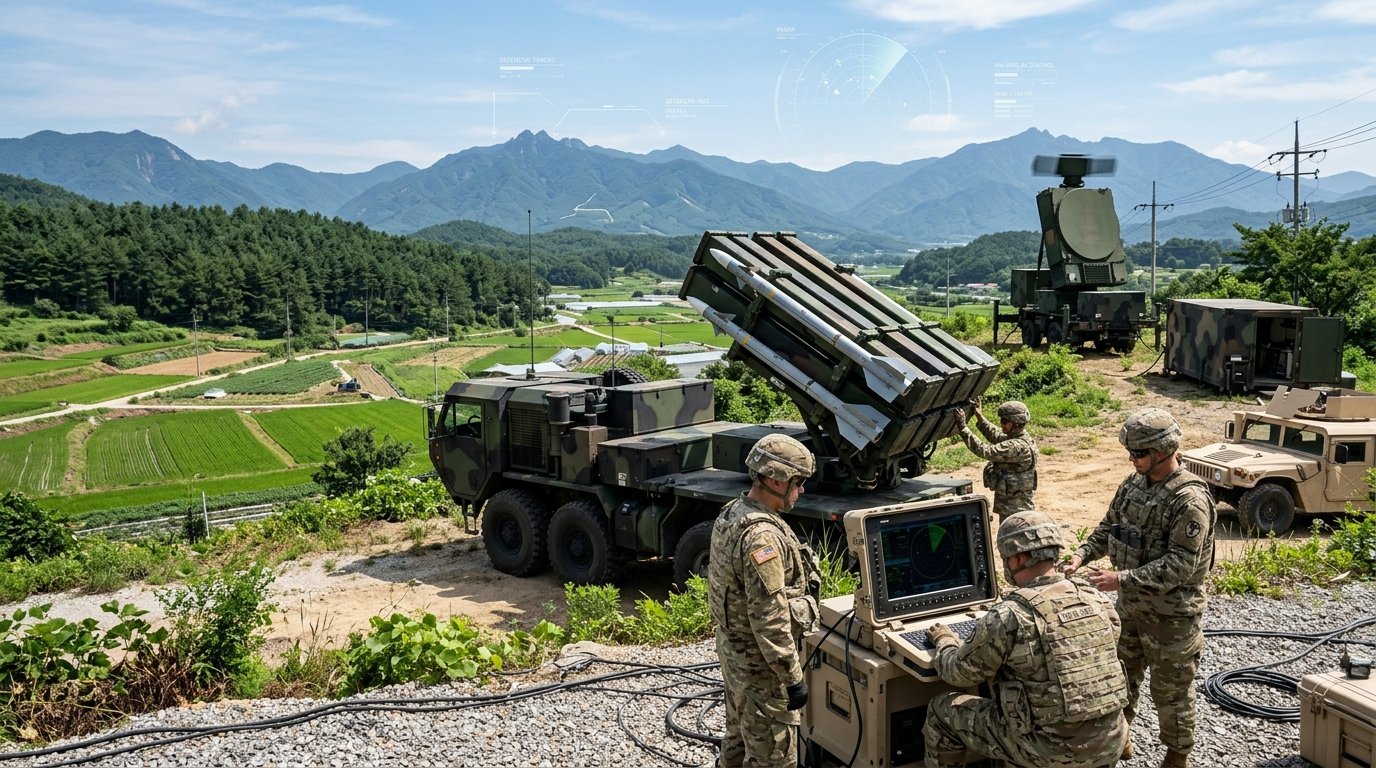
Recently, the U.S. Army introduced the Indirect Fire Protection Capability (IFPC) Inc 2 system to South Korea, the first time this advanced mobile air defense platform has been positioned outside the United States. This strategic move bolsters South Korea’s capability to defend against a variety of airborne threats, including drones, cruise missiles, and rockets, artillery, and mortars (RAM). The deployment comes amid increasing regional tensions and rising concerns over North Korea’s evolving missile and drone technologies. Coupled with ongoing rotations of MQ-9A Reaper drones and other reconnaissance assets, the IFPC system adds a vital layer of defense for critical military infrastructure and forward operating bases. The arrival of this sophisticated system creates a new paradigm for integrated air defense that could redefine the security landscape in East Asia.
Introducing the IFPC system: A game changer in mobile air defense technology
The U.S. Army’s Indirect Fire Protection Capability (IFPC) Inc 2 represents cutting-edge advancement in short-range air defense tailored to countering modern aerial threats. As a mobile, ground-based platform, it combines advanced missile interceptors, radar, and command and control systems designed to instantly identify and neutralize incoming dangers such as drones, cruise missiles, and rocket attacks.
Unlike traditional static air defense systems, the IFPC is engineered for rapid deployment and mobility, which allows it to protect a broad spectrum of tactical zones, including semi-fixed military bases and strategic command posts. This mobility is crucial given the evolving nature of conflict zones where fixed installations are increasingly vulnerable to swift, unpredictable strikes.
The IFPC system integrates tightly with the U.S. Army’s Integrated Air and Missile Defense Battle Command System (IBCS), which acts as a networked brain coordinating sensors and interceptors across multiple units for seamless real-time threat engagement. The IBCS integration means that data from various radars and intelligence sources are fused, enabling more precise targeting decisions and greater overall situational awareness.
This system’s interceptor missiles, capable of neutralizing threats at low altitudes and in complex airspaces, showcase America’s response to emerging aerial challenges. The capability to counter small drones, often difficult to detect and track, alongside higher-speed cruise missiles and supersonic threats, makes IFPC a versatile shield in the modern battlefield.
How IFPC improves South Korea’s defense posture against North Korean threats
South Korea faces increasing risks from diverse missile and unmanned aerial systems developed by its northern neighbor. The IFPC system strengthens South Korea’s defense by enhancing protection around strategic bases like Osan Air Base, where the U.S. has long maintained Patriot missile systems. The addition of IFPC fills critical gaps in short-range air defense and addresses emerging low-altitude threats more adeptly than prior systems.
One striking advantage of IFPC deployment is its focus on countering rocket, artillery, and mortar (RAM) attacks, which have historically been challenging to intercept. These threats previously overwhelmed defense measures because of their short flight times and unpredictable trajectories. IFPC’s advanced sensors and rapid-response interceptors now provide a dedicated shield against these fast-approaching attacks.
Moreover, the system’s ability to engage unmanned aerial vehicles (UAVs) is pivotal given North Korea’s growing investment in drone technology for reconnaissance and potential strikes. Drones can exploit gaps in traditional air defenses due to their small size and low radar signatures, but IFPC’s radar and missile combo is designed specifically to detect and neutralize such elusive threats.
Crucially, IFPC’s integration with Joint U.S.-South Korean military exercises like Freedom Shield 2026 ensures that both forces can operate in sync. This cooperation is essential for maximizing response times, sharing real-time intelligence, and coordinating intercept missions. These joint drills also improve the tactical understanding of operating IFPC in a contested, high-pressure environment, which enhances overall mission effectiveness.
The strategic implications of deploying IFPC in East Asia
The U.S. decision to deploy the IFPC Inc 2 system to South Korea goes beyond a mere technological upgrade; it signals a major shift in U.S. military posture and alliance confidence amid rising tensions in East Asia. With North Korea accelerating its missile tests and China’s growing regional assertiveness, the timing and nature of this deployment communicate a firm commitment to regional deterrence.
This mobile air defense capability strengthens the multi-layered defense network designed to protect critical military bases and population centers from missile saturation attacks. Its presence may force adversaries to reconsider the cost-effectiveness of missile strikes and drone incursions, potentially shaping future conflict dynamics.
The deployment also has psychological and geopolitical dimensions. By showcasing advanced U.S. military technology on the Korean Peninsula, it reassures South Korea and allies of America’s dedication to their security, while simultaneously serving as a deterrent against hostile escalation. The enhanced defenses reduce vulnerabilities and increase the strategic stability of the region, supporting diplomatic efforts to manage tensions without immediate resort to conflict.
Moreover, the IFPC’s operational feedback from South Korea will help the U.S. Army refine its concepts for integrated air and missile defense battalions, benefiting all forward-deployed units in Asia and Europe. Deployment lessons learned here could influence future defense architecture across multiple theaters, emphasizing mobility and layered defense combined with advanced command systems.
How joint exercises improve IFPC operational effectiveness and regional deterrence
Ongoing joint drills such as Freedom Shield 2026, featuring U.S. MQ-9A Reaper drones, Athena-R reconnaissance aircraft, and F-35 fighters, form the operational bedrock for IFPC’s deployment. These exercises simulate real-world scenarios where missile threats and drone swarms may converge simultaneously, testing the IFPC’s responsiveness and integration.
These drills serve multiple purposes:
- Enhancing interoperability between U.S. and South Korean forces
- Validating the IFPC system’s real-time sensor data fusion and command capabilities
- Identifying potential system vulnerabilities or procedural gaps
- Training personnel to respond swiftly to multifaceted aerial threats
- Generating actionable data to improve future system design and tactics
For example, in simulated saturation attacks involving dozens of cruise missiles and drones, the IFPC’s ability to coordinate with other air defense assets and engage multiple targets simultaneously has proven crucial. This layered defense approach ensures that even if some threats evade one layer, others can intercept them further along the defense perimeter.
Such exercises also have broader diplomatic implications by demonstrating tangible progress in allied defense integration, reassuring regional partners while signaling readiness to potential adversaries.
Technical components and capabilities of the IFPC system enhancing air defense
The IFPC system combines several key technologies to provide versatile, mobile defense against modern airborne threats. Its components include:
- Launcher vehicle: A highly mobile platform equipped with interceptor missiles capable of engaging RAM threats, cruise missiles, and UAVs.
- High-resolution radar arrays: These sensors detect, track, and classify multiple simultaneous targets with precision at low altitudes.
- Fire control and command system (IBCS): Coordinates information from sensors and other defense nodes to orchestrate the interception sequence.
- Interceptor missiles: Designed to destroy targets mid-flight, the interceptors can engage difficult threats such as small drones or fast-moving missiles with high success rates.
The synergy between these components allows the IFPC to respond swiftly to sudden, complex threats, maintaining a near-continuous defensive shield over priority assets. Its radar system’s ability to distinguish between various threat types reduces false alarms and optimizes interceptor use, preserving ammunition efficiency.
In addition, IFPC’s mobility means it can be rapidly redeployed as frontline situations evolve, counteracting adversaries’ attempts to circumvent air defenses by changing attack routes or timing. This dynamic adaptability is a major step forward from legacy systems that operated in fixed positions.
A closer look at interceptor missile technology and threat engagement
Interceptor missiles used by the IFPC system are engineered to excel against a spectrum of aerial threats. These missiles are equipped with advanced guidance systems capable of locking onto high-speed, maneuvering targets with remarkable accuracy. This capability is essential for tackling increasingly agile drones and supersonic cruise missiles.
Unlike older missile systems, IFPC interceptors benefit from real-time data provided by the IBCS command network, enabling mid-course corrections during flight to adjust to evasive maneuvers by targets. This flexibility significantly raises hit probabilities and overall system lethality.
Interceptors also incorporate counter-countermeasure technologies, allowing them to resist electronic jamming attempts or decoys designed to mislead or exhaust air defense resources. This ensures sustained effectiveness even in contested electronic warfare conditions.
The ongoing refinement of interceptor speed, range, and guidance precision underscores a growing trend in missile defense — optimizing kill probability while maintaining lower logistical footprints and faster reload times.
The broader implications for U.S.-South Korea military collaboration and technology transfer
Deploying the IFPC system to South Korea reflects deeper layers of defense cooperation beyond simple force projection. It represents a commitment to long-term, technologically sophisticated collaboration between the two allies.
South Korea benefits not only from enhanced protection but also gains valuable exposure to next-generation defense technologies, opening pathways for future indigenous development and integration. As tensions in the region persist, this cooperation fosters a stronger, more resilient military partnership capable of addressing evolving threats collaboratively.
Technology transfer and joint training programs allow South Korean forces to gradually master operating complex systems like IFPC, creating synergy and shared knowledge that improve collective defense capabilities. This collaboration may also influence regional arms races, encouraging other nearby nations to develop similar capabilities or form strategic alliances in response.
Ultimately, the IFPC deployment underscores a strategic vision where advanced mobile air defense systems play a central role in deterring aggression and protecting vital assets. The partnership sets a standard for interoperability and technology sharing critical for maintaining security in multi-threat environments.
| Deployment Component | Capability | Significance for South Korea |
|---|---|---|
| IFPC launcher vehicles | Mobile interceptor launch and rapid targeting | Enables flexible defense of key military sites against short-range threats |
| High-resolution radars | 24/7 multi-target detection and tracking | Improves situational awareness and reduces blind spots |
| Interceptor missiles | Engagement of drones, cruise missiles, and RAM threats | Provides critical defense for vulnerable low-altitude attack vectors |
| IBCS command system | Integrated sensor fusion and control | Optimizes response times and engagement coordination across forces |
What threats does the IFPC system protect against?
The IFPC system protects against a wide range of threats, including drones, cruise missiles, rockets, artillery, and mortars (RAM). It is designed to shield military bases and critical infrastructure from both high-speed and low-altitude attacks.
How does IFPC improve joint U.S.-South Korea military cooperation?
The deployment of IFPC is integrated into joint military exercises, enhancing interoperability between the U.S. and South Korean forces. Training and real-time data sharing improve coordinated responses to aerial threats.
Why is the IFPC deployment significant for regional security?
By strengthening South Korea’s air defense capabilities, the IFPC deployment increases deterrence and resilience against North Korean missile and drone threats, contributing to strategic stability in East Asia.
What role does technology transfer play in this deployment?
Technology transfer through training and operational collaboration enables South Korean forces to operate and maintain advanced systems like IFPC, supporting long-term defense modernization and alliance strength.
