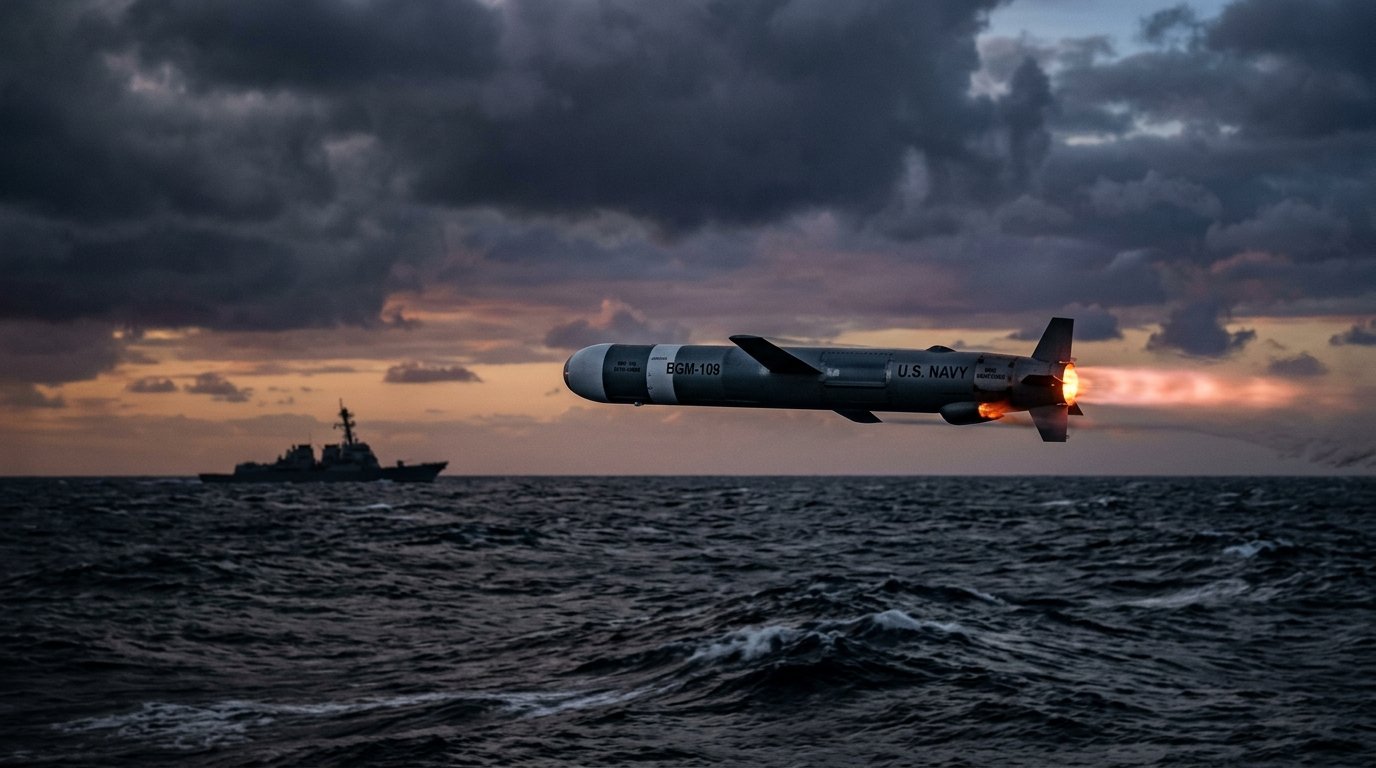
The U.S. Navy faces an alarming challenge as it burns through its dwindling stockpile of Tomahawk missiles amidst mounting global tensions, forcing a strategic rethink about its future naval strike capabilities.
Over recent years, the U.S. Navy’s heavy reliance on its Tomahawk cruise missiles has triggered a worrying depletion of these vital long-range weapons. With the retirement of the Ohio-class guided missile submarines (SSGNs) looming between 2026 and 2028, the Navy confronts a significant loss in firepower that risks upsetting its operational readiness. Efforts to transition to newer platforms like the Virginia-class Block V submarines offer hope but also highlight urgent production and strategic challenges. The unfolding missile shortage is prompting defense planners to grapple with how to maintain dominance amid evolving maritime security threats.
The strategic backbone of Ohio-class SSGNs in U.S. naval force projection
The Ohio-class guided missile submarines have long been the unsung giants of the U.S. Navy’s offensive arsenal. Each SSGN can carry an astonishing capacity of up to 154 Tomahawk missiles, providing unmatched conventional strike power from beneath the waves. These vessels—namely the USS Ohio, USS Georgia, USS Michigan, and USS Florida—have showcased their striking capabilities in pivotal conflicts including the 2011 Libya intervention and earlier Gulf War missions. Such firepower enables the Navy to deliver vast salvoes of precision strikes during the initial phases of a campaign, softening enemy defenses and facilitating combined arms operations. Moreover, the SSGNs’ ability to launch missiles covertly makes them invaluable for supporting special operations forces with clandestine fire support. The operational endurance of these submarines is equally impressive: the USS Florida famously traveled over 112,654 km in nearly 700 days of deployment, a testament to their strategic endurance and stealth utility. Beyond raw missile capacity, Ohio-class SSGNs represent a symbol of U.S. sea control dominance, combining size, stealth, and firepower to deter rivals and reassure allies. Their retirement, therefore, not only removes a massive missile stockpile platform but also diminishes the Navy’s operational footprint in key theaters such as the Pacific, where maritime competition is intensifying rapidly.
A legacy of decisive strikes shaping modern naval warfare
The Ohio-class SSGNs’ contribution transcends mere numbers. Their capability to launch tomahawk cruise missiles during major campaigns underscores a transformational shift in naval strike warfare. The 2011 Libyan civil war stands as a prime example: coordinated missile barrages from multiple SSGNs and surface ships struck carefully selected targets to disable command centers and air defenses. Such precision targeting minimizes civilian casualties and infrastructure damage while maximizing mission impact. Lessons learned from these operations feed back into tactical planning, emphasizing the importance of robust missile stocks and versatile delivery platforms. This history currently contrasts starkly with the Navy’s predicament of facing drawn-down missile reserves just as future conflicts loom.
Tomahawk missile capabilities fueling modern military strategy
Central to the Navy’s strike power, the Tomahawk missile—especially the Block IV variant—remains a cornerstone of tactical and strategic warfare. These cruise missiles boast a remarkable range of approximately 1,448 km and speeds exceeding 885 km/h, enabling them to engage targets deep behind enemy lines while keeping launch platforms safely distanced. The missiles’ advanced guidance systems allow precision strikes against hardened and strategic infrastructure such as communication hubs, missile sites, and command posts. What sets the Block IV apart is its loitering ISR (intelligence, surveillance, and reconnaissance) capability, letting it circle an area awaiting timely targeting commands with a secure two-way data link. This adaptability provides commanders real-time control to reassign or abort strikes based on changing battlefield conditions, significantly improving mission success rates. Yet this tactical sophistication comes at a price. Each Tomahawk is an expensive asset, and heavy combat usage depletes an already tight inventory. The Navy’s current Tomahawk stockpile faces an increasingly precarious position given simultaneous demands for multiple theaters, spotlighting urgent production and strategic replenishment needs.
Technological evolution and its impact on operational readiness
The Block IV missile’s two-way data link marks a dramatic upgrade from earlier models, allowing flexible mission profiles that integrate ISR with strike capabilities. This innovation reflects shifting military doctrines prioritizing network-centric warfare and dynamic battlefield awareness. However, the ensuing dependence on such complex systems accentuates maintenance challenges and supply chain vulnerabilities. Furthermore, the evolving threats from anti-missile defense systems compel continuous upgrades to Tomahawk guidance and stealth measures, driving up modernization costs amid missile scarcity. These pressures compel military planners to seek a diversified arsenal and new delivery modalities beyond existing cruise missiles.
Challenges and strategic ramifications of retiring Ohio-class SSGNs
The planned decommissioning of all four Ohio-class SSGNs by 2028 threatens a substantial erosion of the Navy’s cruise missile launching capacity. With each submarine supporting over 150 Tomahawk missiles, the collective loss translates to more than 600 precision weapons removed from active service, stripping away a unique mass strike capability previously unavailable in other platforms. This retirement coincides with a surge in naval threats, particularly from peer adversaries enhancing their submarine fleets and anti-access/area denial (A2/AD) technologies. The Navy’s ability to project power in critical regions, namely the Indo-Pacific, depends heavily on sustained undersea strike capability, creating a strategic void hard to fill with existing assets. Kris Osborn, a noted defense analyst, emphasizes the “massive loss of collective firepower” and the dire need for rapid mitigation through newer submarines. The procurement crunch, capability gap, and operational implications are driving urgent reconsiderations of fleet structure, combat doctrine, and weapons logistics.
Operational and logistical hurdles in the transition period
Replacing the Ohio-class firepower cannot be accomplished overnight. The Navy faces the dual challenge of managing current commitments while accelerating production of modern platforms. Adapting doctrine to function with fewer missiles imposes strain on strike planning and coalition support structures. Additionally, retiring Ticonderoga-class cruisers reduces surface-launched Tomahawk counts, compounding missile supply issues. The logistical complexity of replenishing missile stocks while updating munition technology adds cost and time delays. Naval planners must balance short-term combat readiness against long-range force development. Failure to close the gap could embolden adversaries underestimating U.S. undersea strike resilience.
Virginia-class Block V and the hope to fill the looming gap
In response to these challenges, the Navy is pivoting toward the Virginia-class Block V submarines, equipped with the Virginia Payload Module (VPM), which increases missile capacity by 28 additional Tomahawks per vessel. This enhancement boosts missile load to roughly 40 missiles per submarine, a significant step toward regaining lost strike power. These new submarines also feature improved sensor suites and stealth capabilities, allowing for greater operational flexibility. The VPM modules represent a strategic bridge between retiring Ohio-class SSGNs and the Navy’s aspirations to transform undersea warfare. However, this transition demands a sharp ramp-up in production pace to ensure a smooth replacement of retiring vessels. Analysts stress that without accelerated manufacturing and integration, the Navy risks a prolonged period of diminished missile firepower at a time when maritime competition intensifies globally.
Key advantages and production challenges associated with Block V
The Virginia Block V’s integration of the VPM is a clear technological leap, enhancing conventional strike capabilities while supporting multi-mission roles including intelligence gathering and anti-submarine warfare. The improved missile load translates to more persistent deterrence and offensive options, critical in contested regions. On the flip side, the complexity of constructing these subs with sizeable payload modules demands increased funding and industrial capacity. Supply chain delays and technical hurdles in incorporating new systems could slow delivery, intensifying the transitional vulnerability. Meeting these demands will require close coordination between the Navy, contractors, and Congress.
List of critical factors impacting the U.S. Navy’s Tomahawk missile capabilities through 2028:
- Retirement of Ohio-class SSGNs removing over 600 Tomahawk missiles’ delivery platforms
- Limited Tomahawk missile production rates hampering stockpile replenishment
- Reduction of Ticonderoga-class cruisers decreasing surface-based missile launch capacity
- Emerging maritime threats demanding higher missile readiness and flexibility
- Dependence on technological upgrades for missile guidance and ISR functions
- Virginia-class Block V submarines with increased missile capacity but facing production pressures
- Need for enhanced industrial base and budget prioritization to overcome capability gaps
| Platform | Tomahawk missile capacity | Status as of 2026 | Replacement timeline |
|---|---|---|---|
| Ohio-class SSGN | 154 missiles per sub (600+ total) | Active but retiring | Fully retired by 2028 |
| Virginia-class Block V | Approx. 40 missiles per sub | Under production and commissioning | Gradual inclusion through late 2020s |
| Ticonderoga-class cruiser | Varied missile counts (~60 Tomahawks) | Phasing out | Retirement by mid-2020s |
What makes Ohio-class SSGNs uniquely capable for missile strikes?
Ohio-class SSGNs excel due to their large missile capacity, stealth, and endurance, allowing massive salvoes of Tomahawk missiles while remaining undetected undersea for extended periods.
How do Tomahawk Block IV missiles differ from earlier variants?
Block IV Tomahawks incorporate advanced guidance with two-way data links and loitering ISR capabilities, enabling dynamic target updates and enhanced mission flexibility.
Why is the retirement of Ohio-class SSGNs a strategic concern?
The retirement removes the Navy’s primary platform for large-scale missile salvoes, creating a temporary capability gap that challenges strike planning in critical regions.
Will the Virginia-class Block V fully replace Ohio-class SSGNs?
While they add significant missile capacity and advanced tech, the Block V subs do not entirely match the Ohio-class’s missile payload, requiring increased production and complementary assets.
What are the biggest hurdles in sustaining Tomahawk missile stockpiles?
Key challenges include production rate limits, evolving technology maintenance, budget constraints, and shifting strategic priorities demanding rapid adaptation.
