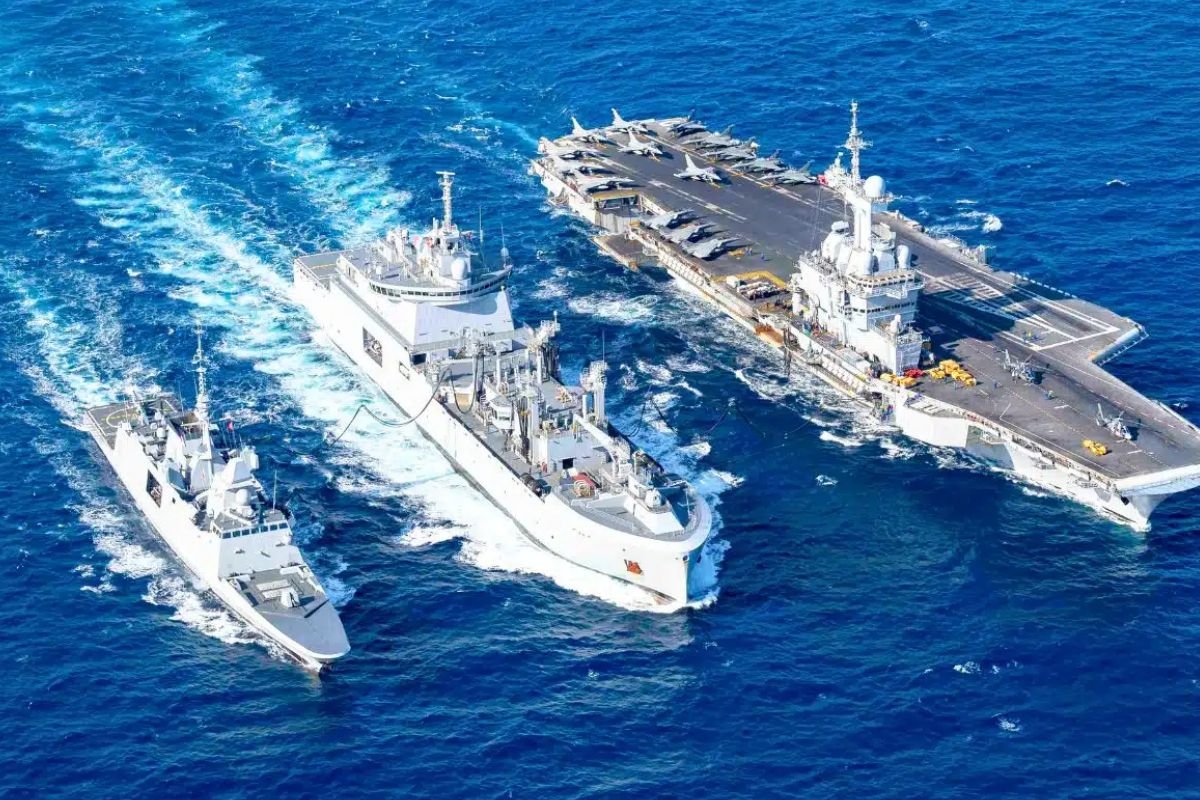
The Jacques Chevallier sets an unprecedented operational benchmark by completing nine at-sea refuelings in just one day—demonstrating a leap forward in naval logistics and endurance.
On March 12, 2026, the French Navy marked a pivotal chapter in maritime operations. The replenishment tanker Jacques Chevallier achieved an exceptional feat, carrying out nine refuelings within a single 24-hour period. This breakthrough not only reflects advanced ship design but also signals the vital role such vessels play in extending the reach and operational autonomy of naval forces amid today’s complex geopolitical landscape.
Breaking the record: why nine refuelings matter for naval logistics
The Jacques Chevallier’s remarkable series of nine refuels surpassed all prior operational milestones, illustrating the ship’s extraordinary logistical capabilities. Each at-sea refueling requires meticulous coordination, precise maneuvers, and stringent safety measures between vessels maneuvering side by side. Accomplishing this nine times in rapid succession reveals both the robust training of its crew and the vessel’s advanced technology designed to optimize fuel transfers efficiently.
This latest achievement builds on a growing track record. Since entering service, the Jacques Chevallier had crossed 100 refuelings by 2024, embedding itself as an integral component of France’s naval supply chain. The milestone is not a mere statistic—it underpins the strategic necessity of rapid, reliable replenishment to maintain fleet momentum during extended missions far from friendly ports.
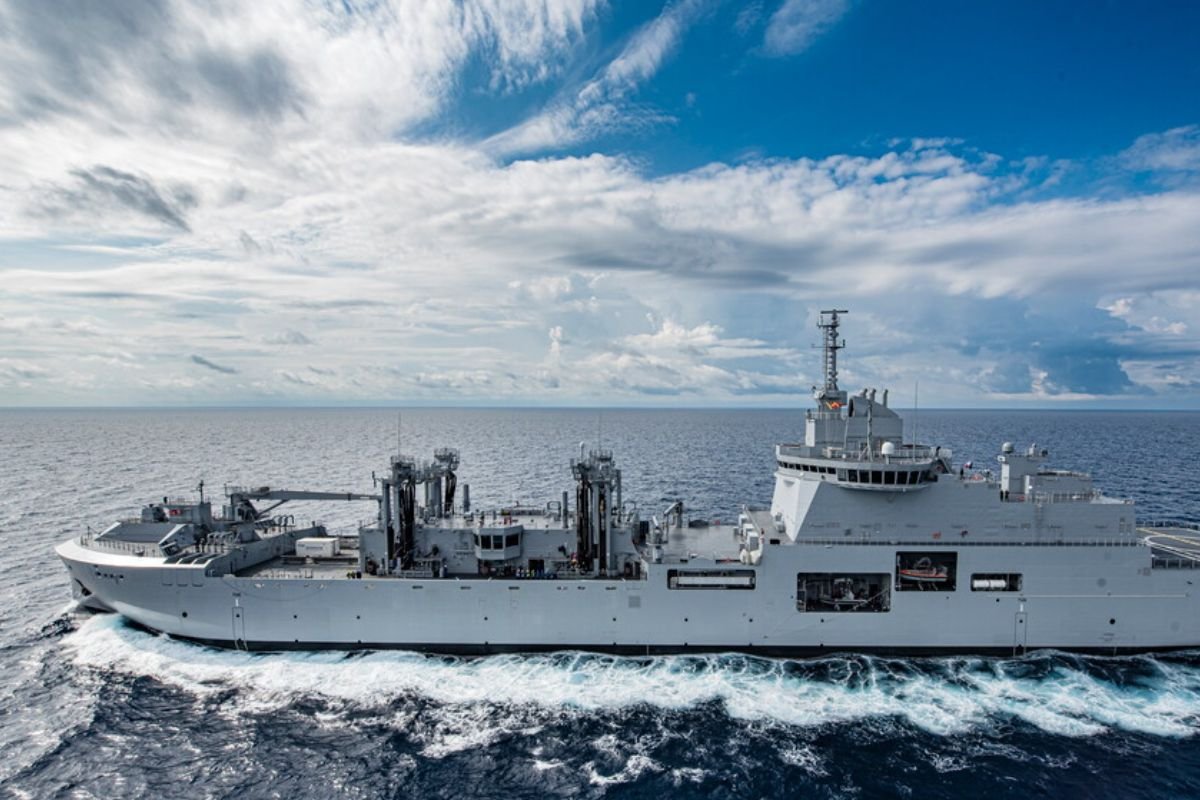
Built through a European industrial partnership between Naval Group, Chantiers de l’Atlantique, and Fincantieri, the vessel measures 194 meters, carries a crew of around 130 sailors, and can transport massive fuel volumes to support fleet operations. Powered by a diesel-electric propulsion system, it reaches speeds of 20 knots with a range of 8,000 nautical miles.
Equipped with 40 mm RAPIDFire guns, SIMBAD missile systems, and a helicopter/drone capability, the Jacques Chevallier plays a central role in enabling long-duration deployments, reinforcing France’s naval autonomy and power projection.
Strategic impact: sustaining naval power away from shore bases
Beyond simple logistics, the Jacques Chevallier embodies a key pillar of France’s naval autonomy. In a world where maritime domains become flashpoints for tension, the ability of French warships to operate continuously at sea hinges on replenishment vessels like this tanker.
Replenishments at sea cover a broad array of supplies: fuel, food, ammunition, and essential spare parts. Designed to handle multiple simultaneous transfers, the Jacques Chevallier enables fleets to remain operationally flexible. This capability is especially vital for task groups centered around capital ships, such as the aircraft carrier Charles de Gaulle, ensuring sustained strike and defensive operations even under demanding circumstances.
Technical prowess: the backbone of modern naval replenishment
Measuring 194 meters long and manned by roughly 130 crew members, the Jacques Chevallier ranks as a technological marvel in naval logistics. It boasts a fuel capacity of 13,000 cubic meters, allowing it to support multiple vessels during protracted deployments. This volume, combined with modern transfer systems, ensures rapid and safe refueling procedures.
The vessel is the forefront of the FLOTLOG program, aimed at modernizing France’s naval supply fleet. This renewal targets bolstering the country’s strategic autonomy, granting the Navy indispensable endurance and reach in increasingly contested waters. Such capabilities reduce reliance on foreign bases, a critical factor given the geopolitical uncertainties in various maritime theaters.
FLOTLOG program’s role in evolving naval logistics
The Jacques Chevallier is the lead of a quartet of replenishment ships commissioned under the FLOTLOG initiative, signifying France’s commitment to cutting-edge naval support assets. This program not only replaces aging tankers but reshapes how logistical sustainment is conceptualized.
By integrating advanced technologies and crew training programs, FLOTLOG ensures these vessels perform complex replenishment tasks seamlessly, even under adverse operational conditions. The program directly aligns with France’s vision of projecting power and safeguarding maritime interests far beyond home waters.
Key strengths of the FLOTLOG replenishment vessels
- Enhanced fuel transfer systems reducing turnaround time during refueling
- Capacity to refuel multiple ships simultaneously, boosting fleet operational tempo
- Advanced communication and navigation tools to optimize coordination under challenging sea conditions
- Diversified supply ability beyond fuel, including munitions and essential provisions
- Improved crew safety standards and automated operational systems for hazard mitigation
Operational endurance: what nine refuelings imply for fleet capabilities
The ability to carry out nine refueling maneuvers in one day translates directly into enhanced fleet endurance and versatility. Such operational rhythms allow naval task groups to maintain pressure, respond rapidly to emerging crises, and remain deployed in remote areas without the traditional constraints imposed by port visits.
This level of logistical sustainability supports France’s wider strategic ambitions, enabling a persistent naval presence in vital regions such as the Indo-Pacific and Mediterranean, where power projection and alliance commitments remain high priorities.
Challenges overcome and lessons learned
Executing multiple at-sea replenishments in close succession is a complex endeavor that tests crew stamina, seamanship, and technical reliability. The Jacques Chevallier’s record day revealed key insights into:
- The importance of well-drilled crew procedures ensuring swift transitions between operations
- Robust communication systems minimizing risks during simultaneous multi-ship refuelings
- Maintenance scheduling that guarantees equipment performance under high operational tempo
- Adaptive weather navigation strategies to sustain readiness despite environmental variables
These lessons inform ongoing training and future vessel design, refining the Navy’s logistical edge.
Summary of Jacques Chevallier operational highlights
| Date | Operational milestone | Significance |
|---|---|---|
| March 12, 2026 | Completed nine at-sea refuelings in a single day | Set new French Navy record for sustainability and rapid logistical support |
| 2024 | Surpassed 100 total refuelings | Affirmed integration into fleet replenishment operations |
| Commissioning (early 2020s) | Entered active service as lead FLOTLOG tanker | Modernized France’s naval logistics capabilities |
Why are at-sea refuelings critical for modern navies?
At-sea refuelings allow naval vessels to operate independently of shore facilities, extending mission duration and improving strategic reach.
How does the Jacques Chevallier support the French Navy’s strategic goals?
By enabling sustained operations at sea through rapid and efficient resupply of fuel and provisions, it underpins France’s naval power projection and autonomy.
What technological features make Jacques Chevallier effective for quick refuelings?
Its large fuel capacity, advanced transfer systems, and well-trained crew enable multiple rapid refuelings under varying sea conditions.
What is the FLOTLOG program?
FLOTLOG is France’s effort to modernize its naval replenishment vessels, enhancing logistical support capabilities to meet 21st-century strategic challenges.
How do multiple refuelings affect fleet operations?
They significantly increase fleet endurance, allowing extended presence at sea and faster operational response without returning to port frequently.
Source: Etat Major des Armées Français
