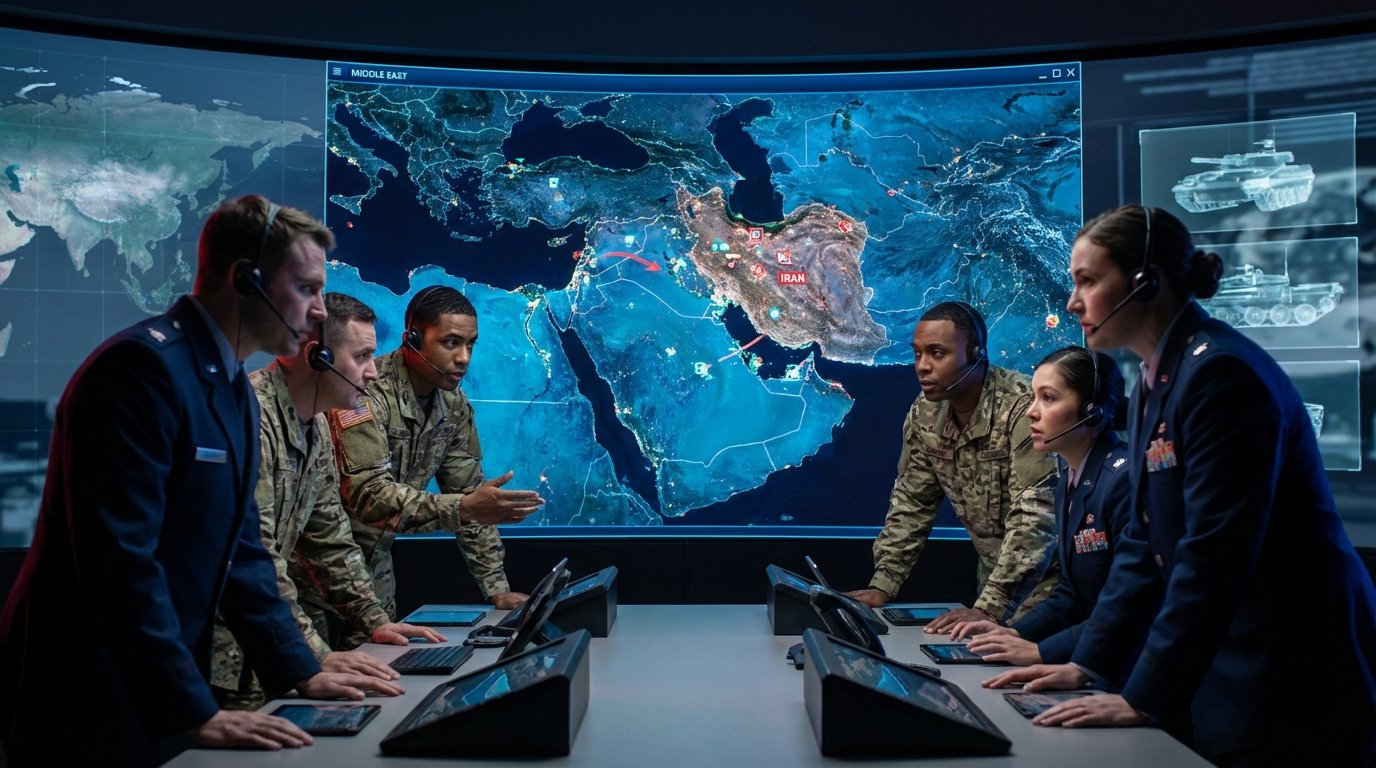
The ongoing Iran conflict has evolved into an unexpected yet invaluable military laboratory for the Pentagon, revealing critical strategic vulnerabilities and tactical lessons that will shape U.S. preparations for a potential future conflict with China.
As the war in Iran unfolds, it provides the U.S. Department of Defense with firsthand combat experience in precision strikes, missile defense, logistics security, and cyber warfare. However, beneath these tactical victories lie troubling deficiencies that Chinese military planners are undoubtedly scrutinizing. This conflict doesn’t just represent a regional crisis but a proving ground for larger geopolitical challenges facing the United States.
Precision strikes redefine modern warfare capabilities
The Iran conflict has highlighted the transformative role of precision munitions and intelligence-driven targeting. Operations like “Midnight Hammer,” which saw B-2 stealth bombers obliterate deeply buried nuclear facilities, underscore the potency of bunker-busting weapons combined with stealth delivery platforms. Similarly, the targeted assault on Kharg Island involved disabling over 90 military sites with minimal collateral damage, showcasing a nuanced approach to strategic air warfare.
These missions emphasize “effects-based” warfare — a method focused on achieving specific strategic outcomes without wholesale destruction. This technique reflects growing Pentagon interest in surgical military campaigns that limit escalation while achieving high-value objectives.
How Iran’s terrain sharpens operational tactics
Iran’s geographic and infrastructural complexities present stiff challenges, pushing U.S. forces to refine deployment of bunker busters and advance surveillance. Precision strikes against widely dispersed and fortified targets have demanded adaptability, paving the way for improved combat readiness in similarly challenging future scenarios, especially in vast theaters like the Indo-Pacific.
The hidden cost of high-tech armaments: missile stockpile depletion
While precision attacks spotlight U.S. technological superiority, they have also resulted in the rapid depletion of Tomahawk cruise missiles and other advanced munitions. This accelerated burn rate raises serious concerns regarding long-term sustainability and continuous combat readiness if a prolonged conflict arises with a near-peer competitor such as China.
The Iran war is a stark reminder that military might doesn’t only depend on battlefield success but on the resilience of production lines and stockpile replenishment—areas that have received growing Pentagon scrutiny following the conflict’s expenditure rates.
Challenges to long-lasting warfare preparedness
Ensuring a robust supply chain is essential. Prolonged conflict scenarios accelerate wear on complex weapons systems, making industrial capacity just as critical as front-line performance. The struggle to keep pace with ammunition resupply in the Iran conflict parallels potential supply issues the U.S. might encounter in a much larger theater like the Pacific.
Missile defense and countering swarm attacks: lessons from Iran
The Pentagon’s frontline experience in intercepting ballistic missiles and drone swarms has come under real stress during the Iran conflict. Patriot missile batteries engaged multiple inbound Iranian missiles, marking one of the most intense live-fire defense operations in recent memory.
This demanding exposure revealed that while existing interceptors are effective, their rapid depletion during sustained assaults underlines an urgent need for more scalable and efficient missile defense solutions, a capability critical to deterring attacks within the Indo-Pacific region.
Why countering asymmetric threats is a Pentagon priority
Iran’s use of cost-effective drones and missile strikes to disrupt key logistics hubs—like the attack on a U.S. facility in Kuwait—underscores vulnerabilities in supply infrastructure. Protecting such hubs from asymmetric attacks will be vital during any future conflict with China, where the scale and sophistication of attacks could be exponentially greater.
Cyber and electronic warfare: the silent battleground
Another crucial insight revolves around the role of cyber operations and electronic warfare. U.S. forces have reportedly conducted cyberattacks and electronic jamming to neutralize Iranian communications and missile networks, underscoring the increasing importance of digital warfare components.
Future conflicts with China will likely see even more intense cyber battles leveraging AI and electronic disruption technology, making these domains a frontline in any military preparation and engagement strategy.
Preparing for AI-enhanced digital combat
As artificial intelligence becomes more entwined with cyber offense and defense, mastering these technologies will be critical. The Iran conflict acts as a real-world experiment in integrating electronic warfare with conventional operations, offering the Pentagon a chance to refine tactics that could prove decisive against a tech-savvy adversary like China.
Global implications and strategic ripple effects
The Iran conflict also reveals the intricate geopolitical web involving China, Russia, and Middle Eastern interests. China’s deep economic ties to Iran, especially through energy imports, risk extensive disruptions if conflict prolongs. Meanwhile, cooperation between Iran, Russia, and China hints at a broader multipolar dynamic that U.S. strategists must tackle.
Maintaining strong alliances, engaging in savvy diplomacy, and managing economic dependencies will thus be pivotal alongside military preparedness in deterring and confronting future great power rivalries.
Economic vulnerability as a strategic factor
Ongoing conflict-driven volatility in oil markets demonstrates how energy dependence remains a critical vulnerability. It’s a factor that players like China watch closely, revealing that wars today have consequences far beyond the battlefield—in global markets, supply chains, and alliances.
| Military Domain | Lessons from Iran War | Implications for China Conflict |
|---|---|---|
| Precision strike capabilities | Effective high-value target neutralization with minimal collateral damage | Essential for disabling fortified facilities in the Indo-Pacific |
| Missile stockpile management | Rapid depletion of advanced munitions | Need for expanded production capacity and replenishment |
| Missile defense and interceptors | Depletion during swarm attacks and missile saturation | Requirement for scalable, efficient air defense systems |
| Asymmetric warfare tactics | Disruption of logistics with inexpensive drone attacks | Critical protection of supply hubs in extended theaters |
| Cyber and electronic warfare | Disabling command networks and missile radars | Heightened importance of AI and cyber defenses |
As 2026 unfolds, the Pentagon continues fine-tuning its strategies and capabilities, using the Iran conflict’s hard-won lessons as a blueprint to enhance its readiness against China’s rising military challenge.
- Precision munitions need to be produced and stockpiled on a much larger scale for sustained conflict scenarios.
- Missile defense systems must evolve for greater scalability and efficiency against high-volume missile attacks.
- Cyber warfare will play a pivotal role in disrupting adversary command and control networks.
- Logistics hubs and supply lines require enhanced protection against asymmetric attacks like drone strikes.
- Strategic alliances and economic resilience remain indispensable to counter multipolar geopolitical dynamics.
What makes the Iran conflict so important for Pentagon’s future war planning?
The Iran conflict acts as a live-fire testing ground for cutting-edge tactics, exposing both strengths and weaknesses in U.S. military capabilities essential for planning against China.
How has missile stockpile depletion influenced defense strategies?
Rapid usage of precision missiles during the Iran conflict highlights the necessity for increased production capacity to sustain prolonged warfare against technologically advanced adversaries.
Why is cyber warfare increasingly significant in modern conflicts?
Cyber operations are crucial for disrupting enemy communications and missile systems, a factor likely to dominate future engagements with highly digitized militaries such as China’s.
In what ways does the Iran war expose vulnerabilities in logistics?
Drone and missile attacks on supply hubs show how critical infrastructure can be disrupted easily, emphasizing the need for hardened defenses of logistics in expansive combat zones.
What role does the geopolitical environment play in U.S. military strategy?
Understanding China’s economic ties and alliances means the Pentagon integrates diplomacy and economic planning with military preparedness to manage complex global power shifts.
