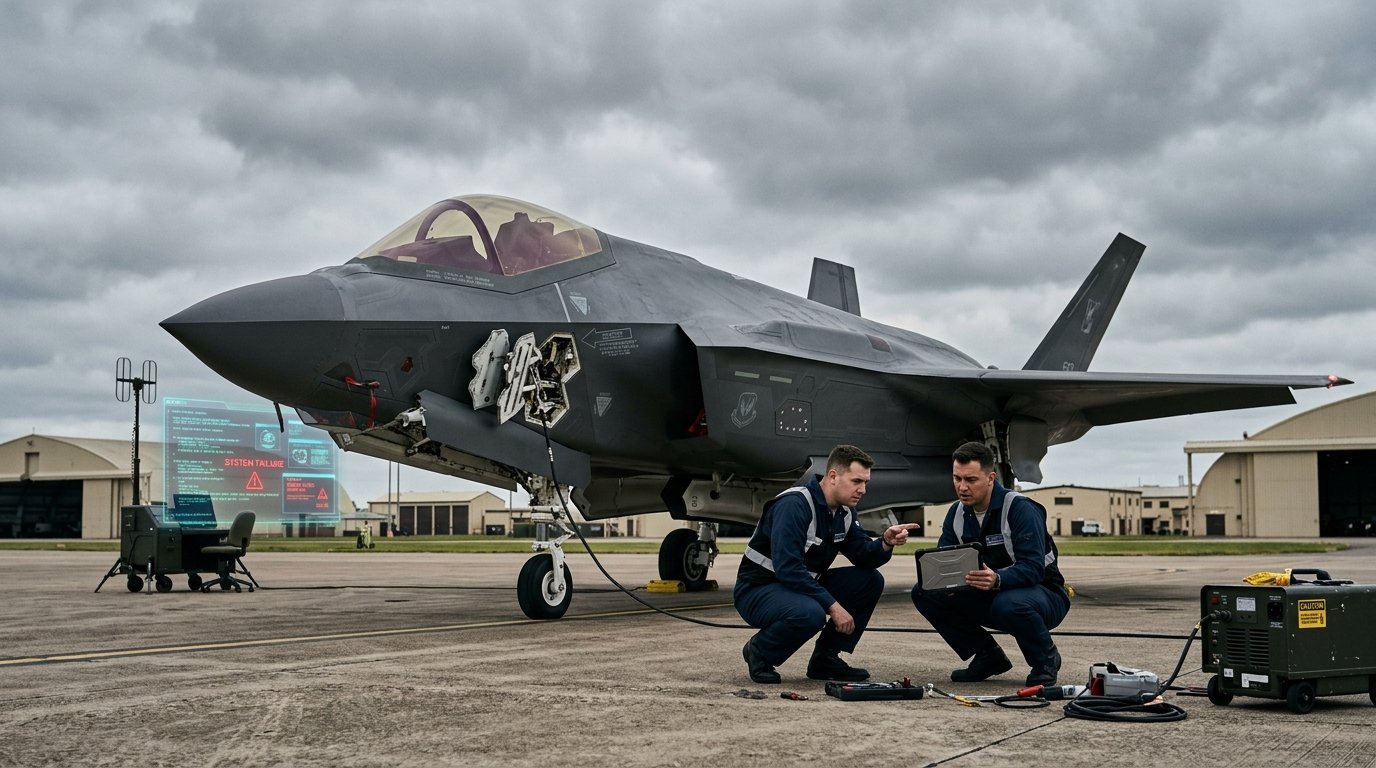
The F-35 Joint Strike Fighter, the cornerstone of U.S. and allied air superiority, faced a critical blow in 2024 as its pivotal software and hardware upgrade, TR-3, failed to deliver the expected new combat capabilities.
The latest Pentagon assessment has revealed a disturbing setback for the F-35 program, which is already grappling with chronic delays and cost overruns. Despite lofty ambitions for the TR-3 hardware upgrade—intended to vastly enhance onboard processing power and set the stage for the Block 4 modernization package—the program delivered no appreciable new combat functionality throughout 2024. As over 800 of these stealth fighters continue to operate globally, the cascading effects of this shortfall are casting a shadow over the aircraft’s readiness and future evolution.
Why the TR-3 Upgrade’s Failures Put F-35’s Future at Risk
The F-35’s modernization hinges heavily on a series of incremental software and hardware improvements, collectively known as “blocks.” Among these, Block 4 represents the most ambitious leap, promising advanced sensor fusion, integration of next-generation weapons, and broader networking capabilities with allied forces.
At the core of Block 4 is the TR-3 upgrade—a $1.9 billion package intended to multiply the aircraft’s processing power by more than tenfold and expand memory resources dramatically. This wasn’t just a routine update but a foundational overhaul designed to support the increasingly complex demands of modern aerial combat.
Unfortunately, in 2024, the TR-3 upgrade proved “predominantly unusable” due to persistent stability issues, numerous previously undetected software defects, and missing critical features. The Government Accountability Office flagged these problems, noting their potential to stall the entire Block 4 rollout. Plans for delivering full Block 4 capabilities have now been pushed back beyond 2030, undermining the modernization timeline dramatically.
These delays risk not only the U.S. Air Force’s operational edge but also endanger the entire NATO and allied partner fleets that rely heavily on the evolving F-35 platform. Without TR-3, key improvements in radar capabilities, electronic warfare, and data-sharing networks cannot be effectively deployed, leaving the fleet vulnerable against increasingly sophisticated adversaries.
Example: One concrete repercussion is the inability to fully operationalize new electronic attack capabilities designed to jam enemy radar systems, crucial for safeguarding allied aircraft during long-range strike missions.
Moreover, given the rapid pace of global military aviation advancements—especially from Russia and China—the stagnation in F-35 upgrades fuels concerns about future survivability and mission effectiveness in high-threat environments.
The domino effect of software delays on F-35 mission readiness
The Pentagon’s Director of Operational Test and Evaluation (DOT&E) report underscores that the program’s software development timelines remain behind schedule, with cybersecurity vulnerability assessments only partially completed—three out of nine planned tests were finished by late 2024. This paints a worrying picture.
Software isn’t just a convenience for the F-35; it’s the very backbone of its ability to transform raw data into actionable battlefield intelligence. Software glitches or incomplete security measures have direct impacts on pilot safety, mission success, and aircraft survivability.
For example, a single software vulnerability could expose the fighter to cyber-attacks, potentially disrupting mission-critical communications or sabotaging onboard navigation and weapons systems mid-flight. The incomplete cybersecurity testing, exacerbated by staffing cuts and shifting priorities within the development teams, heightens this risk.
The result of these software delays is a direct hit to fleet readiness. Over 800 delivered F-35s across the U.S., NATO, and allied forces are effectively flying with slightly outdated TR-2 software. This older system lacks many advanced capabilities envisioned for more complex future combat theaters, creating an operational bottleneck.
Operational squadrons must contend with this limitation, trying to bridge high-tech ambitions with practical realities. Marines flying combat missions over Iran, for instance, are currently relying on older TR-2 software that doesn’t incorporate the latest sensor or weapon system expansions.
Historically, cutting-edge military aircraft have often struggled with software stability during major upgrades, but the F-35’s prolonged delays deepen concerns. The interplay between hardware limitations, testing setbacks, and cybersecurity gaps means the fleet’s ability to maintain dominance in emerging combat scenarios could be compromised if these issues are not quickly resolved.
Block 4’s promise and its cascading global consequences
Block 4 isn’t merely a U.S.-focused initiative; it’s a multinational modernization effort shaping the future of allied air combat. This upgrade brings several crucial enhancements, including:
- Improved sensor fusion: Combining data from radar, infrared, and electronic warfare sources for a more complete battlefield picture.
- Integration of advanced weapons: Enabling deployment of hypersonic missiles and next-gen precision-guided munitions.
- Enhanced interoperability: Facilitating seamless coordination between allied forces for joint operations.
- Stronger electronic warfare capabilities: Counteracting new threats and hardened enemy air defenses.
- Expanded mission data memory: Allowing the jet to handle more complex and larger datasets to support decision-making.
The inability to deploy these Block 4 features on schedule has knock-on effects worldwide, leaving partner nations vulnerable or forced to delay their fleet upgrades. Many countries, including those in NATO and Asia-Pacific allies, rely heavily on F-35 technology for their air defense strategies and deterrence postures.
For instance, Japan and South Korea have expressed concerns about slower-than-anticipated software rollouts, which may limit their air force modernization plans amid escalating regional tensions. Likewise, European members of NATO are increasingly watching these delays with unease as the geopolitical landscape grows more volatile.
The implications extend beyond immediate military effectiveness. Partners that have invested billions of euros in F-35 fleets may face increasing pressure to consider alternative platforms or boost supplementary defense investments to plug capability gaps caused by these delays.
Combat performance today versus the future battlefield challenge
Despite these serious challenges, the F-35 remains a versatile and formidable aircraft in many active theaters. Ongoing combat operations have demonstrated that the jet’s existing TR-2 software version can effectively perform missions involving air patrol, strike, and suppression of enemy air defenses.
For example, U.S. Marine Corps F-35s flying over Iran have leveraged stealth and sensor fusion capabilities to neutralize key threats. This real-world experience underscores the platform’s underlying strength and flexibility, even without the promised Block 4 enhancements.
Yet, experts caution that this effectiveness might erode in future conflicts involving adversaries equipped with cutting-edge anti-access/area denial (A2/AD) systems. Emerging technologies from China and Russia are expected to challenge current stealth and electronic warfare advantages.
In high-threat scenarios, the promised TR-3 upgrade and Block 4 enhancements—such as better data integration and next-gen weapon compatibility—will be critical to maintaining air superiority. The delay in these improvements effectively handicaps the F-35’s long-term ability to operate in contested environments.
Historical parallel: Similar challenges were faced by previous generation fighters when transitioning to digital avionics in the 1990s, but the stakes today are higher with vastly increased software complexity and cyber risk.
Lessons learned and path ahead for the F-35 program’s software overhaul
As the F-35 program navigates this critical juncture, several key lessons emerge that could influence the future of complex military software programs:
- Robust development and testing cycles: Early identification and resolution of defects must be prioritized over rushed deployment schedules to avoid cascading delays.
- Cybersecurity focus: Comprehensive and timely vulnerability assessments are essential to secure critical platforms from emerging cyber threats.
- Adaptive project management: Flexibility in resourcing and prioritization can mitigate the impact of unexpected technical challenges.
- Transparency with allies: Keeping partner nations informed helps manage expectations and supports joint problem-solving efforts.
- Incremental capability delivery: Smaller, more manageable updates could improve operational readiness rather than large-scale software ‘block’ rollouts.
Lockheed Martin and the Pentagon now face significant pressure to accelerate software improvements while ensuring stability. Investments may be required to rebuild confidence in the upgrade process, balancing security, performance, and timeliness.
The program’s success or failure will likely shape not just the F-35’s future, but also the broader domain of software-intensive military aviation procurement in the years ahead.
| Aspect | Original plan | 2024 status | Projected completion |
|---|---|---|---|
| TR-3 hardware/software upgrade deployment | Start 2020, fully operational by 2025 | Predominantly unusable throughout 2024 | Projected 2031 or later |
| Software vulnerability assessments | 9 planned assessments in 2024 | 3 completed by year-end | Ongoing into late 2020s |
| Block 4 capability full delivery | Scheduled by Late 2020s | Delayed beyond 2030 | Possible delivery post-2031 |
| Active combat deployments with TR-2 software | Phase out by 2024 | In use over Iran and elsewhere | Continued until new upgrade proven stable |
Why did the TR-3 upgrade fail to deliver new combat capabilities in 2024?
The TR-3 upgrade encountered significant stability problems, undiscovered defects, and missing features, rendering it largely unusable in 2024, as detailed by Pentagon reports.
How do software delays affect F-35 combat readiness?
Delays prevent deployment of critical new capabilities and maintain older software versions in active use, limiting performance against advanced threats and raising cybersecurity risks.
What are the implications of delayed Block 4 capabilities for allied nations?
Allied countries relying on F-35s face postponed access to enhanced sensor fusion, better weapons integration, and electronic warfare capabilities, potentially impacting regional security strategies.
Is the F-35 still effective in current combat missions?
Yes, operating on older TR-2 software, the F-35 performs well in ongoing missions such as those over Iran, but lacks the advanced features expected from forthcoming upgrades.
What steps can improve the F-35 software development process?
Prioritizing early defect detection, comprehensive cybersecurity testing, flexible project management, clear communication with partners, and smaller incremental updates can enhance progress.
