
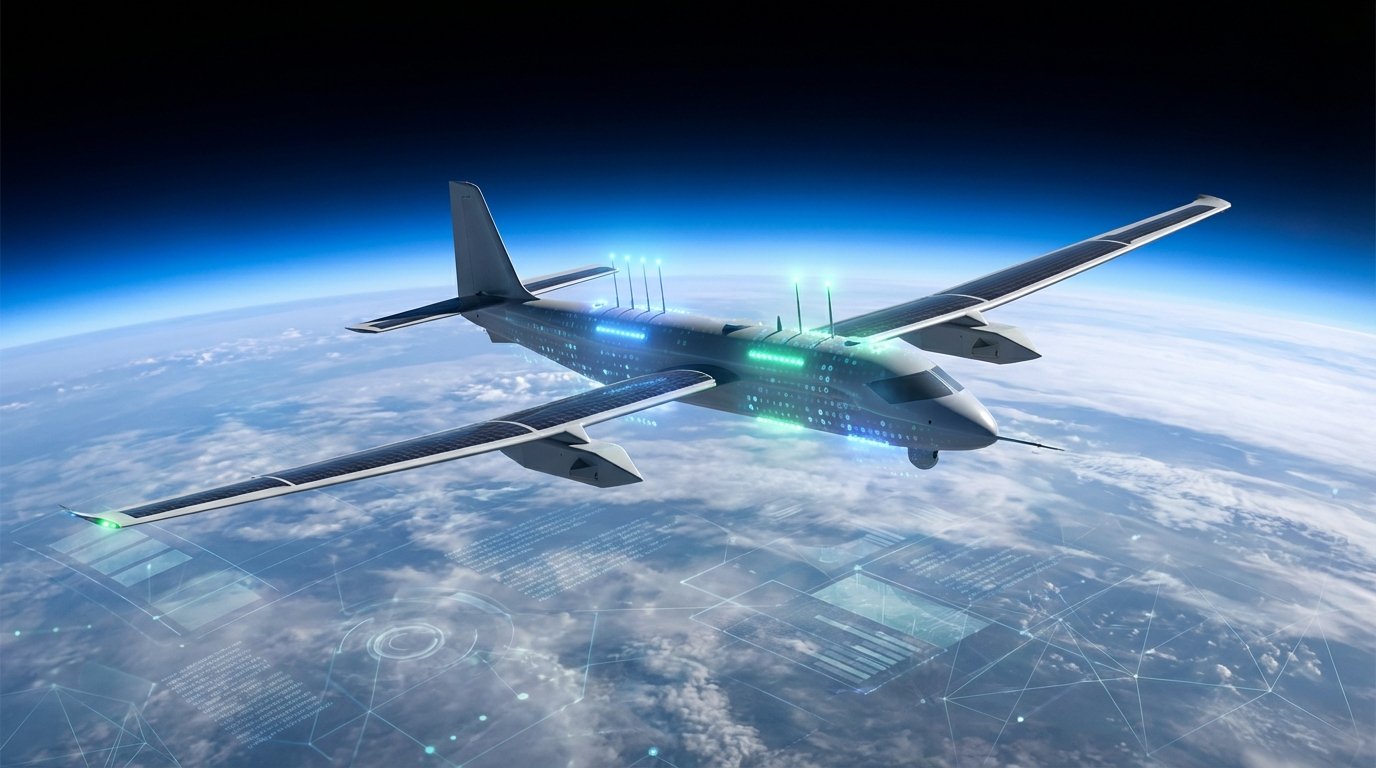
Palantir is revolutionizing high-altitude surveillance with cutting-edge AI, joining forces with key industry players to transform intelligence, surveillance, and reconnaissance (ISR) systems in the stratosphere and beyond.
As the demand for persistent, precise, and real-time intelligence grows, new collaborations are pushing the boundaries of what’s possible in ISR technology. Palantir, renowned for its data analytics prowess, has teamed up with Ondas and World View Enterprises to integrate advanced artificial intelligence into stratospheric and aerial platforms. This partnership aims at developing scalable, software-defined surveillance capabilities that outperform traditional satellites and aircraft, offering unprecedented operational advantages.
How AI is reshaping stratospheric intelligence operations
Artificial intelligence now plays a pivotal role in managing the immense data generated by stratospheric ISR systems. Palantir’s AI Platform (AIP) will enhance everything from production optimization to mission planning, enabling faster, smarter decision-making in real-time. This fusion of AI and stratospheric tech signals a shift from hardware-centric operations to software-defined intelligence, which promises higher efficiency and adaptability in the cloud-adjacent edge computing environments where these systems operate.
Why the stratosphere is the new frontier for surveillance
The stratosphere, located roughly 12 to 50 kilometers above the earth, offers a unique vantage point poising between satellites and low-flying aircraft. Platforms like World View’s Stratollite hover here, providing persistent coverage without the high costs or geopolitical complications associated with satellites or manned flights. With Palantir’s AI capabilities layered on top, these balloons and drones can process intelligence continuously, sharply increasing the responsiveness and depth of ISR missions.
Ondas and World View: Expanding the AI-driven ISR ecosystem
Ondas, a leader in autonomous aerial and ground robotics, and World View, pioneers of stratospheric balloon platforms, are central to this strategic alliance. By integrating Palantir’s AI-powered software, their combined systems benefit from smarter mission planning and on-board intelligence processing without the latency issues plaguing traditional ISR tools. This collaborative framework will usher in a new generation of persistent ISR platforms capable of scaling across stratospheric, aerial, and terrestrial domains.
Key programs fueling the transformation
Three flagship initiatives define this partnership’s technical roadmap:
- Palantir Warp Speed: Enhancing manufacturing and supply chain integration to accelerate deployment.
- AI Flight Director: Automating mission planning and operational decisions using AI to reduce human workload and errors.
- SkyWeaver: Delivering edge computing and advanced intelligence processing directly on stratospheric platforms, turning sensors into real-time decision hubs.
These programs combined are set to drastically improve the agility, scalability, and effectiveness of ISR missions worldwide.
What practical benefits does this AI-powered ISR bring?
Integrating Palantir’s AI with Ondas’ and World View’s technologies delivers operational advantages that were previously out of reach:
- Reduced latency in intelligence processing means faster reactions and real-time battlefield awareness.
- Lower operational costs compared to deploying and maintaining satellites or manned aircraft.
- Enhanced mission scalability through software-defined platforms that can be updated and reconfigured mid-mission.
- Persistent surveillance capabilities provide longer coverage windows and broader area monitoring.
A timeline for integration and deployment
| Phase | Milestone | Expected timeframe (2026) |
|---|---|---|
| Research & Development | Start of integration of AI with stratospheric platforms | Q2 |
| System Testing | Field testing of AI operational capabilities with Ondas drones | Q3 |
| Deployment | Initial operational deployment of AI-enabled ISR platforms | Q4 |
The geopolitical impact of AI-enhanced stratospheric ISR
The entry of AI-powered stratospheric platforms into the ISR landscape is not just a technological milestone; it carries substantial geopolitical weight. These platforms offer nations a cost-effective way to maintain continuous surveillance without depending on satellites that might be vulnerable to anti-satellite weapons or diplomatic restrictions. With this technology, countries can gather actionable intelligence faster and more discreetly, reshaping the balance in global security and defense strategies.
How edge computing revolutionizes ISR in extreme environments
Strong AI integration hinges on the ability to process data locally, near the point of collection—what experts call edge computing. Palantir’s SkyWeaver program equips stratospheric platforms with this capability, enabling AI algorithms to analyze raw sensor data in real-time without constant reliance on ground stations. This drastically improves data freshness and operational autonomy, especially in remote or contested areas where communication links can be unreliable or jammed.
What makes stratospheric platforms better than satellites for ISR?
Stratospheric platforms like World View’s Stratollite operate at lower altitudes than satellites, allowing for persistent, flexible coverage with lower costs and faster deployment cycles. They fill the gap between expensive satellite operations and limited-range aircraft.
How does Palantir’s AI improve ISR missions?
Palantir’s AI enhances ISR missions by automating complex data processing, improving mission planning, and enabling real-time edge intelligence, which speeds up decision-making and reduces operational costs.
When will AI integration across these ISR systems be fully operational?
AI integration is expected to begin in mid-2026, with initial operational deployments scheduled for the fourth quarter of the year.
What challenges do AI-powered stratospheric ISR platforms face?
Challenges include ensuring secure communication channels, managing vast data flows, and maintaining system resilience against cyber threats and extreme environmental conditions.
