The much-hyped F-35 stealth fighter, a cornerstone of US and allied air power, is struggling significantly with its latest software upgrade, leaving the aircraft severely handicapped throughout 2025 and well into 2026.
Despite its reputation as a cutting-edge multirole jet, the F-35 has faced a critical setback due to persistent stability problems with the TR-3 (Technology Refresh 3) software update. This issue has not only halted the delivery of new combat capabilities but also raised questions about the program’s future amidst escalating international tensions and strategic rivalries.
Why the F-35’s latest software difficulties are a game changer in stealth fighter capabilities
Innovative aircraft like the F-35 heavily depend on seamless software upgrades to maintain operational superiority. The latest TR-3 update was projected to revolutionize the jet’s computing power by increasing processing speed and memory by 37 and 20 times, respectively. Yet, it has been deemed “predominantly unusable” because of continuous stability problems and discovered defects during 2025. This has left the aircraft stuck with outdated TR-2 software while flying missions in hotspots like Iran, severely limiting their effectiveness and adaptability in real combat scenarios.
The growing software challenge beneath the sleek design
The F-35 is more than a fighter jet; it’s essentially a flying computer running millions of lines of code. Its combat edge depends on upgrades that enhance weapon handling, targeting precision, communication, and cybersecurity resilience. The failure to roll out a usable TR-3 update means the jet hasn’t received any new combat capabilities for a full year. The Pentagon report underscores this stagnation, highlighting lapses in adhering to set development timelines and the absence of crucial new features.
The impact of reduced cybersecurity testing on the F-35’s operational reliability
Software stability isn’t the only worry. The Pentagon’s testing office suffered a drastic 66% reduction in cybersecurity testing personnel following Defense Secretary Pete Hegseth’s staff cuts, sparking bipartisan concern over national security. Only three out of nine cybersecurity tests were completed in 2025, delaying crucial hardening defenses against cyberattacks. This personnel shrinkage has magnified the risks posed by the software’s defects, potentially leaving the jets vulnerable during sensitive missions over volatile regions.
The strategic consequences of flying on obsolete software during Operation Epic Fury
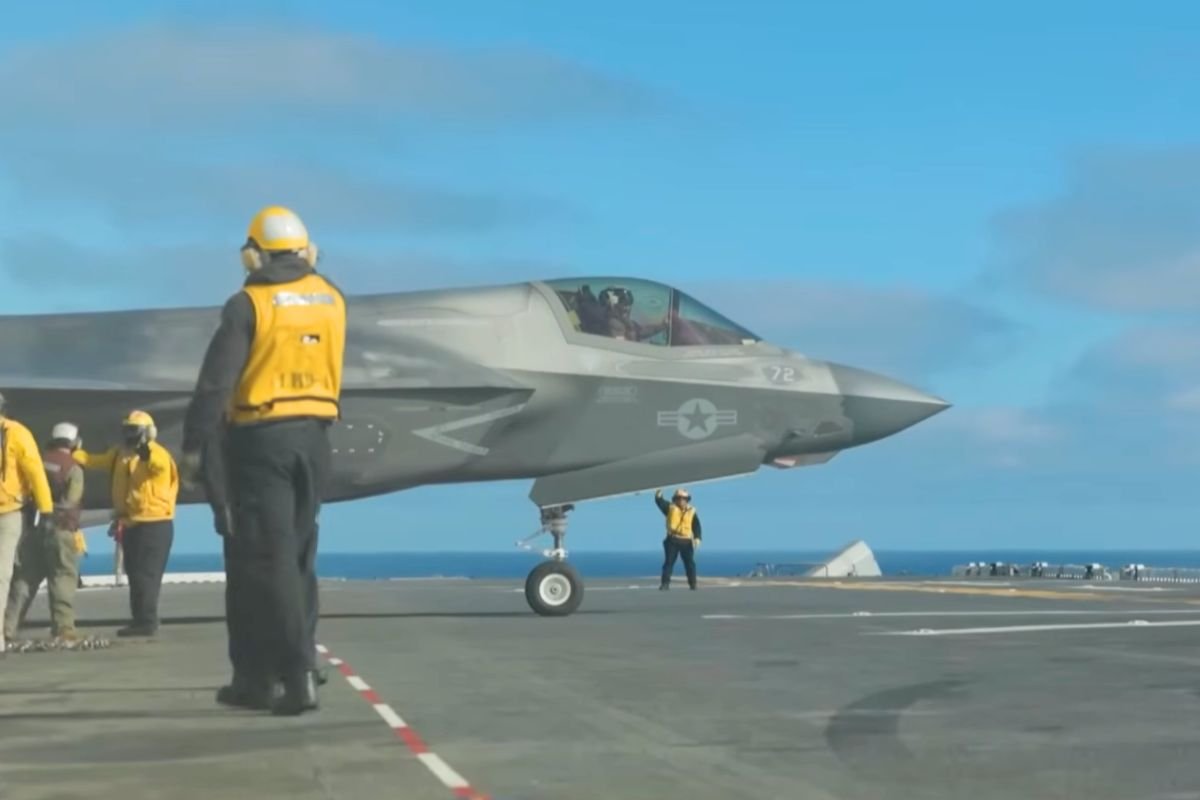
F-35s deployed from the USS Abraham Lincoln during the Operation Epic Fury in Iran had to rely on the older TR-2 software, missing out on enhancements promised by TR-3. This limited their capability to execute complex operations requiring advanced navigation, communication, or weapon systems integration. With little room for error in high-stakes missions, this software bottleneck raised serious questions about mission success probabilities and pilot safety.
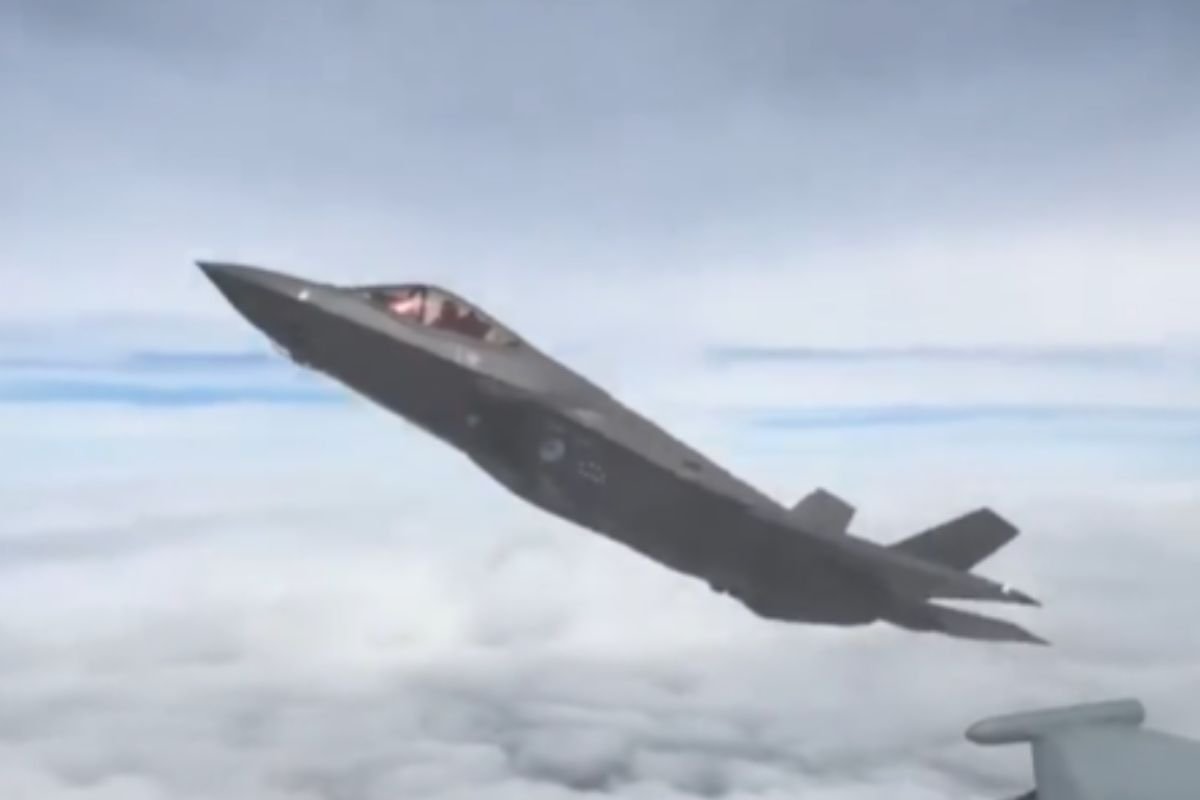
This update, meant to boost computing power and unlock new combat capabilities, has proven unstable and largely unusable, forcing jets to operate with outdated software. As a result, key features like advanced targeting, weapons integration, and cybersecurity improvements are delayed.
These issues are slowing deliveries, reducing operational effectiveness, and raising concerns about the F-35’s readiness—especially as rivals like China rapidly expand their air power.
Why the production pace of F-35 jets needs urgent acceleration to counter China’s fleet growth
Despite these setbacks, military experts stress the urgency to ramp up procurement of F-35s. Lt. Gen. David A. Deptula argues that to meet the challenge from China’s rapid fighter production, the US must increase its annual F-35 purchases to 72 jets—more than double the current rate. With a fighter inventory already reduced by over 60% since the Cold War and worn out by continuous deployments, the F-35 remains a linchpin in maintaining air superiority worldwide.
Expansion of F-35 production as a strategic necessity
Faster procurement doesn’t just mean acquiring more jets; it involves ramping up manufacturing, modernizing software, and stabilizing procurement schedules to avoid backlog issues. The Government Accountability Office reported that all 110 jets delivered in 2024 were delayed by an average of 238 days, mostly due to difficulties linked with the TR-3 software rollout. Addressing these hurdles could help streamline production and ensure the jets are fully mission-ready upon delivery.
| Key milestone | Date | Details |
|---|---|---|
| Start of TR-3 software testing | Early 2024 | Encountered persistent stability issues |
| TR-3 declared predominantly unusable | Throughout 2025 | No new combat capabilities delivered |
| Pentagon staff cuts at testing office | 2025 | 66% reduction in cybersecurity testing personnel |
| Delayed F-35 deliveries related to TR-3 | 2024-2025 | Average delay of 238 days for 110 jets |
| Projected acceleration of F-35 procurement | 2026 onwards | Target of 72 jets per year to counter China |
Inventory delays and incentive fees: How contracts are influencing F-35 deliveries
The Pentagon’s routine delay in F-35 deliveries also ties back to contract structures with Lockheed Martin. While contractors received hundreds of millions in incentive fees to encourage on-time deliveries, current contracts allow up to 60 days of delay without penalty. This loophole diminishes urgency and harms the reliability of the delivery timeline. Experts recommend reassessing these fees to better align them with prompt production and delivery goals.
Improving contract frameworks to boost accountability
Restructuring incentives could push manufacturers to prioritize timely software stability fixes and manufacturing logistics. This shift would tighten the link between financial rewards and actual performance, ensuring that fighter jets arrive fully operational and on schedule—both vital in an era where air superiority hinges on cutting-edge technology that cannot lag behind global competitors.
Will the software crisis halt the F-35’s reign as the most advanced stealth fighter?
The F-35 program’s struggles with TR-3 reveal the immense challenges in maintaining a fleet that is as much an advanced computer system as an aircraft. Without rapid resolution of software stability and cybersecurity shortfalls, the jets risk falling behind in combat readiness despite their state-of-the-art hardware. Meanwhile, allies relying on these fighters face operational risks, while geopolitical rivals expand their fleets unabated.
Future-proofing the F-35 through agile software development
Efforts are underway to refine the F-35’s agile software development approach, aiming for faster bug fixes and the reliable addition of new capabilities. Success will require coordinated efforts between the Pentagon, Lockheed Martin, and cybersecurity teams, emphasizing a culture of continuous improvement and rigorous field testing. This is essential to sustain the fighter’s dominance against increasingly sophisticated threats worldwide.
Critical features of the F-35 TR-3 update and why it matters for global air forces
- 37-fold increase in processing power for faster handling of complex battle data
- 20-fold increase in memory capacity, allowing advanced sensor fusion and data sharing
- Improved weapons delivery systems enabling deployment of next-generation armaments
- Enhanced communication links for secure data exchange across multiple platforms
- Strengthened cybersecurity protections vital to defend against hacking attempts during operations
Why has the F-35’s TR-3 software update been so problematic?
The TR-3 update has faced persistent stability issues, missing features, and newly discovered defects during testing, rendering it mostly unusable throughout 2025.
What risks does operating the F-35 with older software pose?
Flying on outdated software limits combat capabilities, jeopardizes mission success, and increases vulnerability to cyber threats.
How has staff reduction impacted F-35 cybersecurity testing?
A 66% reduction in cybersecurity personnel led to only three of nine planned tests being completed in 2025, delaying crucial security improvements.
What measures could improve F-35 software delivery and production?
Revising contractor incentives, increasing testing staff, accelerating procurement rates, and employing agile software development practices are key to resolving delays.
Is there a plan to counter China’s rising fighter production with the F-35?
Military experts advocate increasing F-35 production to 72 jets annually to maintain air superiority over China’s rapidly expanding fleet.
Source: https://nationalinterest.org/blog/buzz/f-35-software-upgrades-stagnated-warns-new-report-ps-031726
