The U.S. Navy just secured a groundbreaking €14 billion deal to build the future of underwater warfare with its Columbia-class submarines, promising unmatched stealth and strategic power for decades to come.
In an ambitious move to modernize its submarine fleet, the U.S. Navy has finalized a monumental €14 billion contract to construct the Columbia-class ballistic missile submarines. These next-generation vessels are poised to redefine naval deterrence with advanced stealth capabilities and cutting-edge technology designed to operate silently and undetected beneath the ocean’s surface.
Why the Columbia-class marks a new era in submarine technology
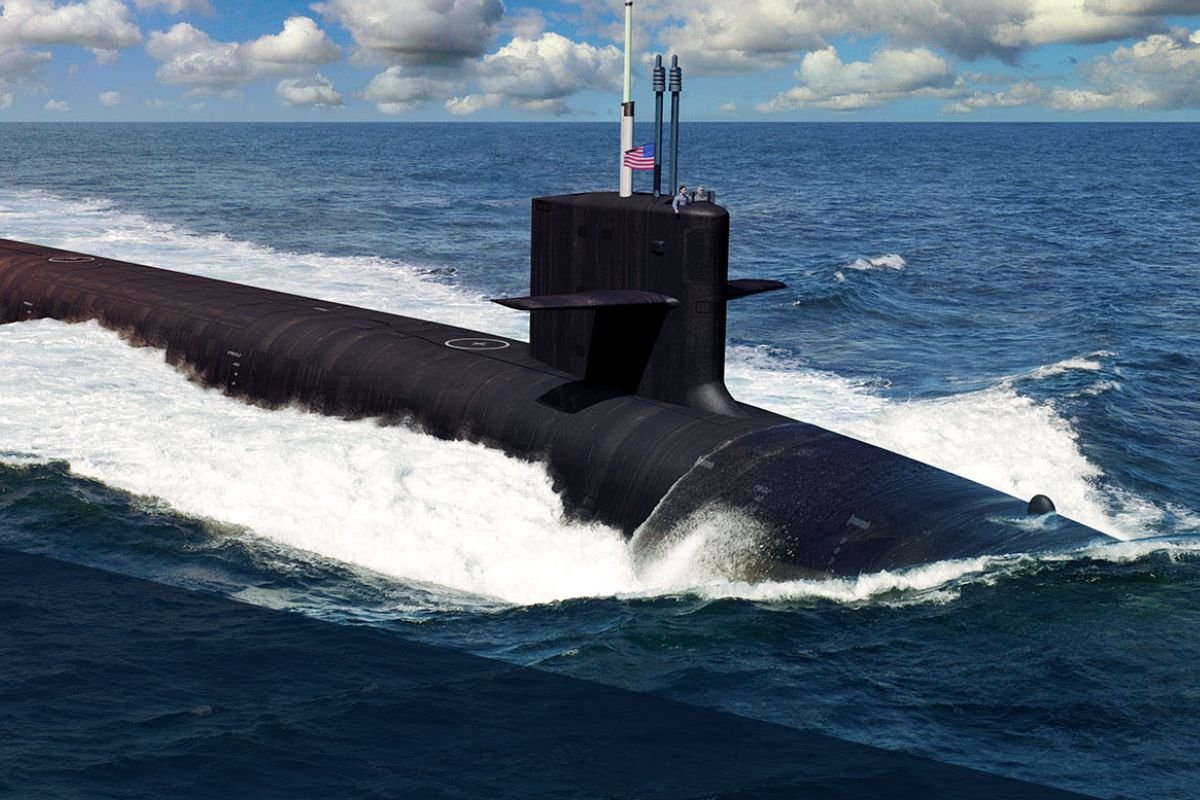
The Columbia-class submarines incorporate state-of-the-art innovations that vastly improve upon their Ohio-class predecessors. Equipped with enhanced stealth features and an upgraded nuclear propulsion system, these submersibles are engineered to remain submerged longer and evade even the most sophisticated detection methods. This leap in technology ensures that the U.S. Navy maintains a strategic advantage in the increasingly contested underwater domain.
Next-level stealth and endurance
Developed with acoustic quieting measures and an advanced propulsion system, these submarines dramatically reduce noise signatures, making detection by enemy sonar nearly impossible. The improved nuclear reactors grant the Columbia-class an endurance exceeding 30 years without refueling, allowing for extended deterrent patrols that bolster national security.
The colossal scope and timeline of the Columbia-class program
This colossal €14 billion agreement sets into motion the construction of 12 Columbia-class subs, scheduled for deployment starting in the early 2030s. The program spans nearly two decades in development and production, aiming to replace the aging Ohio-class fleet one vessel at a time while maintaining continuous at-sea deterrence.
Project milestones and delivery schedule
| Key Milestone | Expected Date |
|---|---|
| Contract award | 2026 |
| Start of construction | 2028 |
| Launch of first submarine | 2031 |
| Initial operational capability | 2033 |
| Full fleet deployment | 2045 |
Strategic impact on global naval power dynamics
With the Columbia-class fleet, the U.S. Navy is set to retain a decisive edge in maritime nuclear deterrence. These submarines will operate stealthily anywhere in the world’s oceans, underpinning the United States’ second-strike capability and fortifying NATO’s deterrent posture amid rising geopolitical tensions.
Implications for rival powers
China and Russia are already accelerating their own underwater capabilities, raising the stakes in underwater warfare. The Columbia-class submarines represent a significant leap forward, complicating adversaries’ strategies by ensuring the U.S. can strike undisrupted, thus maintaining strategic stability despite emerging threats.
Technological innovations driving Columbia-class superiority
Behind the impressive capabilities of the Columbia-class lies a suite of breakthrough technologies. From silent pump-jet propulsors to advanced sonar systems, these subs are designed to dominate the underwater environment. Their missile launch tubes have been reimagined for enhanced reliability and faster deployment of the Trident II D5 missiles.
Revolutionizing armament and defense
The Columbia-class boasts 16 missile tubes, providing a powerful strategic strike platform. Alongside traditional armament, next-generation electronic warfare systems and countermeasures are integrated to outmaneuver detection and tracking attempts, ensuring maximum survivability in hostile waters.
The industrial powerhouse behind the Columbia-class project
The contract mobilizes a vast network of U.S. shipyards, suppliers, and defense contractors. Leading the build, Huntington Ingalls Industries and General Dynamics Electric Boat leverage decades of submarine construction expertise together with cutting-edge manufacturing techniques to ensure high precision and quality.
Economic ripple effects and workforce development
This extensive program is expected to generate tens of thousands of jobs across multiple states, stimulating local economies and advancing skills in naval engineering and high-tech manufacturing. Investments in workforce training programs accompany the build to prepare the next generation of submarine experts.
Challenges and risks in delivering the Navy’s future submarines
Undertaking a program of this scale inevitably presents risks including technical delays, budget overruns, and the complexities of integrating cutting-edge systems. However, the Navy and contractors have instituted rigorous project management frameworks designed to track progress and address issues swiftly.
Mitigating complexity with innovation and oversight
Leveraging digital twin simulations and modular construction approaches helps reduce risks and improve efficiency. Continuous oversight ensures the program stays aligned with strategic timelines and operational goals, critical for delivering a capable and reliable fleet.
The unofficial list of Columbia-class capabilities setting new naval standards
- Stealth operation: Extreme noise reduction techniques for undetectable underwater patrols
- Longevity: Nuclear propulsion allowing over 30 years of continuous operation without refueling
- Payload: 16 missile tubes capable of deploying Trident II D5 nuclear missiles
- Advanced sonar: Highly sensitive arrays for superior detection and navigation
- Survivability: Integrated electronic warfare and countermeasure systems
- Modular design: Streamlined assembly and upgrade capabilities
- Economic impact: Job creation and industrial innovation across the U.S.
The video elucidates the intricate shipbuilding process highlighting advanced technologies and scale involved in Columbia-class submarine production, giving viewers an inside look at how these maritime behemoths come to life.
This documentary-style footage details the stealth techniques and acoustic innovations that define the Columbia-class submarines, shedding light on how these vessels achieve undetected movement in adversarial seas.
What makes the Columbia-class submarine different from earlier models?
The Columbia-class offers extreme stealth, longer endurance without refueling, and advanced missile systems that surpass previous Ohio-class submarines in strategic deterrence capabilities.
When will the first Columbia-class submarine be operational?
The first vessel is expected to be launched in 2031 and operational by 2033, marking a new generation of underwater strategic defense.
How does the Columbia-class affect global naval power?
By ensuring the U.S. can maintain a stealthy and reliable nuclear deterrent, the Columbia-class complicates rival strategies and strengthens international security alliances.
What are the main economic impacts of the Columbia-class program?
The construction program generates thousands of jobs, boosts technological innovation, and supports a wide network of suppliers and contractors across the U.S.
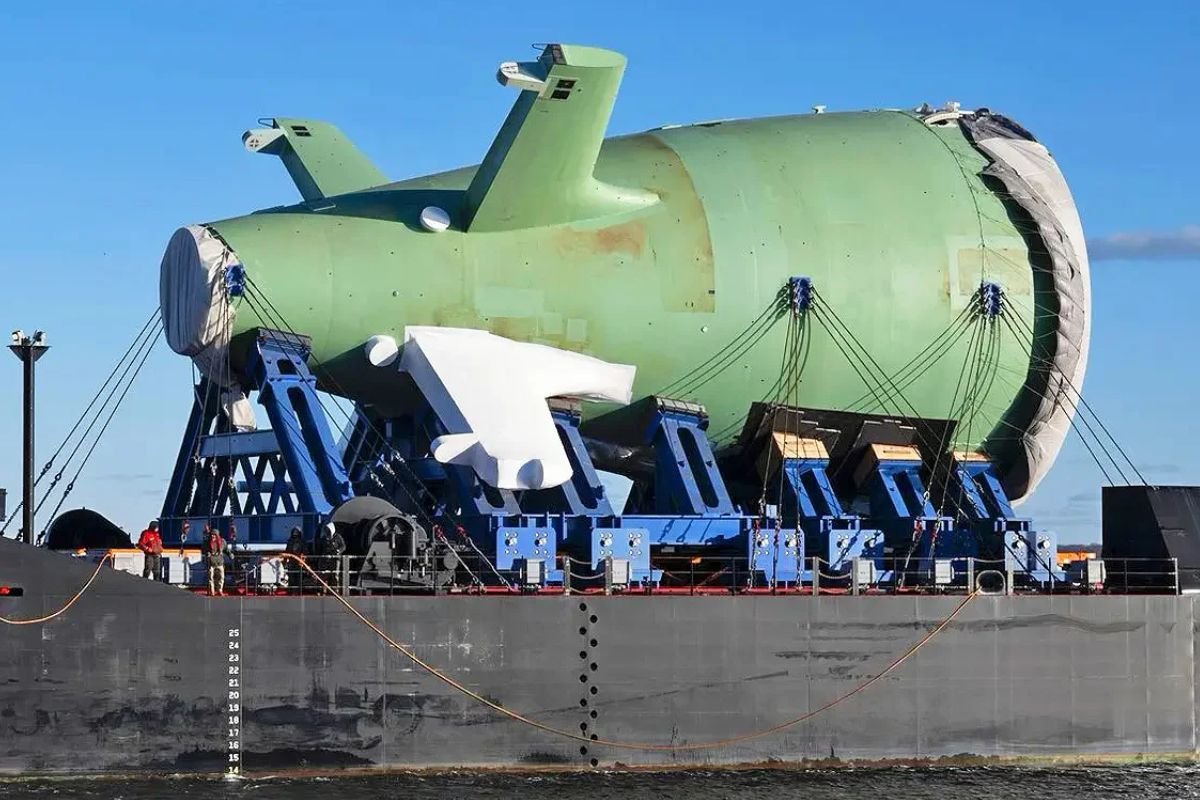
Image: Stern section of the future District of Columbia headed to General Dynamic – credit: GD
