
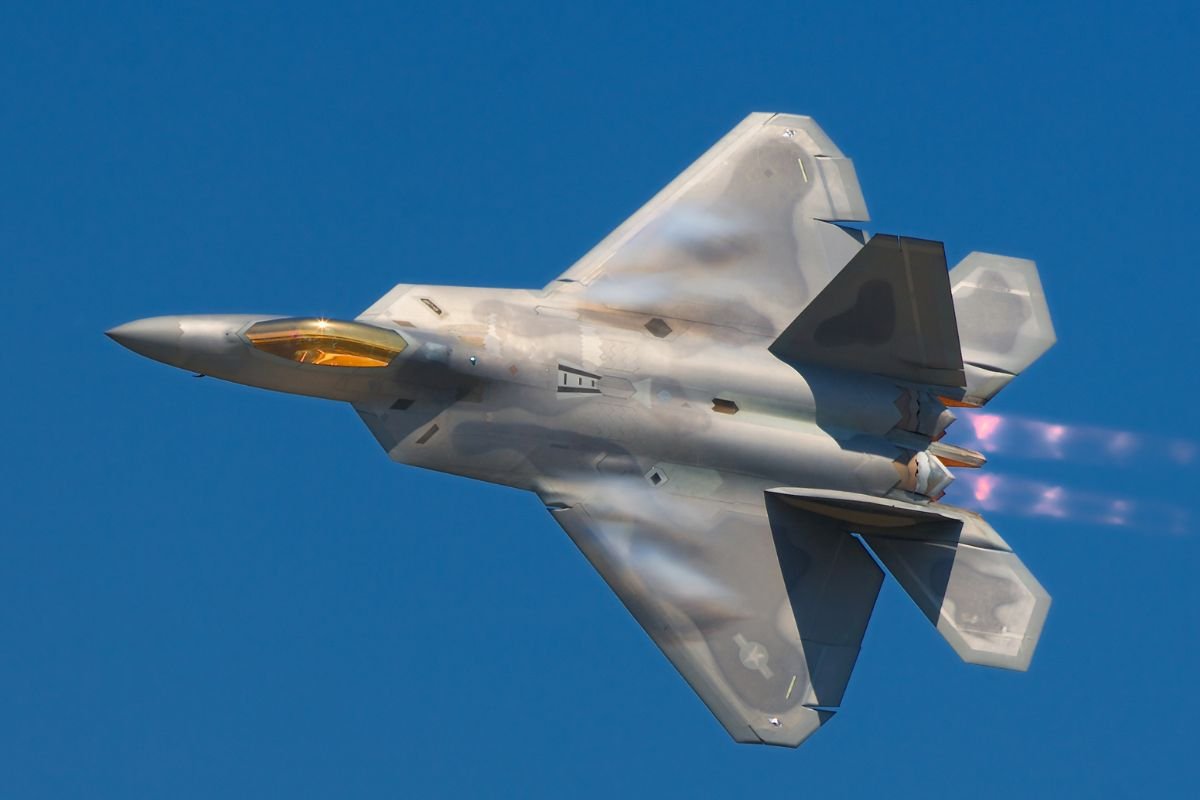
The fierce showdown between the YF-23 Black Widow II and the F-22 Raptor shaped the future of U.S. air superiority, but few realize the stealthier, faster contender never took flight as the ultimate champion.
Back in the late 1980s, the U.S. Air Force embarked on a critical mission: to find a stealth fighter that could dominate the skies against advanced Soviet threats. Two groundbreaking prototypes flew head-to-head — the agile Lockheed YF-22 and the enigmatic Northrop YF-23, nicknamed Black Widow II and Grey Ghost. Although the YF-23 boasted superior stealth and higher supercruise speeds, it was the more maneuverable YF-22 that ultimately clinched the prize. Nearly four decades later, the legacy of this dramatic competition continues to spark debate among defense experts and aviation enthusiasts alike.
Stealth and supercruise: dissecting the YF-23’s technical edge over the competition
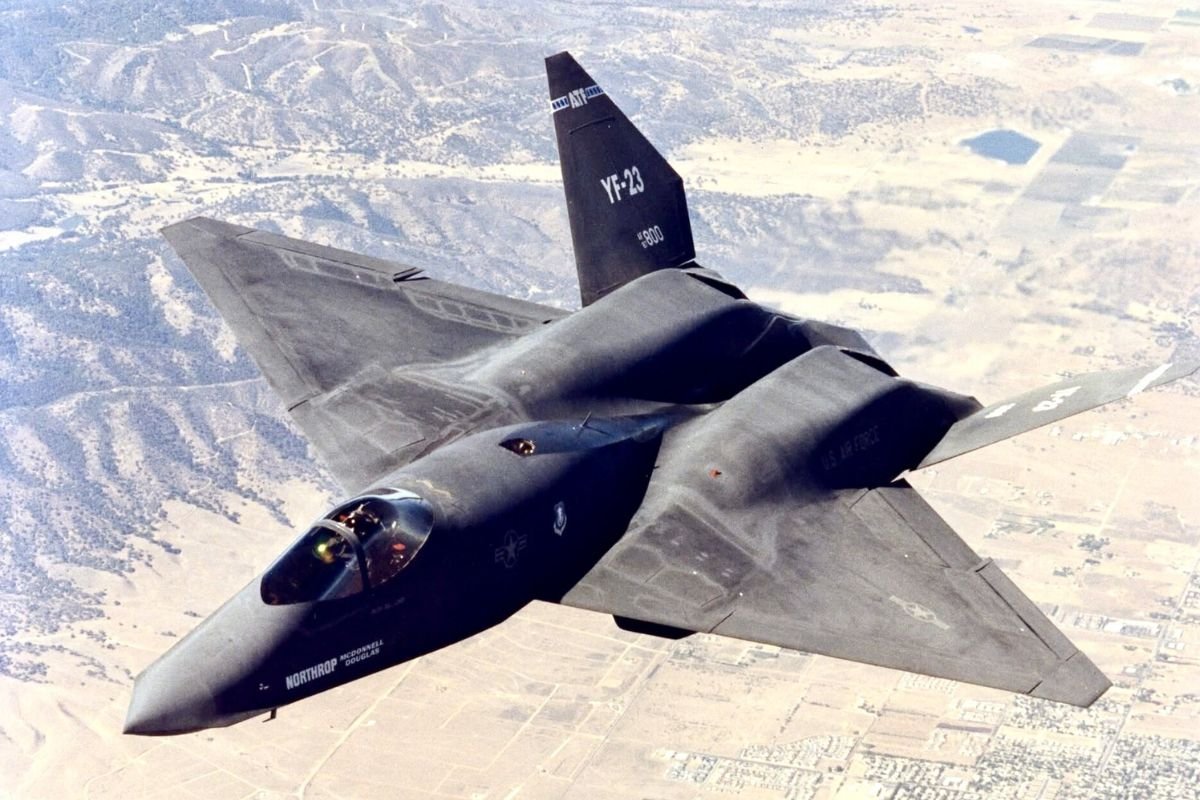
The YF-23 distinguished itself with an impressive Mach 1.6 supercruise capability, which allowed it to sustain supersonic speeds without afterburners — a crucial advantage for fuel efficiency and mission endurance. Its two versions, the Black Widow II and the Grey Ghost, were powered by Pratt & Whitney and General Electric engines respectively, with the latter pushing the jet to even greater speed heights. Beyond speed, the aircraft’s stealth design featured an alien-like drooping nose and a sleek V-tail, crafted to minimize radar detection and maximize agility. In comparison, the F-22 supercruise capped at Mach 1.58 and relied more heavily on innovative thrust vectoring to gain maneuverability.
Why supercruise matters in modern aerial combat
Supercruise enables jets to travel faster for longer periods without the excessive fuel consumption linked to afterburners. For the YF-23, this translated to greater operational range and more in-depth penetration into hostile airspace. This advantage would have allowed pilots to launch strikes further from refueling points and maintain stealth throughout missions, an edge that could redefine engagement strategies. The combination of speed and stealth put the YF-23 a step ahead technologically, at least on paper.
Rewriting air dominance: the practical limits of maneuverability
Despite its clear technological prowess, the YF-23’s impressive attributes were countered by its comparative lack of maneuverability versus the YF-22. The F-22’s thrust vectoring nozzles granted it exceptional agility in dogfights, enabling pilots to pull off extreme turns and rapid changes of direction—key in close-range combat scenarios. While the YF-23’s V-tail design provided a form of nimbleness and the ability to “turn on a dime,” it did not fully match the dynamic handling of the Raptor during combat-intensive flight simulations.
The impact of flight testing approaches on the final decision
High-intensity flight testing tipped the scales in favor of the F-22 team. Lockheed’s pilots pushed their aircraft beyond 9Gs and fired test missiles during evaluations, creating a perception of unmatched combat readiness and reliability. Conversely, Northrop’s more cautious test flights led to fewer dramatic demonstrations. This difference in test strategy influenced the Air Force’s confidence, positioning the YF-22 as the bolder contender ready to face emerging international threats.
The role of industrial trust and program management in shaping air force procurement
Another key factor that complicated the YF-23’s bid was uncertainty surrounding Northrop’s ability to deliver on schedule and within budget. Previous delays and overruns on other programs had cast a shadow over the firm’s reliability in Washington. In contrast, Lockheed and its partners enjoyed a solid reputation for meeting ambitious deadlines without major hiccups. Confidence in a contractor’s organizational strength and program management proved to be as decisive as the aircraft’s technical specifications.
The continuing fascination with the YF-23’s enigmatic legacy
Well into 2026, aviation enthusiasts and defense strategists continue to ponder the “what if” of the YF-23. While the F-22 Raptor has aged as a symbol of unmatched U.S. air superiority, new fifth-generation competitors like China’s J-20 and Russia’s Su-57 press the U.S. to innovate further. The YF-23’s stealth and range capabilities remain subjects of admiration, often seen as a lost opportunity to push American fighter design into even more advanced territory.
Lasting lessons and modern parallels in stealth fighter development
The competition underscores how technological brilliance alone doesn’t guarantee procurement success. Operational versatility, aggressive validation flights, and industrial stability also shape outcomes. The Air Force’s decision-making process balanced these elements, favoring a fighter that could deliver combat effectiveness in real-world scenarios over raw technical superiority.
Summary of YF-23 and F-22 key performance and program characteristics
| Feature | YF-23 Black Widow II / Grey Ghost | F-22 Raptor |
|---|---|---|
| Supercruise speed | Mach 1.43 – Mach 1.6 | Mach 1.58 |
| Stealth capability | Superior due to advanced design and radar absorption | Highly stealthy but slightly less than YF-23 |
| Maneuverability | Good with V-tail control but no thrust vectoring | Excellent with thrust vectoring |
| Range | Longer operational range | Shorter range than YF-23 |
| Flight testing approach | Conservative, fewer extreme maneuvers | Aggressive, over 9Gs and test missile firing |
| Industrial reliability | Skepticism due to past issues | High confidence from Air Force |
A glimpse inside the preserved YF-23 stealth fighters in museums today
Both the Black Widow II and Grey Ghost prototypes have been retired but remain on public display, offering a tangible reminder of this historic rivalry. Museums provide a close-up view of the aircraft’s innovative design elements like the uniquely shaped nose and iconic V-tail. These preserved jets tell a story of ambition and the razor-thin margins that decide the fate of major military investments.
Exploring the impact of the fly-off competition on today’s 5th-generation fighters
The lessons learned from the YF-22/YF-23 competition continue to influence development of modern stealth technologies. The delicate balance between stealth, speed, maneuverability, and industrial practicality experienced decades ago informs how fighter jets are conceived today. As international rivals ramp up fifth-generation fighter production, these early decisions still echo in global air combat strategies.
- Stealth design breakthroughs in the YF-23 could inspire future fighter evolutions.
- Test pilot strategies can heavily influence military procurement choices.
- Agile maneuvering remains critical despite supercruise advantages.
- Industrial confidence continues to be pivotal in defense contracts.
- The YF-23 provides a benchmark in stealth and range for new fighters.
What made the YF-23 faster than the F-22?
The YF-23 gained its speed advantage thanks to its efficient aerodynamic design and powerful General Electric YF120 engines that enabled sustained Mach 1.6 supercruise speeds without afterburners.
Why did the Air Force choose the F-22 over the YF-23?
The Air Force valued the F-22’s superior maneuverability, aggressive flight test demonstrations, and the contractor’s proven reliability, tipping the final decision despite the YF-23’s stealth and range advantages.
Are any YF-23 aircraft still around?
Yes, both the Black Widow II and Grey Ghost prototypes are preserved in museums and serve as historical artifacts showcasing advanced stealth fighter design.
How has the YF-23 influenced modern fighter development?
The YF-23’s focus on stealth, speed, and range has provided valuable insights for contemporary fifth-generation fighters, influencing design priorities to balance these factors effectively.
Source: https://nationalsecurityjournal.org/the-stealth-fighter-that-got-away-why-the-yf-23-black-widow-ii-lost-to-the-f-22-raptor
