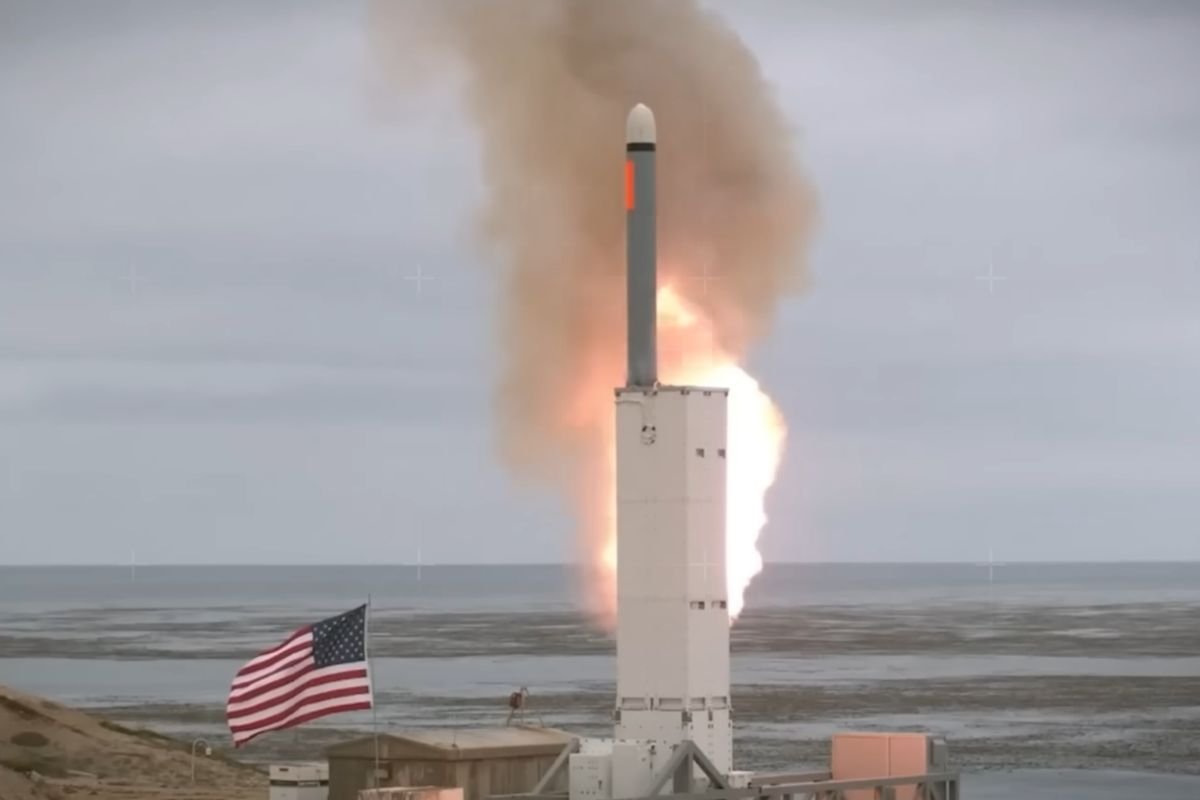
The U.S. Army’s Typhon Mid-Range Capability system is redefining power projection in the Indo-Pacific, enabling precision strikes against China’s critical targets and supercarriers from distances exceeding 1,600 kilometers.
Emerging as a game-changer in military strategy, the Typhon missile system marks a bold evolution in U.S. deterrence capabilities. Once relying heavily on naval and air assets to project force, the American military is now deploying land-based missiles that can reach deep into China’s maritime strongholds and mainland targets while maintaining mobility and survivability. This shift responds to the growing challenge posed by China’s expanding maritime influence and sophisticated defenses, forcing strategic planners to rethink how power is balanced in the Pacific theater.
Capabilities reshaping Indo-Pacific deterrence with the Typhon missile system
The newly operational Typhon Mid-Range Capability (MRC) integrates multiple missile types on a mobile launcher platform, delivering unparalleled precision and range. Deployed on key sites like Luzon in the Philippines and Iwakuni in Japan, Typhon’s arsenal includes the Lockheed Martin Block IV Tomahawk cruise missiles, SM-6 interceptors, and the innovative Precision Strike Missile (PrSM).
Typhon’s extensive operational range of approximately 1,200 miles (1,930 km) enables the U.S. Army to put a serious threat on Chinese naval surface vessels and coastal infrastructure, effectively sharing long-range strike responsibilities that historically fell solely to the Navy. With the ability to strike across the entire South China Sea and parts of the East China Sea from its forward bases, Typhon significantly complicates any adversary’s strategic calculus.
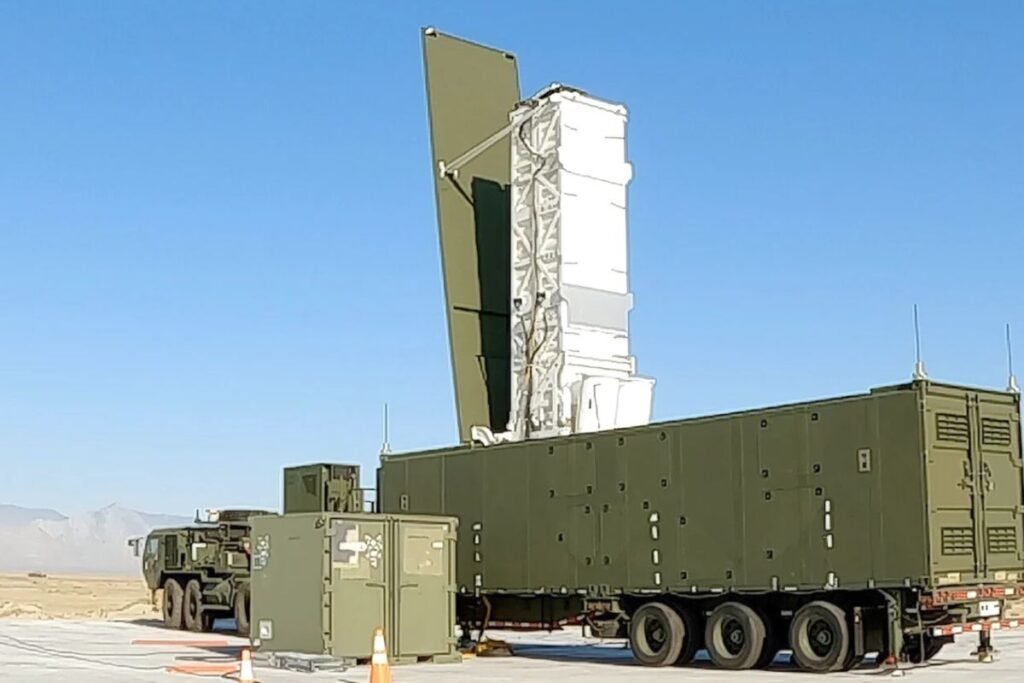
Introduced in 2023, it forms part of the Army’s Long Range Precision Fires program, providing the ability to strike targets hundreds to over a thousand kilometers away from land-based platforms.
Multi-mission versatility: striking ships, air defenses, and infrastructure
The strength of Typhon lies not just in its range but also in its diverse missile payload. The Block IV Tactical Tomahawk can cover nearly 1,450 km with subsonic speed, equipped with mid-course retargeting and loitering capabilities to assess and adapt to battlefield conditions. Newer variants can even engage moving naval targets, crucial for countering China’s expanding carrier strike groups.
Additionally, the SM-6 missiles defend against aerial threats and act in an anti-ship role, while the PrSM brings cutting-edge precision against land targets further expanding Typhon’s strike shield over vast distances. This multi-capacity weapon system thus offers a flexible, layered approach to regional defense.
Strategic mobility: why Typhon launchers are hard to detect and target
Unlike static missile bases with predictable locations, Typhon is a mobile and relocatable system, enhancing its survivability in a high-intensity conflict environment. This mobility enables units to rapidly shift between launch points, making it difficult for adversaries to preemptively neutralize missile launchers through strikes.
The importance of this mobility becomes clear against China’s sophisticated reconnaissance and missile-strike capabilities, which heavily target fixed assets. By operating from dispersed, potentially hidden launch sites, Typhon ensures a persistent and unpredictable strike threat that disrupts enemy planning and readiness.
Creating a missile arc along the first island chain
The strategic deployment of Typhon along the First Island Chain—including key territories in the Philippines and Japan—builds a formidable “missile arc” that dominates critical chokepoints such as the South China Sea. This deployment restricts China’s freedom of navigation and adds layers of complexity to Beijing’s anti-access/area-denial (A2/AD) strategies.
The missile arc is more than positional advantage; it fundamentally contests China’s maritime expansion and safeguards vital sea lanes crucial for global trade and U.S. regional allies’ security.
Joint force advantage: how Typhon rebalances Army-Navy strike responsibilities
Previously, long-range strike missions in the Pacific heavily relied on the Navy’s surface ships and submarines armed with Tomahawks and interceptors. Typhon’s land-based missile batteries now share this responsibility, freeing Navy vessels to prioritize sea control, escort, and fleet defense missions.
This enhanced operational synergy between the Army’s missile units and the Navy ensures that strike power is dispersed and sustained, making U.S. military forces much harder to neutralize and boosting overall deterrence posture in the Indo-Pacific.
List of Typhon missile capabilities enhancing Indo-Pacific defense
- Long-range strike from mobile, land-based launchers capable of operating across 1,200 miles (1,930 km).
- Versatile missile payloads including Block IV Tomahawks (anti-ship and land targets), SM-6 interceptors (anti-air and anti-ship), and Precision Strike Missiles.
- Mobility and survivability through frequent relocation and operational flexibility.
- Ability to loiter and retarget mid-flight, enhancing precision and battlefield adaptability.
- Deployment along strategic island chains creating persistent missile arcs that contest regional sea lanes and chokepoints.
- Joint Army-Navy operational integration that optimizes strike distribution and force layering in contested regions.
Technical snapshot: key features and deployment sites of Typhon missile systems
| Aspect | Description |
|---|---|
| Range | Approximately 1,200 miles (1,930 kilometers) |
| Missiles carried | Block IV Tactical Tomahawk, SM-6, Precision Strike Missile (PrSM) |
| Mobility | Mobile land-based launchers capable of frequent relocation |
| Operational zones | Luzon (Philippines), Iwakuni (Japan), forward-deployed island bases |
| Primary mission | Deterrence and precision targeting of naval vessels, coastal infrastructure, and strategic command centers |
Anticipating regional impact and China’s response to the Typhon deployment
China’s rapid military modernization, including expanded marine forces and advanced missile defenses, aims to assert dominance in contested maritime zones. Yet, the introduction of Typhon’s land-based strike capability presents a significant challenge. It complicates Chinese A2/AD networks by introducing unpredictable, mobile threats that erode confidence in defensive perimeters.
The U.S. Typhon system effectively lowers China’s operational threshold, forcing it to consider redoubled investments in countermeasures and potentially recalibrating its strategies across the Indo-Pacific, shifting the long-term balance of deterrence in favor of the U.S. and its allies.
What is the range of the Typhon missile system?
The Typhon system can strike targets up to approximately 1,200 miles (1,930 kilometers) away, covering a significant portion of the Indo-Pacific region.
Which missiles are launched from Typhon platforms?
Typhon launchers can fire the Block IV Tactical Tomahawk cruise missile, SM-6 interceptors, and the Precision Strike Missile (PrSM), each serving diverse strike roles against ships, air threats, and land targets.
Why is Typhon’s mobility important?
Typhon’s mobile launchers can relocate frequently, making them difficult to detect and target, enhancing survivability against preemptive strikes in conflict zones.
Where are Typhon missile systems currently deployed?
As of 2026, Typhon units are deployed in Luzon, Philippines, and Iwakuni, Japan, allowing extensive coverage of key maritime regions.
How does Typhon improve U.S. military strategy in the Indo-Pacific?
By reintroducing land-based mid-range strike capability, Typhon shares the long-range strike role with Navy units, complicates Chinese defense planning, and ensures sustained deterrence across critical sea lanes.
