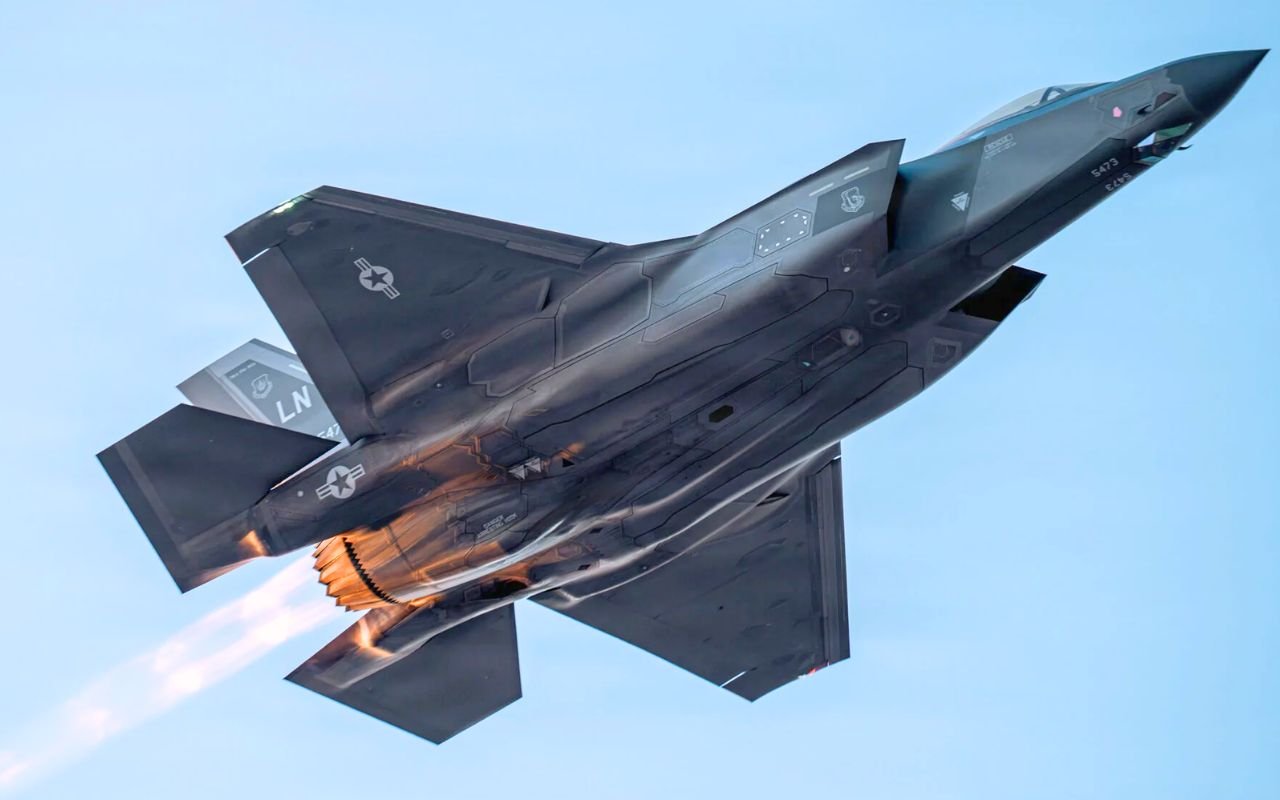
A high-stakes U.S. F-35 stealth fighter sustained damage during a daring combat operation over Iranian airspace, forcing an emergency landing at a Middle East base.
This unprecedented event highlights escalating tensions and raises questions about the vulnerabilities of America’s most advanced fighter jets in hostile territories. The U.S. F-35, heralded as the pinnacle of fifth-generation stealth technology, encountered hostile fire while on a classified mission deep over Iran. Despite sustaining damage, the fighter jet managed to safely land back at a U.S. base in the Middle East. The pilot’s condition remains stable, but the incident marks a significant moment in aerial combat history as the first known strike against this aircraft type in Iranian airspace. Analysts are now scrutinizing the implications for stealth operations and regional military dynamics.
Details of the combat mission and F-35’s strategic role
The F-35 was conducting a highly sensitive combat operation aimed at disrupting Iranian military installations. Operating hundreds of kilometers inside hostile territory, the jet was part of an advanced strike force designed to evade detection by sophisticated surface-to-air missile (SAM) systems. Its mission combined stealth with precision strike capabilities, underlying the U.S. military’s emphasis on maintaining technological superiority in contested regions.
Sources reveal the F-35’s role extended beyond pure attack; it escorted B-2 stealth bombers and provided invaluable real-time reconnaissance. The damage sustained—believed to have come from Iranian fire—put the craft’s renowned stealth features to a severe test.
Significance of the emergency landing at a U.S. air base
The F-35’s ability to complete an emergency landing despite damage highlights the resilience engineered into this aircraft. According to U.S. Central Command spokesperson Capt. Tim Hawkins, the aircraft returned safely, and the pilot’s health was not compromised. This incident underscores the combined importance of pilot training, aircraft durability, and rapid response protocols during high-risk missions.
The stealth technology challenge faced over Iran
The suspected Iranian strike against a stealth aircraft signals a critical shift in air defense capabilities. Iran has increasingly invested in advanced radar and missile systems capable of detecting low-observable aircraft. This challenges the previously uncontested notion of invulnerability associated with fifth-generation fighters like the F-35. Military strategists now face urgent questions about future stealth design and electronic warfare countermeasures.
How Iran’s air defense advancements complicate U.S. missions
Iranian missile systems such as the Bavar-373 and other long-range SAMs have reportedly been upgraded with enhanced radar capable of detecting stealth aircraft. This resurgence in air defense capability forces U.S. operations to continuously adapt tactics and technology. The recent incident is a stark reminder that staying ahead in aerial combat demands constant innovation.
Implications for U.S.-Iran military dynamics and future operations
This event marks one of the first times Iranian forces have successfully engaged a U.S. fifth-generation fighter jet. Its fallout could reverberate through future military posturing and diplomatic relations between Washington and Tehran. The U.S. may accelerate efforts to harden stealth designs, enhance electronic warfare capabilities, and refine combat tactics to mitigate newfound risks.
The balance between risk and mission objectives in contested airspace
Engaging in high-risk missions over hostile territory inevitably means balancing operational gains with potential costs. While deep strikes disrupt key enemy infrastructure, the threat of aircraft loss poses difficult questions. Military planners must evaluate whether the strategic benefits outweigh the growing dangers against advanced integrated air defense systems.
Key dates and overview of the F-35 combat operation over Iran
| Date | Event | Location |
|---|---|---|
| June 2025 | Operation Midnight Hammer launched | Iranian airspace |
| June 2025 | F-35 escorts B-2 bombers deep into Iran | Hundreds of kilometers inside Iran |
| Mid-June 2025 | F-35 sustains suspected Iranian fire damage | Over Iran |
| Mid-June 2025 | Emergency landing at U.S. air base in Middle East | U.S. base in Middle East |
How the F-35’s advanced design holds up under fire
The F-35’s architecture combines stealth, speed, and multipurpose weaponry to create an aircraft tailored for today’s complex combat theaters. Damage control systems and redundant backups played a critical role during the incident, allowing the pilot to navigate back safely. The incident tested the integrity of its advanced materials and electronic systems, with early assessments indicating robust survivability despite damage.
What makes the F-35 unique among fighter jets
Unlike older jets, the F-35 offers unmatched fusion of sensors and digital avionics, creating a comprehensive battlefield awareness package. This edge allows pilots to detect threats earlier and strike targets with precision, even in contested zones. Its versatility is vital in environments where rapid adaptation to enemy defenses is essential.
List of key takeaways from the F-35 incident over Iran
- First known case of an F-35 sustained damaged by hostile fire in Iranian airspace.
- Emergency landing success showcases aircraft resilience and pilot skill.
- Growing threat from advanced Iranian air defense systems challenges stealth dominance.
- Strategic recalibration needed for future U.S. missions in contested regions.
- Technological innovation accelerates as military adapts to evolving threats.
Predictions and next steps for U.S. tactical air operations
Going forward, military planners are expected to enhance countermeasures against sophisticated air defenses. This includes upgrading electronic warfare suites and improving stealth materials. Additionally, the incident may spur investment in drone swarms and unmanned systems for high-risk deep strike missions, reducing pilot exposure.
Understanding the evolving capabilities of adversary defenses will remain a top priority. The F-35 incident acts as a real-world test case prompting new doctrines and technologies spanning the future of aerial warfare.
What caused the damage to the F-35?
The damage was reportedly caused by suspected Iranian surface-to-air missile fire during a combat mission deep inside Iranian airspace.
Was the pilot harmed in the incident?
The pilot successfully executed an emergency landing and remained in stable condition after the incident.
What does this incident mean for stealth technology?
It signals that advanced air defense systems are improving, challenging the invulnerability once associated with stealth fighters and driving the need for further technological enhancements.
How does this event affect U.S.-Iran military relations?
The event escalates tensions and could lead to more cautious or aggressive military postures by both sides, influencing future engagements and diplomatic efforts.
Will the U.S. continue with similar missions?
While riskier, such missions provide vital intelligence and strategic advantages; however, they will likely be adjusted to mitigate emerging threats and protect aircraft and pilots.
