

The U.S. Army’s recent decision to choose the ABRIS DG Unex unmanned support vehicle marks a transformative leap in battlefield technology that could reshape combat dynamics far beyond the current era.
At the heart of modern military innovation lies the integration of unmanned systems. The U.S. Army’s selection of the ABRIS DG Unex unmanned ground vehicle for its xTech Edge Strike Ground competition is a testament to how automated support is becoming indispensable. Designed by the ABRIS Design Group, a key player with facilities stretching across Poland, the Czech Republic, and Ukraine, this vehicle promises to enhance operational efficiency and soldier safety through advanced robotics. What makes the ABRIS DG Unex stand out, and how might it influence future military tactics? This article explores the features and potential impact of this cutting-edge technology.
Advanced technology behind the ABRIS DG Unex unmanned support vehicle
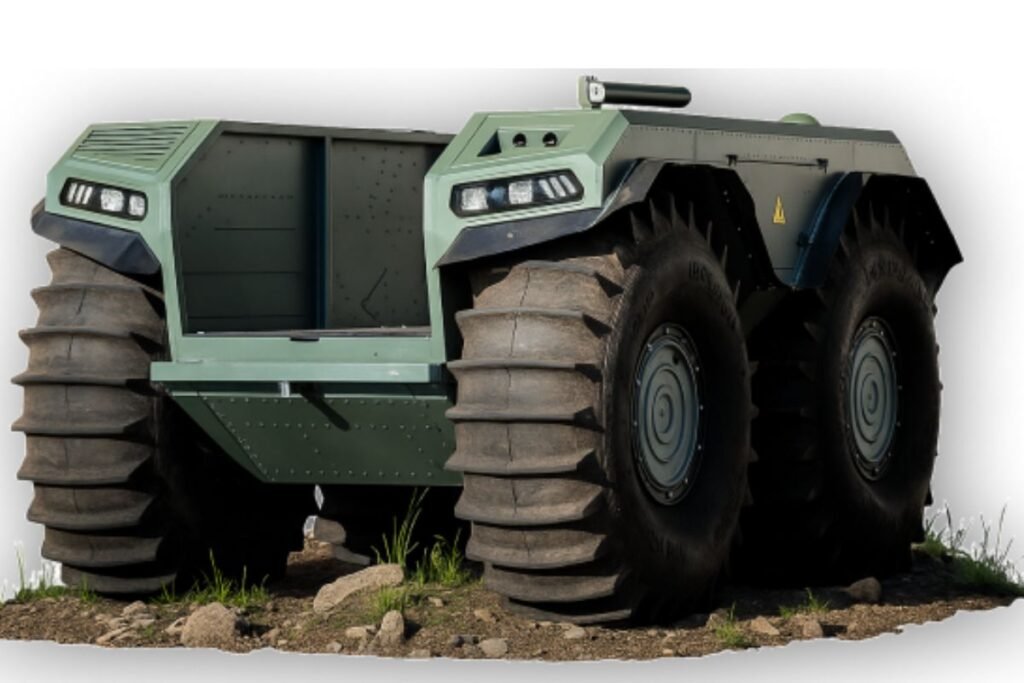
The ABRIS DG Unex is engineered as a multipurpose unmanned ground vehicle (UGV) that excels in intelligence, surveillance, target acquisition, and reconnaissance (ISTAR) missions. Its capability to undertake autonomous operations reduces the need for direct human control, which in combat environments is a game-changer. The vehicle’s design integrates highly precise sensors and robust autonomous navigation systems, allowing seamless movement in complex terrains. These features are critical for minimizing risk and maximizing situational awareness on the battlefield.
Seamless integration with human forces
The ABRIS DG Unex doesn’t replace soldiers but rather complements them by taking on logistical and scouting roles that traditionally exposed personnel to significant danger. For example, it can tow artillery or ammunition and perform remote surveillance, freeing soldiers to focus on immediate threats and strategic decisions. This reduces casualty risk and enhances battle readiness. The synergy between man and machine opens a new chapter in combat support systems tailored for modern battlefield challenges.
How the xTech Edge Strike Ground competition shaped the ABRIS DG Unex’s selection
The xTech Edge Strike Ground initiative by the U.S. Army serves as a rigorous platform for testing and vetting innovative robotic and unmanned technologies. Between March 3 and 13, soldiers evaluated over 17 unmanned ground vehicles, assessing criteria like adaptability, autonomy, payload capacity, and reliability. The ABRIS DG Unex’s ability to meet and exceed these benchmarks secured its selection. This competition is more than a trial; it reflects the Army’s strategic pivot toward automated technologies that can respond swiftly to evolving threats.
Criteria that determined the winner
Subsystem performance, ease of operation, and sustainability in austere environments were among the key evaluation points. Teams also considered how well these UGVs could blend into existing units and mission protocols. The ABRIS DG Unex impressed with its versatility and low logistical footprint. This underscores a broader trend in defense procurement: a preference for systems delivering multi-functional utility with minimal support.
Operational benefits for brigade-level combat teams
Adding the ABRIS DG Unex to armored brigade combat teams translates into enhanced mission endurance and flexibility. The unmanned vehicle can perform dangerous reconnaissance missions ahead of convoys, tow disabled vehicles, and deliver supplies under fire. This capability dramatically increases operational tempo while reducing casualty rates. Essentially, it acts as both a lifeline and force multiplier in high-stakes environments.
Transforming logistical chains on the battlefield
The ability to automate resupply missions reduces the logistical burden on troops and minimizes vulnerabilities associated with manned convoys. This robotic support system ensures supply lines remain intact even under heavy enemy pressure. For commanders, this means more reliable resource distribution and better-maintained combat effectiveness over extended campaigns.
ABRIS DG’s commitment to innovation and energy independence
Innovations from ABRIS Design Group go beyond mechanical engineering. They also pioneer solutions in energy independence, ensuring that their unmanned vehicles operate longer without frequent refueling. This stability helps maintain continuous operational readiness, particularly in remote theaters where traditional fuel supplies might be scarce or dangerous to transport. Their integrated information technology solutions further bolster mission success by enhancing data communication and control.
A global footprint with a robust manufacturing network
With production bases spanning multiple European countries, ABRIS DG leverages cross-border expertise to refine its designs constantly. This international collaboration guarantees that their robotic and unmanned systems are not just cutting-edge but also tailored to meet diverse operational demands. It’s a strategic advantage that supports the global deployment potential of the ABRIS DG Unex vehicle.
Breakdown of key features and specifications
| Feature | Specification | Benefit |
|---|---|---|
| Autonomous navigation | Advanced AI-supported terrain mapping | Enhanced maneuverability and reduced operator workload |
| Payload capacity | Up to 2,500 kg (5,512 lbs) | Supports towing and transport of essential supplies |
| Operational range | Up to 100 km (62 miles) per mission | Extended mission endurance without refueling |
| Communication system | Secure, real-time data link | Improved situational awareness and control |
| Energy system | Hybrid electric with energy independence tech | Reduced logistical footprint and higher operational uptime |
Challenging traditional combat doctrines through robotic support
The U.S. Army’s embrace of platforms like the ABRIS DG Unex signals a shift in how warfare is conceptualized. By delegating high-risk tasks to unmanned vehicles, commanders can rethink frontline strategies and troop deployment. This transition not only protects lives but also expands operational possibilities where human presence was once considered indispensable. Future battlefields will likely see a blend of manned and unmanned units working in tandem, reshaping tactical doctrines.
What makes the ABRIS DG Unex stand out among other UGVs?
The ABRIS DG Unex combines advanced autonomy, a high payload capacity of 2,500 kg, hybrid energy systems, and seamless integration with manned units, making it versatile for multiple combat support roles.
How does the ABRIS DG Unex enhance soldier safety?
By handling dangerous logistics and reconnaissance tasks autonomously, the ABRIS DG Unex minimizes soldiers’ exposure to hazardous environments, reducing casualty risks.
What role did the xTech Edge Strike Ground competition play in selecting this vehicle?
The competition provided a rigorous testing ground where the ABRIS DG Unex outperformed other UGV candidates in autonomy, durability, and operational focus, leading to its selection.
Can the ABRIS DG Unex operate long missions without refueling?
Yes, its hybrid electric energy system and energy independence technologies allow it to sustain extended missions, increasing battlefield endurance.
What are the future prospects for ABRIS DG unmanned vehicles?
ABRIS DG’s global manufacturing footprint and ongoing innovations position its vehicles at the forefront of next-generation battlefield robotics, with expanding roles in logistics, surveillance, and combat support.
Source: https://abris-dg.com/product/unex-ugv/
