This drone doesn’t rush. It waits… and that’s exactly why it’s dangerous
Most drones are built to go fast, strike hard, and get out.
The K1000ULE does the opposite. It stays.
And stays.
And stays.
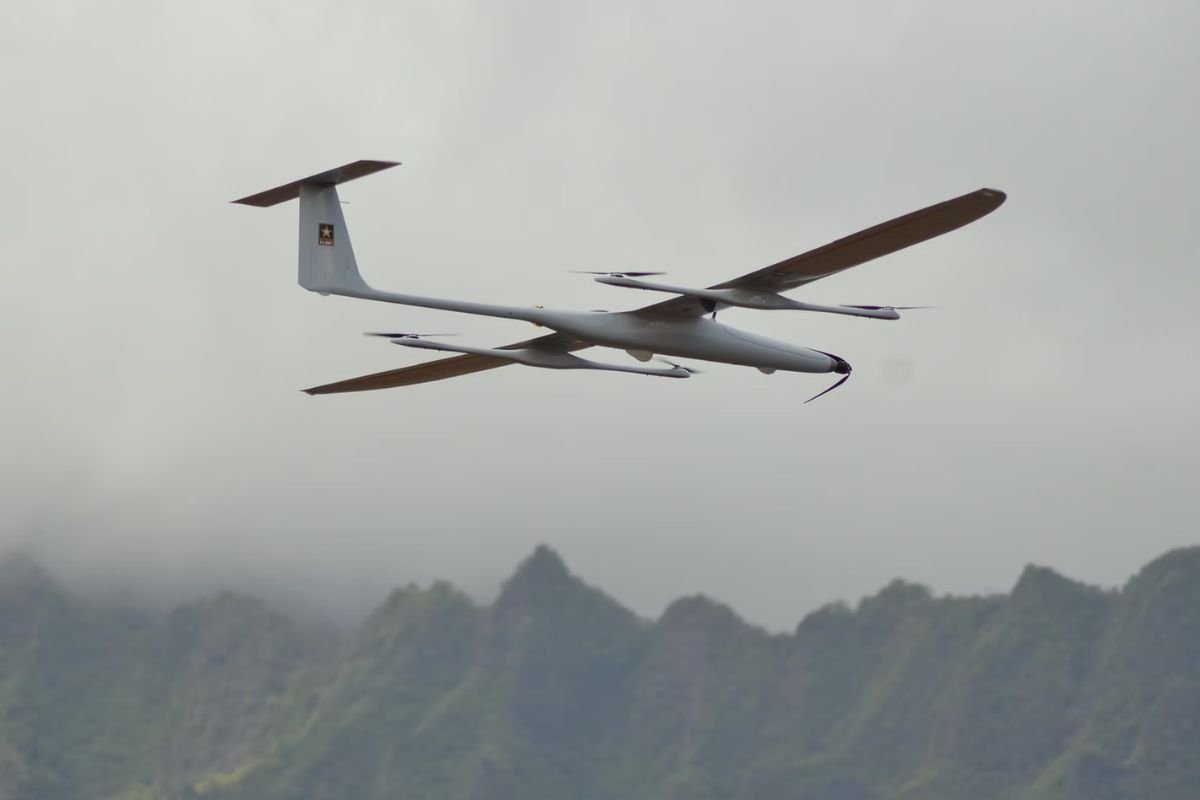
At the AUSA Global Force Symposium & Exposition, Kraus Hamdani Aerospace didn’t just show off another drone. They showed a different way of thinking about air power — one where time becomes the weapon.
Because when you can watch something for two straight days… you don’t miss much.
Related articles:
- The US is cracking down on foreign drones, but these exemptions show Washington still cannot fully cut the cord
- NATO launches counter-drone trials in Latvia with AI and new defense technologies
The K1000ULE: two days in the air changes everything
Let’s be concrete.
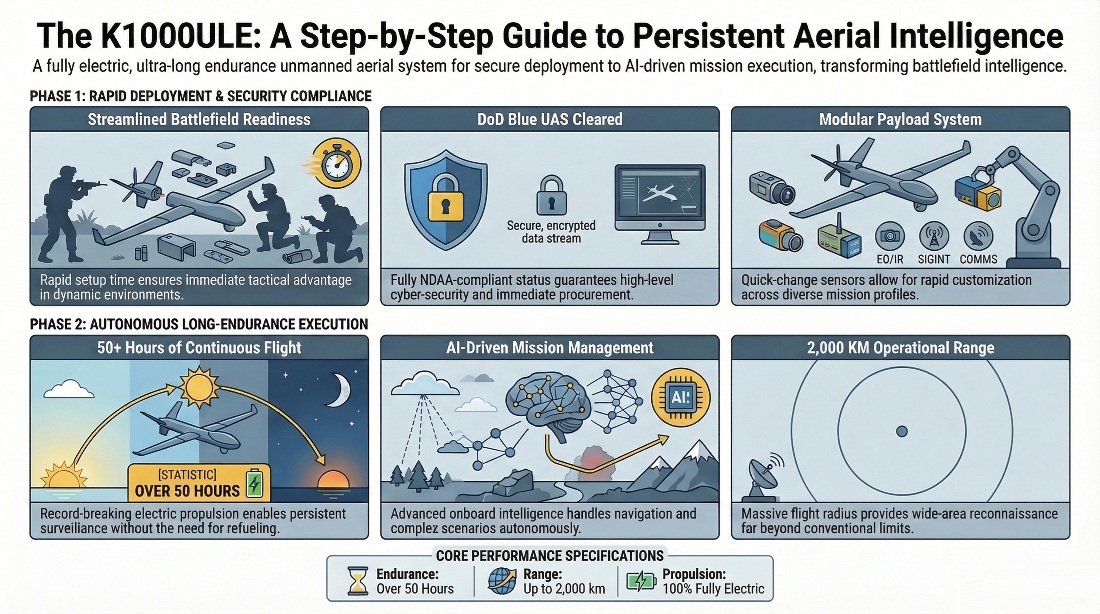
The K1000ULE can fly for more than 50 hours. That’s over two full days without landing.
Not a theoretical number. Not a lab claim. A real operational endurance in its class — and a record for a Group 2 drone.
That means:
- One launch instead of three or four
- One crew rotation instead of constant handoffs
- One drone quietly watching while everything else comes and goes
If you’ve ever tracked something — a convoy, a patrol, a moving target — you know the hardest part isn’t finding it.
It’s not losing it.
This drone is built exactly for that moment.
Electric isn’t about “green”. It’s about being invisible
People hear “electric” and think sustainability.
In military terms, that’s not the point.
The real advantage is much more tactical.
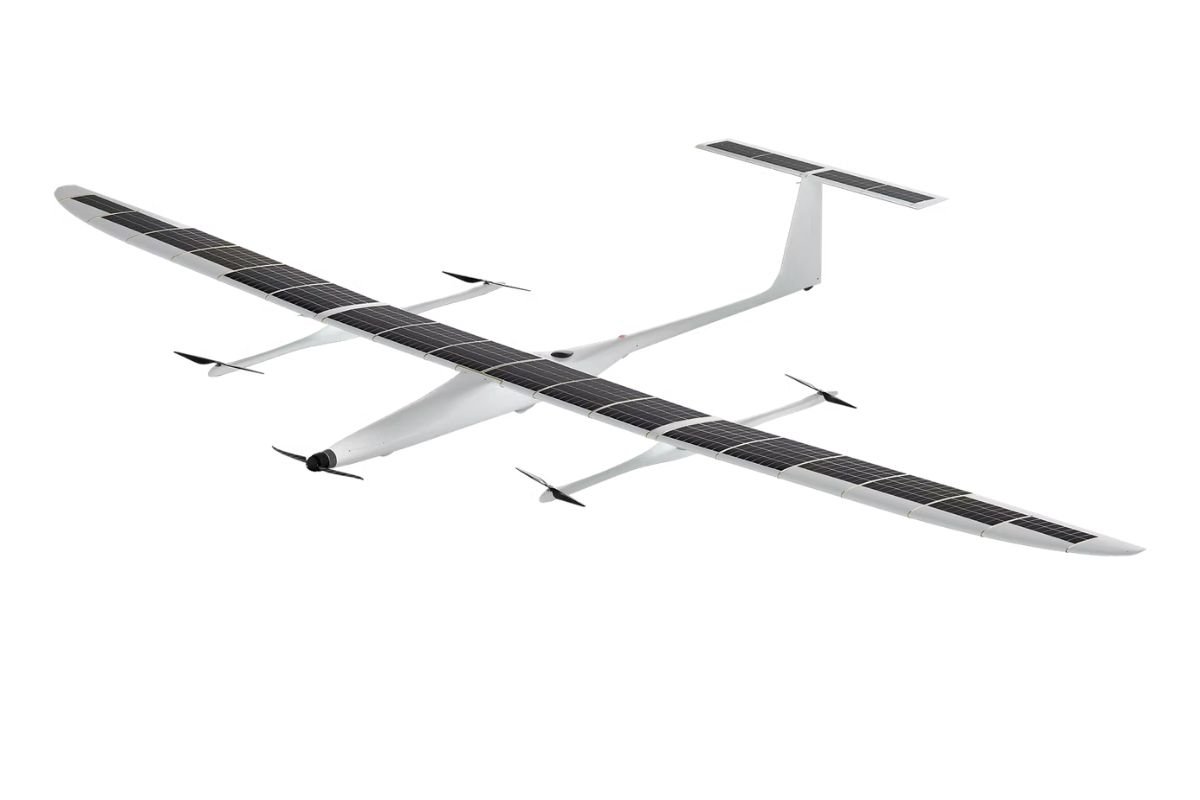
An electric drone is:
- Quieter
- Cooler (less infrared signature)
- logistically simpler
No fuel trucks. No refueling window. Fewer weak points.
It just takes off… and disappears into the sky.
If you’re trying to stay unnoticed over a contested area, that’s gold.
US Army selects ABRIS DG Unex unmanned ground vehicle for battlefield operations
It’s not flashy. It’s useful
What makes the K1000ULE interesting is that it’s not trying to be impressive.
It doesn’t carry massive weapons. It doesn’t break speed records.
It’s designed to fit into real operations without friction.
Quick setup. Easy integration with existing control stations. Data flowing in real time.
You launch it, and it becomes part of the system almost immediately.
In modern warfare, that matters more than ever. Because the battlefield isn’t just physical anymore — it’s a network.
And this drone is basically a flying sensor node that refuses to leave.
Cleared, trusted… and ready to go
There’s another detail that says a lot.
The K1000ULE is on the DoD Blue UAS list. That means it meets strict NDAA security standards.
Translated: it’s been vetted. No hidden vulnerabilities. No questionable components.
For military buyers, that’s not a bonus — that’s a prerequisite.
It means this drone isn’t just experimental. It’s deployable now.
AI handles the boring part, humans keep control
The autonomy onboard is not about replacing operators.
It’s about freeing them.
The drone can manage:
- Navigation
- Route adjustments
- Mission flow
on its own, using AI.
So instead of babysitting the aircraft, the operator focuses on what matters: what’s happening below.
It’s a small shift, but it changes how missions are run. Less fatigue. Better decisions.
One platform, many roles
Another strength: flexibility.
The K1000ULE can be configured quickly depending on the mission:
- Cameras for day/night surveillance
- Signal interception equipment
- Communication relay payloads
- Electronic warfare modules
Same drone. Different job.
That kind of modularity is becoming essential. Because modern conflicts don’t give you time to redesign systems — you adapt what you already have.
K1000ULE at a glance
Feature | What it really means |
50+ hours endurance | You don’t lose the target |
1,240 miles range | You cover huge areas without repositioning |
Fully electric | Quiet, discreet, low logistics burden |
AI-assisted flight | Less workload, more focus on the mission |
DoD Blue UAS listed | Trusted and ready for real operations |
Modular payloads | One drone, multiple missions |
A different kind of power
There’s something interesting happening here.
For years, military aviation has been about speed, power, dominance.
This drone represents something quieter.
Patience. Persistence. Presence.
It doesn’t overwhelm the enemy.
It outlasts them.
And in a world where information decides outcomes, the one who watches the longest often wins.
That’s what makes the K1000ULE dangerous.
Not what it does in a second.
But what it can do over 50 hours straight.
Source: https://www.khaero.com/k1000ule
