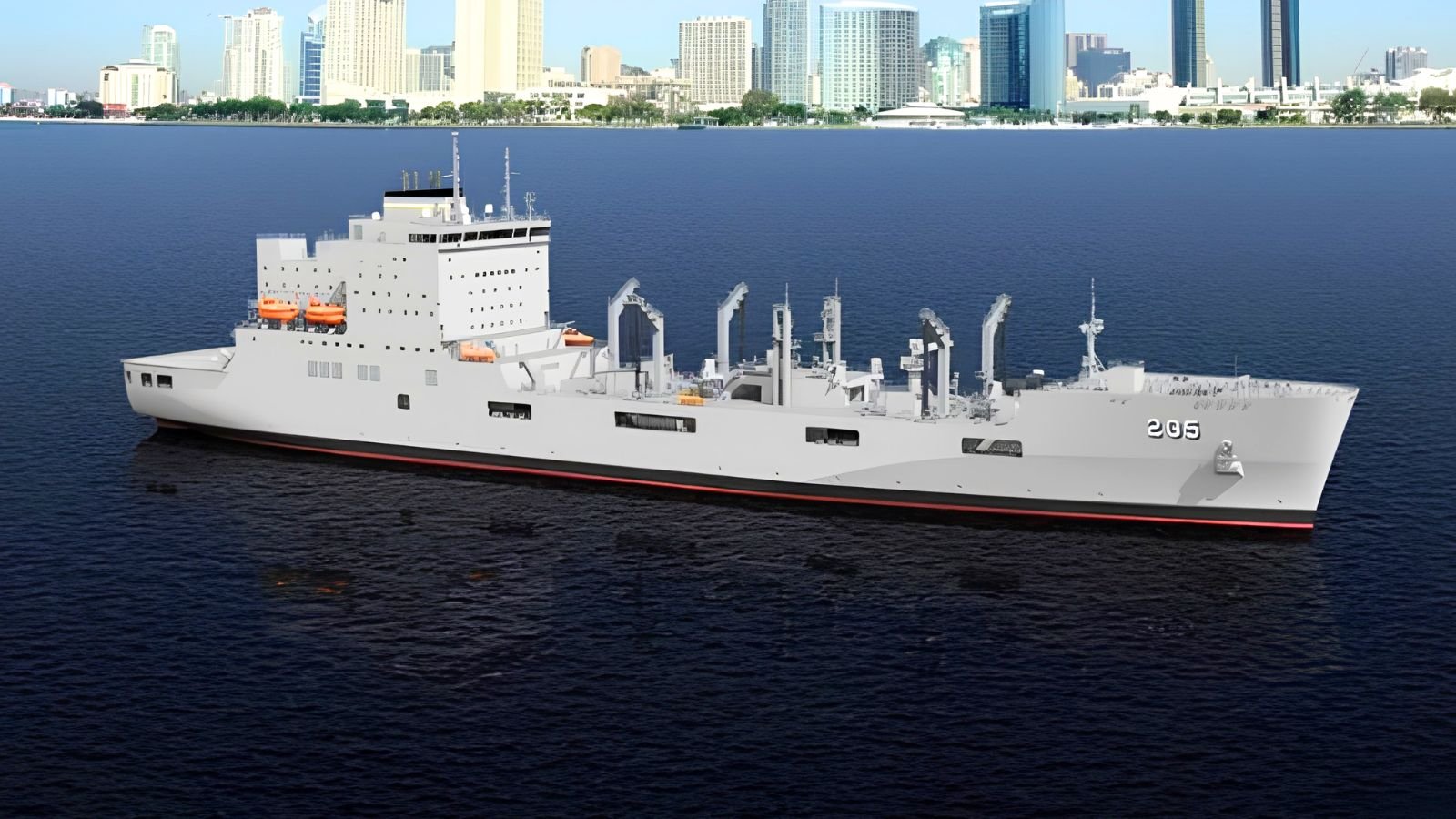
Hanwha Defense USA has secured its first U. S. Navy subcontract, joining prime contractor Vard Marine US Inc. on the Next Generation Logistics Ship program, also known as the light replenishment oiler (T-AOL). The award puts Hanwha in the early-stage work that shapes what the Navy may buy later, covering market survey activities, concept design refinement, and production cost evaluation.
For Hanwha’s U. S. shipbuilding arm, the timing matters. Since taking over and investing in Hanwha Philly Shipyard, the company has been signaling it wants to compete in the American naval market, not just commercial work. This subcontract does not mean a shipbuilding order is guaranteed, but it does place Hanwha inside the program’s design and manufacturability conversation, where requirements, price targets, and build strategy get defined.
Related articles:
- Pentagon Awards $967M for AN/TPY-2 Radar — One of the Costliest Ground-Based Air Defense Investments in Recent U.S. History
- America Is Quadrupling THAAD Output — and the Deal That Makes It Possible Starts at the Factory Floor
Vard Marine US selects Hanwha for NGLS market survey and concept design
The subcontract positions Vard Marine US as the prime contractor and Hanwha Defense USA as a supporting partner on the Navy’s NGLS effort. The scope is not glamorous shipyard footage or steel cutting, it is the work that usually decides whether a program stays affordable. Hanwha is tasked with supporting a market survey of existing designs and helping refine the concept for a U. S.-tailored platform.
Tom Anderson, president of shipbuilding at Hanwha Defense USA, framed the deal as a step toward bringing the company’s shipbuilding experience into a Navy context, with an emphasis on supporting sailors “deployed in contested maritime domains.” That phrase is doing a lot of work. The Navy wants replenishment ships that can keep up with distributed operations, where combatants may be spread out and still need fuel, supplies, and ammunition on tight timelines.
Inside the subcontract, Hanwha’s responsibilities include manufacturability input, advice on commercial construction practices, and help evaluating production costs. If you’ve watched Navy ship programs drift upward in price, you know why this matters. The Navy is explicitly trying to leverage commercial methods where it can, aiming for simpler builds and repeatable processes. Hanwha’s role is to pressure-test whether the concept can be built efficiently, not just drawn beautifully.
The agreement also includes options for additional functional design planning and special studies, which is a common way to keep a team on call as requirements mature. Still, this is not the same as a long-term production contract, and that’s the nuance worth keeping in mind. Early design subcontracts can open doors, but they can also end with a binder of studies if budgets tighten or the Navy shifts priorities.
Hanwha Philly Shipyard investment tops $200 million since December 2024
Hanwha says it has invested more than $200 million into Hanwha Philly Shipyard since December 2024, aimed at upgrading workforce, capabilities, and capacity. That figure is important because it signals intent: the company is spending to modernize a U. S. yard at a moment when Washington is worried about shipbuilding throughput. For Philadelphia, it is also a bet that Navy-related work can provide steadier demand than some commercial cycles.
On the ground, investments like that typically translate into facility upgrades, training, and production planning tools that reduce rework. The subcontract’s focus on manufacturability and commercial practices lines up with that logic. A yard can’t just say it is “ready,” it has to show it can build to cost and schedule, and those metrics are where Navy programs often get criticized. The NGLS design phase is a chance to build credibility before any hulls are ordered.
There’s also a strategic narrative here about foreign-owned firms operating inside U. S. defense supply chains. Hanwha is a major South Korean industrial group, and this is a U. S. subsidiary working with a U. S.-based prime contractor. That can be a strength, bringing outside shipbuilding experience into a U. S. market that has struggled with capacity. But it can also invite scrutiny about governance, security, and how much sensitive know-how is being shared.
One local yard manager, who asked not to be named because they were not authorized to speak publicly, put it bluntly: “The Navy doesn’t pay you for ambition, it pays you for hitting milestones.” That’s the real test for Hanwha after the investment headlines. If the NGLS work produces costed designs the Navy can actually afford, the investment story looks smart. If it doesn’t, critics will call it an expensive attempt to buy a seat at the table.
Navy T-AOL targets 3,000-4,000 dwt and about $150 million per hull
The Navy’s T-AOL, previously branded as NGLS, is conceived as a smaller auxiliary ship meant to refuel, rearm, and resupply combatants forward. Early studies describe a notional size in the 3,000-4,000 dwt range, and a planning figure of roughly $150 million per hull. Those numbers are not trivia, they are the program’s identity: smaller, cheaper, and more deployable than big fleet oilers.
For comparison, the larger John Lewis-class fleet oiler has been cited around $800 million per ship. That gap explains why the Navy is interested in a “light” replenishment platform. If you can buy multiple smaller ships for the price of one large oiler, you can spread logistics support across more routes and more operating areas. It also reduces the operational impact if one ship is unavailable, because the fleet is not relying on a small number of high-value auxiliaries.
The concept leans on commercially available technologies, which is Navy-speak for avoiding custom, one-off systems where possible. That approach can cut cost and speed delivery, but it can also create friction when military survivability expectations collide with commercial standards. A ship designed to operate closer to contested waters may face pressure for more robust self-defense, redundancy, and damage control features, and each addition risks pushing the price above the $150 million target.
Using the latest per-ship estimate and the Navy’s notional goal of 13 ships, the program would land at roughly $5.89 billion, excluding research and development funding and future inflation adjustments, offering a clearer picture of the scale and financial trajectory of this emerging logistics backbone.
This is where Hanwha’s subcontract work matters. Cost analysis and manufacturability reviews are supposed to keep the program honest about tradeoffs. A defense analyst in Washington, Marc H., described it this way: “T-AOL only works if the Navy resists turning it into a mini combatant.” That’s a real risk. If requirements creep, the Navy could end up with a ship that is neither cheap nor fast to build, which would undercut the entire point of the program.
Congressional shipbuilding plans highlight a push for more logistics ships
U. S. shipbuilding plans tracked by Congress have put a spotlight on logistics capacity, not just submarines and destroyers. In force-structure discussions, the Combat Logistics Force has been cited in the context of growing demand for at-sea resupply, with figures like 34 to 46 ships appearing in planning tables. That kind of delta tells you the debate is not only about firepower, it is about keeping fleets fueled and armed over long distances.
Budget context also matters. The Navy’s FY2026 shipbuilding submission includes about $47.4 billion in the Shipbuilding and Conversion, Navy account, with a large share tied to funding mechanisms linked to the FY2025 reconciliation act. The same planning environment has referenced $100 million in advance procurement funding for the light replenishment oiler concept in recent legislative activity. Those figures show momentum, but they also show how dependent shipbuilding can be on politics.
For industry, the NGLS/T-AOL effort is part of a broader reality: the Navy wants more hulls, and the U. S. industrial base is under pressure to deliver. That creates openings for yards that can demonstrate throughput and predictable costs. It also creates competition, because every yard wants to be the one that Congress points to as the solution. Hanwha’s entry through a subcontract is a cautious, lower-risk way to get into the Navy ecosystem.
Still, there’s a critique worth stating plainly. Big topline budgets do not automatically translate into smooth programs. If a design is not mature, or if workforce constraints hit, costs rise and schedules slip, and Congress starts asking hard questions. The NGLS subcontract is a positive signal for Hanwha, but it sits inside a shipbuilding system that has struggled with on-time delivery. The Navy will judge partners on performance, not press releases.
Hanwha’s MASGA push tests how fast it can scale in the U. S. defense market
Observers in South Korea have described this win as part of Hanwha’s broader MASGA push to expand in the U. S. defense market. The logic is straightforward: the United States remains the world’s largest defense customer, and naval demand is expected to stay strong as the Navy pursues a larger fleet and modernizes support ships. A first subcontract does not guarantee future awards, but it does create a track record, which matters in government procurement.
The partnership structure also says something about how Hanwha is approaching the market. Working under Vard Marine US lets Hanwha contribute expertise while learning the Navy’s acquisition rhythms, documentation expectations, and design review culture. It is less risky than trying to prime a Navy program immediately. But it also means Hanwha’s influence is bounded by the prime’s decisions, and credit for success often accrues to the prime contractor first.
From a shipyard perspective, the most practical question is what comes next if the program moves toward construction. If the Navy decides to buy multiple T-AOLs, yards with proven capacity and competitive pricing will line up to bid. Hanwha’s early involvement could help it argue it understands the design intent and cost model. But competitors will argue the opposite: early design participation does not prove you can execute production at scale.
A former Navy logistics officer, speaking generally about replenishment programs, offered a reality check: “The fleet doesn’t care who drew the lines, it cares when the ship shows up loaded.” That’s the standard Hanwha is walking toward. The subcontract is a foothold, and it is meaningful, but the hard part is turning studies, cost models, and manufacturability plans into delivered ships that meet the Navy’s operational tempo.
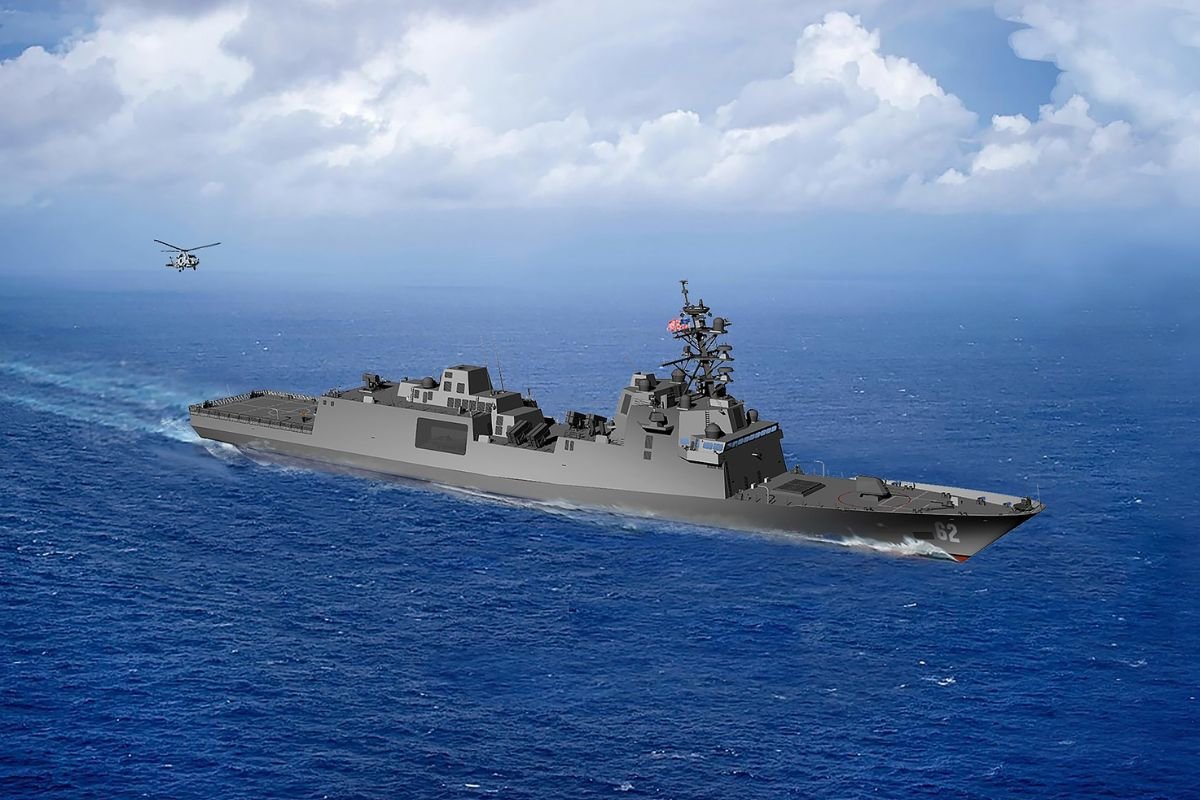
The Constellation-class warning: when costs spiral
The cautionary example hanging over all of this is the Constellation-class frigate program. Originally pitched as a faster, more affordable adaptation of a proven European design, it has steadily drifted away from that premise. U.S.-specific requirements, design changes, and integration challenges have pushed costs upward and delayed timelines, with unit prices now trending well above early expectations.
What was meant to demonstrate that the Navy could control costs through adaptation has instead become a case study in how quickly budgets can expand when requirements grow. For programs like the Next-Generation Logistics Ship, the lesson is clear: discipline in design and restraint in requirements are not optional—they are the only way to avoid repeating the same cost spiral.
Sources:
Hanwha Defense USA, “Hanwha Defense USA and Hanwha Philly Shipyard awarded first U.S. Navy subcontract” (March 30, 2026),
https://www.hanwhadefenseusa.com/news-articles/hanwha-defense-usa-and-hanwha-philly-shipyard-awarded-first-u-s-navy-subcontract
official corporate announcement detailing the award of a first U.S. Navy subcontract to Hanwha Defense USA and Hanwha Philly Shipyard, highlighting the companies’ entry into U.S. naval programs, the scope of work, and the broader implications for industrial cooperation and shipbuilding capabilities.
U.S. Naval Institute (USNI News), “Report to Congress on Next-Generation Logistic Ship” (published July 14, 2022),
https://news.usni.org/2022/07/14/report-to-congress-on-next-generation-logistic-ship
defense-focused analysis summarizing a U.S. Navy report to Congress on future logistics vessels, outlining operational requirements, fleet support concepts, and the strategic importance of next-generation supply ships in sustaining distributed maritime operations.
Image:
The Next-Generation Logistics Ship (NGLS) program reflects a shift in how the United States Navy approaches sustainment in contested environments. Traditionally reliant on large logistics ships operated by the Military Sealift Command, the Navy is now moving toward smaller, more distributed resupply vessels. This evolution supports concepts like Distributed Maritime Operations, aiming to reduce vulnerability and maintain operational tempo against modern anti-access threats, particularly from China.
Credit: Congressional Research Service / U.S. Naval Institute
