Texelis Defense has joined KNDS France and is now operating under a new name, KNDS Mobility. The deal, cleared by the French competition authority, folds a specialized armored-vehicle mobility business into one of France’s central land-systems groups, at a moment when European armies are accelerating procurement and sustainment planning.
Behind the rebrand is a practical industrial logic. Texelis has long supplied mobility components and complete mobility solutions for French armored vehicles, including vehicles tied to the Scorpion program. By integrating that know-how more tightly with KNDS France’s vehicle design, manufacturing, and assembly footprint, the new entity is positioned to shorten interfaces between designer, integrator, and mobility-package supplier, while keeping a close eye on cost, delivery tempo, and long-term support.
Related articles:
- European missile maker MBDA has doubled its production in two years, and with a $6.3 billion investment, it’s only the beginning
- The United States loses the torpedo contract for the future Dutch Orka-class submarines to France and its F21 torpedo
French competition authority clears KNDS deal for Texelis Defense
The formal green light came from the French competition authority, which cleared KNDS’s acquisition of Texelis’ defense business. In practice, that clearance matters because it reduces uncertainty for customers and suppliers who want predictable contracting, especially on multiyear programs. The decision also frames the transaction as unlikely to harm competition, a key point in a sector where a small number of primes and specialist subcontractors repeatedly meet on the same tenders.
The structure described publicly separates activities into distinct entities, with the newly created Texelis Defense taking over the defense business before it is brought into the KNDS group and rebranded KNDS Mobility. That separation signals a clean perimeter: what is defense-focused, what is transport-focused, and who owns what. For procurement officials, that kind of perimeter can be as important as the headline, because it affects audit trails, security rules, and supply-chain obligations.
KNDS itself sits at the center of French land systems. The group, formed from the merger of Krauss-Maffei Wegmann and Nexter, is active in military land systems and, in France, is involved in major modernization efforts. It is part of the Scorpion program industrial ecosystem, with roles tied to vehicles like Griffon and Jaguar and the upgrade of the Leclerc main battle tank. Adding a mobility specialist into that orbit tightens vertical integration around a critical subsystem.
There is also a less glamorous angle that still matters, the risk of bottlenecks. Mobility packages, axles, driveline components, and energy-management expertise can become pacing items when production ramps up. One defense-industry analyst, Marc Delcourt, put it bluntly in a phone interview, “You can have armor steel and electronics lined up, but if driveline deliveries slip, the whole schedule slips.” That comment lands because KNDS Mobility is now expected to help stabilize those interfaces, not just design clever hardware.
Credit: Wikipedia / Ministère des Armées
KNDS Mobility targets Scorpion vehicles Griffon, Jaguar, and Serval
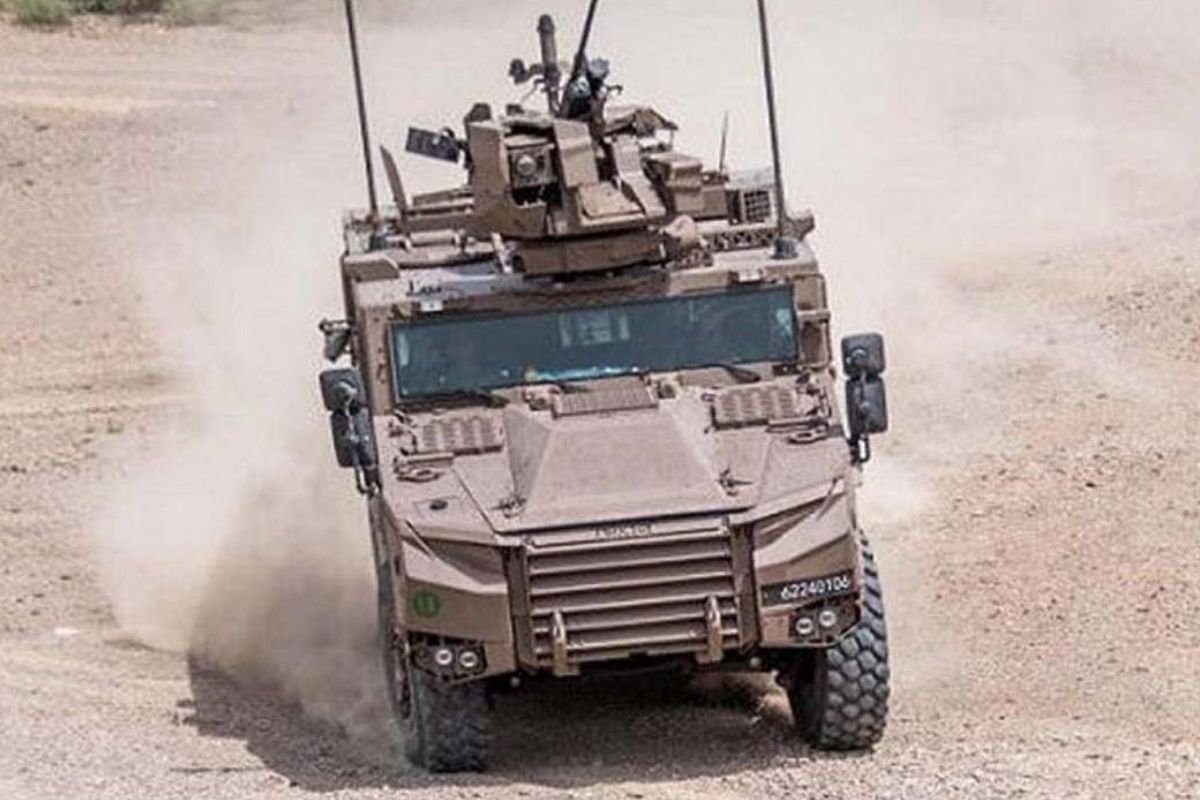
Texelis’ defense activity is deeply tied to French Army armored fleets, particularly the Scorpion family. Public reporting highlights Texelis’ role in supplying mobility solutions for the Griffon multi-role armored vehicle and the Jaguar reconnaissance and combat vehicle. Those platforms are not niche projects, they are central to France’s modernization path, and they carry long tail support needs that can span decades.
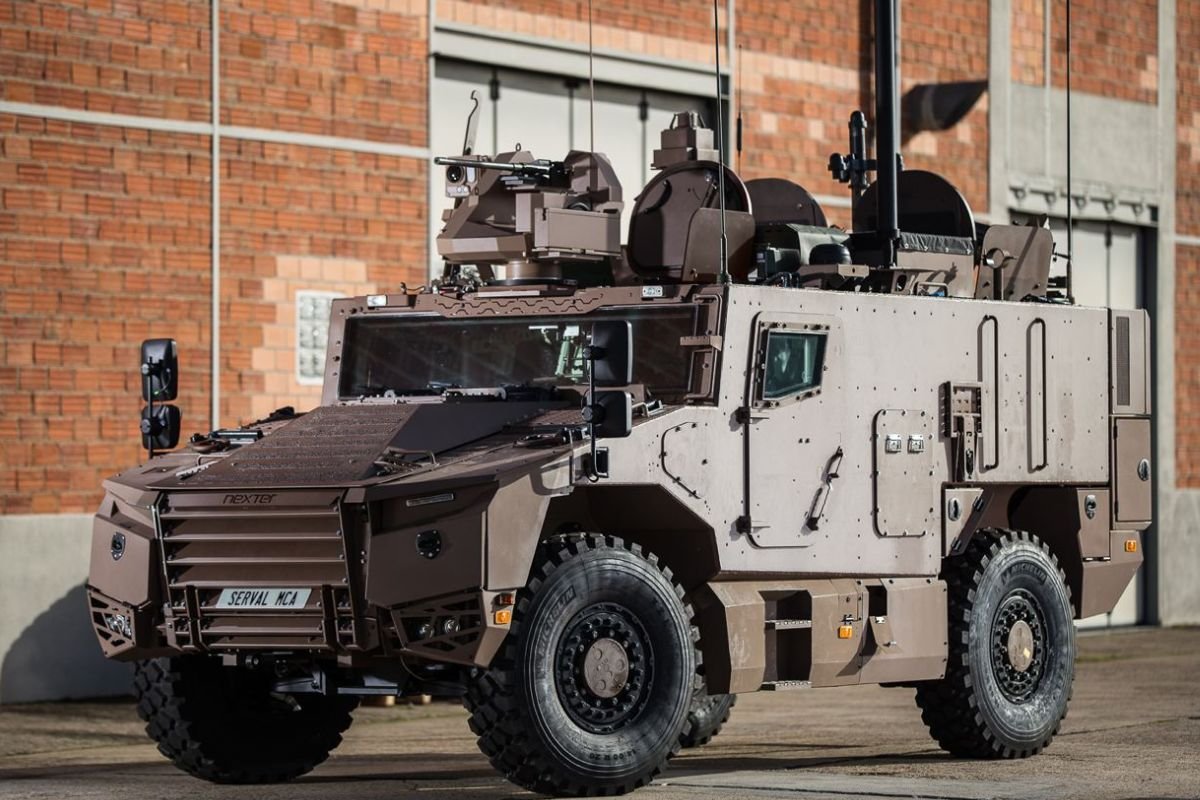
Serval is the other anchor. Texelis and KNDS France have worked together on Serval through a temporary business grouping that supplies the French Army with the mobility solution for the new 4×4 vehicle. The split of responsibilities is clear: Texelis provides the mobility platform, while KNDS France manufactures and assembles the vehicles and supplies associated equipment. With the rebrand to KNDS Mobility, that interface becomes internal, which can reduce contractual friction and speed up engineering changes.
Serval is also a program with scale. In an interview, Texelis CEO Jean Vandel said 2,000 Serval vehicles have been ordered in 35 different configurations, ranging from armored personnel carrier variants to short-range air defense. That configuration count is a reminder that “one vehicle” is really a family, and mobility solutions need to support weight growth, power demands, and mission kits without turning maintenance into a nightmare.
There is an export dimension, too. Vandel said Serval is in the process of being procured by Belgium and that the underlying platform is marketed internationally under the name Celeris. He also described rapid adaptation and production procedures, claiming delivery under one year in some partnership contexts, which is unusually fast for the sector. The nuance is that speed claims depend on local industrial conditions and pre-qualified designs, but the industrial message is consistent: KNDS Mobility wants to package mobility as a product line, not only as a set of parts.
Texelis brings hybridization and energy management for armored mobility
One of the most closely watched capabilities is hybridization and energy management applied to armored vehicles. Texelis has been described as known for work in hybridization and energy management for armored platforms, a technical niche that is becoming mainstream as armies add sensors, electronic warfare, and active protection systems. More onboard power demand forces a rethink of alternators, batteries, thermal management, and how engines operate across duty cycles.
In practical terms, hybridization is not only about fuel savings. It can support silent watch, reduced thermal signature in certain modes, and better power availability for mission systems. It can also complicate sustainment if it introduces new failure modes or requires training pipelines that units do not yet have. Marc Delcourt, the same analyst, offered a caution: “Hybrid is attractive, but armies want it to be boring. If it adds complexity without measurable readiness gains, procurement officers push back.” That skepticism is part of the reality check facing KNDS Mobility.
Texelis’ footprint provides clues about how the company industrializes these promises. Texelis has a production site in Limoges and a branch at the KNDS France site in Roanne. That proximity to a major vehicle assembly location matters because mobility packages are heavy, bulky, and schedule-sensitive. Shortening transport legs and aligning quality processes can reduce rework and speed up acceptance, especially when production rates move from dozens to hundreds.
The company’s scale is also documented. Texelis employs about 350 people and reported sales of roughly EUR110 million in 2023. That makes it a specialist, not a mega-prime, and that status can be a strength because engineering teams stay close to the product. But it also means investment choices are tight. Under KNDS, the bet is that mobility R&D can be funded with more stability, while the group benefits from owning a capability that used to sit partly outside its direct control.
Industrial footprint in Limoges and Roanne reshapes supply-chain control
Industrial geography is not just trivia in defense manufacturing. Limoges and Roanne are tied to how France produces and supports armored vehicles, with Roanne known for assembly work on major Scorpion platforms. Integrating Texelis Defense into KNDS France and rebranding as KNDS Mobility can streamline production planning between mobility-package output and final vehicle assembly, especially when program managers are trying to avoid stop-start rhythms that inflate unit costs.
Texelis’ role has also evolved over time. Reporting has described the company as moving from subcontractor status to a more central position, including being seen as a joint prime contractor on Serval with KNDS France after a competition run by France’s procurement office. That shift matters because it changes bargaining power and accountability. A subcontractor can be swapped, in theory. A joint prime is embedded in the program’s governance, and that can influence everything from configuration management to export licensing strategy.
There are concrete production expectations mentioned publicly. Texelis expected to build 110 mobility packages in a given year, combining Serval and the export-oriented Celeris systems. That number is not massive by civilian auto standards, but in armored vehicles it is meaningful, particularly when each package is tailored to mission variants and must survive harsh duty cycles. Under the KNDS umbrella, the question is whether that output can scale without quality drift or supply shortages in key components.
There is also a risk worth stating plainly. Vertical integration can reduce coordination costs, but it can also reduce competitive pressure inside the same group. If a prime owns the mobility supplier, procurement officials may worry about fewer independent options, even if regulators cleared the deal. The counterargument is that France still has multiple vehicle makers and subsystem suppliers, and programs like Scorpion involve partnerships with firms such as Arquus and Thales. Still, KNDS Mobility will be judged on whether integration improves delivery performance, not only on whether it looks neat on an org chart.
KNDS Mobility positions for exports and faster vehicle adaptation cycles
Export positioning is woven through the public narrative. Texelis leadership has emphasized a “fully military platform,” qualified after five years of trials and significant investment, designed to be adapted to local specifications. The claim of being able to help partners produce quickly, sometimes under one year, is a clear commercial pitch. Under KNDS Mobility, that pitch gains a bigger brand and a closer tie to a prime that can offer complete vehicles, not only mobility subsystems.
Examples cited publicly include work with partners in Indonesia and Canada on vehicles that used the same platform lineage, in addition to the French Army’s Serval. Those examples signal a strategy: turn a proven domestic platform into a repeatable export building block. For customers, the appeal is de-risking, buying something already qualified and used by a NATO army. For KNDS, the appeal is margin and influence, because mobility is a core determinant of payload, protection growth, and lifecycle cost.
Still, exports are not frictionless. Different climates, terrain profiles, and maintenance cultures can break “one-size-fits-most” assumptions. A 4×4 optimized for European roads and mixed terrain may face different stresses in desert heat or tropical humidity, and supply chains for spares can be the difference between a successful fleet and a hangar queen. That is where KNDS Mobility will need to prove it can deliver not just hardware, but training, documentation, and sustainment packages aligned with how customers actually operate.
The broader implication is that mobility is becoming a selling point in its own right. Buyers increasingly ask about power management for electronics, growth margins for armor kits, and how quickly variants can be fielded. If KNDS can point to a dedicated internal unit, KNDS Mobility, with a track record on Scorpion vehicles and a footprint in Limoges and Roanne, it strengthens the credibility of bids that promise fast adaptation. The next test is whether the new brand translates into measurable outcomes, like shorter engineering change cycles and fewer delivery disruptions on high-visibility programs.
Source: KNDS
