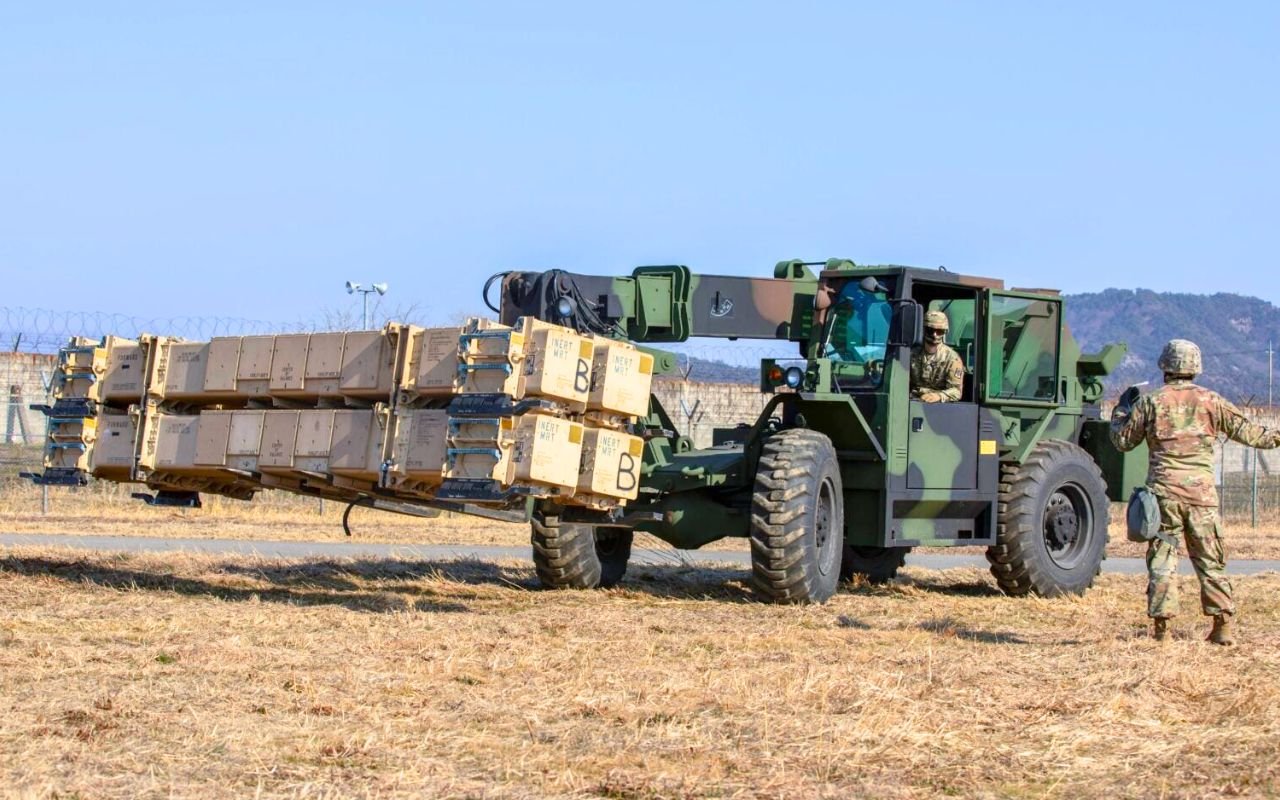
The strategic relocation of missile defense systems by the U.S. from South Korea to the Middle East signals a significant shift in global military priorities, stirring complex geopolitical reactions.
The United States’ recent maneuver to temporarily redeploy Patriot missile defense batteries from South Korea to the Middle East has brought to light underlying tensions between maintaining stability in East Asia and addressing rising threats in the Gulf region. As Washington shifts significant military assets, the delicate balance of deterrence against North Korean aggression faces new challenges, while the security landscape in the Middle East becomes increasingly fortified. This realignment is reshaping alliances and raising questions about future U.S. commitments across critical global hotspots.
Shifting geopolitical priorities: What the missile system relocation reveals about U.S. strategy
The United States’ decision to move its advanced Patriot missile defense systems from South Korea to the Middle East marks a pivotal moment in global security strategy. For decades, these missile systems played a crucial role in deterring North Korean provocations, a region where the U.S. has maintained a robust military presence through the U.S. Forces Korea (USFK). However, the intensifying conflict dynamics in the Middle East, notably around Iran and regional proxy wars, have compelled Washington to reallocate resources to a theater now viewed as demanding urgent reinforcement. Strategic military assets such as Patriot missiles, known for their capability to intercept incoming ballistic threats at altitudes ranging from 15 to 40 kilometers, are fundamental in modern missile defense. These systems complement the U.S.’s layered defense architecture, including the higher-altitude Terminal High Altitude Area Defense (THAAD) systems previously stationed in South Korea. The redeployment reflects a recalibration of where the U.S. perceives its most immediate security risks lie, underscoring an increasing prioritization of Middle Eastern stability over Indo-Pacific deterrence—for at least the duration of this relocation. This shift, however, is not without diplomatic complexities. South Korea has expressed unease about potential vulnerabilities arising from this move. Analysts warn that reducing missile defense coverage could entice risky provocations from North Korea, challenging Seoul’s security assurances. U.S. officials have emphasized that this redeployment is temporary and coordinated closely with South Korean authorities, aiming to maintain regional deterrence while addressing emergent threats elsewhere. The relocation also signals how military flexibility is becoming a hallmark of U.S. defense posture, adapting rapidly to geopolitical frontlines. Moreover, the sizable cost of maintenance and deployment—each new-generation Patriot missile costing around 5.4 billion euros—adds a layer of financial intensity to such movements, revealing that this is a calculated strategic investment rather than a mere tactical shift.
The historical significance of missile defenses in South Korea
Since the early 2000s, missile defense systems in South Korea have been the frontline shield against North Korea’s expanding ballistic missile arsenal. The deployment was part of a concerted effort to bolster South Korea’s defense capabilities in response to Pyongyang’s repeated missile tests, which have evolved in frequency and sophistication. With the Patriot system’s interception altitude tailored perfectly for medium-range threats, it provided a reliable barrier to protect civilian and military infrastructure alike. Notably, these systems formed a critical part of the broader U.S.-South Korea military alliance, which has long been a cornerstone of regional security. The relocation of some of these assets now triggers concern about the balance of power on the Korean Peninsula. However, South Korean President Lee Jae Myung has reassuringly asserted that Seoul possesses independent deterrent capabilities sufficient to counter any threats from the north, even in the absence of temporary U.S. missile battery redeployments. Despite this, experts argue that the absence of high-value systems like Patriot PAC-3 missiles—designed to counter advanced threats with precision—can influence the strategic calculus of North Korean military planners. This underlines the intertwined nature of deterrence, capability, and perception in maintaining peace in this highly volatile part of the world.
Enhancing Middle East missile defense: addressing escalating regional threats
The redeployment of U.S. missile defense assets to the Middle East directly corresponds to mounting tensions involving Iran and its regional proxies. The Gulf states, often on the frontline of escalating conflicts, have expressed concerns over dwindling ammunition reserves and aging air defense infrastructure, which leave them vulnerable to ballistic missile and drone attacks. U.S. missile systems like the Patriot PAC-3 batteries provide a critical upgrade, enhancing interception capabilities against a variety of threats. Recent conflicts have demonstrated the rising sophistication of missile technology in the Middle East, where non-state actors have leveraged increasingly accurate and high-velocity projectiles. Traditional air defense systems are struggling to keep pace with these evolving threats, necessitating urgent reinforcement. The infusion of U.S. technology aims to fill critical gaps by offering advanced missile defense coverage that includes faster reaction times, improved tracking technologies, and greater range. This significantly elevates the overall security architecture in countries such as Saudi Arabia, the United Arab Emirates, and other Gulf Cooperation Council members. Moreover, the presence of Patriot systems acts as a potent deterrent not only by their physical capabilities but as a symbolic representation of U.S. commitment to regional allies. The psychological impact on adversaries is substantial, often swaying the strategic decisions of competing nations. Integrating these systems with existing air defense networks further solidifies layered defense and enhances command and control capabilities. There are also economic dimensions to this defense boost. Protecting vital oil infrastructure, international shipping lanes, and economic hubs from missile threats ensures continuity in global markets and shields billions of euros in investments. Thus, the missile defense relocation embodies a multi-layered response, intertwining military necessity with economic stability.
Technical benefits of Patriot PAC-3 missiles in the Gulf
The Patriot Advanced Capability-3 (PAC-3) missile system stands out for its enhanced precision and ability to intercept ballistic missiles during the terminal phase of flight. Unlike earlier Patriot versions, PAC-3 uses hit-to-kill technology, destroying incoming missiles through direct collision rather than explosive warheads. This method increases interception reliability and reduces collateral damage risk. Its radar systems incorporate state-of-the-art phased array technology, enabling simultaneous tracking of multiple targets with high accuracy. Furthermore, PAC-3 batteries are highly mobile and can be rapidly redeployed, perfect for the fluid combat environments seen in Middle Eastern conflicts. Such attributes provide Gulf states with the flexibility to counter diverse missile threats, from short-range projectiles launched by proxy groups to more sophisticated regional ballistic missiles. The integration with other U.S. and allied air defense assets ensures a seamless response mechanism, improving reaction speed, and overall defense resilience.
Security implications for East Asia: balancing risks and reassurance
The reallocation of missile defense systems touches on profound security concerns throughout the Indo-Pacific region. South Korea’s cautious stance is understandable given its proximity to a militarily assertive North Korea, whose missile tests and nuclear ambitions continually unsettle regional security calculations. Yet, the decision to shift these missile defenses highlights the confidence of U.S. and allied forces in broader deterrence frameworks, including diplomatic efforts and intelligence sharing. The U.S.-South Korea alliance remains strong, with Seoul asserting its capacity to maintain a credible defensive posture independently during the U.S. redeployment period. This assertion reflects investments in indigenous military technologies and strategic partnerships with other allies, such as Japan. South Korea’s emphasis on missile defense innovation, including the potential development of reusable interceptor missiles, signifies a move towards greater self-reliance in national defense. Nonetheless, experts caution that reduced missile defense assets could embolden Pyongyang’s “adventurism,” potentially testing new weapons or signaling escalations to exploit perceived vulnerabilities. The precarious balance requires ongoing vigilance, coordination, and transparent communication between Washington and Seoul to preempt misunderstandings or miscalculations. Beyond military hardware, the shift underscores the evolving nature of global alliances, where shared threats force flexible approaches in force deployments. U.S. regional partners must adapt to these dynamics, reevaluating risk tolerance and perhaps increasing local defense contributions to compensate for temporary gaps left by realigned American assets.
South Korea’s evolving defense capabilities amid U.S. shifts
Over recent years, South Korea has accelerated development of indigenous defense technologies, including its own ballistic missile defense (BMD) systems designed to bridge gaps left by allied redeployments. Programs focus on advanced radar networks, interceptor missiles, and cyber-defense capabilities aimed at countering missile threats comprehensively. Collaborative exercises with U.S. forces continue to hone interoperability, ensuring rapid response in emergencies despite hardware movements. Moreover, diplomatic channels have emphasized commitment to joint security agreements, signaling to adversaries a unified defense front regardless of temporary tactical sacrifices.
Financial and logistical challenges of missile defense realignment
Relocating sophisticated missile defense systems like Patriot batteries is a formidable logistical undertaking involving extensive planning, coordination, and budgetary allocation. Each unit is composed of radar systems, launchers, command centers, and multiple interceptor missiles, all of which require specialized transportation and reassembly. The financial implications run high: the cost per PAC-3 missile is estimated at roughly 5.4 billion euros, reflecting advanced technology and limited production quantities. Beyond acquisition costs, maintaining readiness through regular training, software upgrades, and physical upkeep adds to the operational budget. When systems are redeployed across continents, additional expense accrues in transit, security, and temporary infrastructure buildup in new locations. Despite these costs, the U.S. views such expenditures as essential investments in global security posture. The reallocation aims to prevent costly conflicts by deterring hostile actions with credible, visible defensive systems. This approach aligns defense spending with evolving geopolitical priorities, ensuring agility in an unpredictable strategic environment.
Table: Summary of missile defense relocation key dates and cost estimates
| Date | Event | Estimated Cost (€) |
|---|---|---|
| April 2025 | Agreement on temporary redeployment of Patriot systems | — |
| June 2025 | Start of physical relocation process from South Korea to Middle East | ~150 million (logistics and setup) |
| July 2025 | Completion of initial deployment in Middle East | — |
| Ongoing | Maintenance and training support | ~50 million annually |
Alliances and future directions: navigating complex military dynamics
The redeployment highlights the evolving nature of U.S. alliances and the complexities of managing global military commitments simultaneously. While the Middle East situation demands immediate reinforcement, the Indo-Pacific region remains a critical strategic priority due to ongoing tensions with China and North Korea. Allied nations such as South Korea and Gulf states are adjusting their defense policies to accommodate this temporary rebalancing. This includes increased procurement of indigenous or third-party defense technologies and deepening bilateral security collaborations. The dynamic interplay between diplomacy and military readiness underpins this transitional phase, ensuring that no theater becomes critically exposed despite shifting deployments. Furthermore, this situation underscores the necessity of agile defense frameworks capable of rapid redeployment to meet emergent threats worldwide. Future U.S. military planning is likely to incorporate more versatile, modular defense assets optimized for quick relocation without sacrificing deterrence effectiveness. This strategy aims to reconcile budget constraints with the demand for flexible global presence amid unpredictable conflicts.
Key factors shaping future directions include:
- Greater integration of missile defense networks across regions to allow seamless sharing of information and coordination.
- Investment in autonomous and AI-driven defense systems to reduce human risk and enhance reaction speeds.
- Strengthening regional self-sufficiency to lessen dependency on U.S. assets without undermining cooperation.
- Continuous diplomatic engagement to manage alliance expectations and mitigate risks of conflicts escalating from perceived vulnerabilities.
- Emphasis on flexible and mobile military assets that can be deployed rapidly where needed most.
Why is the U.S. moving missile defense systems from South Korea to the Middle East?
The U.S. aims to reinforce security in the Middle East due to escalating threats, particularly around Iran, while maintaining deterrence in South Korea temporarily through allied cooperation and local defense capabilities.
Does relocating these systems weaken South Korea’s defense against North Korea?
While it reduces the number of U.S. missile systems temporarily, South Korea maintains strong independent defense capabilities and continues joint exercises with the U.S. to ensure regional security is not compromised significantly.
How long will the Patriot system redeployment last?
The redeployment is described as temporary, lasting several months, after which the missile batteries are expected to return to South Korea depending on the evolving security situation.
What technical advantages do Patriot PAC-3 systems bring to the Middle East?
Patriot PAC-3 missiles offer advanced hit-to-kill technology with precise interception capabilities, enhanced radar tracking, and high mobility, significantly improving the region’s missile defense against ballistic threats.
How does this redeployment affect U.S. military budgeting?
Relocating sophisticated defense systems incurs substantial costs in logistics, maintenance, and upgrade expenditures, but is seen as a necessary investment to maintain global security balance amid shifting threat priorities.
