
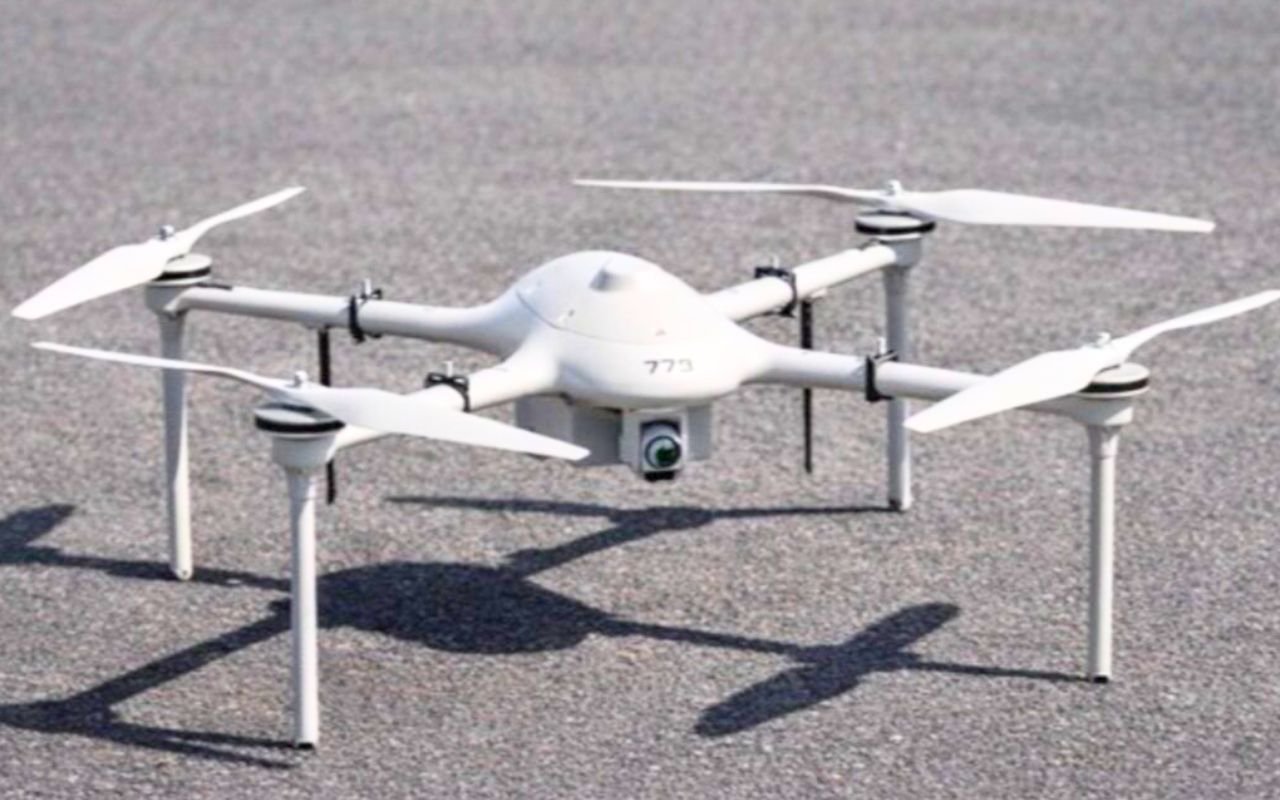
In a groundbreaking move for defense technology, an Israeli company has secured a major U.S. contract to develop and deliver stealthy silent drones, promising to reshape the future of urban warfare and special operations.
The U.S. Department of Defense has officially awarded a significant multi-million-euro contract to an innovative Israeli drone manufacturer, signaling a shift towards stealth and silence in aerial reconnaissance and strike capabilities. These next-generation drones leverage advanced artificial intelligence and state-of-the-art stealth technology, designed to operate silently in complex urban environments. The contract marks a strategic partnership, combining Israeli technological prowess with American industrial and military resources to enhance battlefield effectiveness in the years to come.
Revolutionizing urban combat with AI-powered silent drones
The U.S. Department of Defense’s decision to invest heavily in Israeli-developed stealth drones highlights the growing need for superior aerial platforms in urban combat scenarios. Unlike traditional drones, these new designs embrace artificial intelligence (AI) to navigate complex cityscapes without human intervention, minimizing operator risk and maximizing mission success. One of the key challenges historically faced by drone operators in urban environments is the cluttered and dynamic nature of cities — with buildings, power lines, and moving crowds complicating navigation and targeting. The drones coming out of this Israeli-American collaboration incorporate an AI-driven autonomous system capable of real-time mapping and decision-making, allowing these drones to adapt to sudden changes without compromising stealth. This AI sophistication ensures the drones can perform precision strikes or gather critical reconnaissance data with unprecedented accuracy. Their silent operation ensures these activities remain covert, restricting the adversary’s ability to detect and counteract them. This is a considerable improvement over previous generation drones, whose noise and radar signature betrayed their presence. Moreover, by integrating U.S.-based production and training, the program delivers a fusion of Israeli combat-tested technology with American industrial capacity and military standards, ensuring these drones meet strict operational and logistical requirements of the U.S. armed forces. This synergy not only benefits immediate tactical needs but also supports long-term strategic deterrence.
Case study: How AI autonomy outperforms manual drone control in combat
During recent conflicts where these drones have been deployed, the autonomous features enabled missions that would have been impossible or too risky with traditional remotely piloted drones. For example, in densely built-up areas with hostile anti-drone countermeasures, AI-powered drones could reroute mid-flight, avoid detection, and pinpoint targets with a precision that was previously unattainable. This has direct implications for reducing civilian casualties and collateral damage — factors always at the forefront of military planning but difficult to manage in real-time combat. The drone’s ability to “think” on its own minimizes human error, speeds up the decision-making loop, and enhances operational safety.
The strategic implications of Israeli stealth drones on U.S. defense doctrine
The awarding of this contract is more than just a technological upgrade; it reflects changing priorities within U.S. defense strategies. The U.S. military acknowledges the increasing complexity of future battlefields, where urban combat and asymmetrical warfare dominate. Drones capable of blending stealth, silence, and artificial intelligence meet these emerging demands in a unique way. Stealth and silence are critical because they allow forces to penetrate enemy defenses without alerting them, enabling surprise attacks and rapid intelligence collection. For decades, the U.S. has invested in high-profile stealth assets like stealth fighters and bombers. Now, the focus is extending to smaller, tactical systems that empower ground forces in real-time scenarios. This shift will likely lead to changes in how special operations forces approach urban engagements and how conventional units integrate unmanned systems into combined arms tactics. These drones are not just offensive weapons; they also act as silent scouts, electronic warfare platforms, and communication relays, giving soldiers an enhanced situational awareness advantage. Additionally, the contract symbolizes the U.S. commitment to international collaboration, especially with Israel which has proven to be a frontrunner in drone innovation. By bringing cutting-edge Israeli AI tech into the American ecosystem, the contract facilitates a faster adoption cycle and accelerates capability development.
Evolution of tactical drone roles in 21st-century conflicts
Tactical drones are quickly moving from simple reconnaissance tools to multi-role assets capable of offensive and defensive functions. The enhanced stealth and AI autonomy seen here will redefine drone missions:
- Precision engagement: Striking high-value targets with minimal collateral damage.
- Persistent surveillance: Silent long-duration observation in hostile environments.
- Electronic warfare: Jamming or intercepting enemy communications.
- Communications relay: Extending battlefield network reach under cover of silence.
- Decoy operations: Creating confusion without exposing manned assets.
The versatility of these drones underscores why the U.S. is dramatically increasing investments in such systems, given their ability to shift the balance of power on urban fronts.
The importance of stealth technology in drone warfare
Stealth technology for drones is not just about reducing noise—it’s a multi-layered approach including radar cross-section reduction, infrared signature suppression, and visual camouflage. This Israeli U.S. partnership focuses heavily on these facets to create drones that virtually disappear from enemy sensors. A key innovation involves specially designed airframes and materials that absorb or deflect radar waves while the drone operates at ultra-low acoustic levels thanks to cutting-edge motor and propeller designs. These features combined allow the drone to execute missions where detection could otherwise jeopardize an entire operation. Silent drones equipped with stealth tech profoundly change the game in intelligence failure scenarios, granting military commanders the power to gather intelligence or strike without tipping their hand until the last moment. This advancement moves drones beyond disposable tools to strategic long-term assets. Another dimension involves integrating stealth directly into drone swarms. Swarm tactics rely on the element of surprise and overwhelming adversaries by numbers. If each unit is also individually stealthy, the swarm becomes a nearly unstoppable force capable of overwhelming traditional air defenses.
How stealth shapes future conflict zones
Modern battlefields, especially urban ones, demand concealment not only from visual sight but from radar, infrared, and electronic detection. Stealth drones achieve this by coordinating multiple detection avoidance methods simultaneously, allowing operatives to carry out sensitive missions in heavily monitored areas. For instance, counterinsurgency operations often require insertion and surveillance in areas saturated with hostile forces equipped with electronic countermeasures. The stealth technology onboard these drones will allow U.S. and allied forces to operate with decreased risk of pre-emptive strikes.
The economic and industrial impact of this U.S.-Israeli drone contract
This contract not only signifies military innovation but also promises tangible economic effects in both countries’ defense sectors. The partnership alleviates some of the supply chain risks by enabling U.S.-based production of critical drone components, ensuring resilience in times of geopolitical tension. Furthermore, this deal will provide hundreds of skilled jobs in manufacturing, software development, and support services on both sides, invigorating bilateral industrial ties. The increased demand for these drones also turbocharges the Israeli drone industry’s reputation as a global leader. This boost attracts further investments in AI and stealth research, potentially spilling over into commercial drone applications and civilian technologies—autonomous delivery, advanced surveillance for emergency services, and infrastructure monitoring. The ripple effects of this defense contract will likely influence technology trends beyond military confines for years to come.
Summary of key contract milestones and impact
| Milestone | Date | Details |
|---|---|---|
| Contract awarded | Early 2026 | U.S. DoD signs multi-million-euro deal with Israeli firm for silent AI drones |
| First prototypes delivered | Mid 2026 | Initial stealth drones begin testing with U.S. military units |
| Full-scale production launch | Late 2026 | Production shifts partially to U.S. facilities, ensuring supply chain control |
| Operational deployment | 2027 | Deployment within special forces and urban operations teams |
Training and operational integration of silent drones into U.S. forces
Deploying these advanced drones involves more than delivery; it requires a sophisticated training and operational integration program across U.S. units. The contract includes comprehensive training modules designed by a coalition of Israeli and U.S. specialists to prepare personnel in handling stealth, AI autonomy, and new tactical doctrines. Training covers drone piloting, AI system management, and maintenance – ensuring units can maximize the drones’ potential. Special forces, known for their adaptability, are among the first to receive this hands-on instruction, enabling them to exploit drone capabilities fully in live combat environments. Moreover, the introduction of these drones is transforming battlefield command by providing commanders with instantaneous intelligence feeds and autonomous strike options, reshaping how decisions are made under pressure. Effective training ensures seamless drone integration, increasing mission success rates while reducing risks for ground troops.
What makes these drones silent compared to conventional UAVs?
These drones utilize specially designed low-noise motors and propellers combined with noise-reducing airframe materials, dramatically cutting down audible sounds during flight, making them virtually undetectable by ear.
How does AI autonomy enhance drone capabilities in urban environments?
AI systems enable drones to dynamically navigate complex and changing surroundings, avoid obstacles, and carry out missions independently, reducing reaction times and operator workload.
Why did the U.S. choose an Israeli company over domestic manufacturers?
Israeli firms have demonstrated cutting-edge AI and stealth drone technology proven in real conflict zones. This contract leverages Israel’s battle experience and innovation while incorporating U.S. production to meet stringent military demands.
What are the main operational roles for these drones?
They serve various functions including precision strike, surveillance, electronic warfare, communication relay, and decoy operations — all tailored for urban and special operations.
When will these drones be fully deployed within U.S. forces?
Full operational deployment is expected by 2027 after completing prototype testing, training, and partial U.S.-based production.
